
Verwandte Artikel zu The Human Shore: Seacoasts in History
Inhaltsangabe
Since before recorded history, people have congregated near water. But as growing populations around the globe continue to flow toward the coasts on an unprecedented scale and climate change raises water levels, our relationship to the sea has begun to take on new and potentially catastrophic dimensions. The latest generation of coastal dwellers lives largely in ignorance of the history of those who came before them, the natural environment, and the need to live sustainably on the world’s shores. Humanity has forgotten how to live with the oceans.
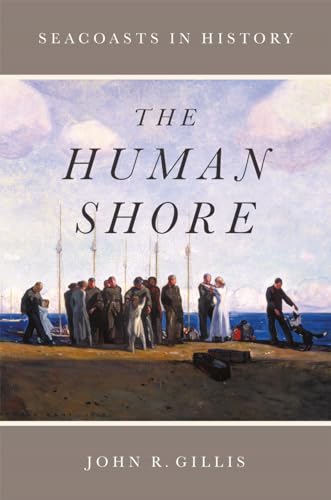
In The Human Shore, a magisterial account of 100,000 years of seaside civilization, John R. Gillis recovers the coastal experience from its origins among the people who dwelled along the African shore to the bustle and glitz of today’s megacities and beach resorts. He takes readers from discussion of the possible coastal location of the Garden of Eden to the ancient communities that have existed along beaches, bays, and bayous since the beginning of human society to the crucial role played by coasts during the age of discovery and empire. An account of the mass movement of whole populations to the coasts in the last half-century brings the story of coastal life into the present.
Along the way, Gillis addresses humankind’s changing relationship to the sea from an environmental perspective, laying out the history of the making and remaking of coastal landscapes—the creation of ports, the draining of wetlands, the introduction and extinction of marine animals, and the invention of the beach—while giving us a global understanding of our relationship to the water. Learned and deeply personal, The Human Shore is more than a history: it is the story of a space that has been central to the attitudes, plans, and existence of those who live and dream at land’s end.
Die Inhaltsangabe kann sich auf eine andere Ausgabe dieses Titels beziehen.
Über die Autorin bzw. den Autor
John R. Gillis is the author of Islands of the Mind; A World of Their Own Making: Myth Ritual, and the Quest for Family Values; and Commemorations. A professor of history emeritus at Rutgers University, he now divides his time between two coasts: Northern California and Maine.
Auszug. © Genehmigter Nachdruck. Alle Rechte vorbehalten.
The Human Shore
SEACOASTS IN HISTORY By JOHN R. GILLISThe University of Chicago Press
Copyright © 2012 John R. GillisAll right reserved.
ISBN: 978-0-226-92223-2
Contents
List of Illustrations............................................ixIntroduction.....................................................11 An Alternative to Eden.........................................72 Coasts of the Ancient Mariner..................................393 Sea Frontiers of the Early Modern Atlantic.....................684 Settling the Shores............................................995 The Second Discovery of the Sea................................1286 Coastal Dreams and Nightmares..................................158Conclusion: Learning to Live with Coasts.........................187Acknowledgments..................................................199Notes............................................................201Index............................................................227
Chapter One
AN ALTERNATIVE TO EDENThe seashore is an edge ... and it defies the usual idea of borders by being unfixed, fluctuant, and infinitely permeable. REBECCA SOLNIT
Western civilization is landlocked, mentally if not physically. While it has a long history of aquatic accomplishments, these do not constitute its primary identity. In the Western world we imagine human history as beginning and ending on terra firma. Our understandings of our origins, both religious and scientific, are decidedly terrestrial, and we have had great difficulty in finding a place for water in either our histories or our geographies. We remember Lucy, whose three-million-year-old remains were found in 1974 in the bone-dry Olduvai Gorge, but forget that when she was alive the gorge was a lake and she was most likely a shore dweller. Only recently has underwater archaeology challenged assumptions based on terrestrial excavations, showing the extent to which humankind has been semiaquatic, foraging not just in freshwater but also, perhaps more important, at the edge of the sea.
"The inability to regard place as anything but terrestrial, the eternal assumption that societies are boundaried, centered, contained, and enduring structures, is a distortion of retrospect," writes Eric Leed: it is "a view of history filtered through the results of history." Sustained by religious as well as secular traditions, terracentricity has assumed the status of myth in Western culture. The oldest of the Greek gods was Gaia, Mother Earth: "Mother of us all, the oldest of all, hard, splendid like a rock." The peoples we have come to know as the ancient Hebrews had just begun to settle down to an semiagrarian existence when they seized upon the idea of Eden. This terracentricity was passed on to Christianity, and, reinforced by Greek and Roman understandings of earth and water, became foundational to Western civilization. As long as the mass of humankind was tied to the land, it made sense, but now that this is no longer true, it must be called into question.
In the Western tradition, the sea has always been an alien environment. Other societies have felt much more at home with its waters, although, as far as I know, no people entirely deny their terrestrial connections. Even the Moken and other so-called sea gypsies of Southeast Asia do not live entirely at sea. Fijians believe their island was brought into being by Rokomautu, who dove into the sea to bring soil to surface. The earth-diver story is common among people who live by or from the sea. The Haida people of the Queen Charlotte Islands of the Canadian Northwest tell a story of Raven, flying above the sea, who sees a small island and turns it into earth. Later, as Raven explores this new world, he hears a sound coming from a small clamshell and discovers five tiny humans, who became what the Haida people refer to as the "earth surface people."
For coastal and island peoples, it has been the edge of the sea that has been their perpetual Eden, for them not the margin but the center of their world. Unlike the Hebrews, for whom history was a long series of exiles, the coastal-dwelling Haida have no memory of coming from somewhere else. In the stories they tell themselves, the shores of the Pacific Northwest had always been their home. They live in a capacious environment of abundance, in an unchanging present, which produces no yearning for a lost past nor dreams of a redemptive future. It was not until Christian Europeans arrived and told them that all humankind had dispersed from a single landlocked place called the Garden of Eden, making them one of the Lost Tribes of Israel, that they even considered the possibility that they were strangers in their own land or that the sea constituted a danger. And even then they refused this tragic view of history as implausible, at odds with their sense of always having been the people of the xhaaydla, their term for the coast, belonging wholly neither to land or to sea, a different kind of place living on a different kind of time, somewhere not normally found on the surveyor's map or the historian's page.
For the most part, coasts are still an unmarked category in both history and geography. Even today we barely acknowledge the 95 percent of human history that took place before the rise of agricultural civilizations. In this postindustrial era, our image of paradise is still the Garden of Eden and our model human the gardener. The book of Genesis would have us believe that our beginnings were wholly landlocked, but it was written at the time that the Hebrews were settling down to an agrarian existence. The story of Eden served admirably as the foundational myth for agricultural society, but it bears no relationship to the history and geography of humankind, including that of the Jews, that took place before it was written some ,000 years ago. The story of modern humankind, Homo sapiens, that which I am concerned with here, begins 164,000 years ago. For most of our existence we have been foragers, and much of human evolution has taken place not in landlocked locations but where land and water meet. Not only does the idea of Eden misrepresent our past, but, now, when for the first time more humans live in cities than on the land, it is wholly misleading about our future.
We need to rediscover xhaaydla and find a narrative that is less terra-centric, one that recognizes humanity's long relationship with the sea as an edge species, occupying the ecotones where land and water meet. We need to know ourselves as aquatic foragers, as gamekeepers as well as gardeners. Gardeners attempt to control nature, gamekeepers accept it and adapt to its conditions. As we shall see, on coasts gardening was often combined with hunting and gathering. And now that the limits of human beings' control over nature are becoming so evident, it is all the more urgent that we recover that element of adaptability that was present when humans had a working relationship with the sea as well as with the land. In short, we require a new narrative, one with, as Steve Mentz suggests, "fewer gardens, and more shipwrecks," one more in tune with the fluctuant nature of coasts in this age of massive climate change.
Myth of the Garden
It is said that the Hebrews were "the first people to conceive of themselves as living a life whose meaning was defined apart from nature." Their god was a gardener who provided Adam and Eve with a ready-made abundance that precluded any need to work and promised everlasting life. In the beginning, there was no wild nature. Wilderness was...
„Über diesen Titel“ kann sich auf eine andere Ausgabe dieses Titels beziehen.
Suchergebnisse für The Human Shore: Seacoasts in History

Beispielbild für diese ISBN
The Human Shore: Seacoasts in History
Verlag:
University of Chicago Press, 2012
ISBN 10: 0226922235
ISBN 13: 9780226922232
Gebraucht
Hardcover
Anbieter: ThriftBooks-Atlanta, AUSTELL, GA, USA
Verkäuferbewertung 5 von 5 Sternen

Hardcover. Zustand: Good. No Jacket. Pages can have notes/highlighting. Spine may show signs of wear. ~ ThriftBooks: Read More, Spend Less. Artikel-Nr. G0226922235I3N00
Gebraucht kaufen
EUR 5,83
Versand gratis
Versand innerhalb von USA
Versand innerhalb von USA
Anzahl: 1 verfügbar
Foto des Verkäufers
Human Shore: Seacoasts in History
Verlag:
University of Chicago Press, 2012
ISBN 10: 0226922235
ISBN 13: 9780226922232
Gebraucht
Hardcover
Erstausgabe
Anbieter: Southampton Books, Sag Harbor, NY, USA
Verkäuferbewertung 5 von 5 Sternen
Hardcover. Zustand: Like New. Zustand des Schutzumschlags: Like New. First Edition. First Edition, First Printing. Not price-clipped ($27.50 price intact). Published by Chicago, 2012. Octavo. Hardcover. Book is like new. Dust jacket is like new. 100% positive feedback. 30 day money back guarantee. NEXT DAY SHIPPING! Excellent customer service. Please email with any questions or if you would like a photo. All books packed carefully and ship with free delivery confirmation/tracking. All books come with free bookmarks. Ships from Sag Harbor, New York. Artikel-Nr. 192094
Gebraucht kaufen
EUR 17,65
EUR 4,28 Versand
Versand innerhalb von USA
Versand innerhalb von USA
Anzahl: 1 verfügbar
Beispielbild für diese ISBN
The Human Shore: Seacoasts in History (First Edition)
Verlag:
University of Chicago Press, 2012
ISBN 10: 0226922235
ISBN 13: 9780226922232
Gebraucht
Hardcover
Erstausgabe
Anbieter: Dan Pope Books, West Hartford, CT, USA
Verkäuferbewertung 5 von 5 Sternen
Hardcover. Zustand: Fine. Zustand des Schutzumschlags: Fine. 1st Edition. First edition. First printing (with full number line including 1). Hardbound. Fine in a fine jacket. A clean tight copy. Comes with archival-quality mylar jacket protector. Smoke-free. Artikel-Nr. Oxford-7
Gebraucht kaufen
EUR 19,87
EUR 3,86 Versand
Versand innerhalb von USA
Versand innerhalb von USA
Anzahl: 1 verfügbar
Beispielbild für diese ISBN
The Human Shore
Verlag:
The University of Chicago Press, 2012
ISBN 10: 0226922235
ISBN 13: 9780226922232
Neu
Hardcover
Anbieter: PBShop.store US, Wood Dale, IL, USA
Verkäuferbewertung 5 von 5 Sternen
HRD. Zustand: New. New Book. Shipped from UK. Established seller since 2000. Artikel-Nr. GB-9780226922232
Beispielbild für diese ISBN
The Human Shore
Verlag:
The University of Chicago Press, 2012
ISBN 10: 0226922235
ISBN 13: 9780226922232
Neu
Hardcover
Anbieter: PBShop.store UK, Fairford, GLOS, Vereinigtes Königreich
Verkäuferbewertung 5 von 5 Sternen
HRD. Zustand: New. New Book. Shipped from UK. Established seller since 2000. Artikel-Nr. GB-9780226922232
Neu kaufen
EUR 34,88
EUR 5,87 Versand
Versand von Vereinigtes Königreich nach USA
Versand von Vereinigtes Königreich nach USA
Anzahl: 1 verfügbar
Beispielbild für diese ISBN
The Human Shore: Seacoasts in History
Anbieter: Ria Christie Collections, Uxbridge, Vereinigtes Königreich
Verkäuferbewertung 5 von 5 Sternen
Zustand: New. In. Artikel-Nr. ria9780226922232_new
Neu kaufen
EUR 35,29
EUR 14,00 Versand
Versand von Vereinigtes Königreich nach USA
Versand von Vereinigtes Königreich nach USA
Anzahl: 1 verfügbar
Beispielbild für diese ISBN
The Human Shore Seacoasts in History
Anbieter: Revaluation Books, Exeter, Vereinigtes Königreich
Verkäuferbewertung 5 von 5 Sternen
Hardcover. Zustand: Brand New. 256 pages. 9.00x6.00x0.75 inches. In Stock. Artikel-Nr. __0226922235
Neu kaufen
EUR 36,50
EUR 14,61 Versand
Versand von Vereinigtes Königreich nach USA
Versand von Vereinigtes Königreich nach USA
Anzahl: 1 verfügbar
Beispielbild für diese ISBN
The Human Shore
Verlag:
The University of Chicago Press, 2012
ISBN 10: 0226922235
ISBN 13: 9780226922232
Neu
Hardcover
Anbieter: Kennys Bookstore, Olney, MD, USA
Verkäuferbewertung 5 von 5 Sternen
Zustand: New. Humanity has forgotten how to live with the oceans. In this book, a magisterial account of 100,000 years of seaside civilization, the author recovers the coastal experience from its origins among the people who dwelled along the African shore to the bustle and glitz of today's megacities and beach resorts. Num Pages: 272 pages, 50 halftones. BIC Classification: HBG. Category: (G) General (US: Trade). Dimension: 229 x 152 x 25. Weight in Grams: 476. . 2012. First Edition. Hardcover. . . . . Books ship from the US and Ireland. Artikel-Nr. V9780226922232
Neu kaufen
EUR 46,14
EUR 9,00 Versand
Versand innerhalb von USA
Versand innerhalb von USA
Anzahl: 1 verfügbar
Foto des Verkäufers
HUMAN SHORE
Anbieter: moluna, Greven, Deutschland
Verkäuferbewertung 5 von 5 Sternen
Zustand: New. Über den AutorJohn R. Gillis is the author of Islands of the Mind A World of Their Own Making: Myth, Ritual, and the Quest for Family Values and Commemorations. A professor of history emeritus at Rutgers University, he now divides. Artikel-Nr. 867653696
Neu kaufen
EUR 36,99
EUR 48,99 Versand
Versand von Deutschland nach USA
Versand von Deutschland nach USA
Anzahl: 1 verfügbar
Foto des Verkäufers
The Human Shore | Seacoasts in History
Verlag:
The University of Chicago Press, 2012
ISBN 10: 0226922235
ISBN 13: 9780226922232
Neu
Hardcover
Anbieter: preigu, Osnabrück, Deutschland
Verkäuferbewertung 5 von 5 Sternen
Buch. Zustand: Neu. The Human Shore | Seacoasts in History | John R. Gillis | Buch | Einband - fest (Hardcover) | Englisch | 2012 | The University of Chicago Press | EAN 9780226922232 | Verantwortliche Person für die EU: Libri GmbH, Europaallee 1, 36244 Bad Hersfeld, gpsr[at]libri[dot]de | Anbieter: preigu. Artikel-Nr. 130078009
Neu kaufen
EUR 42,05
EUR 70,00 Versand
Versand von Deutschland nach USA
Versand von Deutschland nach USA
Anzahl: 1 verfügbar