
The Dramatic Writer's Companion, Second Edition: Tools to Develop Characters, Cause Scenes, and Build Stories (Chicago Guides to Writing, Editing, and Publishing) - Softcover
Buch 63 von 93: Chicago Guides to Writing, Editing, and Publishing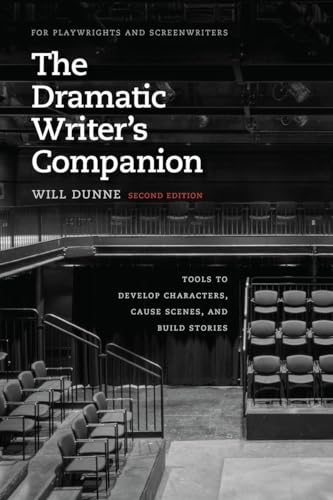
Inhaltsangabe
In just eight years, The Dramatic Writer’s Companion has become a classic among playwrights and screenwriters. Thousands have used its self-contained character, scene, and story exercises to spark creativity, hone their writing, and improve their scripts.
Having spent decades working with dramatists to refine and expand their existing plays and screenplays, Dunne effortlessly blends condensed dramatic theory with specific action steps—over sixty workshop-tested exercises that can be adapted to virtually any individual writing process and dramatic script. Dunne’s in-depth method is both instinctual and intellectual, allowing writers to discover new actions for their characters and new directions for their stories. The exercises can be used by those just starting the writing process and by those who have scripts already in development. With each exercise rooted in real-life issues from Dunne’s workshops, readers of this companion will find the combined experiences of more than fifteen hundred workshops in a single guide.
This second edition is fully aligned with a brand-new companion book, Character, Scene, and Story, which offers forty-two additional activities to help writers more fully develop their scripts. The two books include cross-references between related exercises, though each volume can also stand alone.
No ordinary guide to plotting, this handbook centers on the principle that character is key. “The character is not something added to the scene or to the story,” writes Dunne. “Rather, the character is the scene. The character is the story.” With this new edition, Dunne’s remarkable creative method will continue to be the go-to source for anyone hoping to take their story to the stage.
Die Inhaltsangabe kann sich auf eine andere Ausgabe dieses Titels beziehen.
Über die Autorin bzw. den Autor
Will Dunne is resident playwright and faculty member at Chicago Dramatists. He is the author of numerous plays and recipient of many writing awards and honors. His third companion book, The Architecture of Story: A Technical Guide for the Dramatic Writer, is also available from the University of Chicago Press.
Auszug. © Genehmigter Nachdruck. Alle Rechte vorbehalten.
The Dramatic Writer's Companion
Tools to Develop Characters, Cause Scenes, and Build Stories
By Will DunneThe University of Chicago Press
Copyright © 2017 Will Dunne
All rights reserved.
ISBN: 978-0-226-49408-1All rights reserved.
Contents
About This Guide,
Exercises at a Glance,
DEVELOPING YOUR CHARACTER,
STAGE 1: FLESHING OUT THE BONES,
Basic Character Builder,
What the Character Believes,
Where the Character Works,
Getting Emotional,
Into the Past,
Defining Trait,
STAGE 2: GETTING TO KNOW THE CHARACTER BETTER,
Allies: Then and Now,
Adversaries: Then and Now,
Characters in Contrast,
Finding the Character's Voice,
Three Characters in One,
The Secret Lives of Characters,
STAGE 3: UNDERSTANDING WHO THE CHARACTER REALLY IS,
The Noble Character,
Seven Deadly Sins,
The Dramatic Triangle,
Spinal Tap,
Character as Paradox,
The Character You Like Least,
In So Many Words,
CAUSING A SCENE,
STAGE 1: MAKING THINGS HAPPEN,
Basic Scene Starter,
Where in the World Are We?,
The Roots of Action,
What Does the Character Want?,
What's the Problem?,
Good Intentions,
How It Happens,
Character Adjustments,
Scene in a Sentence,
STAGE 2: REFINING THE ACTION,
Seeing the Scene,
There and Then,
The Aha!s of the Story,
Heating Things Up,
The Emotional Storyboard,
In the Realm of the Senses,
The Voice of the Setting,
Thinking in Beats,
STAGE 3: REFINING THE DIALOGUE,
Talking and Listening,
Unspeakable Truths,
Universal Truths and Lies,
The Bones of the Lines,
BUILDING YOUR STORY,
STAGE 1: TRIGGERING THE CHAIN OF EVENTS,
Whose Story Is It?,
How Will the Tale Be Told?,
As the World Turns,
Inciting Event,
The Art of Grabbing,
STAGE 2: DEVELOPING THE THROUGHLINE,
Step by Step,
Turning Points,
What Happens Next?,
Pointing and Planting,
Crisis Decision,
Picturing the Arc of Action,
Before and After,
Twelve-Word Solution,
STAGE 3: SEEING THE BIG PICTURE,
Main Event,
Your Story as a Dog,
The Incredible Shrinking Story,
What's the Big Idea?,
What's in a Name?,
The Forest of Your Story,
Ready, Aim, Focus,
Six Steps of Revision,
FIXING COMMON SCRIPT PROBLEMS,
Glossary,
Acknowledgments,
CHAPTER 1
BASIC CHARACTER BUILDER
THE QUICK VERSION
Start to flesh out a character
BEST TIME FOR THIS
During early story development or any time you add a new character
CHARACTER: A MIX OF PHYSICAL, PSYCHOLOGICAL, AND SOCIAL TRAITS
You won't understand what your story is about until you understand who your characters are. Dramatist Henrik Ibsen felt he could not begin writing a play until he knew the characters inside out — as if he had lived with them for a month. To know a character is to know the complex blend of physical, psychological, and social traits that make him or her unique. The most important of these traits will be revealed to us through the character's actions under the increasing pressure of story events.
Great stories create extreme circumstances where characters are tested — and usually changed — and where they may do things, for better or for worse, that they never thought possible. To write such stories, you need to know your characters well enough to understand where in life they have come from, how they usually behave day-to-day, in what unexpected ways they might act under stress, and in what ways they would never under any circumstances behave.
ABOUT THE EXERCISE
Try this first with your main character. You can repeat it later with other principal characters in less detail. Don't overdevelop minor characters. They may steal the show if, after they come and go, we are waiting for them to return.
You don't need to write volumes as you answer the exercise questions. It's more about making choices and knowing what they are. For best results:
Set up a personal palette. For each character you build, choose one or two people whom you can use — in combination with yourself — as a source of information. Pick people who trigger strong positive or negative feelings. Give the character a name that embodies your choices and has special meaning for you.
Look for what matters most. The importance of each question will depend on the unique character you are developing. Try to find character facts that may influence story events. Don't waste time on details that will have no impact.
Focus on when the story begins. The character will undergo changes as the dramatic journey unfolds. The exercise is designed to help you flesh out who the character is before those changes begin to occur.
When basing a character on someone from your life, you may find the best material by using his or her real name in the early private stages of writing. Once you establish the character — and before others see your script — switch to a fictitious name.
* YOUR CHARACTER'S PHYSICAL LIFE
Remember that "now" and "today" refer to when the story begins.
1. When was the character born and what is the character's age now?
2. Think about his or her other vital stats, such as gender, ethnicity, height, and weight. Which of these, if any, might matter in the story?
3. How would most people describe the character's physical appearance?
4. Good or bad, what is the character's most striking physical feature?
5. How would you describe the character's strength, endurance, and coordination when it comes to physical activity and sports?
6. What is the character's favorite sport or physical activity?
7. How is the character's health now, and what has most contributed to this?
8. Is the character on any medication now? If so, what is it, why is the character taking it, and how does it affect his or her behavior?
9. What significant diseases, if any, has the character had in the past and what impact does this medical history have on the character now?
10. Has the character ever sustained a serious physical injury? If so, what happened and how has this affected the character?
11. Does the character have any permanent physical defects, such as nearsightedness, or temporary ones, such as a broken leg? If so, what are they?
12. Of the character's most defining traits, which ones run in the family?
13. Does the character use nicotine, alcohol, or recreational drugs? If so, what is used in what quantities and how important is this in the character's daily life?
14. What is the character's greatest physical asset?
15. What is the character's greatest physical weakness or liability?
* YOUR CHARACTER'S INNER LIFE
1. What is the character's IQ and how has this affected the character?
2. How would you describe the character's imagination?
3. How does the character rate in terms of common sense and sound judgment?
4. How would you describe the character's outlook on life?
5. Does the character tend to be dominant or submissive with others, and why?
6. How does the character usually approach major problems?
7. What is the character's greatest talent?
8. What is the character's greatest lack of talent?
9....
„Über diesen Titel“ kann sich auf eine andere Ausgabe dieses Titels beziehen.
Weitere beliebte Ausgaben desselben Titels

Suchergebnisse für The Dramatic Writer's Companion, Second Edition:...

Beispielbild für diese ISBN
The Dramatic Writer's Companion, Second Edition: Tools to Develop Characters, Cause Scenes, and Build Stories (Chicago Guides to Writing, Editing, and Publishing)
Verlag:
University of Chicago Press, 2017
ISBN 10: 022649408X
ISBN 13: 9780226494081
Gebraucht
Softcover
Anbieter: World of Books (was SecondSale), Montgomery, IL, USA
Verkäuferbewertung 5 von 5 Sternen

Zustand: Acceptable. Item in acceptable condition! Textbooks may not include supplemental items i.e. CDs, access codes etc. Artikel-Nr. 00104147699
Gebraucht kaufen
EUR 5,84
Versand gratis
Versand innerhalb von USA
Versand innerhalb von USA
Anzahl: 1 verfügbar
Beispielbild für diese ISBN
The Dramatic Writer's Companion, Second Edition: Tools to Develop Characters, Cause Scenes, and Build Stories
Verlag:
University of Chicago Press, 2017
ISBN 10: 022649408X
ISBN 13: 9780226494081
Gebraucht
Paperback
Anbieter: ThriftBooks-Atlanta, AUSTELL, GA, USA
Verkäuferbewertung 5 von 5 Sternen
Paperback. Zustand: Fair. No Jacket. Readable copy. Pages may have considerable notes/highlighting. ~ ThriftBooks: Read More, Spend Less. Artikel-Nr. G022649408XI5N00
Gebraucht kaufen
EUR 5,85
Versand gratis
Versand innerhalb von USA
Versand innerhalb von USA
Anzahl: 1 verfügbar
Beispielbild für diese ISBN
The Dramatic Writer's Companion, Second Edition : Tools to Develop Characters, Cause Scenes, and Build Stories
Verlag:
University of Chicago Press, 2017
ISBN 10: 022649408X
ISBN 13: 9780226494081
Gebraucht
Softcover
Anbieter: Better World Books: West, Reno, NV, USA
Verkäuferbewertung 5 von 5 Sternen
Zustand: Very Good. Pages intact with possible writing/highlighting. Binding strong with minor wear. Dust jackets/supplements may not be included. Stock photo provided. Product includes identifying sticker. Better World Books: Buy Books. Do Good. Artikel-Nr. 19066973-75
Gebraucht kaufen
EUR 9,71
Versand gratis
Versand innerhalb von USA
Versand innerhalb von USA
Anzahl: 1 verfügbar
Beispielbild für diese ISBN
The Dramatic Writer's Companion, Second Edition
Anbieter: PBShop.store US, Wood Dale, IL, USA
Verkäuferbewertung 5 von 5 Sternen
PAP. Zustand: New. New Book. Shipped from UK. Established seller since 2000. Artikel-Nr. WG-9780226494081
Beispielbild für diese ISBN
The Dramatic Writer's Companion, Second Edition
Anbieter: PBShop.store UK, Fairford, GLOS, Vereinigtes Königreich
Verkäuferbewertung 5 von 5 Sternen
PAP. Zustand: New. New Book. Shipped from UK. Established seller since 2000. Artikel-Nr. WG-9780226494081
Neu kaufen
EUR 24,48
EUR 5,82 Versand
Versand von Vereinigtes Königreich nach USA
Versand von Vereinigtes Königreich nach USA
Anzahl: 15 verfügbar
Beispielbild für diese ISBN
The Dramatic Writer's Companion: Tools to Develop Characters, Cause Scenes, and Build Stories (Chicago Guides to Writing, Editing, and Publishing)
Anbieter: Majestic Books, Hounslow, Vereinigtes Königreich
Verkäuferbewertung 4 von 5 Sternen

Zustand: New. pp. 352. Artikel-Nr. 371857903
Neu kaufen
EUR 25,39
EUR 7,53 Versand
Versand von Vereinigtes Königreich nach USA
Versand von Vereinigtes Königreich nach USA
Anzahl: 3 verfügbar
Beispielbild für diese ISBN
The Dramatic Writer's Companion, Second Edition: Tools to Develop Characters, Cause Scenes, and Build Stories (Chicago Guides to Writing, Editing, and Publishing)
Verlag:
University of Chicago Press, 2017
ISBN 10: 022649408X
ISBN 13: 9780226494081
Gebraucht
Softcover
Anbieter: Homeless Books, Berlin, Deutschland
Verkäuferbewertung 5 von 5 Sternen
Softcover. Zustand: Wie neu. 2. Auflage. Unread book in excellent condition. Language: english. Ships from Berlin. Artikel-Nr. ABE-1765908275446
Gebraucht kaufen
EUR 15,00
EUR 19,95 Versand
Versand von Deutschland nach USA
Versand von Deutschland nach USA
Anzahl: 1 verfügbar
Beispielbild für diese ISBN
The Dramatic Writer`s Companion, Second Edition Tools to Develop Characters, Cause Scenes, and Build Stories
Anbieter: Revaluation Books, Exeter, Vereinigtes Königreich
Verkäuferbewertung 5 von 5 Sternen
Paperback. Zustand: Brand New. 2nd edition. 328 pages. 8.75x6.00x1.00 inches. In Stock. Artikel-Nr. __022649408X
Neu kaufen
EUR 23,24
EUR 14,49 Versand
Versand von Vereinigtes Königreich nach USA
Versand von Vereinigtes Königreich nach USA
Anzahl: 2 verfügbar
Beispielbild für diese ISBN
The Dramatic Writer's Companion, Second Edition: Tools to Develop Characters, Cause Scenes, and Build Stories (Chicago Guides to Writing, Editing, and Publishing)
Anbieter: Kennys Bookstore, Olney, MD, USA
Verkäuferbewertung 5 von 5 Sternen
Zustand: New. 2017. 2nd Edition. Paperback. . . . . . Books ship from the US and Ireland. Artikel-Nr. V9780226494081
Neu kaufen
EUR 29,54
EUR 9,05 Versand
Versand innerhalb von USA
Versand innerhalb von USA
Anzahl: Mehr als 20 verfügbar
Beispielbild für diese ISBN
The Dramatic Writer's Companion, Second Edition: Tools to Develop Characters, Cause Scenes, and Build Stories (Chicago Guides to Writing, Editing, and Publishing)
Anbieter: Ria Christie Collections, Uxbridge, Vereinigtes Königreich
Verkäuferbewertung 5 von 5 Sternen
Zustand: New. In. Artikel-Nr. ria9780226494081_new
Neu kaufen
EUR 27,43
EUR 13,89 Versand
Versand von Vereinigtes Königreich nach USA
Versand von Vereinigtes Königreich nach USA
Anzahl: 2 verfügbar