
Inhaltsangabe
From Ritual
A slow parade of old west enthusiasts,
camp song and hymn, came in along the winding
way where rural declined to suburban, slow
riders and wagoners passing a cow staked
to graze, some penned cattle looking vacantly
up—not in vacant lots the ancient icons
of wealth they had been in odes, prayers and epics,
in sacrifices and customs of bride-price
or dowry. (It’s good people no longer make
blood sacrifices, at gas stations and stores,
for example, and in the crunching gravel
parking lots of small churches—oh but we do.)
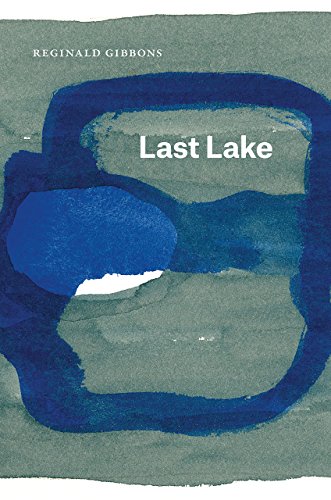
“The evening forgives the alleyway,” Reginald Gibbons writes in his tenth book of poems—but such startling simplicities are overwhelmed in us by the everyday and the epochal. Across the great range of Gibbons’s emblematic, vividly presented scenes, his language looks hard at and into experience and feeling. Words themselves have ideas, and have eyes—inwardly looking down through their own meanings, as the poet considers a lake in the Canadian north, a Chicago neighborhood, a horse caravan in Texas, a church choir, a bookshelf, or an archeological dig on the steppes near the Volga River. The last lake is the place of both awe and elegy.
Die Inhaltsangabe kann sich auf eine andere Ausgabe dieses Titels beziehen.
Über die Autorin bzw. den Autor
Reginald Gibbons is a Frances Hooper Professor of Arts and Humanities at Northwestern University. His poetry collections include National Book Award finalist Creatures of a Day and Slow Trains Overhead: Chicago Poems and Stories, the latter also published by the University of Chicago Press.
Auszug. © Genehmigter Nachdruck. Alle Rechte vorbehalten.
Last Lake
By Reginald GibbonsThe University of Chicago Press
Copyright © 2016 The University of Chicago
All rights reserved.
ISBN: 978-0-226-41745-5All rights reserved.
Contents
Acknowledgments,
ONE,
A Neighborhood in Chicago,
Memorial Day,
Belief,
Last Lake,
Canasta,
On Self and Soul,
Ritual,
A Bookshelf,
Divergence,
A Veteran,
TWO,
Dark Honey,
Note,
CHAPTER 1
A Neighborhood in Chicago
from a line of Gwendolyn Brooks
In its last halogen hours,
the evening forgives the alley-
ways ... wherein,
Every June morning, again,
here are new leaves, viridian.
They'll come to,
Tremble toward the brightening.
Instruments without musicians,
they will play
A silence, soothing last night's
bruised pianos and exhausted
horns. For your
instruction, each meager leaf,
shaped like, more intricate than, a
violin,
accompanies rats and moths
into the dawn, and a cougar,
hiding, with
wounded eye, a torn paw: in
halogen night, no escape — but
there's luck, grace.
Memorial Day
after Walt Whitman
A last formality is
running late, as a life can't,
this hot day. The final
ethereal glow of
the sun seems to come up from
underfoot in this parkland
of polysyllabic death.
These deep graves, two this time,
neatly cut into the earth,
await the arrivals,
and two adjacent heaps of
damp fertile glebe are half
blanketed by reticent
dark tarpaulins. After
the full moon's first moments of
horizon-magnified
fact and risen largesse, it
has contracted as our
heaven has passed it by and now
it floats above the crowns
of the inky trees and
well beyond bare roofs. It has
always been an entity
born dead — not a phantom, as
must be this son, a muddy
part of whom soared from cratered
waste lands far away before
landing here, and also
this veteran father,
whose heart staggered into
an ER and failed after
he heard what circumstance
had done to his one boy.
No horses — hearses, the first
two cars. A corps of six men —
they bear the heavy coffined
corpse of the father toward his
very small opening in
the planet; and six more
envoys of duty, with
much-practiced attentiveness,
slow-step the light son, an
imperfect cadaver with
handles, to his own last place.
White gloves lift up the draped
famed cloth, super-striped and
starry, from the younger
casket, fold it just so —
hands with hands over hands
in ritual honor,
a ceremony neither
of mystical creed nor
of doubter's midnights — then
they advance it to the one
who remains. She's looking
away from her burials,
down at the blades of moon grass.
She feels no great gut blows
from startled convulsive
big drums that shake the spirits
of mourners, nor any
whirring of equally
perilous small drums that
might reduce the silence.
The son is submitted as
lifeless organism to
dirt; the father's remains
descend into his pit
alongside, likewise on
tightly held ropes men slowly
let slip. (In foremost ranks of
a final unbecoming
these two fell alike.) The
ropes snake back up into
what's left of natural light —
remainder of the ancient
calculus of day and night.
From a boom box ten paces
away, the familiar
bugled notes say that the
journey of these remains
is done. Even if no grief
shadows the bugler, bugles
do sound it, word it — that
unacceptable sentence
of slow notes.
Distant, on
overtime, respectful, yet
much too near, a stranger
waits to start up a backhoe.
On such occasions, after
courage of soldiers or
folly of command or cold
wrong purposes among
patriarchs, lords, kings, and freed
madness in red valleys,
mountains, cities, villages,
in schools, shrines, sheds, beds, mud-brick
hearts, we have offered up our
mortally wounded, un-
comprehending remembrance.
We look down or away
and notice the impassive
grass under our bloody weight.
Belief
The lovely Director who
led us with her feathered hands
as she mouthed
...
„Über diesen Titel“ kann sich auf eine andere Ausgabe dieses Titels beziehen.
Suchergebnisse für Last Lake (Phoenix Poets)

Beispielbild für diese ISBN
Last Lake (Phoenix Poets)
Verlag:
University of Chicago Press, 2016
ISBN 10: 022641745X
ISBN 13: 9780226417455
Gebraucht
Paperback
Anbieter: ThriftBooks-Dallas, Dallas, TX, USA
Verkäuferbewertung 5 von 5 Sternen

Paperback. Zustand: Very Good. No Jacket. Former library book; May have limited writing in cover pages. Pages are unmarked. ~ ThriftBooks: Read More, Spend Less. Artikel-Nr. G022641745XI4N10
Gebraucht kaufen
EUR 5,54
Versand gratis
Versand innerhalb von USA
Versand innerhalb von USA
Anzahl: 1 verfügbar
Beispielbild für diese ISBN
Last Lake
Verlag:
University of Chicago Press, 2016
ISBN 10: 022641745X
ISBN 13: 9780226417455
Gebraucht
Softcover
Anbieter: Better World Books: West, Reno, NV, USA
Verkäuferbewertung 5 von 5 Sternen
Zustand: Very Good. Pages intact with possible writing/highlighting. Binding strong with minor wear. Dust jackets/supplements may not be included. Stock photo provided. Product includes identifying sticker. Better World Books: Buy Books. Do Good. Artikel-Nr. 16429598-6
Gebraucht kaufen
EUR 7,34
Versand gratis
Versand innerhalb von USA
Versand innerhalb von USA
Anzahl: 1 verfügbar
Foto des Verkäufers
Last Lake (Signed First Edition)
Verlag:
The University of Chicago Press, Chicago, IL, 2016
ISBN 10: 022641745X
ISBN 13: 9780226417455
Gebraucht
Softcover
Erstausgabe
Signiert
Anbieter: Jeff Hirsch Books, ABAA, Wadsworth, IL, USA
Verkäuferbewertung 5 von 5 Sternen
First edition and first printing. Softcover. 77 pages. A paperback original collection of poems from this underappreciated writer who was also the longtime editor of TriQuarterly. A fine copy in wrappers. Signed and warmly inscribed by Gibbons on the title page. Uncommon signed. Artikel-Nr. 194860
Gebraucht kaufen
EUR 17,35
EUR 5,90 Versand
Versand innerhalb von USA
Versand innerhalb von USA
Anzahl: 1 verfügbar
Beispielbild für diese ISBN
Last Lake
Anbieter: PBShop.store UK, Fairford, GLOS, Vereinigtes Königreich
Verkäuferbewertung 4 von 5 Sternen

PAP. Zustand: New. New Book. Shipped from UK. Established seller since 2000. Artikel-Nr. FW-9780226417455
Neu kaufen
EUR 25,23
EUR 3,78 Versand
Versand von Vereinigtes Königreich nach USA
Versand von Vereinigtes Königreich nach USA
Anzahl: 15 verfügbar
Beispielbild für diese ISBN
Last Lake (Phoenix Poets (Paperback))
Anbieter: Majestic Books, Hounslow, Vereinigtes Königreich
Verkäuferbewertung 4 von 5 Sternen
Zustand: New. pp. 96. Artikel-Nr. 371469198
Neu kaufen
EUR 26,63
EUR 7,47 Versand
Versand von Vereinigtes Königreich nach USA
Versand von Vereinigtes Königreich nach USA
Anzahl: 3 verfügbar
Beispielbild für diese ISBN
Last Lake
Anbieter: Revaluation Books, Exeter, Vereinigtes Königreich
Verkäuferbewertung 5 von 5 Sternen
Paperback. Zustand: Brand New. 77 pages. 9.00x5.50x0.20 inches. In Stock. Artikel-Nr. __022641745X
Neu kaufen
EUR 23,91
EUR 11,50 Versand
Versand von Vereinigtes Königreich nach USA
Versand von Vereinigtes Königreich nach USA
Anzahl: 2 verfügbar
Beispielbild für diese ISBN
Last Lake
Verlag:
The University of Chicago Press, 2016
ISBN 10: 022641745X
ISBN 13: 9780226417455
Neu
Softcover
Anbieter: Kennys Bookstore, Olney, MD, USA
Verkäuferbewertung 4 von 5 Sternen
Zustand: New. Series: Phoenix Poets. Num Pages: 96 pages. BIC Classification: DCF. Category: (G) General (US: Trade). Dimension: 216 x 140 x 10. Weight in Grams: 136. . 2016. Paperback. . . . . Books ship from the US and Ireland. Artikel-Nr. V9780226417455
Neu kaufen
EUR 27,53
EUR 8,84 Versand
Versand innerhalb von USA
Versand innerhalb von USA
Anzahl: Mehr als 20 verfügbar