
Verwandte Artikel zu The Encyclopedia of Chicago (Emersion: Emergent Village...
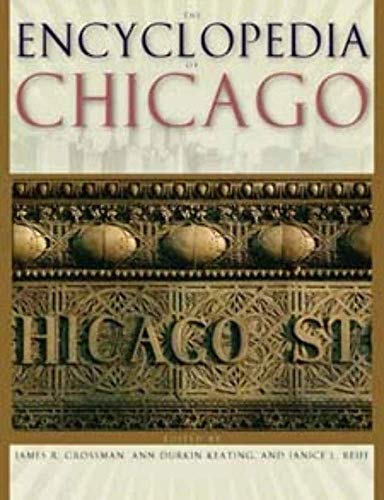
The Encyclopedia of Chicago (Emersion: Emergent Village resources for communities of faith) - Hardcover
Inhaltsangabe
One of the great American metropolises, Chicago rises out of the prairie in the heart of the country, buffeted by winds coming off the plains and cooled by the waters of the inland sea of Lake Michigan. Chicago is a city of size and mass, the cradle of modern architecture, the freight hub of the nation, a city built on slaughterhouses and cacophonous financial trading tempered by some of the finest cultural institutions in the world. While many histories have been written of the city, none can claim the scope and breadth of the long-awaited Encyclopedia of Chicago.
Developed by the Newberry Library with the cooperation of the Chicago Historical Society, The Encyclopedia of Chicago is the definitive historical reference on metropolitan Chicago. More than a decade in the making, the Encyclopedia brings together hundreds of historians, journalists, and experts on everything from airlines to Zoroastrians to explore all aspects of the rich world of Chicagoland, from its geological prehistory to the present.
The main alphabetical section of the Encyclopedia, comprising more than 1,400 entries, covers the full range of Chicago's neighborhoods, suburbs, and ethnic groups, as well as the city's cultural institutions, technology and science, architecture, religions, immigration, transportation, business history, labor, music, health and medicine, and hundreds of other topics. The Encyclopedia has the widest geographical reach of any city encyclopedia of its kind, encompassing eight of the region's counties, including suburbs. Nearly 400 thumbnail maps pinpoint Chicago neighborhoods and suburban municipalities; these maps are complemented by hundreds of black-and-white and color photographs and thematic maps that bring the history of metropolitan Chicago to life. Additionally, contributors have provided lengthy interpretive essays—woven into the alphabetical section but set off graphically—that take a long view of such topics as the built environment, literary images of Chicago, and the city's often legendary and passionate sports culture.
The Encyclopedia also offers a comprehensive biographical dictionary of more than 2,000 individuals important to Chicago history and a detailed listing of approximately 250 of the city's historically significant business enterprises. A color insert features a timeline of Chicago history and photo essays exploring nine pivotal years in this history.
The Encyclopedia of Chicago is one of the most significant historical projects undertaken in the last twenty years, and it has everything in it to engage the most curious historian as well as settle the most boisterous barroom dispute. If you think you know how Chicago got its name, if you have always wondered how the Chicago Fire actually started and how it spread, if you have ever marveled at the Sears Tower or the reversal of the Chicago River—if you have affection, admiration, and appreciation for this City of the Big Shoulders, this Wild Onion, this Urbs in Horto, then The Encyclopedia of Chicago is for you.
Developed by the Newberry Library with the cooperation of the Chicago Historical Society, The Encyclopedia of Chicago is the definitive historical reference on metropolitan Chicago. More than a decade in the making, the Encyclopedia brings together hundreds of historians, journalists, and experts on everything from airlines to Zoroastrians to explore all aspects of the rich world of Chicagoland, from its geological prehistory to the present.
The main alphabetical section of the Encyclopedia, comprising more than 1,400 entries, covers the full range of Chicago's neighborhoods, suburbs, and ethnic groups, as well as the city's cultural institutions, technology and science, architecture, religions, immigration, transportation, business history, labor, music, health and medicine, and hundreds of other topics. The Encyclopedia has the widest geographical reach of any city encyclopedia of its kind, encompassing eight of the region's counties, including suburbs. Nearly 400 thumbnail maps pinpoint Chicago neighborhoods and suburban municipalities; these maps are complemented by hundreds of black-and-white and color photographs and thematic maps that bring the history of metropolitan Chicago to life. Additionally, contributors have provided lengthy interpretive essays—woven into the alphabetical section but set off graphically—that take a long view of such topics as the built environment, literary images of Chicago, and the city's often legendary and passionate sports culture.
The Encyclopedia also offers a comprehensive biographical dictionary of more than 2,000 individuals important to Chicago history and a detailed listing of approximately 250 of the city's historically significant business enterprises. A color insert features a timeline of Chicago history and photo essays exploring nine pivotal years in this history.
The Encyclopedia of Chicago is one of the most significant historical projects undertaken in the last twenty years, and it has everything in it to engage the most curious historian as well as settle the most boisterous barroom dispute. If you think you know how Chicago got its name, if you have always wondered how the Chicago Fire actually started and how it spread, if you have ever marveled at the Sears Tower or the reversal of the Chicago River—if you have affection, admiration, and appreciation for this City of the Big Shoulders, this Wild Onion, this Urbs in Horto, then The Encyclopedia of Chicago is for you.
Die Inhaltsangabe kann sich auf eine andere Ausgabe dieses Titels beziehen.
Über die Autorin bzw. den Autor
James R. Grossman is Vice President for Research and Education at the Newberry Library and senior lecturer in history at the University of Chicago. Ann Durkin Keating is professor of history at North Central College in Naperville, IL. Janice L. Reiff is associate professor of history and interim director of the Oral History Program at UCLA.
Auszug. © Genehmigter Nachdruck. Alle Rechte vorbehalten.
THE ENCYCLOPEDIA OF CHICAGO
THE UNIVERSITY OF CHICAGO PRESS
Copyright © 2004 The Newberry LibraryAll right reserved.
ISBN: 978-0-226-31015-2
Contents
LIST OF MAPS..............................................................XISTAFF AND CONSULTANTS.....................................................XIIIACKNOWLEDGMENTS...........................................................XVCONTRIBUTORS..............................................................XXVINTRODUCTION..............................................................XXXMETROPOLITAN CHICAGO REFERENCE MAP........................................1A - Z ENTRIES.............................................................206THE CITY AS ARTIFACT......................................................542TIMELINE AND YEAR PAGES...................................................782MAPS IN COLOR.............................................................909DICTIONARY OF LEADING CHICAGO BUSINESSES, 1820 - 2000.....................955BIOGRAPHICAL DICTIONARY...................................................1001CHICAGO MAYORS............................................................1005CHICAGO METROPOLITAN POPULATION...........................................1047CREDITS...................................................................1053MAP SOURCES...............................................................1057INDEX
Chapter One
AAbolitionism. Chicago's antislavery community included a variety of activists and sympathizers, including former slaves and evangelical Christians from northeastern states. Among white Chicagoans, opposition to the extension of slavery into new territory was more popular than abolition. To many whites, abolitionist crusades seemed as much a threat to the Republic as slavery itself.
African American Chicagoans voiced unanimous opposition to slavery but risked reprisal if their actions brought individuals to public notice. Even so, the community, which included many former slaves, took seriously its commitment to UNDERGROUND RAILROAD activity assisting fugitive slaves. John Jones, a prosperous free black tailor, often served as a link between African Americans and white abolitionists. It was to John and Mary Jones's house that John Brown brought his band of militant abolitionists when they came through Chicago in 1859 on their way to Harpers Ferry, Virginia.
Abolitionists first organized in Chicago through churches, beginning around 1839 with prayer meetings led by the minister of the First Presbyterian Church. Members of other churches also participated, on the grounds that slaveholding was a sin. Quinn Chapel African Methodist Episcopal Church also sponsored abolitionist activities, including an organized watch for slave catchers. Institutional support for the abolitionist movement culminated in 1862 when several Chicago churches voted to send a delegation to plead with President Lincoln for an emancipation policy.
Secular abolitionist institutions included the Chicago Anti-Slavery Society and the Chicago Female Anti-Slavery Society. Chicago abolitionists circulated petitions against slavery to be sent to the U.S. Congress. The Western Citizen, a Chicago-based NEWSPAPER, served as the official organ of the Illinois Liberty Party and was the primary abolitionist press for Illinois, Indiana, Wisconsin, and Iowa.
Abolitionism enjoyed little success at the ballot box, although one alderman, Ira Miltimore, was elected in 1844, with Liberty Party support. In 1848, the Western Citizen endorsed Martin Van Buren, the Free Soil Party's presidential candidate, as the best chance to elect an antislavery man and found itself in step with a majority of Chicago voters. Thereafter, most Chicago abolitionists who voted became a small, radical portion of the free-soil, anti-Nebraska, and Republican Party coalitions.
Linda J. Evans
See also: Civil Rights Movements; Fenianism; Politics; Whigs
Further reading: Gliozzo, Charles A. "John Jones: A Study of a Black Chicagoan." Illinois Historical Journal 80.3 (Autumn 1987). Mahoney, Olivia. "Black Abolitionists." Chicago History 20.1-2 (Spring-Summer 1991).
Accounting. Chicago's emergence as a major center of professional accountancy began during the 1890s. Initially, Chicago businesses relied on semiprofessional bookkeepers who were usually ill-prepared to develop innovative responses to the bewildering measurement problems associated with new technologies, legal contracts, transactions, management practices, or organizational forms.
A major focus of the early drive to professionalize accounting centered on the founding in 1897 of a state professional association that later became the Illinois Society of Certified Public Accountants. Public accountants provided three distinct services: (1) certification of financial statements; (2) consulting services concerning accounting systems; and (3) tax compliance and planning services after the passage of the federal corporate excise tax (1909) and the federal corporate income tax (1913). The Illinois licensing law (1903) was similar to New York's-both required an examination and practical experience-but the Illinois law provided for reciprocal licensing for practitioners certified in other jurisdictions. Besides encouraging more competitive markets, reciprocity facilitated the building of branch offices and interstate practices.
A unique aspect of Chicago's leading accounting practices was the importance of consulting. The central role of consulting was illustrated by the experience of two early public accounting firms that eventually grew to be giants, Arthur Andersen & Co. and McKinsey & Co. The initial impetus came from a plethora of small- and medium-sized businesses in the Chicago area whose managements were often skilled in either manufacturing or marketing but were not knowledgeable about finance and accounting.
To help clients overcome these weaknesses, Arthur Andersen created a new service in the 1920s known as financial and industrial "investigations." These were specialized studies employing accounting analysis to evaluate markets, organizational structures, plants, or products. Besides assisting business operators, they were also used by bankers in planning mergers or new securities issues. In 1932, this proficiency led to Andersen's selection as the monitor for the financial restoration of Samuel Insull's bankrupt utilities empire. Beginning in the 1960s, Andersen Consulting registered strong, sustained growth because of the advent of new opportunities attributable to the use of electronic data processing. Under the leadership of Leonard Spacek, the firm assisted clients in converting from manual-mechanical to computer-based accounting systems. In 1989, Arthur Andersen & Co. elected to spin off Andersen Consulting, later renamed Accenture, which had grown to become the world's largest consulting practice. The remaining firm, known simply as Andersen, lost its accounting business suddenly in 2002 because of its association with a financial fraud scandal at Enron corporation, one of its clients.
McKinsey & Co. was formed by James O. McKinsey, a CPA and University of Chicago professor. McKinsey's pioneering Budgetary Control (1922) established the intellectual underpinning for a service specialization that supported the formation of his firm three years later and eventually drew it into consultancy. Although budgeting was a practice then thought primarily relevant to the fund accounting procedures of governmental enterprises, McKinsey demonstrated...
„Über diesen Titel“ kann sich auf eine andere Ausgabe dieses Titels beziehen.
Suchergebnisse für The Encyclopedia of Chicago (Emersion: Emergent Village...

Beispielbild für diese ISBN
The Encyclopedia of Chicago
Verlag:
University of Chicago Press, 2004
ISBN 10: 0226310159
ISBN 13: 9780226310152
Gebraucht
Hardcover
Anbieter: ThriftBooks-Dallas, Dallas, TX, USA
Verkäuferbewertung 5 von 5 Sternen

Hardcover. Zustand: Fair. No Jacket. Former library book; Missing dust jacket; Readable copy. Pages may have considerable notes/highlighting. ~ ThriftBooks: Read More, Spend Less. Artikel-Nr. G0226310159I5N11
Gebraucht kaufen
EUR 10,30
Versand gratis
Versand innerhalb von USA
Versand innerhalb von USA
Anzahl: 1 verfügbar
Beispielbild für diese ISBN
The Encyclopedia of Chicago
Verlag:
University of Chicago Press, 2004
ISBN 10: 0226310159
ISBN 13: 9780226310152
Gebraucht
Hardcover
Anbieter: ThriftBooks-Dallas, Dallas, TX, USA
Verkäuferbewertung 5 von 5 Sternen
Hardcover. Zustand: Good. No Jacket. Missing dust jacket; Pages can have notes/highlighting. Spine may show signs of wear. ~ ThriftBooks: Read More, Spend Less. Artikel-Nr. G0226310159I3N01
Gebraucht kaufen
EUR 10,30
Versand gratis
Versand innerhalb von USA
Versand innerhalb von USA
Anzahl: 1 verfügbar
Beispielbild für diese ISBN
The Encyclopedia of Chicago
Verlag:
University of Chicago Press, 2004
ISBN 10: 0226310159
ISBN 13: 9780226310152
Gebraucht
Hardcover
Anbieter: Better World Books: West, Reno, NV, USA
Verkäuferbewertung 5 von 5 Sternen
Zustand: Very Good. Former library copy. Pages intact with possible writing/highlighting. Binding strong with minor wear. Dust jackets/supplements may not be included. Includes library markings. Stock photo provided. Product includes identifying sticker. Better World Books: Buy Books. Do Good. Artikel-Nr. 4485437-6
Gebraucht kaufen
EUR 11,95
Versand gratis
Versand innerhalb von USA
Versand innerhalb von USA
Anzahl: 1 verfügbar
Beispielbild für diese ISBN
The Encyclopedia of Chicago
Verlag:
University of Chicago Press, 2004
ISBN 10: 0226310159
ISBN 13: 9780226310152
Gebraucht
Hardcover
Anbieter: Better World Books, Mishawaka, IN, USA
Verkäuferbewertung 5 von 5 Sternen
Zustand: Very Good. Former library copy. Pages intact with possible writing/highlighting. Binding strong with minor wear. Dust jackets/supplements may not be included. Includes library markings. Stock photo provided. Product includes identifying sticker. Better World Books: Buy Books. Do Good. Artikel-Nr. 4485437-6
Gebraucht kaufen
EUR 11,95
Versand gratis
Versand innerhalb von USA
Versand innerhalb von USA
Anzahl: 2 verfügbar
Beispielbild für diese ISBN
The Encyclopedia of Chicago
Verlag:
University of Chicago Press, 2004
ISBN 10: 0226310159
ISBN 13: 9780226310152
Gebraucht
Hardcover
Anbieter: Better World Books, Mishawaka, IN, USA
Verkäuferbewertung 5 von 5 Sternen
Zustand: Good. Pages intact with minimal writing/highlighting. The binding may be loose and creased. Dust jackets/supplements are not included. Stock photo provided. Product includes identifying sticker. Better World Books: Buy Books. Do Good. Artikel-Nr. 4937002-6
Gebraucht kaufen
EUR 11,95
Versand gratis
Versand innerhalb von USA
Versand innerhalb von USA
Anzahl: 2 verfügbar
Beispielbild für diese ISBN
The Encyclopedia of Chicago
Verlag:
University of Chicago Press, 2004
ISBN 10: 0226310159
ISBN 13: 9780226310152
Gebraucht
Hardcover
Anbieter: Wonder Book, Frederick, MD, USA
Verkäuferbewertung 5 von 5 Sternen
Zustand: Good. Good condition. No Dust Jacket A copy that has been read but remains intact. May contain markings such as bookplates, stamps, limited notes and highlighting, or a few light stains. NOT AVAILABLE FOR SHIPMENT OUTSIDE OF THE UNITED STATES. Artikel-Nr. K02A-01255
Gebraucht kaufen
EUR 13,32
Versand gratis
Versand innerhalb von USA
Versand innerhalb von USA
Anzahl: 1 verfügbar
Foto des Verkäufers
The Encyclopedia of Chicago
Verlag:
University of Chicago Press, 2004
ISBN 10: 0226310159
ISBN 13: 9780226310152
Gebraucht
Hardcover
Anbieter: Goodwill Northern Illinois, Rockford, IL, USA
Verkäuferbewertung 5 von 5 Sternen
Zustand: good. The cover shows wear with possible indentations, creases, and small tears. The pages show wear that may include evidence of handling, smudges, and edge discoloration markings stains . The book may or may not have mild corner dings. The imagery is a stock photo of the item. Artikel-Nr. 4LFSZV000KU4_ns
Gebraucht kaufen
EUR 13,41
Versand gratis
Versand innerhalb von USA
Versand innerhalb von USA
Anzahl: 1 verfügbar
Beispielbild für diese ISBN
The Encyclopedia of Chicago
Verlag:
University Of Chicago Press, 2004
ISBN 10: 0226310159
ISBN 13: 9780226310152
Gebraucht
Hardcover
Anbieter: Anybook.com, Lincoln, Vereinigtes Königreich
Verkäuferbewertung 5 von 5 Sternen
Zustand: Good. This is an ex-library book and may have the usual library/used-book markings inside.This book has hardback covers. In good all round condition. Dust jacket in good condition. Please note the Image in this listing is a stock photo and may not match the covers of the actual item,3150grams, ISBN:9780226310152. Artikel-Nr. 5849568
Gebraucht kaufen
EUR 12,76
EUR 22,03 Versand
Versand von Vereinigtes Königreich nach USA
Versand von Vereinigtes Königreich nach USA
Anzahl: 1 verfügbar
Beispielbild für diese ISBN
The Encyclopedia of Chicago
Verlag:
University Of Chicago Press, 2004
ISBN 10: 0226310159
ISBN 13: 9780226310152
Gebraucht
Hardcover
Anbieter: Anybook.com, Lincoln, Vereinigtes Königreich
Verkäuferbewertung 5 von 5 Sternen
Zustand: Good. This is an ex-library book and may have the usual library/used-book markings inside.This book has hardback covers. In good all round condition. Dust jacket in poor condition. Please note the Image in this listing is a stock photo and may not match the covers of the actual item,3100grams, ISBN:9780226310152. Artikel-Nr. 5849564
Gebraucht kaufen
EUR 12,76
EUR 22,03 Versand
Versand von Vereinigtes Königreich nach USA
Versand von Vereinigtes Königreich nach USA
Anzahl: 1 verfügbar
Beispielbild für diese ISBN
The Encyclopedia of Chicago (Emersion: Emergent Village resources for communities of faith)
Verlag:
University of Chicago Press, 2004
ISBN 10: 0226310159
ISBN 13: 9780226310152
Gebraucht
Hardcover
Anbieter: WorldofBooks, Goring-By-Sea, WS, Vereinigtes Königreich
Verkäuferbewertung 5 von 5 Sternen
Hardback. Zustand: Very Good. The book has been read, but is in excellent condition. Pages are intact and not marred by notes or highlighting. The spine remains undamaged. Artikel-Nr. GOR008740792
Gebraucht kaufen
EUR 50,33
EUR 6,59 Versand
Versand von Vereinigtes Königreich nach USA
Versand von Vereinigtes Königreich nach USA
Anzahl: 2 verfügbar