
Verwandte Artikel zu Wolves on the Hunt: The Behavior of Wolves Hunting...
Inhaltsangabe
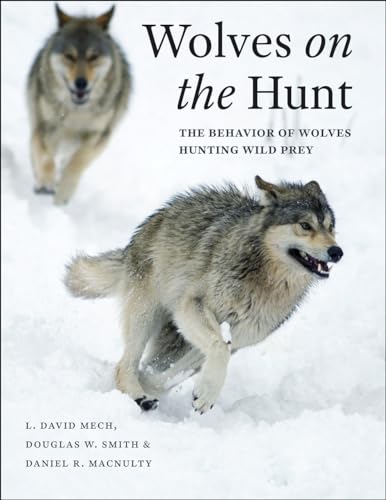
The interactions between apex predators and their prey are some of the most awesome and meaningful in nature—displays of strength, endurance, and a deep coevolutionary history. And there is perhaps no apex predator more impressive and important in its hunting—or more infamous, more misjudged—than the wolf. Because of wolves’ habitat, speed, and general success at evading humans, researchers have faced great obstacles in studying their natural hunting behaviors. The first book to focus explicitly on wolf hunting of wild prey, Wolves on the Hunt seeks to fill these gaps in our knowledge and understanding.
Combining behavioral data, thousands of hours of original field observations, research in the literature, a wealth of illustrations, and—in the e-book edition and online—video segments from cinematographer Robert K. Landis, the authors create a compelling and complex picture of these hunters. The wolf is indeed an adept killer, able to take down prey much larger than itself. While adapted to hunt primarily hoofed animals, a wolf—or especially a pack of wolves—can kill individuals of just about any species. But even as wolves help drive the underlying rhythms of the ecosystems they inhabit, their evolutionary prowess comes at a cost: wolves spend one-third of their time hunting—the most time consuming of all wolf activities—and success at the hunt only comes through traveling long distances, persisting in the face of regular failure, detecting and taking advantage of deficiencies in the physical condition of individual prey, and through ceaseless trial and error, all while risking injury or death.
By describing and analyzing the behaviors wolves use to hunt and kill various wild prey—including deer, moose, caribou, elk, Dall sheep, mountain goats, bison, musk oxen, arctic hares, beavers, and others—Wolves on the Hunt provides a revelatory portrait of one of nature’s greatest hunters.
Combining behavioral data, thousands of hours of original field observations, research in the literature, a wealth of illustrations, and—in the e-book edition and online—video segments from cinematographer Robert K. Landis, the authors create a compelling and complex picture of these hunters. The wolf is indeed an adept killer, able to take down prey much larger than itself. While adapted to hunt primarily hoofed animals, a wolf—or especially a pack of wolves—can kill individuals of just about any species. But even as wolves help drive the underlying rhythms of the ecosystems they inhabit, their evolutionary prowess comes at a cost: wolves spend one-third of their time hunting—the most time consuming of all wolf activities—and success at the hunt only comes through traveling long distances, persisting in the face of regular failure, detecting and taking advantage of deficiencies in the physical condition of individual prey, and through ceaseless trial and error, all while risking injury or death.
By describing and analyzing the behaviors wolves use to hunt and kill various wild prey—including deer, moose, caribou, elk, Dall sheep, mountain goats, bison, musk oxen, arctic hares, beavers, and others—Wolves on the Hunt provides a revelatory portrait of one of nature’s greatest hunters.
Die Inhaltsangabe kann sich auf eine andere Ausgabe dieses Titels beziehen.
Über die Autorin bzw. den Autor
L. David Mech is a senior research scientist with the US Geological Survey and an adjunct professor in the Department of Fisheries, Wildlife, and Conservation Biology and Department of Ecology, Evolution, and Behavior at the University of Minnesota. He is the author or editor of many books, including Wolves: Behavior, Ecology, and Conservation, coedited by Luigi Boitani and published by the University of Chicago Press. Douglas W. Smith is a senior wildlife biologist and the Wolf Project Leader in Yellowstone National Park. He is coauthor most recently of Decade of the Wolf: Returning the Wild to Yellowstone. Daniel R. MacNulty is an assistant professor of wildlife ecology at Utah State University.
Auszug. © Genehmigter Nachdruck. Alle Rechte vorbehalten.
Wolves on the Hunt
The Behavior of Wolves Hunting Wild Prey
By L. David Mech, Douglas W. Smith, Daniel R. MacNultyThe University of Chicago Press
Copyright © 2015 University of Chicago
All rights reserved.
ISBN: 978-0-226-25514-9All rights reserved.
Contents
1. Foreword,
2. Preface,
3. Acknowledgments,
4. Introduction: The Wolf as a Killing Machine,
5. 1 White-Tailed Deer,
6. 2 Moose,
7. 3 Caribou,
8. 4 Elk,
9. 5 Mountain Sheep and Goats,
10. 6 Bison,
11. 7 Musk Oxen,
12. 8 Miscellaneous Prey,
13. 9 Conclusion,
14. Appendix: List of Scientific Names of Birds and Mammals Mentioned,
15. Literature Cited,
16. Author Index,
17. Subject Index,
18. Plates,
CHAPTER 1
White-Tailed Deer
To the public, and even to some wildlife biologists, the white-tailed deer is seen as easy prey for wolves. This view probably results from the fact that deer represent one of the smallest of wolf prey and because wolves are large and live in packs. Compared superficially with moose or bison, deer would seem to be much easier prey. However, to capture and kill deer, wolves must first find them, catch up to them, and confront them. At each step in this process deer possess effective antipredator strategies. These traits help explain why deer and wolves can continually coexist without either one going extinct (Olson 1938; Stenlund 1955; Mech 2009), except under unusual circumstances (Mech and Karns 1977; Nelson and Mech 2006).
Science may know more about the interactions between wolves and white-tailed deer than it does about wolf relations with any of its other prey, except moose and elk. This is the case for two main reasons. First, some of the earliest studies of wolves were conducted where white-tailed deer were the wolf's main prey (Olson 1938; Stenlund 1955; Mech 1966b; Rutter and Pimlott 1968; Pimlott et al. 1969; Mech and Frenzel 1971). Second, much of the information results from the only long-term, intensive study that has employed radio tracking of both wolves and their prey. That study of wolves began in 1968 in the Superior National Forest of northeastern Minnesota, and incorporated radio tracking of deer starting in 1973. Through 2006, this study had livetrapped 712 wolves and radio-collared most of them, and through 2007, radio-collared 347 deer (Mech 2009). Thus numerous publications have synthesized and discussed wolf behavior hunting deer (Mech 1970, 1984; Mech and Frenzel 1971; Nelson and Mech 1981, 1993), and many others have synthesized information about wolf-deer interactions in general (Kolenosky 1972; Fritts and Mech 1981; Kunkel and Pletscher 1999; Theberge and Theberge 2004; DelGiudice et al. 2009; Ballard 2011).
Here we highlight the major findings from the above studies of wolf hunting behavior and update them with information published since and with additional information gleaned from the many unpublished accounts and observations below. Unless otherwise mentioned, information in this chapter applies only to white-tailed deer.
In current wolf range, white-tailed deer are distributed throughout the Southwest, Midwest, and West of the United States and throughout southern and northwest Canada, with densities lower in extreme northwest Canada. Thus wolves prey on deer in many areas. That deer have been able to extend their range farther and farther north in the face of wolf predation (Heffelfinger 2011) is evidence of the species' considerably effective antipredator traits and behavior.
Adult female deer that live in wolf range generally weigh 70–80 kg (Mech and McRoberts 1990), and males weigh up to 180 kg (Sauer 1984). Only males possess antlers, which are fully hardened in fall and retained for a few months of fall and winter. All deer except newborns sport small, sharp, pointed hooves, which can kill a wolf (Frijlink 1977; Nelson and Mech 1990) or can alert other deer to danger (Caro et al. 1995), and all possess a conspicuous fanlike tail that is white underneath and that the deer "flags" or raises when disturbed.
Most deer occupy home ranges of about 0.4–7.0 km2, with most females remaining close to where they are born while males disperse (Nelson and Mech 1981). Females generally produce their fawns relatively close to where they themselves were born, and a matriarchal society develops around them with offspring home ranges often overlapping those of their mothers (Nelson and Mech 1981). Thus many deer home ranges fit within a single wolf-pack territory (fig. 1.1). Like most northern ungulates, deer begin gaining weight in spring and reach their peak weight in midautumn and their nadir in late winter or early spring (DelGiudice et al. 1992).
The weight and nutritional condition that deer lose throughout winter is directly related to snow depth and temperature (Verme 1963). Further, if winter conditions are extremely poor (deep snow primarily) or favorable, there is evidence that the extreme effect (positive or negative) on an individual deer's nutritional condition can accumulate over consecutive winters (Mech et al. 1987). Thus a series of severe winters could result in deer of poor condition, or vice versa. (This finding has since been both challenged [Messier 1991, 1995; Garroway and Broders 2005] and supported [Feldhamer et al. 1989; McRoberts et al. 1995; Post and Stenseth 1998; Patterson and Power 2002]).
There is also evidence that the extreme effects of snow depths can even persist across generations of deer, such that deer whose grandmothers lived through a winter of deep snow while gravid with offspring produced fawns whose own offspring (the F generation) were in poorer condition regardless of the condition of the mothers (i.e., the F generation [Mech et al. 1991]). Although this finding seems surprising, it was confirmed by Monteith et al. (2009) for deer and by Lumey and Stein (1997) and Bygren et al. (2001) for humans. (A possible mechanism is epigenetics [Pembrey 1996]). Of course, a prey animal's condition is extremely important to escaping predators.
In much of their northern range, many deer migrate between their summer ranges and winter "yards" or areas where deer from as far as 40 km away (Nelson and Mech 1981) concentrate. Usually by late winter most deer have migrated to winter yarding areas if snow is deep enough and/or temperatures low enough (Nelson and Mech 1981). In spring, deer migrate back to their summer ranges as snow melts and temperatures rise.
At least one important function of this yarding is for each individual to reduce its risk of predation. Nelson and Mech (1981, 36) explained this functioning as follows:
Yarding behavior provides several significant antipredator benefits: (1) The mere congregation of many animals creates a system of trails which can become escape routes during chases by predators. (2) Herding provides greater sensory capability and makes gregarious animals less vulnerable than solitary individuals to undetected predator approach (Galton 1871, Dimond and Lazarus 1974, Treisman 1975, and references therein). (3) Social grouping may confuse the search image of predators (McCullough 1969). One way such confusion may operate is suggested by observations of 15 deer groups in our study area chased by wolves in winter (Mech unpublished). The groups tended to split up when closely pursued, just as moose do (Mech 1966[a]). Such a maneuver could give group members an added chance of survival as the wolves tried to choose which individual to chase. (4) Grouping probably would expose the more vulnerable members when...
„Über diesen Titel“ kann sich auf eine andere Ausgabe dieses Titels beziehen.
Suchergebnisse für Wolves on the Hunt: The Behavior of Wolves Hunting...

Beispielbild für diese ISBN
Wolves on the Hunt
Anbieter: PBShop.store US, Wood Dale, IL, USA
Verkäuferbewertung 5 von 5 Sternen

HRD. Zustand: New. New Book. Shipped from UK. Established seller since 2000. Artikel-Nr. WG-9780226255149
Beispielbild für diese ISBN
Wolves on the Hunt
Anbieter: PBShop.store UK, Fairford, GLOS, Vereinigtes Königreich
Verkäuferbewertung 5 von 5 Sternen
HRD. Zustand: New. New Book. Shipped from UK. Established seller since 2000. Artikel-Nr. WG-9780226255149
Neu kaufen
EUR 56,22
EUR 7,95 Versand
Versand von Vereinigtes Königreich nach USA
Versand von Vereinigtes Königreich nach USA
Anzahl: 11 verfügbar
Beispielbild für diese ISBN
Wolves on the Hunt The Behavior of Wolves Hunting Wild Prey
Anbieter: Revaluation Books, Exeter, Vereinigtes Königreich
Verkäuferbewertung 5 von 5 Sternen
Hardcover. Zustand: Brand New. 208 pages. 11.50x9.00x0.75 inches. In Stock. Artikel-Nr. __022625514X
Neu kaufen
EUR 54,87
EUR 14,71 Versand
Versand von Vereinigtes Königreich nach USA
Versand von Vereinigtes Königreich nach USA
Anzahl: 2 verfügbar
Beispielbild für diese ISBN
Wolves on the Hunt
Anbieter: Majestic Books, Hounslow, Vereinigtes Königreich
Verkäuferbewertung 4 von 5 Sternen

Zustand: New. pp. 208. Artikel-Nr. 322533845
Neu kaufen
EUR 65,20
EUR 7,65 Versand
Versand von Vereinigtes Königreich nach USA
Versand von Vereinigtes Königreich nach USA
Anzahl: 3 verfügbar
Beispielbild für diese ISBN
Wolves on the Hunt: The Behavior of Wolves Hunting Wild Prey
Anbieter: Ria Christie Collections, Uxbridge, Vereinigtes Königreich
Verkäuferbewertung 5 von 5 Sternen
Zustand: New. In English. Artikel-Nr. ria9780226255149_new
Neu kaufen
EUR 61,85
EUR 17,58 Versand
Versand von Vereinigtes Königreich nach USA
Versand von Vereinigtes Königreich nach USA
Anzahl: 11 verfügbar
Beispielbild für diese ISBN
Wolves on the Hunt: The Behavior of Wolves Hunting Wild Prey
Anbieter: Kennys Bookstore, Olney, MD, USA
Verkäuferbewertung 5 von 5 Sternen
Zustand: New. By describing and analyzing the behaviors wolves use to hunt and kill various wild prey - including deer, moose, caribou, elk, Dall sheep, mountain goats, bison, muskoxen, arctic hares, beavers, and others, this book provides a revelatory portrait of one of nature's greatest hunters. Num Pages: 208 pages, 28 colour plates, 44 halftones, 3 line drawings, 6 tables. BIC Classification: PSVP; PSVW7. Category: (UP) Postgraduate, Research & Scholarly. Dimension: 288 x 227 x 29. Weight in Grams: 916. . 2015. Hardcover. . . . . Books ship from the US and Ireland. Artikel-Nr. V9780226255149
Neu kaufen
EUR 89,80
EUR 9,33 Versand
Versand innerhalb von USA
Versand innerhalb von USA
Anzahl: 11 verfügbar