
On the Run: Fugitive Life in an American City (Fieldwork Encounters and Discoveries) - Hardcover
Buch 11 von 18: Fieldwork Encounters and Discoveries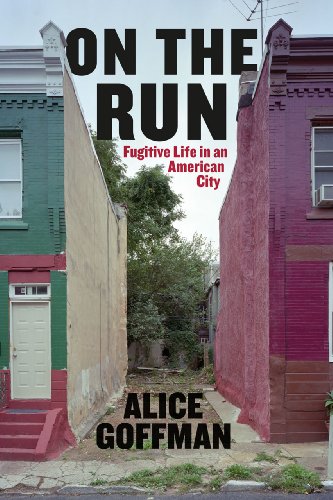
Inhaltsangabe
Forty years in, the War on Drugs has done almost nothing to prevent drugs from being sold or used, but it has nonetheless created a little-known surveillance state in America’s most disadvantaged neighborhoods. Arrest quotas and high-tech surveillance techniques criminalize entire blocks, and transform the very associations that should stabilize young lives—family, relationships, jobs—into liabilities, as the police use such relationships to track down suspects, demand information, and threaten consequences.
Alice Goffman spent six years living in one such neighborhood in Philadelphia, and her close observations and often harrowing stories reveal the pernicious effects of this pervasive policing. Goffman introduces us to an unforgettable cast of young African American men who are caught up in this web of warrants and surveillance—some of them small-time drug dealers, others just ordinary guys dealing with limited choices. All find the web of presumed criminality, built as it is on the very associations and friendships that make up a life, nearly impossible to escape. We watch as the pleasures of summer-evening stoop-sitting are shattered by the arrival of a carful of cops looking to serve a warrant; we watch—and can’t help but be shocked—as teenagers teach their younger siblings and cousins how to run from the police (and, crucially, to keep away from friends and family so they can stay hidden); and we see, over and over, the relentless toll that the presumption of criminality takes on families—and futures.
While not denying the problems of the drug trade, and the violence that often accompanies it, through her gripping accounts of daily life in the forgotten neighborhoods of America's cities, Goffman makes it impossible for us to ignore the very real human costs of our failed response—the blighting of entire neighborhoods, and the needless sacrifice of whole generations.
Alice Goffman spent six years living in one such neighborhood in Philadelphia, and her close observations and often harrowing stories reveal the pernicious effects of this pervasive policing. Goffman introduces us to an unforgettable cast of young African American men who are caught up in this web of warrants and surveillance—some of them small-time drug dealers, others just ordinary guys dealing with limited choices. All find the web of presumed criminality, built as it is on the very associations and friendships that make up a life, nearly impossible to escape. We watch as the pleasures of summer-evening stoop-sitting are shattered by the arrival of a carful of cops looking to serve a warrant; we watch—and can’t help but be shocked—as teenagers teach their younger siblings and cousins how to run from the police (and, crucially, to keep away from friends and family so they can stay hidden); and we see, over and over, the relentless toll that the presumption of criminality takes on families—and futures.
While not denying the problems of the drug trade, and the violence that often accompanies it, through her gripping accounts of daily life in the forgotten neighborhoods of America's cities, Goffman makes it impossible for us to ignore the very real human costs of our failed response—the blighting of entire neighborhoods, and the needless sacrifice of whole generations.
Die Inhaltsangabe kann sich auf eine andere Ausgabe dieses Titels beziehen.
Über die Autorin bzw. den Autor
Alice Goffman is assistant professor of sociology at the University of Wisconsin–Madison. She lives in Madison.
Auszug. © Genehmigter Nachdruck. Alle Rechte vorbehalten.
On the Run
Fugitive Life in an American City
By Alice GoffmanThe University of Chicago Press
Copyright © 2014 The University of Chicago
All rights reserved.
ISBN: 978-0-226-13671-4All rights reserved.
Contents
Prologue,
Preface,
Introduction,
1. The 6th Street Boys and Their Legal Entanglements,
2. The Art of Running,
3. When the Police Knock Your Door In,
4. Turning Legal Troubles into Personal Resources,
5. The Social Life of Criminalized Young People,
6. The Market in Protections and Privileges,
7. Clean People,
Conclusion: A Fugitive Community,
Epilogue: Leaving 6th Street,
Acknowledgments,
Appendix: A Methodological Note,
Notes,
CHAPTER 1
The 6th Street Boys and Their Legal Entanglements
CHUCK AND TIM
On quiet afternoons, Chuck would sometimes pass the time by teaching his twelve-year-old brother, Tim, how to run from the police. They'd sit side by side on the iron back-porch steps of their two-story home, facing the shared concrete alley that connects the small fenced-in backyards of their block to those of the houses on the next.
"What you going to do when you hear the sirens?" Chuck asked.
"I'm out," his little brother replied.
"Where you running to?"
"Here."
"You can't run here—they know you live here."
"I'ma hide in the back room in the basement."
"You think they ain't tearing down that little door?"
Tim shrugged.
"You know Miss Toya?"
"Yeah."
"You can go over there."
"But I don't even know her like that."
"Exactly."
"Why I can't go to Uncle Jean's?"
"'Cause they know that's your uncle. You can't go to nobody that's connected to you."
Tim nodded his head, seeming happy to get his brother's attention no matter what he was saying.
Chuck was the eldest of three brothers. He shared a small, second-floor bedroom with Tim, seven years his junior, and Reggie, born right between them. Reggie had left for juvenile detention centers by the time he turned eleven, so Tim didn't know his middle brother very well. He looked up to Chuck almost like a father.
When Tim was a baby, his dad had moved down to South Carolina and married a woman there; he did not keep in touch. Reggie's father was worse: an in-the-way (no-account) man of no consequence or merit, in prison on long bids and then out for stints of drunken robberies. Reggie said he wouldn't recognize him in the street. By contrast, Chuck's father came around a lot during his early years, a fact that Chuck sometimes mentioned when trying to explain why he knew right from wrong and his younger brothers did not.
The boys' mother, Miss Linda, had been five years into a heavy crack habit when she became pregnant with Chuck, and continued using as the boys grew up. With welfare cuts the family had very little government assistance, and Miss Linda never could hold a job for more than a few months at a time. Her father's post office pension paid the household bills, but he didn't pay for food or clothes or school supplies. He said it was beyond what he could do, and not his responsibility anyway.
At thirteen Chuck began working for a local dealer, which meant that he could buy food for himself and Tim instead of asking his mother for money she didn't have. His access to crack also meant that he could better regulate his mother's addiction. Now she came to him to get drugs, and mostly stopped prostituting herself and selling off their household possessions when she needed a hit. In high school Chuck got arrested a number of times, but the cases didn't stick and he continued working for the dealer.
By his sophomore year, Chuck's legs were sticking out past the edge of the bunk bed he shared with Tim. He cleared out the unfinished basement and moved his mattress and clothing down there. The basement flooded and smelled like mildew and sometimes the rats bit him, but at least he had his own space.
Tim was eight when Chuck moved out of their room, and he tried to put a brave face on it. When he couldn't sleep, he padded down to the basement and crawled into bed with his brother.
In his senior year, when we met, Chuck stood six feet tall and had a build shaped by basketball and boxing—his two favorite sports. That winter, he got into a fight in the school yard with a kid who had called his mom a crack whore. According to the police report, Chuck didn't hurt the other guy much, only pushed his face into the snow, but the school cops charged him with aggravated assault. It didn't matter, Chuck said, that he was on the basketball team, and making Cs and Bs. Since he'd just turned eighteen, the aggravated assault case landed him in the Curran-Fromhold Correctional Facility, a large pink and gray county jail on State Road in Northeast Philadelphia, known locally as CFCF or simply the F.
About a month after Chuck went to jail, Tim stopped speaking. He would nod his head yes or no, but didn't say any words. When Chuck called home from jail he asked his mother to put Tim on the phone, and he would talk to his little brother about what he imagined was happening back at home.
"Mike prolly don't be coming around no more, now that his baby-mom about to pop. She probably big as shit right now. If it's a boy he going to be skinny like his pops, but if it's a girl she'll be a fat-ass like her mom."
Tim never answered, but sometimes he smiled. Chuck kept talking until his minutes ran out.
In his letters and phone calls home, Chuck tried to persuade his mother to take his little brother to the jail for visiting hours. "He just need to see me, like, he ain't got nobody out there."
Miss Linda didn't have the state ID required to visit inmates in county jail, only a social security card and an old voter registration card, and anyway she hated seeing her sons locked up. Chuck's friends Mike and Alex offered to take Tim along with them, but since Tim was a minor, his parent or guardian had to go, too.
Eight months after Chuck was taken into custody, the judge threw out most of the charges and Chuck came home, with only a couple hundred dollars in court fees hanging over his head. When Tim saw his brother walking up the alley, he cried and clung to his leg. He tried to stay awake through the evening festivities but finally fell asleep with his head in Chuck's lap.
Over the next few months, Chuck patiently coaxed his brother to start speaking again. He stayed in most nights and played video games with Tim on the old TV in the living room. He even moved back up to Tim's room for a while, so Tim wouldn't be alone at night. He extended his bed with a folding chair, propping his legs up on it and cursing when they fell through.
"He'll get it back," Chuck said. "He just needs some QT [quality time]."
Tim nodded hopefully.
The following fall, Chuck tried to re-enroll as a senior, but the high school would not admit him; he had already turned nineteen. Then the judge on his old assault case issued a warrant for his arrest, because he hadn't paid $225 in court fees that came due a few weeks after his assault case ended. He spent a few months on the run before going downtown to the Warrant and Surrender Office of the Criminal Justice Center to see if he could work something out with the judge. It was a big risk: Chuck wasn't sure if they'd take him into custody on the spot. Instead, the court clerk worked out a monthly payment plan, and Chuck came home, jubilant, that afternoon.
That fall Tim started speaking again. He remained very quiet,...
„Über diesen Titel“ kann sich auf eine andere Ausgabe dieses Titels beziehen.
Weitere beliebte Ausgaben desselben Titels

Suchergebnisse für On the Run: Fugitive Life in an American City (Fieldwork...

Beispielbild für diese ISBN
On the Run: Fugitive Life in an American City (Fieldwork Encounters and Discoveries)
Verlag:
University of Chicago Press, 2014
ISBN 10: 022613671X
ISBN 13: 9780226136714
Gebraucht
Hardcover
Anbieter: World of Books (was SecondSale), Montgomery, IL, USA
Verkäuferbewertung 5 von 5 Sternen

Zustand: Good. Item in good condition and has highlighting/writing on text. Used texts may not contain supplemental items such as CDs, info-trac etc. Artikel-Nr. 00095653879
Gebraucht kaufen
EUR 3,59
Versand gratis
Versand innerhalb von USA
Versand innerhalb von USA
Anzahl: 4 verfügbar
Beispielbild für diese ISBN
On the Run: Fugitive Life in an American City (Fieldwork Encounters and Discoveries)
Verlag:
University of Chicago Press, 2014
ISBN 10: 022613671X
ISBN 13: 9780226136714
Gebraucht
Hardcover
Anbieter: World of Books (was SecondSale), Montgomery, IL, USA
Verkäuferbewertung 5 von 5 Sternen
Zustand: Good. Good condition ex-library book with usual library markings and stickers. Artikel-Nr. 00104211667
Gebraucht kaufen
EUR 3,78
Versand gratis
Versand innerhalb von USA
Versand innerhalb von USA
Anzahl: 1 verfügbar
Beispielbild für diese ISBN
On the Run: Fugitive Life in an American City (Fieldwork Encounters and Discoveries)
Verlag:
University of Chicago Press (edition ), 2014
ISBN 10: 022613671X
ISBN 13: 9780226136714
Gebraucht
Hardcover
Anbieter: BooksRun, Philadelphia, PA, USA
Verkäuferbewertung 5 von 5 Sternen
Hardcover. Zustand: Very Good. It's a well-cared-for item that has seen limited use. The item may show minor signs of wear. All the text is legible, with all pages included. It may have slight markings and/or highlighting. Artikel-Nr. 022613671X-11-1
Gebraucht kaufen
EUR 4,81
Versand gratis
Versand innerhalb von USA
Versand innerhalb von USA
Anzahl: 1 verfügbar
Beispielbild für diese ISBN
On the Run : Fugitive Life in an American City
Verlag:
University of Chicago Press, 2014
ISBN 10: 022613671X
ISBN 13: 9780226136714
Gebraucht
Hardcover
Anbieter: Better World Books, Mishawaka, IN, USA
Verkäuferbewertung 5 von 5 Sternen
Zustand: Very Good. Former library copy. Pages intact with possible writing/highlighting. Binding strong with minor wear. Dust jackets/supplements may not be included. Includes library markings. Stock photo provided. Product includes identifying sticker. Better World Books: Buy Books. Do Good. Artikel-Nr. 10384665-6
Gebraucht kaufen
EUR 5,91
Versand gratis
Versand innerhalb von USA
Versand innerhalb von USA
Anzahl: 1 verfügbar
Beispielbild für diese ISBN
On the Run : Fugitive Life in an American City
Verlag:
University of Chicago Press, 2014
ISBN 10: 022613671X
ISBN 13: 9780226136714
Gebraucht
Hardcover
Anbieter: Better World Books, Mishawaka, IN, USA
Verkäuferbewertung 5 von 5 Sternen
Zustand: Good. Former library copy. Pages intact with minimal writing/highlighting. The binding may be loose and creased. Dust jackets/supplements are not included. Includes library markings. Stock photo provided. Product includes identifying sticker. Better World Books: Buy Books. Do Good. Artikel-Nr. 7540318-6
Gebraucht kaufen
EUR 5,95
Versand gratis
Versand innerhalb von USA
Versand innerhalb von USA
Anzahl: 1 verfügbar
Beispielbild für diese ISBN
On the Run : Fugitive Life in an American City
Verlag:
University of Chicago Press, 2014
ISBN 10: 022613671X
ISBN 13: 9780226136714
Gebraucht
Hardcover
Anbieter: Better World Books: West, Reno, NV, USA
Verkäuferbewertung 5 von 5 Sternen
Zustand: Very Good. Pages intact with possible writing/highlighting. Binding strong with minor wear. Dust jackets/supplements may not be included. Stock photo provided. Product includes identifying sticker. Better World Books: Buy Books. Do Good. Artikel-Nr. 4104783-6
Gebraucht kaufen
EUR 5,95
Versand gratis
Versand innerhalb von USA
Versand innerhalb von USA
Anzahl: 1 verfügbar
Beispielbild für diese ISBN
On the Run: Fugitive Life in an American City
Verlag:
University of Chicago Press, 2014
ISBN 10: 022613671X
ISBN 13: 9780226136714
Gebraucht
Hardcover
Anbieter: ThriftBooks-Dallas, Dallas, TX, USA
Verkäuferbewertung 5 von 5 Sternen
Hardcover. Zustand: Very Good. No Jacket. May have limited writing in cover pages. Pages are unmarked. ~ ThriftBooks: Read More, Spend Less. Artikel-Nr. G022613671XI4N00
Gebraucht kaufen
EUR 5,98
Versand gratis
Versand innerhalb von USA
Versand innerhalb von USA
Anzahl: 1 verfügbar
Beispielbild für diese ISBN
On the Run: Fugitive Life in an American City
Verlag:
University of Chicago Press, 2014
ISBN 10: 022613671X
ISBN 13: 9780226136714
Gebraucht
Hardcover
Anbieter: ThriftBooks-Reno, Reno, NV, USA
Verkäuferbewertung 5 von 5 Sternen
Hardcover. Zustand: Very Good. No Jacket. May have limited writing in cover pages. Pages are unmarked. ~ ThriftBooks: Read More, Spend Less. Artikel-Nr. G022613671XI4N00
Gebraucht kaufen
EUR 5,98
Versand gratis
Versand innerhalb von USA
Versand innerhalb von USA
Anzahl: 1 verfügbar
Beispielbild für diese ISBN
On the Run: Fugitive Life in an American City
Verlag:
University of Chicago Press, 2014
ISBN 10: 022613671X
ISBN 13: 9780226136714
Gebraucht
Hardcover
Anbieter: ThriftBooks-Phoenix, Phoenix, AZ, USA
Verkäuferbewertung 5 von 5 Sternen
Hardcover. Zustand: Very Good. No Jacket. May have limited writing in cover pages. Pages are unmarked. ~ ThriftBooks: Read More, Spend Less. Artikel-Nr. G022613671XI4N00
Gebraucht kaufen
EUR 5,98
Versand gratis
Versand innerhalb von USA
Versand innerhalb von USA
Anzahl: 1 verfügbar
Beispielbild für diese ISBN
On the Run: Fugitive Life in an American City
Verlag:
University of Chicago Press, 2014
ISBN 10: 022613671X
ISBN 13: 9780226136714
Gebraucht
Hardcover
Anbieter: ThriftBooks-Dallas, Dallas, TX, USA
Verkäuferbewertung 5 von 5 Sternen
Hardcover. Zustand: As New. No Jacket. Pages are clean and are not marred by notes or folds of any kind. ~ ThriftBooks: Read More, Spend Less. Artikel-Nr. G022613671XI2N00
Gebraucht kaufen
EUR 6,00
Versand gratis
Versand innerhalb von USA
Versand innerhalb von USA
Anzahl: 1 verfügbar