
Verwandte Artikel zu The Chicago Guide to Your Career in Science: A Toolkit...
The Chicago Guide to Your Career in Science: A Toolkit for Students and Postdocs (Chicago Guides to Academic Life) - Softcover
Buch 2 von 17: Chicago Guides to Academic Life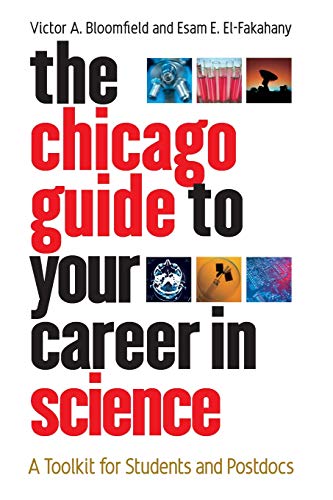
Inhaltsangabe
Embarking upon research as a graduate student or postdoc can be exciting and enriching—the start of a rewarding career. But the world of scientific research is also a competitive one, with grants and good jobs increasingly hard to find. The Chicago Guide to Your Career in Science is intended to help scientists not just cope but excel at this critical phase in their careers.
Victor A. Bloomfield and Esam E. El-Fakahany, both well-known scientists with extensive experience as teachers, mentors, and administrators, have combined their knowledge to create a guidebook that addresses all of the challenges that today’s scientists-in-training face. They begin by considering the early stages of a career in science: deciding whether or not to pursue a PhD, choosing advisors and mentors, and learning how to teach effectively. Bloomfield and El-Fakahany then explore the skills essential to conducting and presenting research. The Chicago Guide to Your Career in Science offers detailed advice on how to pursue research ethically, manage time, and communicate effectively, especially at academic conferences and with students and peers. Bloomfield and El-Fakahany write in accessible, straightforward language and include a synopsis of key points at the end of each chapter, so that readers can dip into relevant sections with ease.
From students prepping for the GRE to postdocs developing professional contacts to faculty advisors and managers of corporate labs, scientists at every level will find The Chicago Guide to Your Career in Science an unparalleled resource.
Victor A. Bloomfield and Esam E. El-Fakahany, both well-known scientists with extensive experience as teachers, mentors, and administrators, have combined their knowledge to create a guidebook that addresses all of the challenges that today’s scientists-in-training face. They begin by considering the early stages of a career in science: deciding whether or not to pursue a PhD, choosing advisors and mentors, and learning how to teach effectively. Bloomfield and El-Fakahany then explore the skills essential to conducting and presenting research. The Chicago Guide to Your Career in Science offers detailed advice on how to pursue research ethically, manage time, and communicate effectively, especially at academic conferences and with students and peers. Bloomfield and El-Fakahany write in accessible, straightforward language and include a synopsis of key points at the end of each chapter, so that readers can dip into relevant sections with ease.
From students prepping for the GRE to postdocs developing professional contacts to faculty advisors and managers of corporate labs, scientists at every level will find The Chicago Guide to Your Career in Science an unparalleled resource.
“The Chicago Guide to Your Career in Science is a roadmap to the beginning stages of a scientific career. I will encourage my own students to purchase it.”—Dov F. Sax, assistant professor of ecology and evolutionary biology, Brown University
“Step-by-step, Victor Bloomfield and Esam El-Fakahany provide sound, thorough, yet succinct advice on every issue a scientist in training is likely to encounter. Young readers will welcome the authors’ advice on choosing a graduate school, for example, while senior scientists will probably wish that a book like this had been around when they were starting out. With down-to-earth and occasionally humorous advice, The Chicago Guide to your Career in Academic Biology belongs on the bookshelf of every graduate student and advisor.”—Norma Allewell, Dean, College of Chemical and Life Sciences, University of Maryland
Die Inhaltsangabe kann sich auf eine andere Ausgabe dieses Titels beziehen.
Über die Autorin bzw. den Autor
Victor Bloomfield is professor in the Department of Biochemistry, Molecular Biology, and Biophysics and a former dean of the Graduate School at the University of Minnesota. Esam E. El-Fakahany is professor of psychiatry, pharmacology, and neuroscience at the University of Minnesota Medical School. He is former associate dean of the Graduate School. Together, El-Fakahany and Bloomfield established and directed the University of Minnesota’s first office for postdoctoral affairs.
Auszug. © Genehmigter Nachdruck. Alle Rechte vorbehalten.
THE CHICAGO GUIDE TO YOUR CAREER IN science
A TOOLKIT FOR STUDENTS AND POSTDOCSBy VICTOR A. BLOOMFIELD ESAM E. EL-FAKAHANYThe University of Chicago Press
Copyright © 2008 The University of ChicagoAll right reserved.
ISBN: 978-0-226-06064-4
Contents
Preface.................................................................viiAcknowledgments.........................................................ix1. Introduction: Thinking about a Research Career.......................1PART I. THE STAGES OF A RESEARCH CAREER2. Pursuing Graduate Education..........................................153. Advisors and Mentors.................................................344. Choosing and Conducting a Dissertation Project.......................535. Effective Teaching...................................................646. Designing Your Postdoctoral Experience...............................797. Preparing for Your First Real Job....................................958. Diversity of Career Choices..........................................1059. Tools for Successful Job Searching...................................119PART II. CONDUCTING AND PRESENTING RESEARCH10. The Meaning and Responsible Conduct of Research.....................15111. Keeping a Notebook..................................................17012. Working with Others.................................................18113. Creativity and Problem Solving......................................19514. Staying Motivated...................................................21315. Managing Time.......................................................22716. Finding and Managing Information....................................24017. Communicating.......................................................25418. Going to Scientific Meetings........................................25819. Poster Presentations................................................26420. Speaking............................................................27121. Writing.............................................................28622. Tables and Graphics.................................................30023. Writing and Defending Your Dissertation.............................31024. Writing a Journal Article...........................................32325. Writing Fellowship and Grant Proposals..............................335Index...................................................................355
Chapter One
INTRODUCTION THINKING ABOUT A RESEARCH CAREER
Do you want to do scientific research? If so, this book will help you answer two big questions:
How can you prepare for a career in research or for an alternative career that uses a background in research?
How can you conduct and present your research most effectively?
These are complicated questions. But whether you're a beginning researcher or just thinking about going into research, this book will take you through them systematically, pointing out the choices and best practices that will make your career as successful and rewarding as possible.
Graduate students and postdoctorals (researchers with a PhD who are seeking further training before embarking on independent careers) learn many specific techniques and scientific concepts, but they don't always acquire the general tools of the trade that are crucial for success in research. A visit to any bookstore will reveal dozens of books concerned with finding the right job, boosting motivation, improving time management, organizing records, communicating effectively, and behaving ethically. These books, often shelved under the heading "self-help," are commonly shunned by students and their professors, but many contain ideas that we believe are valuable-and that are, in fact, evident in the working styles of the most successful researchers. Our intention is to translate these ideas into precepts directly applicable to the life of the scientist.
Although our primary audience is novice scientists-those still in training-we hope that more experienced researchers will also find much of interest here. Few of us, at any age, use all the tools available to us to maximize our effectiveness.
This book is well suited to self-study, but it could also serve as a textbook for courses on research skills or career paths. Indeed, we believe that universities should be offering such courses to their graduate students and postdocs. The book is divided into two main parts. Part I (chapters 2-9) discusses the various stages of a research career and the choices that must be made at each stage. Part II (chapters 10-25) addresses the many tasks involved in doing research and how they can be accomplished in an effective and responsible manner. In this introductory chapter, we provide a brief overview.
The rewards of a research career
Our modern society depends on research to cure diseases, abate pollution, increase supplies of food and energy, and provide insights into our relations with nature. The activities research entails can be mentally and emotionally engaging, among the most absorbing and fulfilling of human occupations. And researchers are generally adequately compensated, work with intellectually stimulating people, and enjoy high regard within society at large.
Some people have jobs in which they do nothing but conduct research-for example, working in a government or corporate lab. Some combine research with other activities: members of university faculties teach and administer programs, and physicians at university hospitals are also involved in clinical work. Still others work in nonresearch jobs that nonetheless utilize their scientific background and skills: as journalists, teachers in liberal arts or community colleges, and managers in enterprises ranging from biotech start-ups to large technical companies. All of these people can benefit from the knowledge, skills, and habits of mind acquired in pursuing a research career.
The challenges of a research career
HISTORICAL PERSPECTIVE
Educational and career opportunities in the sciences have changed over the years. A National Science Foundation report on U.S. doctorates in science and engineering in the twentieth century found rapid growth in both doctoral education and federal expenditure for research and development (R & D) in the middle years of the century (Thurgood, Golladay, and Hill 2006). During the 1970s, however, the economic impact of the Vietnam war led to severe cuts in R & D funding. This, along with a saturation of the academic labor market in most fields, caused a decline in the number of doctorates awarded. Since then, gains in R & D spending and a defense buildup have fostered a renewed increase in doctoral degrees in the sciences and engineering.
There have also been shifts in the types of employment sought by new PhDs. The percentage taking academic jobs declined from 67 percent in the early 1970s to about 50 percent by the end of that decade and stayed at that level for the remainder of the century. In contrast, the percentage of PhDs who chose industry more than doubled, from 12 percent in the early 1970s to 27 percent in the late 1990s. The last three decades of the past century also saw a significant increase in the proportion of PhDs who continued their training as postdoctorals, both because postdoctoral experience increasingly became a requirement for good professional scientific jobs and because the number of qualified applicants for such jobs outstripped the demand.
The past...
„Über diesen Titel“ kann sich auf eine andere Ausgabe dieses Titels beziehen.
Suchergebnisse für The Chicago Guide to Your Career in Science: A Toolkit...

Beispielbild für diese ISBN
The Chicago Guide to Your Career in Science: A Toolkit for Students and Postdocs (Chicago Guides to Academic Life)
Verlag:
University of Chicago Press, 2008
ISBN 10: 0226060640
ISBN 13: 9780226060644
Gebraucht
Softcover
Anbieter: World of Books (was SecondSale), Montgomery, IL, USA
Verkäuferbewertung 5 von 5 Sternen

Zustand: Very Good. Item in very good condition! Textbooks may not include supplemental items i.e. CDs, access codes etc. Artikel-Nr. 00093569350
Gebraucht kaufen
EUR 3,90
Versand gratis
Versand innerhalb von USA
Versand innerhalb von USA
Anzahl: 1 verfügbar
Beispielbild für diese ISBN
The Chicago Guide to Your Career in Science: A Toolkit for Students and Postdocs
Verlag:
University of Chicago Press, 2008
ISBN 10: 0226060640
ISBN 13: 9780226060644
Gebraucht
Paperback
Anbieter: ThriftBooks-Atlanta, AUSTELL, GA, USA
Verkäuferbewertung 5 von 5 Sternen
Paperback. Zustand: Very Good. No Jacket. May have limited writing in cover pages. Pages are unmarked. ~ ThriftBooks: Read More, Spend Less. Artikel-Nr. G0226060640I4N00
Gebraucht kaufen
EUR 5,91
Versand gratis
Versand innerhalb von USA
Versand innerhalb von USA
Anzahl: 1 verfügbar
Beispielbild für diese ISBN
The Chicago Guide to Your Career in Science: A Toolkit for Students and Postdocs
Verlag:
University of Chicago Press, 2008
ISBN 10: 0226060640
ISBN 13: 9780226060644
Gebraucht
Paperback
Anbieter: ThriftBooks-Atlanta, AUSTELL, GA, USA
Verkäuferbewertung 5 von 5 Sternen
Paperback. Zustand: As New. No Jacket. Pages are clean and are not marred by notes or folds of any kind. ~ ThriftBooks: Read More, Spend Less. Artikel-Nr. G0226060640I2N00
Gebraucht kaufen
EUR 5,91
Versand gratis
Versand innerhalb von USA
Versand innerhalb von USA
Anzahl: 1 verfügbar
Beispielbild für diese ISBN
The Chicago Guide to Your Career in Science : A Toolkit for Students and Postdocs
Verlag:
University of Chicago Press, 2008
ISBN 10: 0226060640
ISBN 13: 9780226060644
Gebraucht
Softcover
Anbieter: Better World Books: West, Reno, NV, USA
Verkäuferbewertung 5 von 5 Sternen
Zustand: Very Good. Former library copy. Pages intact with possible writing/highlighting. Binding strong with minor wear. Dust jackets/supplements may not be included. Includes library markings. Stock photo provided. Product includes identifying sticker. Better World Books: Buy Books. Do Good. Artikel-Nr. 3153016-75
Gebraucht kaufen
EUR 8,37
Versand gratis
Versand innerhalb von USA
Versand innerhalb von USA
Anzahl: 1 verfügbar
Beispielbild für diese ISBN
The Chicago Guide to Your Career in Science : A Toolkit for Students and Postdocs
Verlag:
University of Chicago Press, 2008
ISBN 10: 0226060640
ISBN 13: 9780226060644
Gebraucht
Softcover
Anbieter: Better World Books: West, Reno, NV, USA
Verkäuferbewertung 5 von 5 Sternen
Zustand: Very Good. Pages intact with possible writing/highlighting. Binding strong with minor wear. Dust jackets/supplements may not be included. Stock photo provided. Product includes identifying sticker. Better World Books: Buy Books. Do Good. Artikel-Nr. 9448086-6
Gebraucht kaufen
EUR 8,37
Versand gratis
Versand innerhalb von USA
Versand innerhalb von USA
Anzahl: 1 verfügbar
Beispielbild für diese ISBN
The Chicago Guide to Your Career in Science
Anbieter: PBShop.store US, Wood Dale, IL, USA
Verkäuferbewertung 5 von 5 Sternen
PAP. Zustand: New. New Book. Shipped from UK. Established seller since 2000. Artikel-Nr. FW-9780226060644
Beispielbild für diese ISBN
The Chicago Guide to Your Career in Science
Anbieter: PBShop.store UK, Fairford, GLOS, Vereinigtes Königreich
Verkäuferbewertung 5 von 5 Sternen
PAP. Zustand: New. New Book. Shipped from UK. Established seller since 2000. Artikel-Nr. FW-9780226060644
Neu kaufen
EUR 27,55
EUR 6,83 Versand
Versand von Vereinigtes Königreich nach USA
Versand von Vereinigtes Königreich nach USA
Anzahl: 15 verfügbar
Beispielbild für diese ISBN
The Chicago Guide to Your Career in Science
Anbieter: Majestic Books, Hounslow, Vereinigtes Königreich
Verkäuferbewertung 4 von 5 Sternen

Zustand: New. pp. 336. Artikel-Nr. 8248575
Neu kaufen
EUR 28,94
EUR 7,57 Versand
Versand von Vereinigtes Königreich nach USA
Versand von Vereinigtes Königreich nach USA
Anzahl: 3 verfügbar
Beispielbild für diese ISBN
The Chicago Guide to Your Career in Science
Verlag:
The University of Chicago Press, 2008
ISBN 10: 0226060640
ISBN 13: 9780226060644
Neu
Softcover
Anbieter: Kennys Bookstore, Olney, MD, USA
Verkäuferbewertung 5 von 5 Sternen
Zustand: New. A guidebook that addresses the challenges that scientists-in-training face. It offers advice on how to pursue research ethically, manage time, and communicate effectively, especially at academic conferences and with students and peers. It also includes a synopsis of points at the end of the chapters. Series: Chicago Guides to Academic Life. Num Pages: 336 pages, 2 line drawings, 1 table. BIC Classification: JNZ; PD; VSC. Category: (UP) Postgraduate, Research & Scholarly; (UU) Undergraduate. Dimension: 235 x 168 x 21. Weight in Grams: 508. . 2008. 1st Edition. Paperback. . . . . Books ship from the US and Ireland. Artikel-Nr. V9780226060644
Neu kaufen
EUR 29,79
EUR 9,15 Versand
Versand innerhalb von USA
Versand innerhalb von USA
Anzahl: Mehr als 20 verfügbar
Beispielbild für diese ISBN
The Chicago Guide to Your Career in Science: A Toolkit for Students and Postdocs (Chicago Guides to Academic Life)
Anbieter: Ria Christie Collections, Uxbridge, Vereinigtes Königreich
Verkäuferbewertung 5 von 5 Sternen
Zustand: New. In English. Artikel-Nr. ria9780226060644_new
Neu kaufen
EUR 27,54
EUR 13,14 Versand
Versand von Vereinigtes Königreich nach USA
Versand von Vereinigtes Königreich nach USA
Anzahl: Mehr als 20 verfügbar