
Verwandte Artikel zu Stalinism and the Politics of Mobilization: Ideas,...
Stalinism and the Politics of Mobilization: Ideas, Power, and Terror in Inter-War Russia - Hardcover
Inhaltsangabe
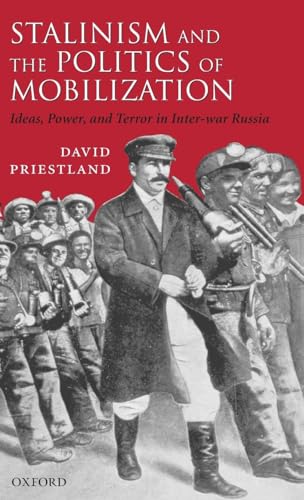
Stalinism and the Politics of Mobilization offers a new interpretation of Bolshevik ideology, examines its relationship with Soviet politics between 1917 and 1939, and sheds new light on the origins of the political violence of the late 1930s. While it challenges older views that the Stalinist system and the Terror were the product of a coherent Marxist-Leninist blueprint, imposed by a group of committed ideologues, it argues that ideas mattered in Bolshevik politics and that there are strong continuities between the politics of the revolutionary period and those of the 1930s. By exploring divisions within the party over several issues, including class, the relations between elites and masses, and economic policy, David Priestland shows how a number of ideological trends emerged within Bolshevik politics, and how they were related to political and economic interests and strategies. He also argues that central to the launching of the Terror was the leadership's commitment to a strategy of mobilization, and to a view of politics that ultimately derived from the left Bolshevism of the revolutionary period.
Die Inhaltsangabe kann sich auf eine andere Ausgabe dieses Titels beziehen.
Suchergebnisse für Stalinism and the Politics of Mobilization: Ideas,...

Beispielbild für diese ISBN
Stalinism and the Politics of Mobilization
Anbieter: Ria Christie Collections, Uxbridge, Vereinigtes Königreich
Verkäuferbewertung 5 von 5 Sternen

Zustand: New. In English. Artikel-Nr. ria9780199245130_new
Neu kaufen
EUR 205,46
EUR 13,49 Versand
Versand von Vereinigtes Königreich nach USA
Versand von Vereinigtes Königreich nach USA
Anzahl: Mehr als 20 verfügbar
Beispielbild für diese ISBN
Stalinism and the Politics of Mobilization
Anbieter: Kennys Bookstore, Olney, MD, USA
Verkäuferbewertung 5 von 5 Sternen
Zustand: New. Presents a reassessment of Bolshevik ideology, and of the ways in which it interacted with other political forces during the period. By analysing the political discourse of the Bolshevik leadership, this study shows how differing interpretations of Marxism-Leninism informed contrasting political and economic strategies. Num Pages: 512 pages, black & white illustrations. BIC Classification: 1DVUA; 3JJF; 3JJG; HBJD; HBLW; JPFC; JPHX; KCZ. Category: (P) Professional & Vocational. Dimension: 223 x 147 x 36. Weight in Grams: 790. . 2007. Hardback. . . . . Books ship from the US and Ireland. Artikel-Nr. V9780199245130
Neu kaufen
EUR 264,22
EUR 9,36 Versand
Versand innerhalb von USA
Versand innerhalb von USA
Anzahl: Mehr als 20 verfügbar