
Verwandte Artikel zu TERRY RILEYS IN C SMGS C (Studies in Musical Genesis,...
Inhaltsangabe
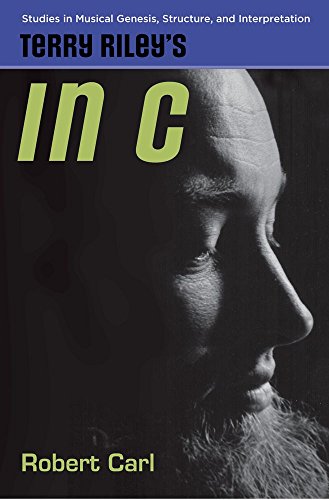
A most intriguing journey into the world of minimalism, via its founding work, Terry Riley's In C.
Die Inhaltsangabe kann sich auf eine andere Ausgabe dieses Titels beziehen.
Über die Autorin bzw. den Autor
Robert Carl is Professor of Composition and Theory and Chair of Composition, Department of Music, The Hartt School, University of Hartford. His music has been performed throughout the United States and Europe and has been published by American composers' Edition, Boosey & Hawkes, and Apollo-Edition. Recent CD releases of works are found on New World, Innova, Neuma, Koch International, Lotus, Centaur, and Vienna Modern Masters. He also writes regularly on new music for Fanfare Magazine.
„Über diesen Titel“ kann sich auf eine andere Ausgabe dieses Titels beziehen.
Suchergebnisse für TERRY RILEYS IN C SMGS C (Studies in Musical Genesis,...

Beispielbild für diese ISBN
Terry Riley's in C
Verlag:
Oxford University Press, Incorporated, 2009
ISBN 10: 0195325281
ISBN 13: 9780195325287
Gebraucht
Hardcover
Anbieter: Better World Books, Mishawaka, IN, USA
Verkäuferbewertung 5 von 5 Sternen

Zustand: Good. Former library copy. Pages intact with minimal writing/highlighting. The binding may be loose and creased. Dust jackets/supplements are not included. Includes library markings. Stock photo provided. Product includes identifying sticker. Better World Books: Buy Books. Do Good. Artikel-Nr. 40120141-75
Gebraucht kaufen
EUR 43,82
Versand gratis
Versand innerhalb von USA
Versand innerhalb von USA
Anzahl: 1 verfügbar
Beispielbild für diese ISBN
Terry Riley's in C
Verlag:
Oxford University Press, 2009
ISBN 10: 0195325281
ISBN 13: 9780195325287
Gebraucht
Hardcover
Anbieter: Anybook.com, Lincoln, Vereinigtes Königreich
Verkäuferbewertung 5 von 5 Sternen
Zustand: Good. This is an ex-library book and may have the usual library/used-book markings inside.This book has hardback covers. In good all round condition. Dust jacket in good condition. Please note the Image in this listing is a stock photo and may not match the covers of the actual item,450grams, ISBN:9780195325287. Artikel-Nr. 3970594
Gebraucht kaufen
EUR 67,01
EUR 15,83 Versand
Versand von Vereinigtes Königreich nach USA
Versand von Vereinigtes Königreich nach USA
Anzahl: 1 verfügbar
Beispielbild für diese ISBN
Terry Riley's in C (Studies in Musical Genesis and Structure)
Anbieter: Revaluation Books, Exeter, Vereinigtes Königreich
Verkäuferbewertung 5 von 5 Sternen
Hardcover. Zustand: Brand New. 1st edition. 160 pages. 9.25x6.25x0.50 inches. In Stock. Artikel-Nr. 0195325281
Neu kaufen
EUR 80,04
EUR 11,98 Versand
Versand von Vereinigtes Königreich nach USA
Versand von Vereinigtes Königreich nach USA
Anzahl: 1 verfügbar
Beispielbild für diese ISBN
Terry Riley's in C
Anbieter: GreatBookPricesUK, Woodford Green, Vereinigtes Königreich
Verkäuferbewertung 5 von 5 Sternen
Zustand: New. Artikel-Nr. 6514297-n
Neu kaufen
EUR 116,98
EUR 17,97 Versand
Versand von Vereinigtes Königreich nach USA
Versand von Vereinigtes Königreich nach USA
Anzahl: Mehr als 20 verfügbar
Foto des Verkäufers
Terry Riley's in C
Verlag:
Oxford University Press Inc, US, 2009
ISBN 10: 0195325281
ISBN 13: 9780195325287
Neu
Hardcover
Anbieter: Rarewaves.com USA, London, LONDO, Vereinigtes Königreich
Verkäuferbewertung 5 von 5 Sternen
Hardback. Zustand: New. Unquestionably the founding work of minimalism in musical composition, Terry Riley's In C (1964) challenges the standards of imagination, intellect, and musical ingenuity to which "classical" music is held. Only one page of score in length, it contains neither specified instrumentation nor parts. Its fifty-three motives are compact, presented without any counterpoint or evident form. The composer gave only spare instructions and no tempo. And he assigned the work a title that's laconic in the extreme. At the same moment of its composition, Elliott Carter was working on his Concerto for Piano, a work Stravinsky was to hail as a masterpiece. Having almost completed Laborinthus II, Luciano Berio would soon start the Sinfonia. Karlheinz Stockhausen had just finished Momente. In context of these other works, and of the myriad of compositional styles and trends which preceded them, In C stands the whole idea of musical "progress" on its head. Forty years later, In C continues to receive regular performances every year by professionals, students, and amateurs, and has had numerous recordings since its 1968 LP premiere. Welcoming performers from a vast range of practices and traditions, from classical to rock to jazz to non-Western, these recordings range from the Chinese Film Orchestra of Shanghai - on traditional Chinese instruments - to the Hungarian 'European Music Project' group, joined by two electronica DJs manipulating the Pulse. In C rouses audiences while all the while projecting an inner serenity that suggests Cage's definition of music's purpose -- "to sober and quiet the mind, thus making it susceptible to divine influence." Setting the stage for a most intriguing journey into the world of minimalism, Robert Carl's Terry Riley's In C argues that the work holds its place in the canon because of the very challenges it presents to "classical" music. He examines In C in the context of its era, its grounding in aesthetic practices and assumptions, its process of composition, presentation, recording, and dissemination. By examining the work's significance through discussion with performers, composers, theorists, and critics, Robert Carl explores how the work's emerging performance practice has influenced our very ideas of what constitutes art music in the 21st century. Artikel-Nr. LU-9780195325287
Neu kaufen
EUR 144,19
Versand gratis
Versand von Vereinigtes Königreich nach USA
Versand von Vereinigtes Königreich nach USA
Anzahl: Mehr als 20 verfügbar
Foto des Verkäufers
Terry Riley's in C
Verlag:
Oxford University Press, 2009
ISBN 10: 0195325281
ISBN 13: 9780195325287
Gebraucht
Hardcover
Anbieter: GreatBookPricesUK, Woodford Green, Vereinigtes Königreich
Verkäuferbewertung 5 von 5 Sternen
Zustand: As New. Unread book in perfect condition. Artikel-Nr. 6514297
Gebraucht kaufen
EUR 128,97
EUR 17,97 Versand
Versand von Vereinigtes Königreich nach USA
Versand von Vereinigtes Königreich nach USA
Anzahl: Mehr als 20 verfügbar
Foto des Verkäufers
Terry Riley's in C
Verlag:
Oxford University Press Inc, US, 2009
ISBN 10: 0195325281
ISBN 13: 9780195325287
Neu
Hardcover
Anbieter: Rarewaves.com UK, London, Vereinigtes Königreich
Verkäuferbewertung 5 von 5 Sternen
Hardback. Zustand: New. Unquestionably the founding work of minimalism in musical composition, Terry Riley's In C (1964) challenges the standards of imagination, intellect, and musical ingenuity to which "classical" music is held. Only one page of score in length, it contains neither specified instrumentation nor parts. Its fifty-three motives are compact, presented without any counterpoint or evident form. The composer gave only spare instructions and no tempo. And he assigned the work a title that's laconic in the extreme. At the same moment of its composition, Elliott Carter was working on his Concerto for Piano, a work Stravinsky was to hail as a masterpiece. Having almost completed Laborinthus II, Luciano Berio would soon start the Sinfonia. Karlheinz Stockhausen had just finished Momente. In context of these other works, and of the myriad of compositional styles and trends which preceded them, In C stands the whole idea of musical "progress" on its head. Forty years later, In C continues to receive regular performances every year by professionals, students, and amateurs, and has had numerous recordings since its 1968 LP premiere. Welcoming performers from a vast range of practices and traditions, from classical to rock to jazz to non-Western, these recordings range from the Chinese Film Orchestra of Shanghai - on traditional Chinese instruments - to the Hungarian 'European Music Project' group, joined by two electronica DJs manipulating the Pulse. In C rouses audiences while all the while projecting an inner serenity that suggests Cage's definition of music's purpose -- "to sober and quiet the mind, thus making it susceptible to divine influence." Setting the stage for a most intriguing journey into the world of minimalism, Robert Carl's Terry Riley's In C argues that the work holds its place in the canon because of the very challenges it presents to "classical" music. He examines In C in the context of its era, its grounding in aesthetic practices and assumptions, its process of composition, presentation, recording, and dissemination. By examining the work's significance through discussion with performers, composers, theorists, and critics, Robert Carl explores how the work's emerging performance practice has influenced our very ideas of what constitutes art music in the 21st century. Artikel-Nr. LU-9780195325287
Neu kaufen
EUR 140,49
EUR 77,85 Versand
Versand von Vereinigtes Königreich nach USA
Versand von Vereinigtes Königreich nach USA
Anzahl: Mehr als 20 verfügbar