
Verwandte Artikel zu Organic Chemistry: An Intermediate Text (Topics in...
Inhaltsangabe
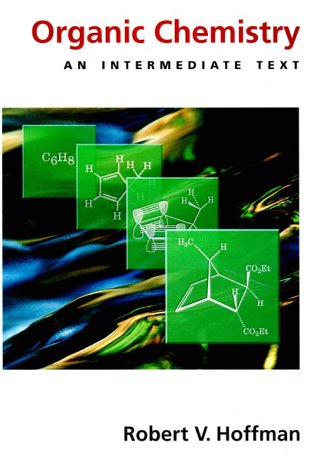
Organic Chemistry: An Intermediate Text provides a focused yet rigorous presentation of organic chemistry which bridges the gap between introductory undergraduate texts and advanced graduate level texts. Instead of a functional group approach, the material is presented from a structural and mechanistic point of view. The first five chapters discuss basic principles which are fundamental in understanding organic reactions and reactivity of all types. These principles include structure and bonding, oxidation levels, acidity and basicity, curved arrow notation, and stereochemistry and conformation. Subsequent topics are based on these fundamental principles and include functional group manipulation, strategies and methods for forming carbon-carbon bonds, and retrosynthetic analysis. Chapters on methods for determining reaction mechanisms and methods for organic structure determination round out the subject matter and provide additional insight into modern ways to investigate organic transformations. A large number of practice problems are included at the end of each chapter so that students may effectively learn and organize the information presented in the text.
Clearly written and logically organized, this unique textbook provides senior undergraduate chemistry students and beginning graduate students with the advanced organic foundation necessary to move confidently into advanced graduate level courses or directly into the workplace.
Die Inhaltsangabe kann sich auf eine andere Ausgabe dieses Titels beziehen.
Über die Autorin bzw. den Autor
Robert V. Hoffman is Professor of Chemistry in the Department of Chemistry and Biochemistry, New Mexico State University.
Von der hinteren Coverseite
Organic Chemistry: An Intermediate Text provides a focused yet rigorous presentation of organic chemistry which bridges the gap between sophomore level texts and advanced graduate level texts. Instead of a functional group approach, the material is presented from a structural and mechanistic point of view. The first five chapters discuss basic principles which are fundamental in understanding organic reactions and reactivity. These principles include structure and bonding, oxidation level, acidity and basicity, curved arrow notation, and stereochemistry and conformation. Subsequent topics are based on these fundamental principles and include functional group manipulation, strategies and methods for forming carbon-carbon bonds, and retrosynthetic analysis. Chapters on methods for determining reaction mechanisms and methods for organic structure determination round out the subject matter and provide additional insight into modern ways to investigate organic transformations. A large number of practice problems are included at the end of each chapter so that students may effectively learn and organize the information presented in the text. Clearly written and logically organized, this unique textbook provides senior undergraduate chemistry students and beginning graduate students with the advanced organic foundation necessary to move confidently into advanced graduate level courses or directly into the workplace.
„Über diesen Titel“ kann sich auf eine andere Ausgabe dieses Titels beziehen.
Suchergebnisse für Organic Chemistry: An Intermediate Text (Topics in...

Beispielbild für diese ISBN
Organic Chemistry: An Intermediate Text
Verlag:
Oxford University Press Inc, 1997
ISBN 10: 0195096185
ISBN 13: 9780195096187
Gebraucht
Hardcover
Anbieter: World of Books (was SecondSale), Montgomery, IL, USA
Verkäuferbewertung 5 von 5 Sternen

Hardback. Zustand: Good. This book aims to provide a succinct yet rigorous presentation of organic chemistry for readers with a some background in the subject. The first five chapters review the basic principles of organic reactions and reactivity, such as structure and bonding, oxidation level, acidity and basicity, curved arrow notation, stereochemistry, and conformation. Functional group manipulation is covered in the next chapter, while chapters 7 and 8 concentrate on the methods employed in the production of new carbon-carbon bonds. Practical concerns--the planning of organic syntheses, the factors influencing organic reactions and their determination, and an overview of the ways to determine the structure of organic compounds--are covered in the final three chapters. Artikel-Nr. 00102435305
Gebraucht kaufen
EUR 5,06
Versand gratis
Versand innerhalb von USA
Versand innerhalb von USA
Anzahl: 1 verfügbar
Beispielbild für diese ISBN
Organic Chemistry: An Intermediate Text
Verlag:
Oxford University Press, USA, 1996
ISBN 10: 0195096185
ISBN 13: 9780195096187
Gebraucht
Hardcover
Anbieter: ThriftBooks-Atlanta, AUSTELL, GA, USA
Verkäuferbewertung 5 von 5 Sternen
Hardcover. Zustand: Very Good. No Jacket. May have limited writing in cover pages. Pages are unmarked. ~ ThriftBooks: Read More, Spend Less. Artikel-Nr. G0195096185I4N00
Gebraucht kaufen
EUR 8,66
Versand gratis
Versand innerhalb von USA
Versand innerhalb von USA
Anzahl: 1 verfügbar
Beispielbild für diese ISBN
Organic Chemistry : An Intermediate Text
Verlag:
Oxford University Press, Incorporated, 1996
ISBN 10: 0195096185
ISBN 13: 9780195096187
Gebraucht
Hardcover
Anbieter: Better World Books Ltd, Dunfermline, Vereinigtes Königreich
Verkäuferbewertung 5 von 5 Sternen
Zustand: Good. Former library copy. Pages intact with minimal writing/highlighting. The binding may be loose and creased. Dust jackets/supplements are not included. Includes library markings. Stock photo provided. Product includes identifying sticker. Better World Books: Buy Books. Do Good. Artikel-Nr. GRP60893742
Gebraucht kaufen
EUR 5,94
EUR 5,89 Versand
Versand von Vereinigtes Königreich nach USA
Versand von Vereinigtes Königreich nach USA
Anzahl: 1 verfügbar
Beispielbild für diese ISBN
Organic Chemistry: An Intermediate Text (Topics in Organic Chemistry)
Verlag:
Oxford University Press, 1996
ISBN 10: 0195096185
ISBN 13: 9780195096187
Gebraucht
Hardcover
Anbieter: Phatpocket Limited, Waltham Abbey, HERTS, Vereinigtes Königreich
Verkäuferbewertung 5 von 5 Sternen
Zustand: Good. Your purchase helps support Sri Lankan Children's Charity 'The Rainbow Centre'. Ex-library, so some stamps and wear, but in good overall condition. Our donations to The Rainbow Centre have helped provide an education and a safe haven to hundreds of children who live in appalling conditions. Artikel-Nr. Z1-E-032-01694
Gebraucht kaufen
EUR 3,95
EUR 12,54 Versand
Versand von Vereinigtes Königreich nach USA
Versand von Vereinigtes Königreich nach USA
Anzahl: 1 verfügbar
Beispielbild für diese ISBN
Organic Chemistry: An Intermediate Text
Anbieter: Revaluation Books, Exeter, Vereinigtes Königreich
Verkäuferbewertung 5 von 5 Sternen
Hardcover. Zustand: Brand New. 336 pages. 9.75x6.75x0.75 inches. In Stock. Artikel-Nr. 0195096185
Neu kaufen
EUR 94,35
EUR 14,74 Versand
Versand von Vereinigtes Königreich nach USA
Versand von Vereinigtes Königreich nach USA
Anzahl: 1 verfügbar