
Verwandte Artikel zu With Head and Heart Pa: The Autobiography of Howard...
Inhaltsangabe
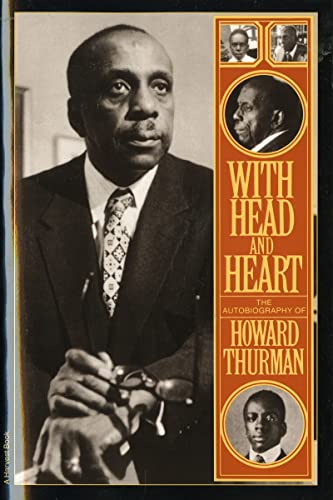
Howard Thurman was a unique man-a black minister, philosopher, and educator whose vitality and vision touched the lives of countless people of all races, faiths, and cultures. Index; photographs.
Die Inhaltsangabe kann sich auf eine andere Ausgabe dieses Titels beziehen.
Auszug. © Genehmigter Nachdruck. Alle Rechte vorbehalten.
With Head And Heart
By Howard ThurmanHoughton Mifflin Harcourt Publishing Company
Copyright © 1979 Howard Thurman
All rights reserved.
ISBN: 978-0-15-697648-0All rights reserved.
Contents
Title Page,
Table of Contents,
Copyright,
Dedication,
Illustrations,
Acknowledgments,
I Beginnings,
II Years in Training,
1. Morehouse,
2. Rochester,
III Launching a Career,
1. Oberlin,
2. Haverford and Morehouse,
3. Howard,
IV Crossing the Great Divide—India,
V The Bold Adventure—San Francisco,
Photos,
VI The Weaving of a Single Tapestry,
1. Boston: One,
2. Boston: Two,
3. Africa,
VII The Written Word,
VIII Mind-Grazing,
IX The Binding Commitment,
Index,
CHAPTER 1
Beginnings
At the end of my first year at the Rochester Theological Seminary, I became assistant to the minister of the First Baptist Church of Roanoke, Virginia. I was to assume the duties as pastor during the month that the minister and his family were away on vacation. I would be on my own. On my first night alone in the parsonage, I was awakened by the telephone. The head nurse of the local Negro hospital asked, "May I speak with Dr. James?" I told her he was away. "Dr. James is the hospital chaplain," she explained. "There is a patient here who is dying. He's asking for a minister. Are you a minister?"
In one kaleidoscopic moment I was back again at an old crossroad. A decision of vocation was to be made here, and I felt again the ambivalence of my life and my calling. Finally, I answered. "Yes, I am a minister."
"Please hurry," she said, "or you'll be too late."
In a few minutes I was on my way, but in my excitement and confusion I forgot to take my Bible. At the hospital, the nurse took me immediately into a large ward. The dread curtain was around the bed. She pulled it aside and directed me to stand opposite her. The sick man's eyes were half closed, his mouth open, his breathing labored. The nurse leaned over and, calling him by name, said, "The minister is here."
Slowly he sought to focus his eyes first on her, and then on me. In a barely audible voice he said, "Do you have something to say to a man who is dying? If you have, please say it, and say it in a hurry."
I bowed my head, closed my eyes. There were no words. I poured out the anguish of my desperation in one vast effort. I felt physically I was straining to reach God. At last, I whispered my Amen.
We opened our eyes simultaneously as he breathed, "Thank you. I understand." He died with his hand in mine.
My father had died seventeen years earlier, in 1907. Those moments in the hospital had rekindled the new memory of the hurt and fear of a seven-year-old boy. Death was well known in our community. We did not know the cause or cure of typhoid fever. All we knew was that every summer there would be a regular death toll of typhoid victims. The course of the disease was as familiar as the distant but steady roar of the Atlantic Ocean, sounding across the Halifax River: first, the sick feeling and the depression; then, mounting fever; finally, the smell of the sickroom. Doctors could do little, but we used many techniques to break the fever. Sometimes we bathed the body with cold wet cloths, or wrapped it in large leaves stripped from the "Pomerchristian" plant. When all of these ministrations failed — as almost always they did — the word was whispered that "we will soon know one way or the other." A stillness pervaded the sickroom and settled round the entire house like a fog. Children were no longer permitted to play in the yard or in front on the street. Waiting. Waiting. Life came to a long moment of pause, for hours, sometimes days. Waiting. Waiting. Each was wondering, How long? How long?
At last, suddenly, the children would start to play again, communicating the joy of recovery, or one heard the crying and wailing of the women as their men stood mute. Either way, the crisis had passed. But parents had still other dangers to worry them. Which of us would drown in the quarry, where we were forbidden to swim? Who would be run over by the three o'clock train that came down the unprotected crossing, the shrill cry of the train whistle sounding too late? Who would be bitten by the everpresent rattlesnakes that lurked under the huckleberry bush where the biggest and most luscious berries grew? Death was no stranger to us. It was a part of the rhythm of our days.
My father, Saul Solomon Thurman, was a big man with a large frame. He worked on a railroad crew, laying the track of the Florida East Coast Railroad from Jacksonville to Miami, and would come home every two weeks. He was quiet, soft-spoken, and gentle. Sometimes I would pass the barbershop and look in. There he would be, getting a haircut and a shave before coming home from his two weeks' absence. He never wanted us to see him with his hair long, his face unshaven.
Suddenly one day, in the middle of the week, I heard him coming up the steps of our little house. The door opened and he fell inside. My mother and I struggled to get him to bed. He could hardly breathe and his body was racked with fever. He had pneumonia. Five days later he died. On the last day of his life, we could hear the death rattle in his throat. I sat on one side of the bed, Mamma on the other.
My young mother was a devout, dedicated praying Christian. My father was a good man, but the church was not for him. Even now I remember him sitting on the front porch, his legs crossed, looking into the distance, often with a book in hand that I could not read or understand. Sometimes I would crawl under the porch and lie on my back so that I could see his face without him seeing me. I wanted to see if he ever batted his eyes.
In the final moment before he died, my mother said softly and with utter tenderness, "Saul, are you ready to die?" Between great gasps for air, he managed to say, "Yes, Alice, all my life I have been a man. I am not afraid of death. I can meet it." With that, his body put forth one last great effort to breathe while we held him down in the bed as best we could. Then death. The long silence was broken only by the sound of our anguished weeping.
I helped my mother and grandmother bathe his body and "lay him out." In those days there were no Negro undertakers. There was one white undertaker in town, but the two races could not be embalmed or prepared for burial in the same place. Any embalming for us would have to be done in the home and, of course, it was almost never done.
The cost of the coffin was critical for the poor. When this sudden death visited our house, I was sent to our neighbors to ask them to help us by giving whatever they could. I was not self-conscious; there was no embarrassment. This was the way of life in our neighborhood. In sorrows, joys, good times and bad, this was the way we lived. We helped each other and we survived.
The burial and funeral arrangements were a serious problem, for in the eyes of the church he was a sinner. In the language of the time, he died "out of Christ." Our pastor therefore refused to permit him to be buried from the church, and naturally was unwilling to take the ceremony himself. But to have it otherwise was unthinkable, hurtful, and also impractical, because there were no funeral parlors, and our homes were all too small to accommodate a group of any size. What were we to do? My grandmother, who took charge of the situation, did so in her customary manner. She went to the chairman of the board of deacons. "You cannot make the...
„Über diesen Titel“ kann sich auf eine andere Ausgabe dieses Titels beziehen.
Suchergebnisse für With Head and Heart Pa: The Autobiography of Howard...

Beispielbild für diese ISBN
With Head And Heart
Anbieter: World of Books (was SecondSale), Montgomery, IL, USA
Verkäuferbewertung 5 von 5 Sternen

Paperback. Zustand: Good. Howard Thurman was a unique man-a black minister, philosopher, and educator whose vitality and vision touched the lives of countless people of all races, faiths, and cultures. Index; photographs. Artikel-Nr. 00106877869
Gebraucht kaufen
EUR 4,84
Versand gratis
Versand innerhalb von USA
Versand innerhalb von USA
Anzahl: 2 verfügbar
Beispielbild für diese ISBN
With Head and Heart: The Autobiography of Howard Thurman
Verlag:
Mariner Books (edition 60748th), 1981
ISBN 10: 015697648X
ISBN 13: 9780156976480
Gebraucht
Paperback
Anbieter: BooksRun, Philadelphia, PA, USA
Verkäuferbewertung 5 von 5 Sternen
Paperback. Zustand: Fair. 60748th. The item might be beaten up but readable. May contain markings or highlighting, as well as stains, bent corners, or any other major defect, but the text is not obscured in any way. Artikel-Nr. 015697648X-7-1
Gebraucht kaufen
EUR 9,22
Versand gratis
Versand innerhalb von USA
Versand innerhalb von USA
Anzahl: 1 verfügbar
Beispielbild für diese ISBN
With Head and Heart: The Autobiography of Howard Thurman
Anbieter: Roundabout Books, Greenfield, MA, USA
Verkäuferbewertung 4 von 5 Sternen

paperback. Zustand: Near Fine. Condition Notes: Excellent, unmarked copy with little wear and tight binding. We ship in recyclable American-made mailers. 100% money-back guarantee on all orders. Artikel-Nr. 1749833
Gebraucht kaufen
EUR 9,57
Versand gratis
Versand innerhalb von USA
Versand innerhalb von USA
Anzahl: 1 verfügbar
Beispielbild für diese ISBN
With Head and Heart : The Autobiography of Howard Thurman
Verlag:
HarperCollins Publishers, 1981
ISBN 10: 015697648X
ISBN 13: 9780156976480
Gebraucht
Softcover
Anbieter: Better World Books, Mishawaka, IN, USA
Verkäuferbewertung 5 von 5 Sternen
Zustand: Good. Pages intact with minimal writing/highlighting. The binding may be loose and creased. Dust jackets/supplements are not included. Stock photo provided. Product includes identifying sticker. Better World Books: Buy Books. Do Good. Artikel-Nr. 5872809-6
Gebraucht kaufen
EUR 11,14
Versand gratis
Versand innerhalb von USA
Versand innerhalb von USA
Anzahl: 1 verfügbar
Beispielbild für diese ISBN
With Head And Heart
Anbieter: PBShop.store US, Wood Dale, IL, USA
Verkäuferbewertung 5 von 5 Sternen
PAP. Zustand: New. New Book. Shipped from UK. Established seller since 2000. Artikel-Nr. L2-9780156976480
Neu kaufen
EUR 20,47
Versand gratis
Versand innerhalb von USA
Versand innerhalb von USA
Anzahl: Mehr als 20 verfügbar
Beispielbild für diese ISBN
With Head And Heart
Anbieter: PBShop.store UK, Fairford, GLOS, Vereinigtes Königreich
Verkäuferbewertung 5 von 5 Sternen
PAP. Zustand: New. New Book. Shipped from UK. Established seller since 2000. Artikel-Nr. L2-9780156976480
Neu kaufen
EUR 18,81
EUR 4,89 Versand
Versand von Vereinigtes Königreich nach USA
Versand von Vereinigtes Königreich nach USA
Anzahl: Mehr als 20 verfügbar
Beispielbild für diese ISBN
With Head and Heart: The Autobiography of Howard Thurman
Anbieter: WorldofBooks, Goring-By-Sea, WS, Vereinigtes Königreich
Verkäuferbewertung 5 von 5 Sternen
Paperback. Zustand: Very Good. The book has been read, but is in excellent condition. Pages are intact and not marred by notes or highlighting. The spine remains undamaged. Artikel-Nr. GOR002182115
Gebraucht kaufen
EUR 20,77
EUR 6,59 Versand
Versand von Vereinigtes Königreich nach USA
Versand von Vereinigtes Königreich nach USA
Anzahl: 1 verfügbar
Beispielbild für diese ISBN
With Head and Heart: The Autobiography of Howard Thurman
Anbieter: Ria Christie Collections, Uxbridge, Vereinigtes Königreich
Verkäuferbewertung 5 von 5 Sternen
Zustand: New. In English. Artikel-Nr. ria9780156976480_new
Neu kaufen
EUR 21,67
EUR 11,03 Versand
Versand von Vereinigtes Königreich nach USA
Versand von Vereinigtes Königreich nach USA
Anzahl: Mehr als 20 verfügbar
Beispielbild für diese ISBN
With Head and Heart
Anbieter: Revaluation Books, Exeter, Vereinigtes Königreich
Verkäuferbewertung 5 von 5 Sternen
Paperback. Zustand: Brand New. 304 pages. 8.00x5.25x1.00 inches. In Stock. Artikel-Nr. x-015697648X
Neu kaufen
EUR 22,20
EUR 11,77 Versand
Versand von Vereinigtes Königreich nach USA
Versand von Vereinigtes Königreich nach USA
Anzahl: 2 verfügbar
Beispielbild für diese ISBN
With Head and Heart Pa: The Autobiography of Howard Thurman
Anbieter: Kennys Bookstore, Olney, MD, USA
Verkäuferbewertung 5 von 5 Sternen
Zustand: New. 1981. First Edition. paperback. . . . . . Books ship from the US and Ireland. Artikel-Nr. V9780156976480
Neu kaufen
EUR 28,07
EUR 9,33 Versand
Versand innerhalb von USA
Versand innerhalb von USA
Anzahl: Mehr als 20 verfügbar