
Verwandte Artikel zu WHERE OR WHEN: A Gripping Contemporary Romance Where...
WHERE OR WHEN: A Gripping Contemporary Romance Where One Love Letter Reignites Old Love and Obsession - Softcover
Inhaltsangabe
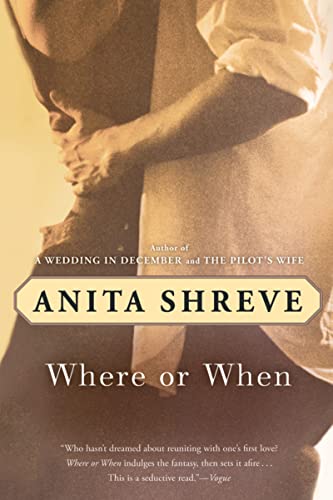
What would you do if out of the blue, you received a letter from your first love? Siân Richards sees no reason why she can't write back to Charles Callahan. After all, it's been thirty years and they are both married with families. But when they decide to meet again, an innocent correspondence becomes a dangerous intimacy. Swept up in the past and consumed by an obsessive love, Charles and Siân risk everything to be together. A heart-wrenching, suspenseful story with an unforgettable conclusion, Where or When is also a 'thoughtful, beautifully written contemporary romance' (The Washington Post).
Die Inhaltsangabe kann sich auf eine andere Ausgabe dieses Titels beziehen.
Über die Autorin bzw. den Autor
Anita Shreve was a high school teacher and a freelance magazine journalist before writing fiction full time. She was the author of over fifteen novels including The Stars Are Fire as well as the international bestseller The Pilot’s Wife, and The Weight of the Water, a finalist for the Orange Prize. Shreve taught writing at Amherst College and lived in Massachusetts.
Auszug. © Genehmigter Nachdruck. Alle Rechte vorbehalten.
Where or When
A Novel
By Anita ShreveHoughton Mifflin Harcourt Publishing Company
Copyright © 1993 Anita Shreve
All rights reserved.
ISBN: 978-0-15-603127-1All rights reserved.
Contents
Title Page,
Contents,
Copyright,
Dedication,
Epigraph,
Where or When,
The Tape That Charles Sent Siân,
Read More from Anita Shreve,
About the Author,
Connect with HMH,
CHAPTER 1
I remember everything.
A kiss at the nape of the neck.
You said you used to have a dream. When we were children, you dreamed that the nipples of my breasts burst through the fabric of my blouse. And when we were grown, you said the dream came back to you, and you had not had it in all the years in between.
When we were children, we whispered words like novices at vespers. We were children and afraid to say the words aloud. I believe this gave us longings that would last a lifetime.
But that afternoon, what did I know of indelible connections?
It was a September afternoon, a Sunday afternoon, and I remember that it was raining. There were a hundred people in the wood-paneled library at the college, and a stack of books on a table by the door. Some friends were there, and my husband, Stephen. My daughter was not. I watched my husband gesture with his glass, embrace with a sweep of his hand (the wine spilling a bit over the rim) the entire room of people, as if he might still his own anxieties by becoming my most exuberant supporter. It was Stephen in a gray sweater and a blazer, who was standing by the table with the books — the books and that day's newspaper, with my own picture in an advertisement.
Earlier that day, when we had driven to the college, Stephen had been quiet in the car. The onion sets that spring had been washed away by heavy and unexpected rains. Stephen had missed one payment at the bank, might miss another soon.
It wasn't anything that Stephen had done or had not done. All the onion farms were going.
The farm that Stephen might lose was set upon the dirt. They called it "black dirt," a soil as black as soot. Each year, in the spring, when the water had receded, if the sets had not been washed away, the tender shoots sprouted up from the soil in perfect rows and turned the black dirt to a shimmery onion green.
But the farm was not mine. Never mine.
It was the first time there had been a party, though there had been other books, other collections. The book, as you saw, was a slim volume with a paper cover in a matte finish, a slim volume of some thirty poems. This book would gain little more attention than the others had, though there was the party this time and money for an advertisement, just the one.
For the picture for the advertisement, I had been asked to wear a black jersey, and at the studio the photographer had removed my glasses, had taken the clips from my hair and mussed it with his fingers. The result was a likeness, recognizable as me, though essentially dishonest.
At the party, I stood at the edge of a small room while people moved around and past me and sometimes stopped with a sentence or a word. I remember that my editor came up to me and said, in a moment of unwarranted optimism, a friendly unwarranted optimism meant to deflect attention from the fact of the disappointingly small printing, that this slim volume would change the direction of my life. And I had smiled at him as if I, too, might share this optimism, though I had thought then that my life would not change, not beyond the small, seismic vibrations of a child growing, of a house slowly settling into the soil, or of a marriage — in unmeasurable, infinitesimal increments — disappearing.
I am in disgrace now. Removed from a state of grace.
When you and I were children, we learned of death. It was in the inevitability of a final separation, a death against which we were helpless. And even as adults, leaving you was always brutal.
I always wanted to ask: Did your wife give you the leather jacket? Did you wear other clothes, a tie perhaps, a shirt, that she had given you and that I touched?
Toward the end of the party, my editor made a toast. When it was over, I looked up. Within the crowd, I searched for Stephen. He was by the door, his back against the wall, draining his glass.
I watched my husband set the glass upon the stack of books, leaving a wet circle on the matte finish of the top cover. I watched Stephen leave the party without a backward glance.
Even on the bay side, the waves are spiking, spitting their caps off the crests. He likes it this way — hard and bright; these are the best mornings. The gulls, the rats of the sea, push against the wind, then swoop and dive for their catch. The old men are on the bridge, as they are every Sunday, braced against a railing that cannot last another year, even though he has been thinking this for years and the railing never gives. The bridge is wooden, nearly a mile long, the ride rattling in good weather, slick and treacherous when the spray freezes over the thick wooden slats. The bridge connects the mainland to a slender sliver of beach, and in the summer the bridge shakes under the weight of the Dodge Caravans and the Jeep Cherokees with their women and children, their beach umbrellas and blankets, their coolers of sodas and sunblock. But by now, the second week in September, the summer people have cleared out, and Charles and the old-timers finally have the place to themselves.
Charles sails the aging charcoal Cadillac gracefully along the rough planking. He nods and waves at the men in their stained parkas, plaid jackets, and baseball caps, their shoulders hunched against the wind, watching their lines for a tug that looks slightly different than the pull of the current. He drives this bridge two, three times a day, takes the car each time to the end. Sometimes he gets out to cross the dunes to the ocean side, to look out toward Lisbon or Rabat, or to watch the fishing boats come in around the bar to the harbor, south of the bridge. At other times he simply sits in his car, listening to Roy Orbison, nursing a beer, maybe two, until it's time for his next appointment or to drive back to the house, where Harriet and his children seem always to be waiting for him.
Today they need milk for breakfast, and he knows he shouldn't have taken this detour. But the morning is too fine, he rationalizes, to have missed. Beside him there is the half gallon of two percent, a heavy Sunday paper this week, and a greasy bag of jelly doughnuts he has bought for the kids, although he knows that by the time he arrives home, his children already will have eaten a breakfast that did not require milk. Harriet will disdain the doughnuts, will not even open the package, will set them aside on the counter until, inside the spotted bag, they will grow hard around the edges and finally be inedible. Thinking this, Charles is determined to eat at least one, even though, as a rule, he doesn't like sweets. He parks the Cadillac in the small circle of blacktop that grows more circumscribed each year by the encroaching sand, takes a doughnut from the bag, gets out of the car, and walks toward the dunes, which prevent him from seeing the ocean side. He has on his jeans, a white dress shirt he's been wearing since Friday, and a black hooded sweatshirt over that. Unthinkingly, he has worn his leather shoes with the tassels, his dress shoes, and as he walks they quickly fill up with sand along the edges. He bites into the doughnut; the jelly squirts over his fingers. With his free hand he...
„Über diesen Titel“ kann sich auf eine andere Ausgabe dieses Titels beziehen.
Suchergebnisse für WHERE OR WHEN: A Gripping Contemporary Romance Where...

Beispielbild für diese ISBN
Where or When
Anbieter: World of Books (was SecondSale), Montgomery, IL, USA
Verkäuferbewertung 5 von 5 Sternen

Paperback. Zustand: Very Good. What would you do if out of the blue, you received a letter from your first love? Siân Richards sees no reason why she can't write back to Charles Callahan. After all, it's been thirty years and they are both married with families. But when they decide to meet again, an innocent correspondence becomes a dangerous intimacy. Swept up in the past and consumed by an obsessive love, Charles and Siân risk everything to be together. A heart-wrenching, suspenseful story with an unforgettable conclusion, Where or When is also a 'thoughtful, beautifully written contemporary romance' (The Washington Post). Artikel-Nr. 00094053322
Gebraucht kaufen
EUR 3,65
Versand gratis
Versand innerhalb von USA
Versand innerhalb von USA
Anzahl: 4 verfügbar
Beispielbild für diese ISBN
Where Or When: A Gripping Contemporary Romance Where One Love Letter Reignites Old Love and Obsession
Anbieter: World of Books (was SecondSale), Montgomery, IL, USA
Verkäuferbewertung 5 von 5 Sternen
Zustand: Acceptable. Item in acceptable condition! Textbooks may not include supplemental items i.e. CDs, access codes etc. Artikel-Nr. 00093645159
Gebraucht kaufen
EUR 3,65
Versand gratis
Versand innerhalb von USA
Versand innerhalb von USA
Anzahl: 2 verfügbar
Beispielbild für diese ISBN
Where Or When: A Gripping Contemporary Romance Where One Love Letter Reignites Old Love and Obsession
Anbieter: World of Books (was SecondSale), Montgomery, IL, USA
Verkäuferbewertung 5 von 5 Sternen
Zustand: Good. Item in good condition. Textbooks may not include supplemental items i.e. CDs, access codes etc. Artikel-Nr. 00089064994
Gebraucht kaufen
EUR 3,65
Versand gratis
Versand innerhalb von USA
Versand innerhalb von USA
Anzahl: 18 verfügbar
Beispielbild für diese ISBN
Where Or When: A Gripping Contemporary Romance Where One Love Letter Reignites Old Love and Obsession
Verlag:
Mariner Books (edition First Edition), 2005
ISBN 10: 0156031272
ISBN 13: 9780156031271
Gebraucht
Paperback
Erstausgabe
Anbieter: BooksRun, Philadelphia, PA, USA
Verkäuferbewertung 5 von 5 Sternen
Paperback. Zustand: Fair. First Edition. The item might be beaten up but readable. May contain markings or highlighting, as well as stains, bent corners, or any other major defect, but the text is not obscured in any way. Artikel-Nr. 0156031272-7-1
Gebraucht kaufen
EUR 4,53
Versand gratis
Versand innerhalb von USA
Versand innerhalb von USA
Anzahl: 1 verfügbar
Beispielbild für diese ISBN
Where Or When: A Gripping Contemporary Romance Where One Love Letter Reignites Old Love and Obsession
Verlag:
Mariner Books (edition First Edition), 2005
ISBN 10: 0156031272
ISBN 13: 9780156031271
Gebraucht
Paperback
Erstausgabe
Anbieter: BooksRun, Philadelphia, PA, USA
Verkäuferbewertung 5 von 5 Sternen
Paperback. Zustand: Very Good. First Edition. It's a well-cared-for item that has seen limited use. The item may show minor signs of wear. All the text is legible, with all pages included. It may have slight markings and/or highlighting. Artikel-Nr. 0156031272-11-1
Gebraucht kaufen
EUR 4,53
Versand gratis
Versand innerhalb von USA
Versand innerhalb von USA
Anzahl: 2 verfügbar
Beispielbild für diese ISBN
Where or When
Anbieter: ThriftBooks-Reno, Reno, NV, USA
Verkäuferbewertung 5 von 5 Sternen
Paperback. Zustand: Very Good. No Jacket. Former library book; May have limited writing in cover pages. Pages are unmarked. ~ ThriftBooks: Read More, Spend Less. Artikel-Nr. G0156031272I4N10
Gebraucht kaufen
EUR 6,16
Versand gratis
Versand innerhalb von USA
Versand innerhalb von USA
Anzahl: 1 verfügbar
Beispielbild für diese ISBN
Where or When
Verlag:
HarperCollins Publishers, 2005
ISBN 10: 0156031272
ISBN 13: 9780156031271
Gebraucht
Softcover
Erstausgabe
Anbieter: Better World Books, Mishawaka, IN, USA
Verkäuferbewertung 5 von 5 Sternen
Zustand: Good. 1st Edition. Former library copy. Pages intact with minimal writing/highlighting. The binding may be loose and creased. Dust jackets/supplements are not included. Includes library markings. Stock photo provided. Product includes identifying sticker. Better World Books: Buy Books. Do Good. Artikel-Nr. 12057796-20
Gebraucht kaufen
EUR 6,17
Versand gratis
Versand innerhalb von USA
Versand innerhalb von USA
Anzahl: 1 verfügbar
Beispielbild für diese ISBN
Where or When
Verlag:
HarperCollins Publishers, 2005
ISBN 10: 0156031272
ISBN 13: 9780156031271
Gebraucht
Softcover
Erstausgabe
Anbieter: Better World Books: West, Reno, NV, USA
Verkäuferbewertung 5 von 5 Sternen
Zustand: Good. 1st Edition. Former library copy. Pages intact with minimal writing/highlighting. The binding may be loose and creased. Dust jackets/supplements are not included. Includes library markings. Stock photo provided. Product includes identifying sticker. Better World Books: Buy Books. Do Good. Artikel-Nr. 12057796-20
Gebraucht kaufen
EUR 6,17
Versand gratis
Versand innerhalb von USA
Versand innerhalb von USA
Anzahl: 2 verfügbar
Beispielbild für diese ISBN
Where or When
Verlag:
HarperCollins Publishers, 2005
ISBN 10: 0156031272
ISBN 13: 9780156031271
Gebraucht
Softcover
Erstausgabe
Anbieter: Better World Books: West, Reno, NV, USA
Verkäuferbewertung 5 von 5 Sternen
Zustand: Very Good. 1st Edition. Pages intact with possible writing/highlighting. Binding strong with minor wear. Dust jackets/supplements may not be included. Stock photo provided. Product includes identifying sticker. Better World Books: Buy Books. Do Good. Artikel-Nr. 8677937-6
Gebraucht kaufen
EUR 6,17
Versand gratis
Versand innerhalb von USA
Versand innerhalb von USA
Anzahl: 1 verfügbar
Beispielbild für diese ISBN
Where or When
Anbieter: ThriftBooks-Dallas, Dallas, TX, USA
Verkäuferbewertung 5 von 5 Sternen
Paperback. Zustand: Very Good. No Jacket. Former library book; May have limited writing in cover pages. Pages are unmarked. ~ ThriftBooks: Read More, Spend Less. Artikel-Nr. G0156031272I4N10
Gebraucht kaufen
EUR 6,18
Versand gratis
Versand innerhalb von USA
Versand innerhalb von USA
Anzahl: 1 verfügbar