
Verwandte Artikel zu Nightfall
Inhaltsangabe
A New York Times and Indie Bestseller
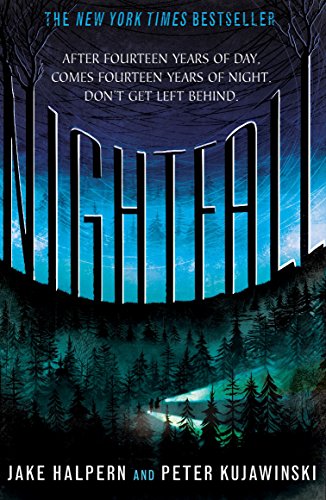
The dark will bring your worst nightmares to light in this gripping and eerie survival story, perfect for fans of James Dashner and Neil Gaiman.
On Marin’s island, the sunrise only comes every twenty-eight years. But it’s not the dawn she has to worry about. When sunset triggers the tide to roll out hundreds of miles, the islanders of Bliss must quickly prepare to sail south, where they will wait out the long, fourteen years of unforgiving Night. Marin and her twin brother, Kana, ready their house for departure: locks must be taken off doors, furniture arranged, tables set. The rituals are bizarre, but none of the adults in town will discuss why it has to be done this way.
Just as the ships are about to sail, a boy goes missing—the twins’ friend Line. Marin and Kana are the only ones who know the truth about where Line has gone, and the only way to rescue him is by doing it themselves. But Night is falling. Their island is changing.
And it may already be too late.
“Creepy.”—Us Weekly
“Cinematic.”—Entertainment Weekly
“Fall’s biggest thriller novel.”—Mashable.com
“Halpern and Kujawinski invent a fascinating world that comes to life, full of intriguing monsters . . . The teens' desperate journey to find their way off the island will keep readers turning pages.”—Kirkus Reviews
Die Inhaltsangabe kann sich auf eine andere Ausgabe dieses Titels beziehen.
Über die Autorin bzw. den Autor
Jake Halpern (www.jakehalpern.com) is an acclaimed journalist, author, and radio producer who has written for several publications including The New Yorker and The New York Times Magazine. As a contributor at NPR, Jake produced one of the most listened-to episodes of This American Life. He co-wrote the Dormia series with Peter Kujawinski and is the author of Bad Paper, a nonfiction book for adults. Follow him on Twitter @JakeHalpern.
For eighteen years, Peter Kujawinski (www.peterkujawinski.com) was an American diplomat, on assignment in places like Israel, Haiti and France and at the United Nations in New York. Most recently, he was the U.S. Consul General in western Canada, which included Alberta, Saskatchewan and the Northwest Territories. While working as a diplomat, he started to write for adults and children. He has contributed to the international edition of the New York Times, and with co-author Jake Halpern, Peter wrote the Dormia trilogy (Dormia, World's End and Shadow Tree). He lives in Chicago with his family. Follow him on Twitter @kujawinski.
Auszug. © Genehmigter Nachdruck. Alle Rechte vorbehalten.
***This excerpt is from an advance uncorrected proof***
Copyright © 2015 Jake Halpern and Peter Kujawinski
CHAPTER 1
MARIN WALKED INTO THE WIND AND FELT IT GENTLY PUSH back. A few more steps and she’d be at the edge of the cliff. Her focus was on the thistle, the prickly green plants that crunched beneath her feet. What would happen to these plants during the years of Night? Would they wither and die, or would they simply lie dormant, waiting for the first rays of sunlight to peek up from the horizon? She had asked those who had been through this before, but they refused to discuss it. No one talked about the Night, even though it was almost upon them.
She stopped near the precipice. The water below was dark, almost black, and it stretched everywhere, like a liquid version of the sky. In the last year, as the sun had begun its final de- scent, the water had gone from blue-green to iridescent blue, and from there it grew steadily darker. A hint of its fluorescence remained, but now it provoked a shiver instead of a smile.
Marin took a deep breath of the cold sea air. When the sun vanished, it would get even colder. Everything would freeze—at least that’s what people at school said. In any case, by the time that happened, she’d be long gone, along with everyone else in Bliss. Only the buildings would remain, silent and empty, en- tombed in ice.
The wind flung Marin’s wavy black hair into her face. She was smaller than other girls her age, but she was stronger than most. Her arms and legs were long and well-muscled, the product of years spent climbing, hiking, and sailing. She had honey-colored eyes, long lashes, and bronze skin—a striking combination, which she inherited from her mother. Her cloth- ing, however, was plain and purely functional: waxed canvas pants, a raw denim shirt, and leather boots.
“Has the tide turned yet?”
Marin spun at the unexpected voice. She had been waiting for her friend Line, but instead she saw Palan—a frail man with paper-thin skin and a bald head marked with brown sunspots. Palan had lived through several Mornings and his skin bore the proof. His cobalt-blue robe rippled in the wind, revealing a left arm that ended in a stump just above his wrist.
“I’m not sure about the tide,” Marin replied. “What do you think?”
The old man faced Marin, his watery eyes looking past her, into the distance. “This is my fourth Evening,” he said quietly. He tightened the heavy wool scarf wrapped around his neck. “The sun seems to be moving faster and faster with the years.” Marin followed his gaze. The sun had almost disappeared below the horizon. Only a sliver remained visible. The entire western sky was ablaze in magnificent shades of orange and red. A few degrees more and the sun would vanish completely, plunging the island into darkness for the next fourteen years. They said this would happen soon, perhaps in a matter of days.
It sounded a bit like the end of the world to Marin, and she still found it hard to believe.
The wind blew gently and Palan sighed. “It saddens me that I will never see this place again. When I leave here—I expect I won’t return.”
Marin reached out and touched his arm. The old man turned away from the sea, back toward the island’s interior, and grasped her hand. “I’ve heard movement in the forest,” he whispered.
“What do you mean?” asked Marin, worried that Palan may have become lost in his mind.
Palan gripped her hand tighter but did not reply. A muffled shout rang in the distance.
“MARIN!”
They looked up and watched a teenage boy moving toward them. It was Line. If Palan hadn’t been there, she would have run to him, but now she just waved back.
When he arrived, Line appeared slightly confused. Palan studied them both, arched an eyebrow, and smiled.
Line’s dark brown eyes twinkled as he approached Marin. He was handsome in the way that few boys of fourteen are. He was tall and broad-shouldered, with an unkempt shock of reddish-brown hair, high cheekbones, and a cleft chin.
“Elder Palan,” said Line. “Any news of the boats?” A gust of wind pressed his curly hair flat against his head.
Palan straightened, as if the use of the honorific—Elder— reminded him of his role and station. “Sorry, my boy, I’ve heard nothing of the boats,” said Palan. “But I am not here for that. Come—I’ll show you.”
He approached the cliff ’s edge and pointed downward. Marin and Line followed close behind him and peered over. The face of the cliff was shrouded in shadow, but they could make out several thick white veins coming out of the cliff and running down its side, like a hardened trail of wax from a giant candle.
“It’s ice,” said Palan. It was colder at the edge of the cliff, and his shoulders began to tremble. “My father brought me to this place as a boy. The ice always begins here. It squeezes out of the rock and then, they say, it spreads . . . until it covers every- thing. The island turns to ice.”
Marin and Line stood close together, near Palan. Line’s fingers grazed Marin’s.
Palan leaned over several inches more. “Somewhere down there is the hag.” His voice turned hoarse. “At times, when the waves break just right, you can see her.”
He took a step back from the cliff and smiled with great con- tentment, as if recalling a particularly fond memory. Marin and Line looked down at the water. It seemed no different than be- fore. Palan often spoke in riddles, in the manner that those of such age do.
“I’d like to get a better view of that ice,” said Line, taking off the coil of rope slung across his shoulder and pushing up the sleeves of his sweater. His forearms and biceps were tan and muscled from years of rock climbing.
“As you wish,” said Palan. “But be careful. Ice is much slicker than rock.”
Suddenly impatient, Marin and Line said good-bye. As Palan shuffled back to town, Line set up the rope, tying it securely to a small brass ring jutting from the rock. Marin and Line had been climbing the cliffs that formed the island’s pe- rimeter their entire lives, and recently, it had been just the two of them. Going off unchaperoned was frowned upon, but at the moment, the town was too consumed with other matters to pay them any mind.
Just before beginning, they checked to make sure they were each securely fastened to the rope. Marin faced Line. She tucked a lock of hair behind his ear so it didn’t dangle over his eyes. “You were late,” she said, scowling as if she were cross with...
„Über diesen Titel“ kann sich auf eine andere Ausgabe dieses Titels beziehen.
Suchergebnisse für Nightfall

Beispielbild für diese ISBN
Nightfall
Anbieter: World of Books (was SecondSale), Montgomery, IL, USA
Verkäuferbewertung 5 von 5 Sternen

Zustand: Very Good. Item in very good condition! Textbooks may not include supplemental items i.e. CDs, access codes etc. Artikel-Nr. 00098279821
Gebraucht kaufen
EUR 4,72
Versand gratis
Versand innerhalb von USA
Versand innerhalb von USA
Anzahl: 2 verfügbar
Beispielbild für diese ISBN
Nightfall
Anbieter: World of Books (was SecondSale), Montgomery, IL, USA
Verkäuferbewertung 5 von 5 Sternen
Zustand: Good. Item in good condition. Textbooks may not include supplemental items i.e. CDs, access codes etc. Artikel-Nr. 00091865587
Gebraucht kaufen
EUR 4,72
Versand gratis
Versand innerhalb von USA
Versand innerhalb von USA
Anzahl: 4 verfügbar
Beispielbild für diese ISBN
Nightfall
Anbieter: World of Books (was SecondSale), Montgomery, IL, USA
Verkäuferbewertung 5 von 5 Sternen
Zustand: Acceptable. Item in acceptable condition! Textbooks may not include supplemental items i.e. CDs, access codes etc. Artikel-Nr. 00110921377
Gebraucht kaufen
EUR 4,72
Versand gratis
Versand innerhalb von USA
Versand innerhalb von USA
Anzahl: 1 verfügbar
Beispielbild für diese ISBN
Nightfall
Verlag:
Puffin Books (edition Reprint), 2016
ISBN 10: 0147517400
ISBN 13: 9780147517401
Gebraucht
Paperback
Anbieter: BooksRun, Philadelphia, PA, USA
Verkäuferbewertung 5 von 5 Sternen
Paperback. Zustand: Very Good. Reprint. It's a well-cared-for item that has seen limited use. The item may show minor signs of wear. All the text is legible, with all pages included. It may have slight markings and/or highlighting. Artikel-Nr. 0147517400-11-1
Gebraucht kaufen
EUR 4,73
Versand gratis
Versand innerhalb von USA
Versand innerhalb von USA
Anzahl: 1 verfügbar
Beispielbild für diese ISBN
Nightfall
Anbieter: Wonder Book, Frederick, MD, USA
Verkäuferbewertung 5 von 5 Sternen
Zustand: Good. Good condition. A copy that has been read but remains intact. May contain markings such as bookplates, stamps, limited notes and highlighting, or a few light stains. Artikel-Nr. A13A-04296
Gebraucht kaufen
EUR 6,33
Versand gratis
Versand innerhalb von USA
Versand innerhalb von USA
Anzahl: 1 verfügbar
Beispielbild für diese ISBN
Nightfall
Verlag:
Penguin Young Readers Group, 2016
ISBN 10: 0147517400
ISBN 13: 9780147517401
Gebraucht
Softcover
Anbieter: Better World Books, Mishawaka, IN, USA
Verkäuferbewertung 5 von 5 Sternen
Zustand: Good. Reprint. Pages intact with minimal writing/highlighting. The binding may be loose and creased. Dust jackets/supplements are not included. Stock photo provided. Product includes identifying sticker. Better World Books: Buy Books. Do Good. Artikel-Nr. 15009534-6
Gebraucht kaufen
EUR 7,10
Versand gratis
Versand innerhalb von USA
Versand innerhalb von USA
Anzahl: 1 verfügbar
Beispielbild für diese ISBN
Nightfall
Verlag:
Penguin Young Readers Group, 2016
ISBN 10: 0147517400
ISBN 13: 9780147517401
Gebraucht
Softcover
Anbieter: Better World Books: West, Reno, NV, USA
Verkäuferbewertung 5 von 5 Sternen
Zustand: Very Good. Reprint. Pages intact with possible writing/highlighting. Binding strong with minor wear. Dust jackets/supplements may not be included. Stock photo provided. Product includes identifying sticker. Better World Books: Buy Books. Do Good. Artikel-Nr. 17203335-6
Gebraucht kaufen
EUR 7,10
Versand gratis
Versand innerhalb von USA
Versand innerhalb von USA
Anzahl: 1 verfügbar
Beispielbild für diese ISBN
Nightfall
Anbieter: WorldofBooks, Goring-By-Sea, WS, Vereinigtes Königreich
Verkäuferbewertung 5 von 5 Sternen
Paperback. Zustand: Very Good. The book has been read, but is in excellent condition. Pages are intact and not marred by notes or highlighting. The spine remains undamaged. Artikel-Nr. GOR009185673
Gebraucht kaufen
EUR 4,22
EUR 6,51 Versand
Versand von Vereinigtes Königreich nach USA
Versand von Vereinigtes Königreich nach USA
Anzahl: 1 verfügbar
Foto des Verkäufers
Nightfall
Anbieter: Bookbot, Prague, Tschechien
Verkäuferbewertung 5 von 5 Sternen
Softcover. Zustand: As New. Leichte Kratzer / Abnutzungen / Druckstellen. A New York Times and Indie Bestseller The dark will bring your worst nightmares to light in this gripping and eerie survival story! On Marin's island, the sunrise only comes every twenty-eight years. But it's not the dawn she has to worry about. When sunset triggers the tide to roll out hundreds of miles, the islanders of Bliss must quickly prepare to sail south, where they will wait out the long, fourteen years of unforgiving Night. Marin and her twin brother, Kana, ready their house for departure: locks must be taken off doors, furniture arranged, tables set. The rituals are bizarre, but none of the adults in town will discuss why it has to be done this way. Just as the ships are about to sail, a boy goes missing--the twins' friend Line. Marin and Kana are the only ones who know the truth about where Line has gone, and the only way to rescue him is by doing it themselves. But Night is falling. Their island is changing. And it may already be too late. "Creepy."--Us Weekly "Cinematic."--Entertainment Weekly "Fall's biggest thriller novel."--Mashable.com "Halpern and Kujawinski invent a fascinating world that comes to life, full of intriguing monsters . . . The teens' desperate journey to find their way off the island will keep readers turning pages."--Kirkus Reviews. Artikel-Nr. df09a0d7-017f-4a95-a3d0-40a5484dde4d
Gebraucht kaufen
EUR 3,80
EUR 20,99 Versand
Versand von Tschechien nach USA
Versand von Tschechien nach USA
Anzahl: 1 verfügbar
Foto des Verkäufers
Nightfall
Verlag:
Penguin US, Puffin Books, 2016
ISBN 10: 0147517400
ISBN 13: 9780147517401
Gebraucht
Taschenbuch
Anbieter: AHA-BUCH GmbH, Einbeck, Deutschland
Verkäuferbewertung 5 von 5 Sternen
Taschenbuch. Zustand: Sehr gut. Gebraucht - Sehr gut SG - leichte Beschädigungen oder Verschmutzungen, ungelesenes Mängelexemplar, gestempelt. Artikel-Nr. INF1000546686
Gebraucht kaufen
EUR 7,96
EUR 35,00 Versand
Versand von Deutschland nach USA
Versand von Deutschland nach USA
Anzahl: 1 verfügbar