
Verwandte Artikel zu Laughter Yoga: Daily Practices for Health and Happiness
Inhaltsangabe
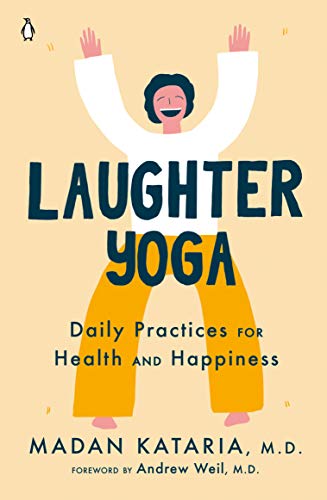
Could you use a good laugh? This definitive guide by the founder of the worldwide laughter yoga movement will show you how to giggle your way to good health!
Bring laughter into your life at any time of day--no special equipment needed, no new wardrobe, no expensive classes, not even a sense of humor!
Laughter yoga is all about voluntary laughter--how you can learn to laugh even in the absence of humorous stimuli, and reap the extraordinary, scientifically proven benefits, which include stress reduction, pain relief, weight loss, heightened immunity, and, especially, enhanced mood: If you act happy, you'll become happy--your body can't tell the difference!
Children laugh more than 300 times a day, adults fewer than fifteen. But it's easy to start laughing again. The exercises in this book combine voluntary laughter with yogic breathing to give you a full body-mind workout. And it turns out that laughter is the fastest way to reduce stress and the best kind of cardio: Ten minutes of hearty laughter is equal to thirty minutes on the rowing machine.
With Laughter Yoga, join the growing worldwide movement and discover how laughter really is the best medicine.
A PENGUIN LIFE TITLE
Die Inhaltsangabe kann sich auf eine andere Ausgabe dieses Titels beziehen.
Über die Autorin bzw. den Autor
Madan Kataria, M.D., "the guru of giggling" (The Times, U.K.), is the founder of the laughter yoga club movement that started in 1995 in Mumbai. He has conducted seminars and workshops around the world for such organizations as UBS, Emirates Bank, IBM, Hewlett-Packard, and Volvo. He has also been featured on The Oprah Winfrey Show, CNN, and ABC, and is associated with an increasing number of medical research projects analyzing the benefits of laughter. Retired from medical practice, he devotes all his time to writing, teaching, coaching, and training laughter leaders in order to foster the spread of laughter clubs. He is the creator of World Laughter Day, which is celebrated on the first Sunday of every May.
Andrew Weil, M.D. (foreword) is the New York Times bestselling author of numerous books, including Spontaneous Happiness, Spontaneous Healing, and Healthy Aging. A world-renowned pioneer in the field of integrative medicine, he is the founder and director of the Arizona Center for Integrative Medicine at the University of Arizona Health Sciences Center.
Auszug. © Genehmigter Nachdruck. Alle Rechte vorbehalten.
1
Origins of Laughter Yoga
"The sun demands no reason to shine, water demands no reason to flow, a child demands no reason to smile, then why do we need a reason to laugh?"
My Laughter Story
Born in a small village on the India-Pakistan border, I was the youngest of eight children. Hailing from a farming background, my parents had never attended school. Being simple village folk, they were mostly engrossed in the daily grind of farm life. None of my siblings were interested in academics, which made me the odd one out. It was my mother's dream that I become a doctor because in those days one had to travel almost ten miles to seek any kind of medical help. She hoped that I would study medicine and return to the village.
In pursuance of her wish, I went to a boarding school in Ferozepur, Punjab, and got my medical degree from Amritsar Medical College. After graduating, I went to Mumbai and started practicing as a family physician. Lured by the glitz and glitterati of the city, I imagined myself becoming rich and famous. I tried everything I could to reach for the skies, but soon realized that it was not that simple. I did not succeed in my quest and slumped into depression.
Life was tough as it was not easy to make money without any experience. I was stressed and miserable. My mother, who visited Mumbai at that point, was shocked to see my state. "Madan, what is wrong? You don't look happy and you don't laugh and smile like you used to in the village," she would ask.
She was right. Somewhere in the midst of the hurried upward scramble to the imagined riches, I had lost my laughter. The transition from an innocent village boy to a city doctor had altered my persona. Having realized the enormity of the situation, I embarked on a new search, and this time it was not money. It was to find my laughter again: the key to happiness and joy.
Not content with being just a physician in a suburb of Mumbai, I launched a health magazine called My Doctor to spread more awareness about the importance of good health. It was in March 1995, while writing an article titled "Laughter: The Best Medicine" for my magazine, that I stumbled upon a rich repertoire of scientific work done on laughter as a therapy. Further exploration led me to an amazing volume of documented studies that described many proven benefits of laughter on the mind and body.
While going through all the scientific literature, I was profoundly inspired by Anatomy of an Illness, a book by American journalist Norman Cousins. It describes how Cousins laughed his way back to health from ankylosing spondylitis, a chronic condition affecting the spine. He took a lot of painkillers each day but found no relief, which is why he decided to watch funny movies instead. To his surprise, he found that just thirty minutes of laughter gave him almost two hours of painless sleep.
I also read about the scientific studies conducted by Dr. Lee Berk of Loma Linda University in California, which showed that mirthful laughter reduced stress and had a positive impact on the immune system.
This got me thinking. Life in Mumbai was stressful and people hardly laughed. They were forever in a rush and struggled to meet their needs and fulfill their dreams. Even I appeared dour and had lost my laughter to the daily rigors of my profession and the added burden of a publication. It was not a joke: there was no time to laugh.
I believed that laughter could improve health and enable one to cope with the stressors of the modern age. I looked for ways to add more laughter to people's lives and help them with their medical or personal crises. I started joking and laughing with my patients and realized that they recovered much faster when they were happy and positive.
The Beginning
It was March 13, 1995. I was awake at 4 a.m. and pacing up and down my living room, desperate to find a solution to the stress I was facing. An idea came to me: if laughter was indeed so good, why not set up a laughter club? I was ecstatic and could hardly wait to implement the concept. Three hours later, I hurried to the public park where I went for a morning walk every day. I tried to convince a few regular walkers about the importance of laughter and the idea of starting a laughter club.
The response was predictable. They were nonplussed and probably thought that I was crazy. They laughed at the idea and scoffed at the concept. But I persisted and managed to motivate 4 out of 400 people. The first laughter club started with just five people.
L to R: (standing) Madan Mohan Pushkarna, Mohan Singh, Rajendra Tandon; (sitting) Madhuri and Dr. Madan Kataria. They were members of the first laughter club in 1995.
We met for half an hour every morning to laugh together, much to the amusement of befuddled onlookers. Initially, the sessions would begin with someone sharing a joke or a humorous anecdote. Soon, we started enjoying the whole exercise and reported feeling much better after a laughter session of just twenty to thirty minutes.
Despite the initial ridicule and criticism, I continued to advocate the health benefits laughter had to offer. Gradually, more people became receptive and showed interest. The numbers rose and by the end of the week there were nearly fifty-five people. The routine continued with much vigor for the next ten days, after which we hit a snag. The good jokes and stories were replaced by negative and hurtful ones. Reacting to the offensive jokes, two members complained that it would be better to close the club. Determined to keep the laughter club alive, I asked the members to give me a day to resolve the crisis. That night, I looked up methods to laugh without jokes. Luckily, I chanced upon a book called Emotions and Health from the Prevention Health Care Series. As I read a chapter on humor and laughter, I was surprised to learn that the body cannot differentiate between real and fake laughter. It concluded that if one could not manage a genuine laugh, one should pretend to do so. I also learned that not only laughter but a bodily expression of any motion generates a similar emotion in the mind. This was the breakthrough I was looking for: why not use laughter as an exercise?
The next morning, I explained the concept to the group and asked them to act like they were laughing for a minute. Though skeptical, they agreed. The results were amazing. For some, the fake laughter quickly turned into real laughter. It was contagious. Soon, the others followed. The group laughed like never before with hearty laughter continuing for almost ten minutes.
Finally, there was laughter, real laughter with no jokes.
The fact that one could laugh without an external trigger was something unique. However, there were some people who were shy and found it difficult to laugh without a reason. As every person has a different psychological makeup, it is harder for some people to laugh at will. My new challenge was to get these people to laugh.
I came up with warm-up exercises like clapping and chanting "ho ho" and "ha ha ha." This helped people laugh more easily. Soon, varied laughter exercises were developed, which included elements of role play like childlike playfulness and other techniques from my theater days.
As the concept evolved, I identified similarities between laughter and pranayama. Both of them are based on the principle of optimal breathing, which is fundamental to good health. Together with my wife, Madhuri, I incorporated elements from this ancient form of yogic breathing into laughter. The result was laughter yoga or hasya yoga-a...
„Über diesen Titel“ kann sich auf eine andere Ausgabe dieses Titels beziehen.
Suchergebnisse für Laughter Yoga: Daily Practices for Health and Happiness

Beispielbild für diese ISBN
Laughter Yoga: Daily Practices for Health and Happiness
Anbieter: World of Books (was SecondSale), Montgomery, IL, USA
Verkäuferbewertung 5 von 5 Sternen

Paperback. Zustand: Fair. Could you use a good laugh? This definitive guide by the founder of the worldwide laughter yoga movement will show you how to giggle your way to good health!Bring laughter into your life at any time of day--no special equipment needed, no new wardrobe, no expensive classes, not even a sense of humor!Laughter yoga is all about voluntary laughter--how you can learn to laugh even in the absence of humorous stimuli, and reap the extraordinary, scientifically proven benefits, which include stress reduction, pain relief, weight loss, heightened immunity, and, especially, enhanced mood: If you act happy, you'll become happy--your body can't tell the difference!Children laugh more than 300 times a day, adults fewer than fifteen. But it's easy to start laughing again. The exercises in this book combine voluntary laughter with yogic breathing to give you a full body-mind workout. And it turns out that laughter is the fastest way to reduce stress and the best kind of cardio: Ten minutes of hearty laughter is equal to thirty minutes on the rowing machine.With Laughter Yoga, join the growing worldwide movement and discover how laughter really is the best medicine.A PENGUIN LIFE TITLE. Artikel-Nr. 00094498144
Gebraucht kaufen
EUR 4,21
Versand gratis
Versand innerhalb von USA
Versand innerhalb von USA
Anzahl: 1 verfügbar
Beispielbild für diese ISBN
Laughter Yoga: Daily Practices for Health and Happiness
Anbieter: World of Books (was SecondSale), Montgomery, IL, USA
Verkäuferbewertung 5 von 5 Sternen
Paperback. Zustand: Good. Could you use a good laugh? This definitive guide by the founder of the worldwide laughter yoga movement will show you how to giggle your way to good health!Bring laughter into your life at any time of day--no special equipment needed, no new wardrobe, no expensive classes, not even a sense of humor!Laughter yoga is all about voluntary laughter--how you can learn to laugh even in the absence of humorous stimuli, and reap the extraordinary, scientifically proven benefits, which include stress reduction, pain relief, weight loss, heightened immunity, and, especially, enhanced mood: If you act happy, you'll become happy--your body can't tell the difference!Children laugh more than 300 times a day, adults fewer than fifteen. But it's easy to start laughing again. The exercises in this book combine voluntary laughter with yogic breathing to give you a full body-mind workout. And it turns out that laughter is the fastest way to reduce stress and the best kind of cardio: Ten minutes of hearty laughter is equal to thirty minutes on the rowing machine.With Laughter Yoga, join the growing worldwide movement and discover how laughter really is the best medicine.A PENGUIN LIFE TITLE. Artikel-Nr. 00100821890
Gebraucht kaufen
EUR 4,21
Versand gratis
Versand innerhalb von USA
Versand innerhalb von USA
Anzahl: 3 verfügbar
Beispielbild für diese ISBN
Laughter Yoga: Daily Practices for Health and Happiness
Anbieter: ThriftBooks-Reno, Reno, NV, USA
Verkäuferbewertung 5 von 5 Sternen
Paperback. Zustand: Good. No Jacket. Pages can have notes/highlighting. Spine may show signs of wear. ~ ThriftBooks: Read More, Spend Less. Artikel-Nr. G0143134949I3N00
Gebraucht kaufen
EUR 6,10
Versand gratis
Versand innerhalb von USA
Versand innerhalb von USA
Anzahl: 1 verfügbar
Beispielbild für diese ISBN
Laughter Yoga: Daily Practices for Health and Happiness
Anbieter: ThriftBooks-Phoenix, Phoenix, AZ, USA
Verkäuferbewertung 5 von 5 Sternen
Paperback. Zustand: Good. No Jacket. Pages can have notes/highlighting. Spine may show signs of wear. ~ ThriftBooks: Read More, Spend Less. Artikel-Nr. G0143134949I3N00
Gebraucht kaufen
EUR 6,10
Versand gratis
Versand innerhalb von USA
Versand innerhalb von USA
Anzahl: 1 verfügbar
Beispielbild für diese ISBN
Laughter Yoga: Daily Practices for Health and Happiness
Anbieter: ThriftBooks-Atlanta, AUSTELL, GA, USA
Verkäuferbewertung 5 von 5 Sternen
Paperback. Zustand: Good. No Jacket. Pages can have notes/highlighting. Spine may show signs of wear. ~ ThriftBooks: Read More, Spend Less. Artikel-Nr. G0143134949I3N00
Gebraucht kaufen
EUR 6,12
Versand gratis
Versand innerhalb von USA
Versand innerhalb von USA
Anzahl: 2 verfügbar
Beispielbild für diese ISBN
Laughter Yoga: Daily Practices for Health and Happiness
Anbieter: ThriftBooks-Dallas, Dallas, TX, USA
Verkäuferbewertung 5 von 5 Sternen
Paperback. Zustand: Good. No Jacket. Pages can have notes/highlighting. Spine may show signs of wear. ~ ThriftBooks: Read More, Spend Less. Artikel-Nr. G0143134949I3N00
Gebraucht kaufen
EUR 6,12
Versand gratis
Versand innerhalb von USA
Versand innerhalb von USA
Anzahl: 1 verfügbar
Beispielbild für diese ISBN
Laughter Yoga: Daily Practices for Health and Happiness
Anbieter: ThriftBooks-Dallas, Dallas, TX, USA
Verkäuferbewertung 5 von 5 Sternen
Paperback. Zustand: Good. No Jacket. Former library book; Pages can have notes/highlighting. Spine may show signs of wear. ~ ThriftBooks: Read More, Spend Less. Artikel-Nr. G0143134949I3N10
Gebraucht kaufen
EUR 6,12
Versand gratis
Versand innerhalb von USA
Versand innerhalb von USA
Anzahl: 1 verfügbar
Beispielbild für diese ISBN
Laughter Yoga: Daily Practices for Health and Happiness
Anbieter: ThriftBooks-Atlanta, AUSTELL, GA, USA
Verkäuferbewertung 5 von 5 Sternen
Paperback. Zustand: Good. No Jacket. Former library book; Pages can have notes/highlighting. Spine may show signs of wear. ~ ThriftBooks: Read More, Spend Less. Artikel-Nr. G0143134949I3N10
Gebraucht kaufen
EUR 6,12
Versand gratis
Versand innerhalb von USA
Versand innerhalb von USA
Anzahl: 1 verfügbar
Beispielbild für diese ISBN
Laughter Yoga: Daily Practices for Health and Happiness
Anbieter: ThriftBooks-Dallas, Dallas, TX, USA
Verkäuferbewertung 5 von 5 Sternen
Paperback. Zustand: Very Good. No Jacket. May have limited writing in cover pages. Pages are unmarked. ~ ThriftBooks: Read More, Spend Less. Artikel-Nr. G0143134949I4N00
Gebraucht kaufen
EUR 6,12
Versand gratis
Versand innerhalb von USA
Versand innerhalb von USA
Anzahl: 1 verfügbar
Beispielbild für diese ISBN
Laughter Yoga: Daily Practices for Health and Happiness
Anbieter: ThriftBooks-Phoenix, Phoenix, AZ, USA
Verkäuferbewertung 5 von 5 Sternen
Paperback. Zustand: Very Good. No Jacket. May have limited writing in cover pages. Pages are unmarked. ~ ThriftBooks: Read More, Spend Less. Artikel-Nr. G0143134949I4N00
Gebraucht kaufen
EUR 6,12
Versand gratis
Versand innerhalb von USA
Versand innerhalb von USA
Anzahl: 1 verfügbar