
Verwandte Artikel zu How Not to Fall Apart: Lessons Learned on the Road...
Inhaltsangabe
"She’s [Maggy is] really funny . . . If I had a self-destructive young adult in my life . . . this is probably the book I’d get her.” —The New York Times Book Review
“How Not to Fall Apart is the book that finally understands mental health, and it'll make you feel infinitely less alone.” —HelloGiggles
Featured in The New York Post, Lenny Letter, BuzzFeed, and more.
What no one tells you about living with anxiety and depression—learned the hard way
Maggy van Eijk knows the best place to cry in public. She also knows that eating super salty licorice or swimming in icy cold water are things that make you feel alive but, unlike self-harm, aren't bad for you.
These are the things to remember when you're sad.
Turning 27, Maggy had the worst mental health experience of her life so far. She ended a three-year relationship. She lost friends and made bad decisions. She drank too much and went to ER over twelve times. She saw three different therapists and had three different diagnoses. She went to two burn units for self-inflicted wounds and was escorted in an ambulance to a mental health crisis center. But that's not the end of her story.
Punctuated with illustrated lists reminiscent of Maggy's popular BuzzFeed posts, How Not to Fall Apart shares the author's hard-won lessons about what helps and what hurts on the road to self-awareness and better mental health. This is a book about what it's like to live with anxiety and depression, panic attacks, self-harm and self-loathing--and it's also a hopeful roadmap written by someone who's been there and is still finding her way.
Die Inhaltsangabe kann sich auf eine andere Ausgabe dieses Titels beziehen.
Über die Autorin bzw. den Autor
MAGGY VAN EIJK has written numerous popular articles about mental health for BuzzFeed and elsewhere. Currently the social media manager for the BBC, she lives in London.
Auszug. © Genehmigter Nachdruck. Alle Rechte vorbehalten.
Chapter 1
Before We Begin
Is this a good idea?"
"Is this a good idea?"
"Are we sure this is a good idea?"
This is the conversation I have with myself the most, sometimes out loud in the futile hope someone out there will reply. I said it when I told my doctor about my anxiety, I said it when I swallowed my first dose of Citalopram, I said it when I took myself to the ER, and I said it when I was thinking about writing this book.
Is it a good idea to write about something I'm still very much in the middle of? It feels like writing about war when I'm still on the battlefield or reporting on an earthquake when shockwaves are tearing down houses around me.
Deep down I know that writing this book is a good idea because it's what's helping me continue on. I have a Quality Street tin of mental health conditions that sometimes decide to get together and make a joint appearance. One condition at a time is relatively manageable but when they all flare up at once it feels like I'm walking around with my head on fire. Only no one can see the blaze. Apart from the scars that run up and down my arms like a train track, everything looks calm. Business as usual.
I hope that by writing my story, by turning my brain inside out and making the invisible visible, I can help someone in a similar position, someone who feels they're stuck in the trenches and there's no way out. What I've learned so far is that no matter how shitty your situation is, there is an escape route, and every time you climb out you'll be more equipped to deal with the next falling down. This book aims to remind people of that, and myself too.
No matter how shitty your situation is, there is an escape route.
Ultimately, your mental illness lies to you. It'll tell you that everything is wrong and that you have no future. It'll tell you that you should be ashamed and you're a nuisance and you don't deserve to get help. The world in which depression and anxiety reign supreme is extremely lonely, and I wanted to write this book to reach out and say: "Hey there, you're not alone, I'm right there with you."
Having said that, everyone's mind is unique, and while our background and diagnoses might sound similar, my story can't encompass your entire experience. In fact, diagnoses can be a strange thing. I was told I had unipolar depression at age seventeen, then a doctor came along and added bipolar to the mix in my early twenties, another one went back to the original conclusion, and finally, aged twenty-seven I was told I have borderline personality disorder. Each time I received a new diagnosis, I assumed I'd step out of my doctor's office and my entire life would change, but it never did. Instead, my mental health remained the same tough slog of a thing I have to push through to move forward.
This book isn't specifically about my borderline personality disorder, but it might touch on symptoms of that condition. I'll also touch on depression, anxiety, self-harm, and self-esteem while moving through my body-the head, the skin, the heart-and the world around me. I'll talk about the moments we all have when you're stressed, angry, sad,or all three. When you're plummeting into a sinkhole. When you feel so lost you could do with a map that tells you where you are and where you're most likely going to be tomorrow.
Depression is in no way equal to "sadness," but I am sad an awful lot. So I've also filled this book with little everyday reminders to pull myself out of my brain ditch. There are notes and anecdotes plastered all over my walls, my phone, my notebook, my mirror, and the back of my hand, and I've put them all together on paper in a way I hope you'll find useful. Some of these reminders are set up as lists. I love lists. They impose a sense of organization onto a lot of the chaos that whizzes around in my head. I make daily to-do lists. I make them for work. I make them for when I get home. I make bigger picture lists: week goals, month goals, year goals. I also have lists for things to reward myself with: tattoos, books, films, playlists.
The most important aspect of lists for me is the fact that they are a direct link to the future, even if it's as immediate as what I'm going to be doing in the next half hour. Lists tell me I need to hang on. They tell me not to give up just yet, which is why I'm using them so often in this book. Hopefully they'll have the same effect on you too.
While I hope to offer you the best advice I can, it's important to remember that there is no blueprint for experiencing a mental health problem. There's no one-size-
fits-all solution either. Personally, I've found reading about others' experiences to be enlightening and comforting, so I hope this book can achieve that for you. If anything you read makes you feel stressed out or uncomfortable, make sure you speak out and ask for help.
Now letÕs begin.
Chapter 2
Remember This When the World Won't Stop Spinning
PANIC AT THE DISCO
I'm twenty years old standing at the top of Row Mead and I'm about to die. Amy Winehouse has appeared on Glastonbury's Pyramid Stage. She weaves a halo over Worthy Farm with her booming voice and erratic yet hypnotizing movements. She's singing "Back to Black" and I'm trying to drink in the words that I've come to know so well, but there's a problem-something awful is happening to me. I'm pretty sure I'm dying.
Between "Cupid" and "Back to Black," my legs had turned to jelly, my stomach somersaulted, acidic dread had climbed up my throat, and as I fell toward the muddy grass I hoped someone would tell my family I loved them, because this was it. At the very least I was losing my mind; at the worst my life was about to end.
I opened my eyes and realized I was somehow not quite dead yet. My boyfriend, P., lifted me up and carried me to the medical tent, assuring me along the way that yes I was still breathing. The nurse handed me a plastic cup of water and suggested I go lie down in my tent and lay off the Ecstasy. I wanted to tell her I'd never done drugs in my whole life, but something told me she wouldn't believe me. I was ushered back outside, where Amy was still playing somewhere in the distance.
I hoped my weird dizzy spell was a fluke, but we had to cut our Glastonbury trip short: whether I was standing in a crowd of Kings of Leon fans or waiting for falafel in front of a food truck, I kept experiencing that surge of feeling, like my-life-is-ending-right-this-second. I was constantly sprinting back to our tent to cry and hyperventilate into my sleeping bag.
When I left Glastonbury and returned to my student life in Bristol, I convinced myself that whatever happened at the festival was the result of dehydration or perhaps a dodgy sandwich. But then a couple of days later it hit me again on the bus, then again in the student union bar, and again in lectures and one-on-one tutorials. In the moments between attacks I didn't feel right either. I felt disconnected from everything around me like my head was stuck in a snow globe. I barged into the doctor's convinced I had diabetes, a brain tumor, chronic fatigue, an iron deficiency, vertigo, meningitis, Ebola, Alice in Wonderland syndrome (yes, this is a thing), migraines, IBS, and meningitis again. I did test after test, but I was constantly told that I was in perfect health. During my fifty-sixth trip to the doctor, a new GP saw me. He asked how often I drank alcohol: "barely ever." And how often did I do drugs: "never." He put his pen down on his...
„Über diesen Titel“ kann sich auf eine andere Ausgabe dieses Titels beziehen.
Suchergebnisse für How Not to Fall Apart: Lessons Learned on the Road...

Beispielbild für diese ISBN
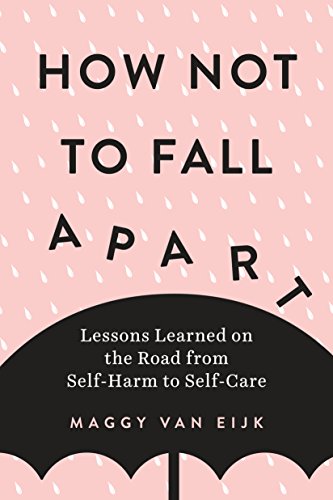
How Not to Fall Apart: Lessons Learned on the Road from Self-Harm to Self-Care
Anbieter: World of Books (was SecondSale), Montgomery, IL, USA
Verkäuferbewertung 5 von 5 Sternen

Paperback. Zustand: Good. "She's [Maggy is] really funny . . . If I had a self-destructive young adult in my life . . this is probably the book I'd get her." --The New York Times Book Review "How Not to Fall Apart is the book that finally understands mental health, and it'll make you feel infinitely less alone." --HelloGiggles Featured in The New York Post, Lenny Letter, BuzzFeed, and more. What no one tells you about living with anxiety and depression--learned the hard way Maggy van Eijk knows the best place to cry in public. She also knows that eating super salty licorice or swimming in icy cold water are things that make you feel alive but, unlike self-harm, aren't bad for you. These are the things to remember when you're sad. Turning 27, Maggy had the worst mental health experience of her life so far. She ended a three-year relationship. She lost friends and made bad decisions. She drank too much and went to ER over twelve times. She saw three different therapists and had three different diagnoses. She went to two burn units for self-inflicted wounds and was escorted in an ambulance to a mental health crisis center. But that's not the end of her story. Punctuated with illustrated lists reminiscent of Maggy's popular BuzzFeed posts, How Not to Fall Apart shares the author's hard-won lessons about what helps and what hurts on the road to self-awareness and better mental health. This is a book about what it's like to live with anxiety and depression, panic attacks, self-harm and self-loathing--and it's also a hopeful roadmap written by someone who's been there and is still finding her way. Artikel-Nr. 00080534142
Gebraucht kaufen
EUR 3,83
Versand gratis
Versand innerhalb von USA
Versand innerhalb von USA
Anzahl: 5 verfügbar
Beispielbild für diese ISBN
How Not to Fall Apart: Lessons Learned on the Road from Self-Harm to Self-Care
Anbieter: BooksRun, Philadelphia, PA, USA
Verkäuferbewertung 5 von 5 Sternen
Paperback. Zustand: Fair. The item might be beaten up but readable. May contain markings or highlighting, as well as stains, bent corners, or any other major defect, but the text is not obscured in any way. Artikel-Nr. 0143133497-7-1-13
Gebraucht kaufen
EUR 4,31
Versand gratis
Versand innerhalb von USA
Versand innerhalb von USA
Anzahl: 1 verfügbar
Beispielbild für diese ISBN
How Not to Fall Apart: Lessons Learned on the Road from Self-Harm to Self-Care
Verlag:
Penguin Publishing Group (edition Illustrated), 2018
ISBN 10: 0143133497
ISBN 13: 9780143133490
Gebraucht
Paperback
Anbieter: BooksRun, Philadelphia, PA, USA
Verkäuferbewertung 5 von 5 Sternen
Paperback. Zustand: Very Good. Illustrated. It's a well-cared-for item that has seen limited use. The item may show minor signs of wear. All the text is legible, with all pages included. It may have slight markings and/or highlighting. Artikel-Nr. 0143133497-11-1
Gebraucht kaufen
EUR 4,49
Versand gratis
Versand innerhalb von USA
Versand innerhalb von USA
Anzahl: 1 verfügbar
Beispielbild für diese ISBN
How Not to Fall Apart: Lessons Learned on the Road from Self-Harm to Self-Care
Verlag:
Penguin Publishing Group, 2018
ISBN 10: 0143133497
ISBN 13: 9780143133490
Gebraucht
Paperback
Anbieter: ThriftBooks-Dallas, Dallas, TX, USA
Verkäuferbewertung 5 von 5 Sternen
Paperback. Zustand: As New. No Jacket. Pages are clean and are not marred by notes or folds of any kind. ~ ThriftBooks: Read More, Spend Less. Artikel-Nr. G0143133497I2N00
Gebraucht kaufen
EUR 6,29
Versand gratis
Versand innerhalb von USA
Versand innerhalb von USA
Anzahl: 1 verfügbar
Beispielbild für diese ISBN
How Not to Fall Apart: Lessons Learned on the Road from Self-Harm to Self-Care
Verlag:
Penguin Publishing Group, 2018
ISBN 10: 0143133497
ISBN 13: 9780143133490
Gebraucht
Paperback
Anbieter: ThriftBooks-Atlanta, AUSTELL, GA, USA
Verkäuferbewertung 5 von 5 Sternen
Paperback. Zustand: As New. No Jacket. Pages are clean and are not marred by notes or folds of any kind. ~ ThriftBooks: Read More, Spend Less. Artikel-Nr. G0143133497I2N00
Gebraucht kaufen
EUR 6,29
Versand gratis
Versand innerhalb von USA
Versand innerhalb von USA
Anzahl: 1 verfügbar
Beispielbild für diese ISBN
How Not to Fall Apart: Lessons Learned on the Road from Self-Harm to Self-Care
Verlag:
Penguin Publishing Group, 2018
ISBN 10: 0143133497
ISBN 13: 9780143133490
Gebraucht
Paperback
Anbieter: ThriftBooks-Dallas, Dallas, TX, USA
Verkäuferbewertung 5 von 5 Sternen
Paperback. Zustand: Good. No Jacket. Pages can have notes/highlighting. Spine may show signs of wear. ~ ThriftBooks: Read More, Spend Less. Artikel-Nr. G0143133497I3N00
Gebraucht kaufen
EUR 6,29
Versand gratis
Versand innerhalb von USA
Versand innerhalb von USA
Anzahl: 1 verfügbar
Beispielbild für diese ISBN
How Not to Fall Apart: Lessons Learned on the Road from Self-Harm to Self-Care
Anbieter: Wonder Book, Frederick, MD, USA
Verkäuferbewertung 5 von 5 Sternen
Zustand: Very Good. Very Good condition. A copy that may have a few cosmetic defects. May also contain light spine creasing or a few markings such as an owner's name, short gifter's inscription or light stamp. Artikel-Nr. G02E-01416
Gebraucht kaufen
EUR 6,40
Versand gratis
Versand innerhalb von USA
Versand innerhalb von USA
Anzahl: 1 verfügbar
Beispielbild für diese ISBN
How Not to Fall Apart : Lessons Learned on the Road from Self-Harm to Self-Care
Verlag:
Penguin Publishing Group, 2018
ISBN 10: 0143133497
ISBN 13: 9780143133490
Gebraucht
Softcover
Anbieter: Better World Books, Mishawaka, IN, USA
Verkäuferbewertung 5 von 5 Sternen
Zustand: Good. Pages intact with minimal writing/highlighting. The binding may be loose and creased. Dust jackets/supplements are not included. Stock photo provided. Product includes identifying sticker. Better World Books: Buy Books. Do Good. Artikel-Nr. 19186782-6
Gebraucht kaufen
EUR 6,54
Versand gratis
Versand innerhalb von USA
Versand innerhalb von USA
Anzahl: 1 verfügbar
Beispielbild für diese ISBN
How Not to Fall Apart : Lessons Learned on the Road from Self-Harm to Self-Care
Verlag:
Penguin Publishing Group, 2018
ISBN 10: 0143133497
ISBN 13: 9780143133490
Gebraucht
Softcover
Anbieter: Better World Books: West, Reno, NV, USA
Verkäuferbewertung 5 von 5 Sternen
Zustand: Very Good. Former library copy. Pages intact with possible writing/highlighting. Binding strong with minor wear. Dust jackets/supplements may not be included. Includes library markings. Stock photo provided. Product includes identifying sticker. Better World Books: Buy Books. Do Good. Artikel-Nr. 56953716-75
Gebraucht kaufen
EUR 6,54
Versand gratis
Versand innerhalb von USA
Versand innerhalb von USA
Anzahl: 1 verfügbar
Beispielbild für diese ISBN
How Not To Fall Apart: Lessons Learned On The Road From Self-Harm To Self-Care (2018 Copyright)
Anbieter: Bookworksonline, Crossville, TN, USA
Verkäuferbewertung 5 von 5 Sternen
Soft cover. Zustand: New. No Jacket. New 2018 Copyright In Soft Cover Format, How Not To Fall Apart: Lessons Learned On The Road From Self-Harm To Self-Care, With Chapters 1-14, About The Author, Illustrations, 245 Pages And Pictorial Pink And Black Cover Featuring An Umbrella, ISBN 0143133497 (2018 Copyright) E5. Artikel-Nr. 503576