Inhaltsangabe
The acclaimed Pelican Shakespeare series edited by A. R. Braunmuller and Stephen Orgel
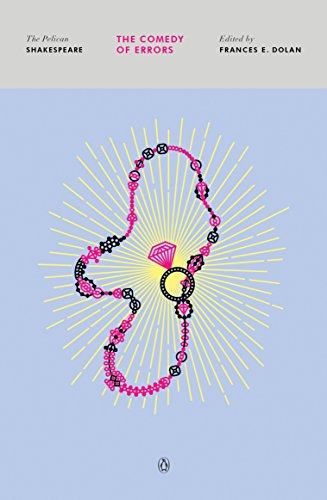
The legendary Pelican Shakespeare series features authoritative and meticulously researched texts paired with scholarship by renowned Shakespeareans. Each book includes an essay on the theatrical world of Shakespeare’s time, an introduction to the individual play, and a detailed note on the text used. Updated by general editors Stephen Orgel and A. R. Braunmuller, these easy-to-read editions incorporate over thirty years of Shakespeare scholarship undertaken since the original series, edited by Alfred Harbage, appeared between 1956 and 1967. With definitive texts and illuminating essays, the Pelican Shakespeare will remain a valued resource for students, teachers, and theater professionals for many years to come.
For more than seventy years, Penguin has been the leading publisher of classic literature in the English-speaking world. With more than 1,800 titles, Penguin Classics represents a global bookshelf of the best works throughout history and across genres and disciplines. Readers trust the series to provide authoritative texts enhanced by introductions and notes by distinguished scholars and contemporary authors, as well as up-to-date translations by award-winning translators.
Die Inhaltsangabe kann sich auf eine andere Ausgabe dieses Titels beziehen.
Über die Autorin bzw. den Autor
William Shakespeare was born in Stratford-upon-Avon in April, 1564, and his birth is traditionally celebrated on April 23. The facts of his life, known from surviving documents, are sparse. He died on April 23, 1616, and was buried in Holy Trinity Church, Stratford.
A. R. Braunmuller is Distinguished Professor of English and Comparative Literature at the University of California at Los Angeles. He has written critical volumes on George Peele and George Chapman and has edited plays in both the Oxford (King John) and Cambridge (Macbeth) series of Shakespeare editions. He is also general editor of The New Cambridge Shakespeare.
Stephen Orgel is the Jackson Eli Reynolds Professor of the Humanities at Stanford University and general editor of the Cambridge Studies in Renaissance Literature and Culture. His books include Imagining Shakespeare, The Authentic Shakespeare, Impersonations: The Performance of Gender in Shakespeare’s England and The Illusion of Power.
Auszug. © Genehmigter Nachdruck. Alle Rechte vorbehalten.
The Comedy of Errors
¥ I.1 Enter the Duke of Ephesus, with the Merchant [Egeon] of Syracuse, Jailer, and other Attendants.
egeon
Proceed, Solinus, to procure my fall,
And by the doom of death end woes and all.
duke
Merchant of Syracusa, plead no more.
I am not partial to infringe our laws.
4
The enmity and discord which of late
Sprung from the rancorous outrage of your duke
To merchants, our well-dealing countrymen,
Who, wanting guilders to redeem their lives,
8
Have sealed his rigorous statutes with their bloods,
Excludes all pity from our threat'ning looks.
10
For since the mortal and intestine jars
11
'Twixt thy seditious countrymen and us,
It hath in solemn synods been decreed,
13
Both by the Syracusians and ourselves,
To admit no traffic to our adverse towns:
15
Nay more, if any born at Ephesus
16
Be seen at Syracusian marts and fairs;
Again, if any Syracusian born
Come to the bay of Ephesus, he dies,
His goods confiscate to the duke's dispose,
20
Unless a thousand marks be levi�d,
21
To quit the penalty and to ransom him.
22
Thy substance, valued at the highest rate,
Cannot amount unto a hundred marks;
Therefore, by law thou art condemned to die.
egeon
Yet this my comfort: when your words are done,
My woes end likewise with the evening sun.
duke
Well, Syracusian, say in brief the cause
Why thou departed'st from thy native home,
And for what cause thou cam'st to Ephesus.
30
egeon
A heavier task could not have been imposed
Than I to speak my griefs unspeakable;
Yet that the world may witness that my end
Was wrought by nature, not by vile offense,
34
I'll utter what my sorrow gives me leave.
In Syracusa was I born, and wed
Unto a woman, happy but for me,
And by me, had not our hap been bad.
38
With her I lived in joy: our wealth increased
By prosperous voyages I often made
40
To Epidamnum; till my factor's death,
41
And the great care of goods at random left,
Drew me from kind embracements of my spouse;
From whom my absence was not six months old,
Before herself (almost at fainting under
The pleasing punishment that women bear)
Had made provision for her following me,
And soon and safe arriv�d where I was.
There had she not been long but she became
A joyful mother of two goodly sons;
50
And, which was strange, the one so like the other
As could not be distinguished but by names.
That very hour, and in the selfsame inn,
A mean woman was deliver�d
54
Of such a burden male, twins both alike.
Those-for their parents were exceeding poor-
I bought, and brought up to attend my sons.
My wife, not meanly proud of two such boys,
58
Made daily motions for our home return.
59
Unwilling I agreed. Alas! too soon
60
We came aboard.
A league from Epidamnum had we sailed
Before the always wind-obeying deep
Gave any tragic instance of our harm.
64
But longer did we not retain much hope;
For what obscur�d light the heavens did grant
Did but convey unto our fearful minds
A doubtful warrant of immediate death;
68
Which, though myself would gladly have embraced,
Yet the incessant weepings of my wife,
70
Weeping before for what she saw must come,
And piteous plainings of the pretty babes,
72
That mourned for fashion, ignorant what to fear,
73
Forced me to seek delays for them and me.
And this it was, for other means was none:
The sailors sought for safety by our boat,
And left the ship, then sinking-ripe, to us.
77
My wife, more careful for the latter-born,
78
Had fastened him unto a small spare mast,
Such as seafaring men provide for storms;
80
To him one of the other twins was bound,
Whilst I had been like heedful of the other.
The children thus disposed, my wife and I,
Fixing our eyes on whom our care was fixed,
Fastened ourselves at either end the mast,
And floating straight, obedient to the stream,
Was carried towards Corinth, as we thought.
At length the sun, gazing upon the earth,
Dispersed those vapors that offended us,
And by the benefit of his wish�d light
90
The seas waxed calm, and we discover�d
Two ships from far, making amain to us:
92
Of Corinth that, of Epidaurus this.
93
But ere they came-O let me say no more!
Gather the sequel by that went before.
duke
Nay, forward, old man; do not break off so,
For we may pity, though not pardon thee.
egeon
O, had the gods done so, I had not now
Worthily termed them merciless to us!
For ere the ships could meet by twice five leagues,
100
We were encountered by a mighty rock,
Which being violently borne upon,
Our helpful ship was splitted in the midst;
103
So that, in this unjust divorce of us,
Fortune had left to both of us alike,
What to delight in, what to sorrow for.
Her part, poor soul, seeming as burden�d
With lesser weight, but not with lesser woe,
Was carried with more speed before the wind,
And in our sight they three were taken up
110
By fishermen of Corinth, as we thought.
At length another ship had seized on us,
And knowing whom it was their hap to save,
Gave healthful welcome to their shipwrecked guests,
And would have reft the fishers of their prey,
115
Had not their bark been very slow of sail;
116
And therefore homeward did they bend their course.
Thus have you heard me severed from my bliss,
That by misfortunes was my life prolonged,
To tell sad stories of my own mishaps.
120
duke
And for the sake of them thou sorrowest for,
Do me the favor to dilate at full,
122
What have befall'n of them and thee till now.
egeon
My youngest boy, and yet my eldest care,
At eighteen years became inquisitive
After his brother; and importuned me
That his attendant-so his case was like,
127
Reft of his brother, but retained his name-
Might bear him company in the quest of him;
Whom whilst I labored of a love to see,
130
I hazarded the loss of whom I loved.
Five summers have I spent in farthest Greece,
Roaming clean through the bounds of Asia,
And coasting homeward, came to Ephesus,
Hopeless to find, yet loath to leave unsought
Or that or any place that harbors men.
136
But here must end the story of my life;
And happy were I in my timely death,
138
Could all my travels warrant me they live.
139
duke
Hapless Egeon, whom the fates have marked
140
To bear the extremity of dire mishap!
Now trust me, were it not against our laws,
Against my crown, my oath, my dignity,
Which princes, would they, may not disannul,
144
My soul should sue as advocate for...
„Über diesen Titel“ kann sich auf eine andere Ausgabe dieses Titels beziehen.
Weitere beliebte Ausgaben desselben Titels

Suchergebnisse für The Comedy of Errors: The Pelican Shakespeare

Beispielbild für diese ISBN
The Comedy of Errors
Anbieter: ThriftBooks-Dallas, Dallas, TX, USA
Verkäuferbewertung 5 von 5 Sternen

Paperback. Zustand: Fair. No Jacket. Readable copy. Pages may have considerable notes/highlighting. ~ ThriftBooks: Read More, Spend Less. Artikel-Nr. G0143132237I5N00
Gebraucht kaufen
EUR 5,62
Versand gratis
Versand innerhalb von USA
Versand innerhalb von USA
Anzahl: 1 verfügbar
Beispielbild für diese ISBN
The Comedy of Errors
Anbieter: ThriftBooks-Dallas, Dallas, TX, USA
Verkäuferbewertung 5 von 5 Sternen
Paperback. Zustand: As New. No Jacket. Pages are clean and are not marred by notes or folds of any kind. ~ ThriftBooks: Read More, Spend Less. Artikel-Nr. G0143132237I2N00
Gebraucht kaufen
EUR 5,63
Versand gratis
Versand innerhalb von USA
Versand innerhalb von USA
Anzahl: 1 verfügbar
Beispielbild für diese ISBN
The Comedy of Errors
Anbieter: ThriftBooks-Dallas, Dallas, TX, USA
Verkäuferbewertung 5 von 5 Sternen
Paperback. Zustand: Good. No Jacket. Pages can have notes/highlighting. Spine may show signs of wear. ~ ThriftBooks: Read More, Spend Less. Artikel-Nr. G0143132237I3N00
Gebraucht kaufen
EUR 5,63
Versand gratis
Versand innerhalb von USA
Versand innerhalb von USA
Anzahl: 1 verfügbar
Foto des Verkäufers
The Comedy of Errors (The Pelican Shakespeare)
Anbieter: Dream Books Co., Denver, CO, USA
Verkäuferbewertung 5 von 5 Sternen
Zustand: good. Gently used with minimal wear on the corners and cover. A few pages may contain light highlighting or writing, but the text remains fully legible. Dust jacket may be missing, and supplemental materials like CDs or codes may not be included. May be ex-library with library markings. Ships promptly! Artikel-Nr. DBV.0143132237.G
Gebraucht kaufen
EUR 5,99
Versand gratis
Versand innerhalb von USA
Versand innerhalb von USA
Anzahl: 1 verfügbar
Beispielbild für diese ISBN
The Comedy of Errors (The Pelican Shakespeare)
Anbieter: BookOutlet, St. Catharines, ON, Kanada
Verkäuferbewertung 5 von 5 Sternen
Paperback. Zustand: New. Paperback. Publisher overstock, may contain remainder mark on edge. Artikel-Nr. 9780143132233B
Neu kaufen
EUR 4,74
EUR 2,77 shipping
Versand von Kanada nach USA
Versand von Kanada nach USA
Anzahl: 1 verfügbar
Beispielbild für diese ISBN
The Comedy of Errors
Verlag:
Penguin Publishing Group, 2018
ISBN 10: 0143132237
ISBN 13: 9780143132233
Gebraucht
Softcover
Anbieter: Better World Books, Mishawaka, IN, USA
Verkäuferbewertung 5 von 5 Sternen
Zustand: Good. Former library book; may include library markings. Used book that is in clean, average condition without any missing pages. Artikel-Nr. 45513659-6
Gebraucht kaufen
EUR 8,79
Versand gratis
Versand innerhalb von USA
Versand innerhalb von USA
Anzahl: 2 verfügbar
Beispielbild für diese ISBN
Comedy of Errors
Anbieter: Eagle Eye Books, Decatur, GA, USA
Verkäuferbewertung 4 von 5 Sternen

Paper Back. Zustand: New. Artikel-Nr. 867704
Neu kaufen
EUR 8,79
EUR 3,41 shipping
Versand innerhalb von USA
Versand innerhalb von USA
Anzahl: 3 verfügbar
Beispielbild für diese ISBN
The Comedy of Errors: The Pelican Shakespeare
Anbieter: Majestic Books, Hounslow, Vereinigtes Königreich
Verkäuferbewertung 4 von 5 Sternen
Zustand: New. Artikel-Nr. 369407218
Neu kaufen
EUR 6,27
EUR 7,51 shipping
Versand von Vereinigtes Königreich nach USA
Versand von Vereinigtes Königreich nach USA
Anzahl: 1 verfügbar
Beispielbild für diese ISBN
The Comedy of Errors
Anbieter: PBShop.store UK, Fairford, GLOS, Vereinigtes Königreich
Verkäuferbewertung 5 von 5 Sternen
PAP. Zustand: New. New Book. Shipped from UK. Established seller since 2000. Artikel-Nr. GB-9780143132233
Neu kaufen
EUR 11,61
EUR 3,80 shipping
Versand von Vereinigtes Königreich nach USA
Versand von Vereinigtes Königreich nach USA
Anzahl: 2 verfügbar
Beispielbild für diese ISBN
The Comedy of Errors
Anbieter: Revaluation Books, Exeter, Vereinigtes Königreich
Verkäuferbewertung 5 von 5 Sternen
Paperback. Zustand: Brand New. 128 pages. 7.75x5.06x0.31 inches. In Stock. Artikel-Nr. __0143132237
Neu kaufen
EUR 7,20
EUR 11,55 shipping
Versand von Vereinigtes Königreich nach USA
Versand von Vereinigtes Königreich nach USA
Anzahl: 2 verfügbar