
Verwandte Artikel zu The Feminist's Guide to Raising a Little Princess:...
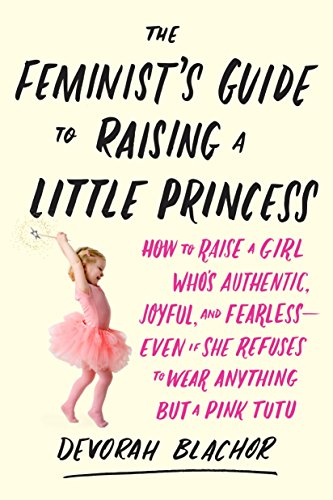
The Feminist's Guide to Raising a Little Princess: How to Raise a Girl Who's Authentic, Joyful, and Fearless--Even If She Refuses to Wear Anything but a Pink Tutu - Softcover
Inhaltsangabe
“May God grant me the serenity to accept the color pink, the courage to not let my house become a shrine to pink and princesses, and the wisdom to know that pink is just a color, not a decision to never attend college in the hopes of marrying wealthy.”
- from The Feminist’s Guide to Raising a Little Princess
Smart, funny, and thought-provoking, this book shows feminist parents how to navigate their daughters' princess-obsessed years by taking a non-judgmental and positive approach.
Devorah Blachor, an ardent feminist, never expected to be the parent of a little girl who was totally obsessed with the color pink, princesses, and all things girly. When her three-year-old daughter fell down the Disney Princess rabbit hole, she wasn't sure how to reconcile the difference between her parental expectations and the reality of her daughter’s passion.
In this book inspired by her viral New York Times Motherlode piece “Turn Your Princess-Obsessed Toddler Into a Feminist in Eight Easy Steps,” Blachor offers insight, advice, and plenty of humor and personal anecdotes for other mothers who cringe each morning when their daughter refuses to wear anything that isn’t pink. Her story of how she surrendered control and opened up—to her Princess Toddler, to pink, and to life—is a universal tale of modern parenting. She addresses important issues such as how to raise a daughter in a society that pressures girls and women to bury their own needs, conform to a beauty standard and sacrifice their own passions.
Die Inhaltsangabe kann sich auf eine andere Ausgabe dieses Titels beziehen.
Über die Autorin bzw. den Autor
Devorah Blachor wrote the 'Coming to America' parenting column for the New York Times Motherlode and also writes for The Huffington Post, McSweeney's, The Hairpin, Redbook, Mommyish, Good Housekeeping and The Rumpus, among other websites and magazines. Her children Cai and Mari provide endless material for her humor and essays.
Auszug. © Genehmigter Nachdruck. Alle Rechte vorbehalten.
Chapter 1 What Is a Little Princess? My Life in Pink: The Science of Little Princesses Mari and I are pretty attached. Like, maybe to an unhealthy degree. Here’s why I think that happened: When my son, Cai, was a baby, a babysitter came a few mornings a week so I could work -part--time. Cai bonded with me, with his father, aka my husband, and also with the babysitter. She’s a fabulous young woman who introduced Cai to her group of fabulous friends, and they showered him with adulation and attention. Cai loved a lot of people, and a lot of people loved Cai. But when Mari came along, we had less money and by then I had no career to speak of less reason to return to work. For the first two years of Mari’s life, the largest portion of her days was spent with me and my boobs. I’m still not sure which of us she loved more. She seemed pretty happy anyway. Just before Mari turned two I had some freelancing opportunities, so we enrolled her in a -half--day preschool program. On her first day when the parents left, all the kids cried. On the second day, most of the kids cried. On the third day, some of the kids cried, and the following week, none of the kids cried anymore. Except for Mari. She still cried when I left her, every day, ripping my heart out with each inconsolable sob. Why was it so difficult for Mari? Maybe it was because the other toddlers lived near grandparents and relatives and were used to occasionally being without their mommies, while Mari had no such “extramaternal” experience. Or maybe it was because I was a crappy mother who’d raised an insecure emotional mess. It was probably one or the other. I considered pulling Mari out of her program and giving up the idea of returning to work. But in time she started to set-tle, though it was definitely slow going. Mari was that -kid—-the one who’s always on the teacher’s lap in the photos they post on the preschool’s Facebook page. She needed lots of attention and love, and she got it there. For that I’m very grateful. She also started to get other ideas there. We’ll address those soon. Those were heady days. I’d drop Mari off at school and have four free hours to play around with. Man, was I elated, if elated means the same thing as insanely tired. Because Mari was also getting up very early to breastfeed. Did I forget to mention that? Mari was still breastfeeding and woke me every day at four a.m. to do it. It turned out she did like my boobs better than me. We weren’t doing it in public anymore. Mari breastfed before bedtime and naps and when she woke up, but she left my boobs alone for the rest of the day. If I had left it up to her she would have done it in public all the time, but at a certain -point—-I can’t remember exactly when because of my -sleep--deprivation--addled -brain—-I told her “Let’s wait until we get home” and sometime after that, “Let’s wait until bedtime.” It worked because she hadn’t yet passed the Psychotic Toddler Threshold.1 Here’s a question. When Mari was a baby, I breastfed her in public with no reservation, shame or feelings of parental inad-equacy. Once she hit toddlerhood, however, I felt uncomfortable whenever she wanted to nurse. Why is that? Why was my -naked--boob--exposure awareness heightened just because Mari was a few months older? Why did I feel judged and critiqued for comforting my toddler, but didn’t care when people disapproved of breastfeeding my baby in public? Discuss. Back to my exhaustion, which was as deep and massive as Crater Lake, but without the stunning views and the gift shop. Too tired to think about anything other than sleeping, I decided to finally wean. So there we were. Mari had just started preschool. I was trying to get her to give up the exact thing that comforted her most, and into this messed‑up vortex of toddler separation anxiety, parental guilt and extreme exhaustion, something new and strange came into our lives. Something we had never really thought about before. Something that would change our lives forever. It all started with Color Week. What’s Color Week? you say. It sounds just adorable. Color Week was that thing where all the kids in Mari’s preschool wore blue on Monday. On Tuesday, they wore yellow. On Wednesday it was red, on Thursday brown, and on Friday, all the kids dressed in either pink or -purple—-toddler’s choice. Isn’t that a fun way to learn about colors? Isn’t that the sweetest thing ever? For the purposes of this book, I took it upon myself to research which part of the brain processes color differentiation. It’s the occipital lobe, as I’m sure you all know already. The occipital lobe is one of the four major lobes of the cerebral cortex. In other words, this is your brain on color:
Did you see that? No? Let me zoom in on that image for you. I don’t know if you can see what -happened—-it’s very -subtle—-but it turns out that by stimulating the part of Mari’s brain that recognizes color, a dormant predilection was aroused. Or implanted. It’s a -nature--versus--nurture -thing—-I’m still trying to figure it out. All I know is that Mari was forever changed. Here’s a helpful graphic to help illustrate the change in Mari’s behavior. Sad to say, as soon as Mari became aware of the concept of color she began suffering from yet another new syndrome. This one was called PFD, a phenomenon discovered by Diane N. Ruble, Leah E. Lurye and Kristina M. Zosuls of Princeton University, the school where middle initials are a big thing. PFD stands for “pink frilly dresses.” Here’s what these develop-mental psychology researchers wrote in the Princeton Report on Knowledge, which is also known by its street cred name, P‑ROK.2 As researchers in the field of developmental psychology who study gender development, we have noticed that a large proportion of girls pass through a stage when they virtually refuse to go out of the house unless they are wearing a dress, often pink and frilly. The intensity of these desires and the extremity with which they are expressed has piqued our research interest. One young mother reported that her 3‑-year--old daughter could only be convinced to wear something other than pink when she was physically shown that all of her pink clothing was in the laundry. What is the driving force behind this phenomenon, which we call PFD?3 I know what you’re thinking. That the mother whose daughter actually agreed to wear something that wasn’t pink is one lucky bitch. The researchers also point out that once children understand that there are two genders, identifying with their own gender becomes very important to them. Did I mention that it was around this time that we let Mari watch her first movie? I didn’t?4 I’m just really forgetful sometimes, as I’ll demonstrate again in about two seconds. There you have it. All the facts have been laid out with supporting evidence submitted to the...
„Über diesen Titel“ kann sich auf eine andere Ausgabe dieses Titels beziehen.
Suchergebnisse für The Feminist's Guide to Raising a Little Princess:...

Beispielbild für diese ISBN
The Feminist's Guide to Raising a Little Princess: How to Raise a Girl Who's Authentic, Joyful, and Fearless--Even If She Refuses to Wear Anything but a Pink Tutu
Verlag:
TarcherPerigee (edition Illustrated), 2017
ISBN 10: 0143130358
ISBN 13: 9780143130352
Gebraucht
Paperback
Anbieter: BooksRun, Philadelphia, PA, USA
Verkäuferbewertung 5 von 5 Sternen

Paperback. Zustand: Very Good. Illustrated. It's a well-cared-for item that has seen limited use. The item may show minor signs of wear. All the text is legible, with all pages included. It may have slight markings and/or highlighting. Artikel-Nr. 0143130358-8-1
Gebraucht kaufen
EUR 4,68
Versand gratis
Versand innerhalb von USA
Versand innerhalb von USA
Anzahl: 1 verfügbar
Beispielbild für diese ISBN
Feminist's Guide to Raising a Little Princess: How to Raise a Girl Who Knows You Can Be Pretty in Pink and Still Lean In
Verlag:
Penguin Publishing Group, 2017
ISBN 10: 0143130358
ISBN 13: 9780143130352
Gebraucht
Paperback
Anbieter: World of Books (was SecondSale), Montgomery, IL, USA
Verkäuferbewertung 5 von 5 Sternen
Paperback. Zustand: Good. "May God grant me the serenity to accept the color pink, the courage to not let my house become a shrine to pink and princesses, and the wisdom to know that pink is just a color, not a decision to never attend college in the hopes of marrying wealthy." - from The Feminist's Guide to Raising a Little Princess Smart, funny, and thought-provoking, this book shows feminist parents how to navigate their daughters' princess-obsessed years by taking a non-judgmental and positive approach. Devorah Blachor, an ardent feminist, never expected to be the parent of a little girl who was totally obsessed with the color pink, princesses, and all things girly. When her three-year-old daughter fell down the Disney Princess rabbit hole, she wasn't sure how to reconcile the difference between her parental expectations and the reality of her daughter's passion. In this book inspired by her viral New York Times Motherlode piece "Turn Your Princess-Obsessed Toddler Into a Feminist in Eight Easy Steps," Blachor offers insight, advice, and plenty of humor and personal anecdotes for other mothers who cringe each morning when their daughter refuses to wear anything that isn't pink. Her story of how she surrendered control and opened up-to her Princess Toddler, to pink, and to life-is a universal tale of modern parenting. She addresses important issues such as how to raise a daughter in a society that pressures girls and women to bury their own needs, conform to a beauty standard and sacrifice their own passions. Artikel-Nr. 00072185243
Gebraucht kaufen
EUR 4,68
Versand gratis
Versand innerhalb von USA
Versand innerhalb von USA
Anzahl: 5 verfügbar
Beispielbild für diese ISBN
The Feminist's Guide to Raising a Little Princess: How to Raise a Girl Who's Authentic, Joyful, and Fearless--Even If She Refuses to Wear Anything but a Pink Tutu
Anbieter: World of Books (was SecondSale), Montgomery, IL, USA
Verkäuferbewertung 5 von 5 Sternen
Zustand: Very Good. Item in very good condition! Textbooks may not include supplemental items i.e. CDs, access codes etc. Artikel-Nr. 00108685287
Gebraucht kaufen
EUR 4,68
Versand gratis
Versand innerhalb von USA
Versand innerhalb von USA
Anzahl: 1 verfügbar
Beispielbild für diese ISBN
The Feminist's Guide to Raising a Little Princess: How to Raise a Girl Who's Authentic, Joyful, and Fearless--Even If She Refuses to Wear Anything but a Pink Tutu
Verlag:
TarcherPerigee (edition Illustrated), 2017
ISBN 10: 0143130358
ISBN 13: 9780143130352
Gebraucht
Paperback
Anbieter: BooksRun, Philadelphia, PA, USA
Verkäuferbewertung 5 von 5 Sternen
Paperback. Zustand: Very Good. Illustrated. It's a well-cared-for item that has seen limited use. The item may show minor signs of wear. All the text is legible, with all pages included. It may have slight markings and/or highlighting. Artikel-Nr. 0143130358-11-1
Gebraucht kaufen
EUR 4,74
Versand gratis
Versand innerhalb von USA
Versand innerhalb von USA
Anzahl: 1 verfügbar
Beispielbild für diese ISBN
The Feminist's Guide to Raising a Little Princess : How to Raise a Girl Who's Authentic, Joyful, and Fearless--Even If She Refuses to Wear Anything but a Pink Tutu
Verlag:
Penguin Publishing Group, 2017
ISBN 10: 0143130358
ISBN 13: 9780143130352
Gebraucht
Softcover
Anbieter: Better World Books, Mishawaka, IN, USA
Verkäuferbewertung 5 von 5 Sternen
Zustand: Very Good. Former library copy. Pages intact with possible writing/highlighting. Binding strong with minor wear. Dust jackets/supplements may not be included. Includes library markings. Stock photo provided. Product includes identifying sticker. Better World Books: Buy Books. Do Good. Artikel-Nr. 17320718-75
Gebraucht kaufen
EUR 7,01
Versand gratis
Versand innerhalb von USA
Versand innerhalb von USA
Anzahl: 1 verfügbar
Beispielbild für diese ISBN
The Feminist's Guide to Raising a Little Princess : How to Raise a Girl Who's Authentic, Joyful, and Fearless--Even If She Refuses to Wear Anything but a Pink Tutu
Verlag:
Penguin Publishing Group, 2017
ISBN 10: 0143130358
ISBN 13: 9780143130352
Gebraucht
Softcover
Anbieter: Better World Books: West, Reno, NV, USA
Verkäuferbewertung 5 von 5 Sternen
Zustand: Very Good. Former library copy. Pages intact with possible writing/highlighting. Binding strong with minor wear. Dust jackets/supplements may not be included. Includes library markings. Stock photo provided. Product includes identifying sticker. Better World Books: Buy Books. Do Good. Artikel-Nr. 17320718-75
Gebraucht kaufen
EUR 7,01
Versand gratis
Versand innerhalb von USA
Versand innerhalb von USA
Anzahl: 1 verfügbar
Beispielbild für diese ISBN
The Feminist's Guide to Raising a Little Princess: How to Raise a Girl Who's Authentic, Joyful, and Fearless--Even If She Refuses to Wear Anything But a Pink Tutu
Verlag:
Penguin Publishing Group, 2017
ISBN 10: 0143130358
ISBN 13: 9780143130352
Gebraucht
Softcover
Anbieter: medimops, Berlin, Deutschland
Verkäuferbewertung 5 von 5 Sternen
Zustand: good. Befriedigend/Good: Durchschnittlich erhaltenes Buch bzw. Schutzumschlag mit Gebrauchsspuren, aber vollständigen Seiten. / Describes the average WORN book or dust jacket that has all the pages present. Artikel-Nr. M00143130358-G
Gebraucht kaufen
EUR 12,51
EUR 10,00 Versand
Versand von Deutschland nach USA
Versand von Deutschland nach USA
Anzahl: 1 verfügbar
Beispielbild für diese ISBN
The Feminist's Guide to Raising a Little Princess: How to Raise a Girl Who's Authentic, Joyful, and Fearless--Even If She Refuses to Wear Anything But a Pink Tutu
Verlag:
Penguin Publishing Group, 2017
ISBN 10: 0143130358
ISBN 13: 9780143130352
Gebraucht
Softcover
Anbieter: medimops, Berlin, Deutschland
Verkäuferbewertung 5 von 5 Sternen
Zustand: very good. Gut/Very good: Buch bzw. Schutzumschlag mit wenigen Gebrauchsspuren an Einband, Schutzumschlag oder Seiten. / Describes a book or dust jacket that does show some signs of wear on either the binding, dust jacket or pages. Artikel-Nr. M00143130358-V
Gebraucht kaufen
EUR 12,77
EUR 10,00 Versand
Versand von Deutschland nach USA
Versand von Deutschland nach USA
Anzahl: 1 verfügbar
Beispielbild für diese ISBN
The Feminist's Guide to Raising a Little Princess: How to Raise a Girl Who's Authentic, Joyful, and Fearless--Even If She Refuses to Wear Anything but a Pink Tutu
Anbieter: Ria Christie Collections, Uxbridge, Vereinigtes Königreich
Verkäuferbewertung 5 von 5 Sternen
Zustand: New. In English. Artikel-Nr. ria9780143130352_new
Neu kaufen
EUR 22,77
EUR 11,09 Versand
Versand von Vereinigtes Königreich nach USA
Versand von Vereinigtes Königreich nach USA
Anzahl: Mehr als 20 verfügbar
Beispielbild für diese ISBN
The Feminist's Guide to Raising a Little Princess: How to Raise a Girl Who's Authentic, Joyful, and Fearless - Even If She Refuses to Wear Anything but a Pink Tutu
Anbieter: Revaluation Books, Exeter, Vereinigtes Königreich
Verkäuferbewertung 5 von 5 Sternen
Paperback. Zustand: Brand New. 273 pages. 8.25x5.50x0.75 inches. In Stock. Artikel-Nr. x-0143130358
Neu kaufen
EUR 23,54
EUR 11,84 Versand
Versand von Vereinigtes Königreich nach USA
Versand von Vereinigtes Königreich nach USA
Anzahl: 2 verfügbar