
Verwandte Artikel zu The Body Keeps the Score: Brain, Mind, and Body in...
Inhaltsangabe
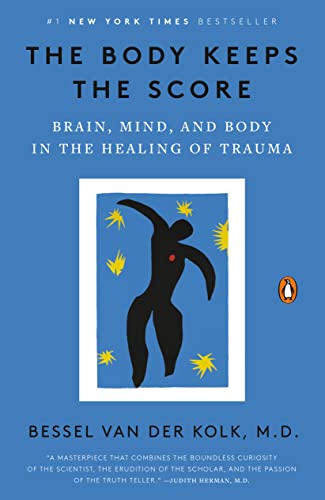
#1 New York Times bestseller
“Essential reading for anyone interested in understanding and treating traumatic stress and the scope of its impact on society.” —Alexander McFarlane, Director of the Centre for Traumatic Stress Studies
A pioneering researcher transforms our understanding of trauma and offers a bold new paradigm for healing in this New York Times bestseller
Trauma is a fact of life. Veterans and their families deal with the painful aftermath of combat; one in five Americans has been molested; one in four grew up with alcoholics; one in three couples have engaged in physical violence. Dr. Bessel van der Kolk, one of the world’s foremost experts on trauma, has spent over three decades working with survivors. In The Body Keeps the Score, he uses recent scientific advances to show how trauma literally reshapes both body and brain, compromising sufferers’ capacities for pleasure, engagement, self-control, and trust. He explores innovative treatments—from neurofeedback and meditation to sports, drama, and yoga—that offer new paths to recovery by activating the brain’s natural neuroplasticity. Based on Dr. van der Kolk’s own research and that of other leading specialists, The Body Keeps the Score exposes the tremendous power of our relationships both to hurt and to heal—and offers new hope for reclaiming lives.
Die Inhaltsangabe kann sich auf eine andere Ausgabe dieses Titels beziehen.
Über die Autorin bzw. den Autor
Bessel van der Kolk, M.D., is the founder and medical director of the Trauma Center in Brookline, Massachusetts. He is also a professor of psychiatry at Boston University School of Medicine and director of the National Complex Trauma Treatment Network. When he is not teaching around the world, Dr. van der Kolk works and lives Boston.
Von der hinteren Coverseite
#1 New York Times bestseller
"Essential reading for anyone interested in understanding and treating traumatic stress and the scope of its impact on society." -Alexander McFarlane, Director of the Centre for Traumatic Stress Studies
A pioneering researcher transforms our understanding of trauma and offers a bold new paradigm for healing in this New York Times bestseller
Trauma is a fact of life. Veterans and their families deal with the painful aftermath of combat; one in five Americans has been molested; one in four grew up with alcoholics; one in three couples have engaged in physical violence. Dr. Bessel van der Kolk, one of the world's foremost experts on trauma, has spent over three decades working with survivors. In The Body Keeps the Score, he uses recent scientific advances to show how trauma literally reshapes both body and brain, compromising sufferers' capacities for pleasure, engagement, self-control, and trust. He explores innovative treatments-from neurofeedback and meditation to sports, drama, and yoga-that offer new paths to recovery by activating the brain's natural neuroplasticity. Based on Dr. van der Kolk's own research and that of other leading specialists, The Body Keeps the Score exposes the tremendous power of our relationships both to hurt and to heal-and offers new hope for reclaiming lives.
Auszug. © Genehmigter Nachdruck. Alle Rechte vorbehalten.
PROLOGUE
FACING TRAUMA
One does not have be a combat soldier, or visit a refugee camp in Syria or the Congo to encounter trauma. Trauma happens to us, our friends, our families, and our neighbors. Research by the Centers for Disease Control and Prevention has shown that one in five Americans was sexually molested as a child; one in four was beaten by a parent to the point of a mark being left on their body; and one in three couples engages in physical violence. A quarter of us grew up with alcoholic relatives, and one out of eight witnessed their mother being beaten or hit.1
As human beings we belong to an extremely resilient species. Since time immemorial we have rebounded from our relentless wars, countless disasters (both natural and man-made), and the violence and betrayal in our own lives. But traumatic experiences do leave traces, whether on a large scale (on our histories and cultures) or close to home, on our families, with dark secrets being imperceptibly passed down through generations. They also leave traces on our minds and emotions, on our capacity for joy and intimacy, and even on our biology and immune systems.
Trauma affects not only those who are directly exposed to it, but also those around them. Soldiers returning home from combat may frighten their families with their rages and emotional absence. The wives of men who suffer from PTSD tend to become depressed, and the children of depressed mothers are at risk of growing up insecure and anxious. Having been exposed to family violence as a child often makes it difficult to establish stable, trusting relationships as an adult.
Trauma, by definition, is unbearable and intolerable. Most rape victims, combat soldiers, and children who have been molested become so upset when they think about what they experienced that they try to push it out of their minds, trying to act as if nothing happened, and move on. It takes tremendous energy to keep functioning while carrying the memory of terror, and the shame of utter weakness and vulnerability.
While we all want to move beyond trauma, the part of our brain that is devoted to ensuring our survival (deep below our rational brain) is not very good at denial. Long after a traumatic experience is over, it may be reactivated at the slightest hint of danger and mobilize disturbed brain circuits and secrete massive amounts of stress hormones. This precipitates unpleasant emotions intense physical sensations, and impulsive and aggressive actions. These posttraumatic reactions feel incomprehensible and overwhelming. Feeling out of control, survivors of trauma often begin to fear that they are damaged to the core and beyond redemption.
• • •
The first time I remember being drawn to study medicine was at a summer camp when I was about fourteen years old. My cousin Michael kept me up all night explaining the intricacies of how kidneys work, how they secrete the body’s waste materials and then reabsorb the chemicals that keep the system in balance. I was riveted by his account of the miraculous way the body functions. Later, during every stage of my medical training, whether I was studying surgery, cardiology, or pediatrics, it was obvious to me that the key to healing was understanding how the human organism works. When I began my psychiatry rotation, however, I was struck by the contrast between the incredible complexity of the mind and the ways that we human beings are connected and attached to one another, and how little psychiatrists knew about the origins of the problems they were treating. Would it be possible one day to know as much about brains, minds, and love as we do about the other systems that make up our organism?
We are obviously still years from attaining that sort of detailed understanding, but the birth of three new branches of science has led to an explosion of knowledge about the effects of psychological trauma, abuse, and neglect. Those new disciplines are neuroscience, the study of how the brain supports mental processes; developmental psychopathology, the study of the impact of adverse experiences on the development of mind and brain; and interpersonal neurobiology, the study of how our behavior influences the emotions, biology, and mind-sets of those around us.
Research from these new disciplines has revealed that trauma produces actual physiological changes, including a recalibration of the brain’s alarm system, an increase in stress hormone activity, and alterations in the system that filters relevant information from irrelevant. We now know that trauma compromises the brain area that communicates the physical, embodied feeling of being alive. These changes explain why traumatized individuals become hypervigilant to threat at the expense of spontaneously engaging in their day-to-day lives. They also help us understand why traumatized people so often keep repeating the same problems and have such trouble learning from experience. We now know that their behaviors are not the result of moral failings or signs of lack of willpower or bad character—they are caused by actual changes in the brain.
This vast increase in our knowledge about the basic processes that underlie trauma has also opened up new possibilities to palliate or even reverse the damage. We can now develop methods and experiences that utilize the brain’s own natural neuroplasticity to help survivors feel fully alive in the present and move on with their lives. There are fundamentally three avenues: 1) top down, by talking, (re-) connecting with others, and allowing ourselves to know and understand what is going on with us, while processing the memories of the trauma; 2) by taking medicines that shut down inappropriate alarm reactions, or by utilizing other technologies that change the way the brain organizes information, and 3) bottom up: by allowing the body to have experiences that deeply and viscerally contradict the helplessness, rage, or collapse that result from trauma. Which one of these is best for any particular survivor is an empirical question. Most people I have worked with require a combination.
This has been my life’s work. In this effort I have been supported by my colleagues and students at the Trauma Center, which I founded thirty years ago. Together we have treated thousands of traumatized children and adults: victims of child abuse, natural disasters, wars, accidents, and human trafficking; people who have suffered assaults by intimates and strangers. We have a long tradition of discussing all our patients in great depth at weekly treatment team meetings and carefully tracking how well different forms of treatment work for particular individuals.
Our principal mission has always been to take care of the children and adults who have come to us for treatment, but from the very beginning we also have dedicated ourselves to conducting research to explore the effects of traumatic stress on different populations and to determine what treatments work for whom. We have been supported by research grants from the National Institute of Mental Health, the National Center for Complementary and Alternative Medicine, the Centers for Disease Control, and a number of private foundations to study the efficacy of many different forms of treatment, from medications to talking, yoga, EMDR, theater, and neurofeedback.
The challenge is: How can people gain control over the residues of past trauma and return to being masters of their own ship? Talking, understanding, and human connections help, and drugs can dampen hyperactive alarm systems. But we will also see that the imprints from the past can be transformed by having physical experiences that directly contradict the helplessness, rage, and collapse that are part of trauma, and thereby regaining self-mastery. I have no preferred treatment modality, as no single...
„Über diesen Titel“ kann sich auf eine andere Ausgabe dieses Titels beziehen.
Suchergebnisse für The Body Keeps the Score: Brain, Mind, and Body in...

Beispielbild für diese ISBN
The Body Keeps the Score: Brain, Mind, and Body in the Healing of Trauma
Anbieter: Books From California, Simi Valley, CA, USA
Verkäuferbewertung 4 von 5 Sternen

Paperback. Zustand: Good. Artikel-Nr. mon0004100449
Gebraucht kaufen
EUR 4,78
EUR 4,45 Versand
Versand innerhalb von USA
Versand innerhalb von USA
Anzahl: 1 verfügbar
Beispielbild für diese ISBN
The Body Keeps the Score: Brain, Mind, and Body in the Healing of Trauma
Anbieter: Night Heron Books, Laramie, WY, USA
Verkäuferbewertung 5 von 5 Sternen

paperback. Zustand: Good. Binding tight.Cover clean.Minor wear to page edges and corners. Paperback. Artikel-Nr. 771483
Gebraucht kaufen
EUR 7,81
EUR 3,79 Versand
Versand innerhalb von USA
Versand innerhalb von USA
Anzahl: 1 verfügbar
Beispielbild für diese ISBN
The Body Keeps the Score : Brain, Mind, and Body in the Healing of Trauma
Verlag:
Penguin Publishing Group, 2015
ISBN 10: 0143127748
ISBN 13: 9780143127741
Gebraucht
Softcover
Erstausgabe
Anbieter: Better World Books, Mishawaka, IN, USA
Verkäuferbewertung 5 von 5 Sternen
Zustand: Good. 1st Edition. Former library copy. Pages intact with minimal writing/highlighting. The binding may be loose and creased. Dust jackets/supplements are not included. Includes library markings. Stock photo provided. Product includes identifying sticker. Better World Books: Buy Books. Do Good. Artikel-Nr. 10323999-6
Gebraucht kaufen
EUR 11,65
Versand gratis
Versand innerhalb von USA
Versand innerhalb von USA
Anzahl: 6 verfügbar
Beispielbild für diese ISBN
The Body Keeps the Score : Brain, Mind, and Body in the Healing of Trauma
Verlag:
Penguin Publishing Group, 2015
ISBN 10: 0143127748
ISBN 13: 9780143127741
Gebraucht
Softcover
Erstausgabe
Anbieter: Better World Books: West, Reno, NV, USA
Verkäuferbewertung 5 von 5 Sternen
Zustand: Very Good. 1st Edition. Pages intact with possible writing/highlighting. Binding strong with minor wear. Dust jackets/supplements may not be included. Stock photo provided. Product includes identifying sticker. Better World Books: Buy Books. Do Good. Artikel-Nr. 7631662-6
Gebraucht kaufen
EUR 11,65
Versand gratis
Versand innerhalb von USA
Versand innerhalb von USA
Anzahl: 2 verfügbar
Beispielbild für diese ISBN
The Body Keeps the Score : Brain, Mind, and Body in the Healing of Trauma
Verlag:
Penguin Publishing Group, 2015
ISBN 10: 0143127748
ISBN 13: 9780143127741
Gebraucht
Softcover
Erstausgabe
Anbieter: Better World Books, Mishawaka, IN, USA
Verkäuferbewertung 5 von 5 Sternen
Zustand: Very Good. 1st Edition. Pages intact with possible writing/highlighting. Binding strong with minor wear. Dust jackets/supplements may not be included. Stock photo provided. Product includes identifying sticker. Better World Books: Buy Books. Do Good. Artikel-Nr. 7631662-6
Gebraucht kaufen
EUR 11,65
Versand gratis
Versand innerhalb von USA
Versand innerhalb von USA
Anzahl: 2 verfügbar
Beispielbild für diese ISBN
The Body Keeps the Score : Brain, Mind, and Body in the Healing of Trauma
Verlag:
Penguin Publishing Group, 2015
ISBN 10: 0143127748
ISBN 13: 9780143127741
Gebraucht
Softcover
Erstausgabe
Anbieter: Better World Books, Mishawaka, IN, USA
Verkäuferbewertung 5 von 5 Sternen
Zustand: Good. 1st Edition. Pages intact with minimal writing/highlighting. The binding may be loose and creased. Dust jackets/supplements are not included. Stock photo provided. Product includes identifying sticker. Better World Books: Buy Books. Do Good. Artikel-Nr. 9322084-6
Gebraucht kaufen
EUR 11,65
Versand gratis
Versand innerhalb von USA
Versand innerhalb von USA
Anzahl: 5 verfügbar
Beispielbild für diese ISBN
The Body Keeps the Score: Brain, Mind, and Body in the Healing of Trauma
Verlag:
Penguin Books September 2015, 2015
ISBN 10: 0143127748
ISBN 13: 9780143127741
Gebraucht
Paper Back
Anbieter: Eagle Eye Books, Decatur, GA, USA
Verkäuferbewertung 4 von 5 Sternen
Paper Back. Zustand: Used. Artikel-Nr. 927697
Gebraucht kaufen
EUR 8,26
EUR 3,56 Versand
Versand innerhalb von USA
Versand innerhalb von USA
Anzahl: 1 verfügbar
Beispielbild für diese ISBN
The Body Keeps the Score: Brain, Mind, and Body in the Healing of Trauma
Anbieter: World of Books (was SecondSale), Montgomery, IL, USA
Verkäuferbewertung 5 von 5 Sternen
Paperback. Zustand: Good. #1 New York Times bestseller "Essential reading for anyone interested in understanding and treating traumatic stress and the scope of its impact on society." --Alexander McFarlane, Director of the Centre for Traumatic Stress Studies A pioneering researcher transforms our understanding of trauma and offers a bold new paradigm for healing in this New York Times bestseller Trauma is a fact of life. Veterans and their families deal with the painful aftermath of combat; one in five Americans has been molested; one in four grew up with alcoholics; one in three couples have engaged in physical violence. Dr. Bessel van der Kolk, one of the world's foremost experts on trauma, has spent over three decades working with survivors. In The Body Keeps the Score, he uses recent scientific advances to show how trauma literally reshapes both body and brain, compromising sufferers' capacities for pleasure, engagement, self-control, and trust. He explores innovative treatments--from neurofeedback and meditation to sports, drama, and yoga--that offer new paths to recovery by activating the brain's natural neuroplasticity. Based on Dr. van der Kolk's own research and that of other leading specialists, The Body Keeps the Score exposes the tremendous power of our relationships both to hurt and to heal--and offers new hope for reclaiming lives. Artikel-Nr. 00109429682
Gebraucht kaufen
EUR 12,49
Versand gratis
Versand innerhalb von USA
Versand innerhalb von USA
Anzahl: Mehr als 20 verfügbar
Beispielbild für diese ISBN
The Body Keeps the Score: Brain, Mind, and Body in the Healing of Trauma
Anbieter: World of Books (was SecondSale), Montgomery, IL, USA
Verkäuferbewertung 5 von 5 Sternen
Paperback. Zustand: Very Good. #1 New York Times bestseller "Essential reading for anyone interested in understanding and treating traumatic stress and the scope of its impact on society." --Alexander McFarlane, Director of the Centre for Traumatic Stress Studies A pioneering researcher transforms our understanding of trauma and offers a bold new paradigm for healing in this New York Times bestseller Trauma is a fact of life. Veterans and their families deal with the painful aftermath of combat; one in five Americans has been molested; one in four grew up with alcoholics; one in three couples have engaged in physical violence. Dr. Bessel van der Kolk, one of the world's foremost experts on trauma, has spent over three decades working with survivors. In The Body Keeps the Score, he uses recent scientific advances to show how trauma literally reshapes both body and brain, compromising sufferers' capacities for pleasure, engagement, self-control, and trust. He explores innovative treatments--from neurofeedback and meditation to sports, drama, and yoga--that offer new paths to recovery by activating the brain's natural neuroplasticity. Based on Dr. van der Kolk's own research and that of other leading specialists, The Body Keeps the Score exposes the tremendous power of our relationships both to hurt and to heal--and offers new hope for reclaiming lives. Artikel-Nr. 00110455973
Gebraucht kaufen
EUR 12,49
Versand gratis
Versand innerhalb von USA
Versand innerhalb von USA
Anzahl: Mehr als 20 verfügbar
Beispielbild für diese ISBN
The Body Keeps the Score: Brain, Mind, and Body in the Healing of Trauma
Anbieter: Treehouse Books, Seattle, WA, USA
Verkäuferbewertung 5 von 5 Sternen
Soft cover. Zustand: As New. This book was purchased new and never read --A like new copy! Artikel-Nr. ABE-1790527035043
Gebraucht kaufen
EUR 7,35
EUR 5,35 Versand
Versand innerhalb von USA
Versand innerhalb von USA
Anzahl: 1 verfügbar