
Verwandte Artikel zu The Hour Between Dog and Wolf: How Risk Taking Transforms...
Inhaltsangabe
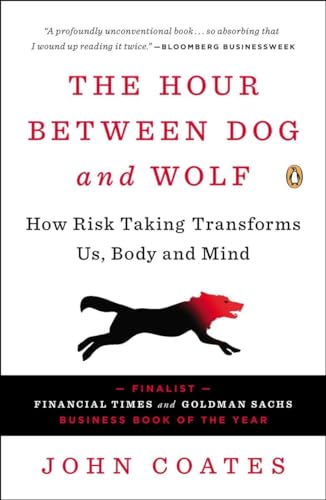
A successful Wall Street trader turned neuroscientist reveals how risk taking and stress transform our body chemistry
Before he became a world-class scientist, John Coates ran a derivatives trading desk in New York City. He used the expression “the hour between dog and wolf” to refer to the moment of Jekyll-and-Hyde transformation traders passed through when under pressure. They became cocky and irrationally risk-seeking when on a winning streak, tentative and risk-averse when cowering from losses. In a series of groundbreaking experiments, Coates identified a feedback loop between testosterone and success—one that can cloud men’s judgment in high-pressure decision-making. Coates demonstrates how our bodies produce the fabled gut feelings we so often rely on, how stress in the workplace can impair our judgment and even damage our health, and how sports science can help us toughen our bodies against the ravages of stress. Revealing the biology behind bubbles and crashes, The Hour Between Dog and Wolf sheds new and surprising light on issues that affect us all.
Die Inhaltsangabe kann sich auf eine andere Ausgabe dieses Titels beziehen.
Über die Autorin bzw. den Autor
John Coates is a senior research fellow in neuroscience and finance at the University of Cambridge. He previously worked for Goldman Sachs and ran a trading desk for Deutsche Bank in New York City. He lives in Cambridge, England.
Auszug. © Genehmigter Nachdruck. Alle Rechte vorbehalten.
INTRODUCTION
WHEN YOU TAKE RISKS, YOU ARE REMINDED IN THE MOST insistent manner that you have a body. For risk by its very nature threatens to hurt you. A driver speeding along a winding road, a surfer riding a monster wave as it crests over a coral reef, a mountain climber continuing his ascent despite an approaching blizzard, a soldier sprinting across noman’s land—each of these people faces a high chance of injury, even death. And that very possibility sharpens the mind and calls forth an overwhelming biological reaction known as the “fight-or-flight” response. In fact, so sensitive is your body to the taking of risk that you can be caught up in this visceral turmoil when death poses no immediate threat. Anyone who plays a sport or watches from the stands knows that even when it is “just a game,” risk engages our entire being. Winston Churchill, a hardened campaigner from the most deadly wars, recognized this power of nonlethal risk to grip us, body and mind. When writing of his early years, he tells of a regimental polo match played in southern India that went to a tie-break in the final chukka: “Rarely have I seen such strained faces on both sides,” he recalls. “You would not have thought it was a game at all, but a matter of life and death. Far graver crises cause less keen emotion.”
Similar strong emotions and biological reactions can be triggered by another form of nonlethal risk—financial risk taking. With the exception of the occasional broker suicide (and these may be more myth than reality), professional traders, asset managers and individuals investing from home rarely face death in their dealings. But the bets they place can threaten their job, house, marriage, reputation and social class. In this way money holds a special significance in our lives. It acts as a powerful token distilling many of the threats and opportunities we have faced over eons of evolutionary time, so making and losing it can activate an ancient and powerful physiological response.
In one important respect, financial risk carries even graver consequences than brief physical risk. A change in income or social rank tends to linger, so when we take risks in the financial markets we carry with us for months, even years after our bets have settled, an inner biological storm. We are not built to handle such long-term disturbances to our biochemistry. Our defense reactions were designed to switch on in an emergency and then switch off after a matter of minutes or hours, a few days at the most. But an above-average win or loss in the markets, or an ongoing series of wins or losses, can change us, Jekyll-and-Hyde-like, beyond all recognition. On a winning streak we can become euphoric, and our appetite for risk expands so much that we turn manic, foolhardy and puffed up with self-importance. On a losing streak we struggle with fear, reliving the bad moments over and over, so that stress hormones linger in our brains, promoting a pathological risk aversion, even depression, and circulate in our blood, contributing to recurrent viral infections, high blood pressure, abdominal fat build-up and gastric ulcers. Financial risk taking is as much a biological activity, with as many medical consequences, as facing down a grizzly bear.
This statement about biology and the financial markets may sound strange to ears accustomed to the teachings of economics. Economists tend to view the assessment of financial risk as a purely intellectual affair— requiring the calculation of asset returns, probabilities and the optimal allocation of capital—carried on for the most part rationally. But to this bloodless account of decision making I want to add some guts. For recent advances in neuroscience and physiology have shown that when we take risks, including financial risk, we do a lot more than just think about it. We prepare for it physically. Our bodies, expecting action, switch on an emergency network of physiological circuitry, and the resulting surge in electrical and chemical activity feeds back on the brain, affecting the way it thinks. In this way body and brain twine as a single entity, united in the face of challenge. Normally this fusion of body and brain provides us with the fast reactions and gut feelings we need for successful risk taking. But under some circumstances the chemical surges can overwhelm us; and when this happens to traders and investors they come to suffer an irrational exuberance or pessimism that can destabilize the financial markets and wreak havoc on the wider economy.
To give you a mere inkling of how this physiology works, I am going to take you onto the trading floor of a Wall Street investment bank. Here we will observe a high-stakes world where young bankers can step up or down a full social class in the space of a single bonus season, one year buying a beach house in the Hamptons, the next pulling their kids out of private school. So consider if you will the following scenario, in which an unanticipated and important piece of news impacts an unsuspecting trading floor.
INCOMING!
It has been said of war that it consists of long stretches of boredom punctuated by brief periods of terror, and much the same can be said of trading. There are long stretches of time when little more than a trickle of business flows in through the sales desks, perhaps just enough to keep the restless traders occupied and to pay the bills. With no news of any importance coming across the wire, the market slows, the inertia feeding on itself until price movement grinds to a halt. Then, people on a trading fl oor disappear into their private lives: salespeople chat aimlessly with clients who have become friends; traders use the lull to pay bills, plan their next ski trip or talk to headhunters, curious to know their value on the open market. Two traders, Logan, who trades mortgage-backed bonds, and Scott, who works down the aisle on the arbitrage desk, toss a tennis ball back and forth, taking care not to hit any salespeople.
This afternoon the Federal Reserve is holding a meeting of its Board of Governors, and normally these events are accompanied by market turbulence. It is at these meetings that the Fed decides whether to raise or lower interest rates, and should it do so it announces its decision at 2:15 p.m. Even though the economy has been growing at a healthy clip and the stock market has been unseasonably, even irrationally, strong, the Fed has dropped few hints of an increase. So today it is widely expected to leave rates unchanged, and by late morning most people across the trading fl oor haven’t a worry on their minds, and think of little else but whether to order sushi or pasta for lunch.
But just before noon there comes the merest breath of change, rippling the surface of prices. Most people on the floor do not consciously notice it, but the slight tremor registers nonetheless. Maybe their breathing quickens, maybe muscles tense just a bit, maybe arterial blood pressure increases ever so slightly. And the sound of the floor shifts, from the quiet buzz of desultory conversation to a mildly excited chatter. A trading floor acts as a large parabolic reflector, and through the bodies of its thousand odd traders and salespeople it gathers information from faraway places and registers early signals from events that have yet to happen. The head of the trading floor looks up from his papers and steps out of his office, surveying the floor like a hunting dog sniffing the air. An experienced manager can sense a change in the market, tell how the floor is doing, just from the sight and sound of it.
Logan stops in midthrow and looks over his shoulder at the screens. Scott has already wheeled his chair back to his desk. Their monitors display thousands of prices and flowing news feeds, blinking and disappearing....
„Über diesen Titel“ kann sich auf eine andere Ausgabe dieses Titels beziehen.
Suchergebnisse für The Hour Between Dog and Wolf: How Risk Taking Transforms...

Foto des Verkäufers
The Hour Between Dog and Wolf: How Risk Taking Transforms Us, Body and Mind
Anbieter: Dream Books Co., Denver, CO, USA
Verkäuferbewertung 5 von 5 Sternen

Zustand: acceptable. This copy has clearly been enjoyedâ"expect noticeable shelf wear and some minor creases to the cover. Binding is strong, and all pages are legible. May contain previous library markings or stamps. Artikel-Nr. DBV.0143123408.A
Gebraucht kaufen
EUR 8,37
Versand gratis
Versand innerhalb von USA
Versand innerhalb von USA
Anzahl: 1 verfügbar
Beispielbild für diese ISBN
The Hour Between Dog and Wolf: How Risk Taking Transforms Us, Body and Mind
Anbieter: World of Books (was SecondSale), Montgomery, IL, USA
Verkäuferbewertung 5 von 5 Sternen
Paperback. Zustand: Good. "Brilliant." --David Brooks, The New York Times "A profoundly unconventional book . . . So absorbing that I wound up reading it twice." --Bloomberg Finalist for the Financial Times and Goldman Sachs Business Book of the Year What happens to your body when you take risks? What happens to it when you make or lose a lot of money? In this startling book, physiologist and former Wall Street trader John Coates vividly illustrates what happens to your body when you engage in risk taking. You transform into a different person, a change Coates refers to as "the hour between dog and wolf." He tells a gripping story of a group of traders caught in a bull market and then a crash. As the excitement builds he takes us inside the traders' bodies to see the biology of risk taking at work, a biology shared by athletes, politicians, soldiers - anyone who ventures beyond their safety zone. Coates also discusses how men and women excel at different types of risk; how the stress of failure damages our health; and how we can train our bodies so that they help rather than hinder our risk taking. Revealing the biology behind bubbles and crashes, The Hour Between Dog and Wolf sheds new and surprising light on issues that affect us all. Artikel-Nr. 00106191864
Gebraucht kaufen
EUR 9,93
Versand gratis
Versand innerhalb von USA
Versand innerhalb von USA
Anzahl: 5 verfügbar
Beispielbild für diese ISBN
The Hour Between Dog and Wolf: How Risk Taking Transforms Us, Body and Mind
Anbieter: World of Books (was SecondSale), Montgomery, IL, USA
Verkäuferbewertung 5 von 5 Sternen
Paperback. Zustand: Very Good. "Brilliant." --David Brooks, The New York Times "A profoundly unconventional book . . . So absorbing that I wound up reading it twice." --Bloomberg Finalist for the Financial Times and Goldman Sachs Business Book of the Year What happens to your body when you take risks? What happens to it when you make or lose a lot of money? In this startling book, physiologist and former Wall Street trader John Coates vividly illustrates what happens to your body when you engage in risk taking. You transform into a different person, a change Coates refers to as "the hour between dog and wolf." He tells a gripping story of a group of traders caught in a bull market and then a crash. As the excitement builds he takes us inside the traders' bodies to see the biology of risk taking at work, a biology shared by athletes, politicians, soldiers - anyone who ventures beyond their safety zone. Coates also discusses how men and women excel at different types of risk; how the stress of failure damages our health; and how we can train our bodies so that they help rather than hinder our risk taking. Revealing the biology behind bubbles and crashes, The Hour Between Dog and Wolf sheds new and surprising light on issues that affect us all. Artikel-Nr. CIN0143123408VG
Gebraucht kaufen
EUR 9,93
Versand gratis
Versand innerhalb von USA
Versand innerhalb von USA
Anzahl: 1 verfügbar
Beispielbild für diese ISBN
The Hour Between Dog and Wolf: How Risk Taking Transforms Us, Body and Mind
Anbieter: ThriftBooks-Dallas, Dallas, TX, USA
Verkäuferbewertung 5 von 5 Sternen
Paperback. Zustand: Good. No Jacket. Pages can have notes/highlighting. Spine may show signs of wear. ~ ThriftBooks: Read More, Spend Less. Artikel-Nr. G0143123408I3N00
Gebraucht kaufen
EUR 10,20
Versand gratis
Versand innerhalb von USA
Versand innerhalb von USA
Anzahl: 1 verfügbar
Beispielbild für diese ISBN
The Hour Between Dog and Wolf: How Risk Taking Transforms Us, Body and Mind
Anbieter: WorldofBooks, Goring-By-Sea, WS, Vereinigtes Königreich
Verkäuferbewertung 5 von 5 Sternen
Paperback. Zustand: Very Good. The book has been read, but is in excellent condition. Pages are intact and not marred by notes or highlighting. The spine remains undamaged. Artikel-Nr. GOR007741211
Gebraucht kaufen
EUR 23,39
EUR 6,62 Versand
Versand von Vereinigtes Königreich nach USA
Versand von Vereinigtes Königreich nach USA
Anzahl: 4 verfügbar
Beispielbild für diese ISBN
The Hour Between Dog and Wolf: How Risk Taking Transforms Us, Body and Mind
Anbieter: Majestic Books, Hounslow, Vereinigtes Königreich
Verkäuferbewertung 4 von 5 Sternen

Zustand: New. pp. 352 Illus. Artikel-Nr. 96270267
Neu kaufen
EUR 23,24
EUR 7,68 Versand
Versand von Vereinigtes Königreich nach USA
Versand von Vereinigtes Königreich nach USA
Anzahl: 3 verfügbar
Beispielbild für diese ISBN
The Hour Between Dog and Wolf: How Risk Taking Transforms Us, Body and Mind
Anbieter: Revaluation Books, Exeter, Vereinigtes Königreich
Verkäuferbewertung 5 von 5 Sternen
Paperback. Zustand: Brand New. 352 pages. 8.25x5.50x0.80 inches. In Stock. Artikel-Nr. xr0143123408
Neu kaufen
EUR 21,15
EUR 11,81 Versand
Versand von Vereinigtes Königreich nach USA
Versand von Vereinigtes Königreich nach USA
Anzahl: 2 verfügbar
Beispielbild für diese ISBN
The Hour Between Dog and Wolf: How Risk Taking Transforms Us, Body and Mind
Anbieter: Kennys Bookstore, Olney, MD, USA
Verkäuferbewertung 5 von 5 Sternen
Zustand: New. 2013. Illustrated. Paperback. . . . . . Books ship from the US and Ireland. Artikel-Nr. V9780143123408
Neu kaufen
EUR 23,73
EUR 9,37 Versand
Versand innerhalb von USA
Versand innerhalb von USA
Anzahl: Mehr als 20 verfügbar
Foto des Verkäufers
The Hour Between Dog and Wolf : How Risk Taking Transforms Us, Body and Mind
Verlag:
Penguin Publishing Group Sep 2013, 2013
ISBN 10: 0143123408
ISBN 13: 9780143123408
Neu
Taschenbuch
Anbieter: AHA-BUCH GmbH, Einbeck, Deutschland
Verkäuferbewertung 5 von 5 Sternen
Taschenbuch. Zustand: Neu. Neuware - "Brilliant." David Brooks, The New York Times"A profoundly unconventional book . . . So absorbing that I wound up reading it twice." BloombergFinalist for the Financial Times and Goldman Sachs Business Book of the YearWhat happens to your body when you take risks What happens to it when you make or lose a lot of money In this startling book, physiologist and former Wall Street trader John Coates vividly illustrates what happens to your body when you engage in risk taking. You transform into a different person, a change Coates refers to as 'the hour between dog and wolf.' He tells a gripping story of a group of traders caught in a bull market and then a crash. As the excitement builds he takes us inside the traders' bodies to see the biology of risk taking at work, a biology shared by athletes, politicians, soldiers - anyone who ventures beyond their safety zone.Coates also discusses how men and women excel at different types of risk; how the stress of failure damages our health; and how we can train our bodies so that they help rather than hinder our risk taking. Revealing the biology behind bubbles and crashes, The Hour Between Dog and Wolf sheds new and surprising light on issues that affect us all. Artikel-Nr. 9780143123408
Neu kaufen
EUR 31,09
EUR 35,00 Versand
Versand von Deutschland nach USA
Versand von Deutschland nach USA
Anzahl: 2 verfügbar
Foto des Verkäufers
The Hour Between Dog and Wolf: How Risk Taking Transforms Us, Body and Mind
Anbieter: moluna, Greven, Deutschland
Verkäuferbewertung 5 von 5 Sternen
Zustand: New. John Coates, Research Fellow in neuroscience and finance at the University of Cambridge, previously traded derivatives for Goldman Sachs, and ran a trading desk for Deutsche Bank. He now researches the biology of risk taking and stress. His book, . Artikel-Nr. 865975315
Neu kaufen
EUR 23,16
EUR 48,99 Versand
Versand von Deutschland nach USA
Versand von Deutschland nach USA
Anzahl: Mehr als 20 verfügbar