
Verwandte Artikel zu The Art of Intelligence: Lessons from a Life in the...
Inhaltsangabe
“A lively account . . . combines the derring-do of old-fashioned spycraft with thoughtful meditations on the future of warfare and intelligence work. It deserves to be read.” —The Washington Post
“Offer[s] an exceptionally deep glimpse into the CIA’s counterterrorism operations in the last decade of the twentieth century.” —Harper’s
A legendary CIA spy and counterterrorism expert tells the spellbinding story of his high-risk, action-packed career
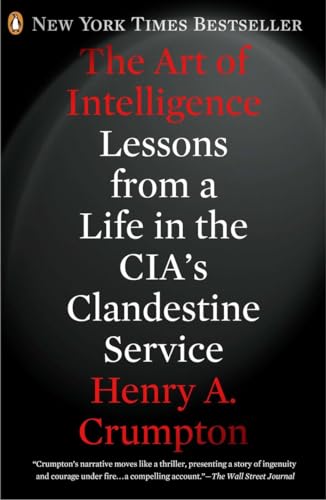
Revelatory and groundbreaking, The Art of Intelligence will change the way people view the CIA, domestic and foreign intelligence, and international terrorism. Henry A. “Hank” Crumpton, a twenty-four-year veteran of the CIA’s Clandestine Service, offers a thrilling account that delivers profound lessons about what it means to serve as an honorable spy. From CIA recruiting missions in Africa to pioneering new programs like the UAV Predator, from running post–9/11 missions in Afghanistan to heading up all clandestine CIA operations in the United States, Crumpton chronicles his role—in the battlefield and in the Oval Office—in transforming the way America wages war and sheds light on issues of domestic espionage.
Die Inhaltsangabe kann sich auf eine andere Ausgabe dieses Titels beziehen.
Über die Autorin bzw. den Autor
Henry A. Crumpton is the chairman and CEO of Crumpton Group LLC, a global business advisory firm. After a twenty-four-year career in the CIA’s Clandestine Service, he served as the U.S. coordinator for counterterrorism with the rank of Ambassador at Large. He lives in the Washington, D.C., area.
Auszug. © Genehmigter Nachdruck. Alle Rechte vorbehalten.
Introduction
In the summer of 2002, I embarked on a new mission. After two decades in the CIA’s Clandestine Service, including the last ten months leading the CIA’s Afghanistan campaign, it was time for a change.
This mission was a departure for me. There were no Mi-17 helicopters, unmanned aerial vehicle (UAV) Predators, M4 assault rifles, Glock model 19 pistols, ceramic-plated body armor, inoculations, polygraphs, disguises, cover, or even basic tradecraft. There was no surveillance to avoid, agents to run, or terrorists to nullify. The assignment did, however, require that I enter a strange culture, readjust my attitude, and assume a different identity.
I returned to university as a student.
The CIA granted me an academic sabbatical at the Paul H. Nitze School of Advanced International Studies (SAIS) at Johns Hopkins University. This new assignment, more sedate than some recent experiences, was nevertheless exciting. It was a full academic year of intellectual indulgence. I gorged on a feast of courses and books covering political thought, military strategy, China, history, foreign policy, terrorism, and philosophy.
I savored it all.
Searching the Spring Semester 2003 course catalog, I stumbled across something unexpected: a class on intelligence. The catchy title “The Art and Tradecraft of Intelligence” prompted me to research the background of the course’s professor, Dr. Jennifer Sims. She had an impressive résumé, both in academia and government.
As a veteran intelligence professional still on the CIA payroll, I felt obliged to take the course. I also figured the class would be fun and easy.
It was a hoot. We explored how George Washington, one of America’s great spymasters, ran agents with superb tactical tradecraft and then brilliantly exploited their intelligence for strategic value. We studied the advances of intelligence capabilities in the U.S. Civil War. We learned that
President Lincoln spent many of his days in the White House telegraph room, turning it into his de facto intelligence and command center. We followed how the advent of wireless telecommunications, airplanes, radar, satellites, and other technical marvels transformed intelligence throughout the twentieth century.
We observed how, unlike Washington and Lincoln, most political leaders forging national security policy and waging war failed to understand or appreciate intelligence. When they also failed to keep pace with geopolitical changes, it was in part because of the gaps among intelligence collection, intelligence analysis, and policy implementation. We reflected on how the government and the broader society perceived and treated intelligence professionals, with comments swinging from deep loathing to cartoonish fantasy. Uninformed and sometimes unreasonable expectations, low and high, of intelligence professionals have whipsawed these officers and their agencies throughout U.S. history. As a nation, our collective ignorance of intelligence has undermined not only our intelligence capabilities, but ultimately the policy makers and citizens served.
Although enjoyable, the class was not easy. Dr. Sims demanded far more study and thought than I anticipated. It was almost embarrassing to realize how much I did not know and how much I learned—even with my many years of experience in espionage, covert action, and war on several continents. Although chagrined by my own ignorance, I was enthralled by the learning experience.
I gained a broader perspective, well beyond the intelligence business, during this academic interlude. It was the first time in twenty years that I was not focused just on the immediate, operational tasks of intelligence. With the opportunity to study and reflect, I better appreciated that the world was transforming rapidly, not least in terms of the nature of conflict, risk, competition, and cooperation. But there was one common denominator: The value of intelligence was increasing. Our Afghanistan campaign of 2001–02 offered many examples of this. The transformative geopolitical trends of our time, many fueled by exponential advances in technology, suggest that intelligence will play an even greater role in an increasingly interdependent and complex world. Our collective understanding and appreciation for intelligence, however, lags far behind our country’s needs, just as it often has throughout U.S. history.
After the United States and its allies won the Cold War and the Iron Curtain collapsed in November 1989, many responsible and respected leaders, such as the late Senator Daniel Patrick Moynihan, voiced their doubts about the need for robust intelligence. Some questioned the need for a Clandestine Service. In the 1990s, Congress cashed in the “peace dividend” and slashed intelligence budgets to the bone. As a field operative during this decade of budgetary collapse, I witnessed operations collapse and agent networks wither. The CIA closed stations all over the world. It was as if our leaders expected that geopolitical risk would fade away.
Some CIA leaders wondered out loud about their nebulous mission. Some quit in confusion and disgust. Remarkably, some CIA veterans even embraced the concept of a new world without real enemies. One CIA Clandestine Service division chief, Milton Bearden, declared that Russia no longer posed any significant espionage threat. His argument gained traction until the exposure of a string of Russian penetrations, such as those of Aldrich Ames in the CIA and Robert Hanssen in the FBI. These traitors dealt great harm to U.S. national security. They also provided information to their Russian handlers that led to the execution of almost a dozen brave Russian agents working for the CIA. While the United States clearly has far more to gain from a cooperative relationship with Russia, as with China, espionage remains an indisputable fact. These great nations are U.S. partners in diplomacy, science, commerce, and much more. They are also espionage adversaries. Both Russia and China probably have more clandestine intelligence operatives inside the United States now, in the second decade of the twenty-first century, than at the height of the Cold War.
In the prosperous calm after the Cold War, however, America as a nation enjoyed a delusional respite, in an imaginary world without serious threats and deadly enemies. Policy wonks bloviated about America’s unrivaled supremacy and the universal, unstoppable, unhindered march of liberal political thought and free-market principles. Life was good.
Then al Qaeda (AQ) attacked the U.S. homeland. It was September 11, 2001. Usama Bin Laden (UBL) and his 19 hijackers murdered 2,977 people. The victims were mostly Americans but included citizens from many other countries. Christians, Jews, Muslims, Hindus, and others perished that day. New York’s World Trade Center’s twin towers were destroyed, leaving human remains shredded among the huge piles of urban rubble. Some of the victims had chosen to jump to their deaths, holding hands, instead of being burned and crushed in the buildings’ collapse. Outside Washington, D.C., the Pentagon, the headquarters of the greatest military on earth, lay wounded, a deep, black, smoking hole in its side. U.S. military men and women, dead and wounded, were strewn throughout its corridors.
The heroic passengers of United Flight 93, in the only effective response to the enemy on that grim day, overpowered the hijackers. The plane, out of control, exploded upon impact in the rural lands near Shanksville, Pennsylvania. This citizen band, a spontaneous, self-organized team of nonstate actors, collected intelligence from their cell phones, analyzed their situation and the risk, and planned and executed a daring counterattack....
„Über diesen Titel“ kann sich auf eine andere Ausgabe dieses Titels beziehen.
Suchergebnisse für The Art of Intelligence: Lessons from a Life in the...

Beispielbild für diese ISBN
The Art of Intelligence: Lessons from a Life in the CIA's Clandestine Service
Anbieter: World of Books (was SecondSale), Montgomery, IL, USA
Verkäuferbewertung 5 von 5 Sternen

Paperback. Zustand: Fair. "A lively account . . . combines the derring-do of old-fashioned spycraft with thoughtful meditations on the future of warfare and intelligence work. It deserves to be read." --The Washington Post "Offer[s] an exceptionally deep glimpse into the CIA's counterterrorism operations in the last decade of the twentieth century." --Harper's A legendary CIA spy and counterterrorism expert tells the spellbinding story of his high-risk, action-packed career Revelatory and groundbreaking, The Art of Intelligence will change the way people view the CIA, domestic and foreign intelligence, and international terrorism. Henry A. "Hank" Crumpton, a twenty-four-year veteran of the CIA's Clandestine Service, offers a thrilling account that delivers profound lessons about what it means to serve as an honorable spy. From CIA recruiting missions in Africa to pioneering new programs like the UAV Predator, from running post-9/11 missions in Afghanistan to heading up all clandestine CIA operations in the United States, Crumpton chronicles his role--in the battlefield and in the Oval Office--in transforming the way America wages war and sheds light on issues of domestic espionage. Artikel-Nr. 00105569594
Gebraucht kaufen
EUR 4,86
Versand gratis
Versand innerhalb von USA
Versand innerhalb von USA
Anzahl: 1 verfügbar
Beispielbild für diese ISBN
The Art of Intelligence: Lessons from a Life in the CIA's Clandestine Service
Anbieter: World of Books (was SecondSale), Montgomery, IL, USA
Verkäuferbewertung 5 von 5 Sternen
Paperback. Zustand: Good. "A lively account . . . combines the derring-do of old-fashioned spycraft with thoughtful meditations on the future of warfare and intelligence work. It deserves to be read." --The Washington Post "Offer[s] an exceptionally deep glimpse into the CIA's counterterrorism operations in the last decade of the twentieth century." --Harper's A legendary CIA spy and counterterrorism expert tells the spellbinding story of his high-risk, action-packed career Revelatory and groundbreaking, The Art of Intelligence will change the way people view the CIA, domestic and foreign intelligence, and international terrorism. Henry A. "Hank" Crumpton, a twenty-four-year veteran of the CIA's Clandestine Service, offers a thrilling account that delivers profound lessons about what it means to serve as an honorable spy. From CIA recruiting missions in Africa to pioneering new programs like the UAV Predator, from running post-9/11 missions in Afghanistan to heading up all clandestine CIA operations in the United States, Crumpton chronicles his role--in the battlefield and in the Oval Office--in transforming the way America wages war and sheds light on issues of domestic espionage. Artikel-Nr. 00100269523
Gebraucht kaufen
EUR 4,86
Versand gratis
Versand innerhalb von USA
Versand innerhalb von USA
Anzahl: Mehr als 20 verfügbar
Beispielbild für diese ISBN
The Art of Intelligence: Lessons from a Life in the CIA's Clandestine Service
Verlag:
Penguin Books (edition Reprint), 2013
ISBN 10: 0143123378
ISBN 13: 9780143123378
Gebraucht
Paperback
Anbieter: BooksRun, Philadelphia, PA, USA
Verkäuferbewertung 5 von 5 Sternen
Paperback. Zustand: Very Good. Reprint. It's a well-cared-for item that has seen limited use. The item may show minor signs of wear. All the text is legible, with all pages included. It may have slight markings and/or highlighting. Artikel-Nr. 0143123378-11-1
Gebraucht kaufen
EUR 4,88
Versand gratis
Versand innerhalb von USA
Versand innerhalb von USA
Anzahl: 1 verfügbar
Beispielbild für diese ISBN
The Art of Intelligence: Lessons from a Life in the CIA's Clandestine Service
Verlag:
Penguin Books (edition Reprint), 2013
ISBN 10: 0143123378
ISBN 13: 9780143123378
Gebraucht
Paperback
Anbieter: BooksRun, Philadelphia, PA, USA
Verkäuferbewertung 5 von 5 Sternen
Paperback. Zustand: Fair. Reprint. The item might be beaten up but readable. May contain markings or highlighting, as well as stains, bent corners, or any other major defect, but the text is not obscured in any way. Artikel-Nr. 0143123378-7-1
Gebraucht kaufen
EUR 5,12
Versand gratis
Versand innerhalb von USA
Versand innerhalb von USA
Anzahl: 2 verfügbar
Beispielbild für diese ISBN
The Art of Intelligence : Lessons from a Life in the CIA's Clandestine Service
Verlag:
Penguin Publishing Group, 2013
ISBN 10: 0143123378
ISBN 13: 9780143123378
Gebraucht
Softcover
Anbieter: Better World Books: West, Reno, NV, USA
Verkäuferbewertung 5 von 5 Sternen
Zustand: Good. Pages intact with minimal writing/highlighting. The binding may be loose and creased. Dust jackets/supplements are not included. Stock photo provided. Product includes identifying sticker. Better World Books: Buy Books. Do Good. Artikel-Nr. 305931-6
Gebraucht kaufen
EUR 6,19
Versand gratis
Versand innerhalb von USA
Versand innerhalb von USA
Anzahl: 2 verfügbar
Beispielbild für diese ISBN
The Art of Intelligence : Lessons from a Life in the CIA's Clandestine Service
Verlag:
Penguin Publishing Group, 2013
ISBN 10: 0143123378
ISBN 13: 9780143123378
Gebraucht
Softcover
Anbieter: Better World Books: West, Reno, NV, USA
Verkäuferbewertung 5 von 5 Sternen
Zustand: Good. Former library copy. Pages intact with minimal writing/highlighting. The binding may be loose and creased. Dust jackets/supplements are not included. Includes library markings. Stock photo provided. Product includes identifying sticker. Better World Books: Buy Books. Do Good. Artikel-Nr. GRP99174900
Gebraucht kaufen
EUR 6,19
Versand gratis
Versand innerhalb von USA
Versand innerhalb von USA
Anzahl: 1 verfügbar
Beispielbild für diese ISBN
The Art of Intelligence : Lessons from a Life in the CIA's Clandestine Service
Verlag:
Penguin Publishing Group, 2013
ISBN 10: 0143123378
ISBN 13: 9780143123378
Gebraucht
Softcover
Anbieter: Better World Books, Mishawaka, IN, USA
Verkäuferbewertung 5 von 5 Sternen
Zustand: Good. Pages intact with minimal writing/highlighting. The binding may be loose and creased. Dust jackets/supplements are not included. Stock photo provided. Product includes identifying sticker. Better World Books: Buy Books. Do Good. Artikel-Nr. 305931-6
Gebraucht kaufen
EUR 6,19
Versand gratis
Versand innerhalb von USA
Versand innerhalb von USA
Anzahl: 4 verfügbar
Beispielbild für diese ISBN
The Art of Intelligence: Lessons from a Life in the Cia's Clandestine Service
Anbieter: ThriftBooks-Dallas, Dallas, TX, USA
Verkäuferbewertung 5 von 5 Sternen
Paperback. Zustand: Fair. No Jacket. Readable copy. Pages may have considerable notes/highlighting. ~ ThriftBooks: Read More, Spend Less. Artikel-Nr. G0143123378I5N00
Gebraucht kaufen
EUR 6,23
Versand gratis
Versand innerhalb von USA
Versand innerhalb von USA
Anzahl: 2 verfügbar
Beispielbild für diese ISBN
The Art of Intelligence: Lessons from a Life in the Cia's Clandestine Service
Anbieter: ThriftBooks-Phoenix, Phoenix, AZ, USA
Verkäuferbewertung 5 von 5 Sternen
Paperback. Zustand: Good. No Jacket. Pages can have notes/highlighting. Spine may show signs of wear. ~ ThriftBooks: Read More, Spend Less. Artikel-Nr. G0143123378I3N00
Gebraucht kaufen
EUR 6,23
Versand gratis
Versand innerhalb von USA
Versand innerhalb von USA
Anzahl: 1 verfügbar
Beispielbild für diese ISBN
The Art of Intelligence: Lessons from a Life in the Cia's Clandestine Service
Anbieter: ThriftBooks-Atlanta, AUSTELL, GA, USA
Verkäuferbewertung 5 von 5 Sternen
Paperback. Zustand: Good. No Jacket. Pages can have notes/highlighting. Spine may show signs of wear. ~ ThriftBooks: Read More, Spend Less. Artikel-Nr. G0143123378I3N00
Gebraucht kaufen
EUR 6,23
Versand gratis
Versand innerhalb von USA
Versand innerhalb von USA
Anzahl: 1 verfügbar