
Verwandte Artikel zu The Rice Mother
Inhaltsangabe
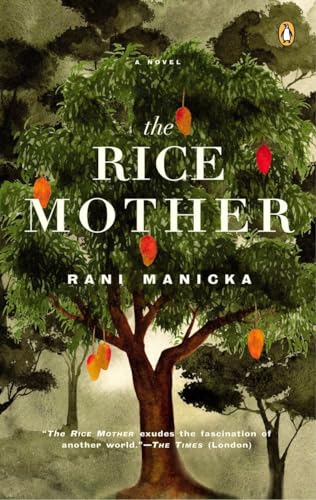
At the age of fourteen, Lakshmi leaves behind her childhood among the mango trees of Ceylon for married life across the ocean in Malaysia, and soon finds herself struggling to raise a family in a country that is, by turns, unyielding and amazing, brutal and beautiful. Giving birth to a child every year until she is nineteen, Lakshmi becomes a formidable matriarch, determined to secure a better life for her daughters and sons. From the Japanese occupation during World War II to the torture of watching some of her children succumb to life’s most terrible temptations, she rises to face every new challenge with almost mythic strength. Dreamy and lyrical, told in the alternating voices of the men and women of this amazing family, The Rice Mother gorgeously evokes a world where small pleasures offset unimaginable horrors, where ghosts and gods walk hand in hand. It marks the triumphant debut of a writer whose wisdom and soaring prose will touch readers, especially women, the world over.
Die Inhaltsangabe kann sich auf eine andere Ausgabe dieses Titels beziehen.
Über die Autorin bzw. den Autor
Rani Manicka, an economics graduate, was born and educated in Malaysia. Infused with her own South Asian family history, The Rice Mother is her first novel.
Auszug. © Genehmigter Nachdruck. Alle Rechte vorbehalten.
Lakshmi
I was born in Ceylon in 1916, at a time when spirits walked the earth just like people, before the glare of electricity and the roar of civilization had frightened them away into the concealed hearts of forests. There they dwelled inside enormous trees full of cool, blue-green shade. In the dappled stillness you could reach out and almost feel their silent, glaring presence yearning for physical form. If the urge to relieve ourselves beset us while we were passing through the jungle, we had to say a prayer and ask their permission before our waste could touch the ground, for they were easily offended. Their solitude broken was the excuse they used to enter an intruder. And walk in his legs.
Mother said her sister was once lured off and possessed by just such a spirit, and a holy man from two villages away had to be sent for to exorcise the evil in her. He wore many chains of strangely twisted beads and dried roots around his neck, testaments to his fearsome powers. The simple villagers gathered, a human ring of curiosity around the man. To drive the spirit away, he began to beat my aunt with a long, thin cane, all the time demanding, "What do you want?" He filled the peaceful village with her terrified screams, but unmoved, he carried on beating her poor body until it bled streams of red.
"You are killing her," my grandmother howled, held back by three appalled yet horribly fascinated women. Ignoring her, the holy man fingered a livid pink scar that ran all the way down his face and walked his determined, tight circles around the cowering girl, always with the darkly whispered query, "What do you want?" Until eventually she screamed shrilly that it was a fruit she wanted.
"Fruit? What sort of fruit?" he asked sternly, halting before the sobbing girl.
A shocking transformation occurred suddenly. The little face looked up at him slyly, and perhaps there was even a bubble of madness in the grin that slowly and with unspeakable obscenity spread its legs on her lips. Coyly she pointed to her younger sister, my mother. "That is the fruit I want," she said, her voice unmistakably male.
The simple villagers were united in their gasp of stunned shock. Needless to say the tall man did not give my mother to the spirit, for she was surely her father's favorite. The spirit had to make do with five lemons, cut and flung into its face, a searing sprinkling of sacred water, and a suffocating amount of myrrh.
When I was very young I used to rest quietly on my mother's lap, listening to her voice remember happier times. You see, my mother was descended from a family of such wealth and influence that in their heyday her English grandmother, Mrs. Armstrong, had been called upon to give a posy of flowers and shake the gloved hand of Queen Victoria herself. My mother was born partially deaf, but her father put his lips against her forehead and spoke to her tirelessly until she learned to speak. By the time she was sixteen she was as beautiful as a cloud maiden. Proposals of marriage came from far and wide to the lovely house in Colombo, but alas, she fell in love with the scent of danger. Her elongated eyes lowered on a charming rogue.
One night she climbed out of her window and down the very neem tree upon which her father had trained a thorny bougainvillea bush when she was only a year old in an effort to deter any man from ever scaling the tree and reaching his daughter's window. As if his pure thoughts had fed the bush, it grew and grew until the entire tree, ablaze with flowers, became a landmark that could be seen for miles around. But Grandfather had not reckoned on his own child's determination.
That moonlit night thorns like bared fangs shredded her thick clothes, ripped her hair, and plunged deep into her flesh, but she couldn't stop. Beneath was the man she loved. When at last she stood before him, there was not an inch of her skin that didn't burn as if aflame. Silently the waiting shadow led her away, but every step was like a knife in her foot, so she begged in terrible pain to rest. The wordless silhouette swung her up and carried her away. Safe inside the warm circle of his arms, she looked back at her home, grand against the vivid night sky, and saw her own bloody footprints leading away from the tree. They remained to taunt her father. She cried then, knowing that they would hurt his poor heart the most. He would beat his own head and cry, "How willing her betrayal?"
The lovers married at daybreak in a small temple in another village. In the ensuing bitter quarrel, the groom, my father, who was in fact the resentful son of a servant in my grandfather's employ, forbade my mother even the mere sight of any member of her family. Only after my father was gray ash in the wind did she return to her family home, but by then her mother was a widow gray with loss.
After issuing his heartless sentence, my father brought my mother to our backward little village far away from Colombo. He sold some of her jewelry, bought some land, built a house, and installed her in it. But clean air and wedded bliss didn't suit the new bridegroom, and soon he was off-lured away by the bright lights in the cities, summoned by the delights of cheap alcohol served by garishly painted prostitutes, and intoxicated by the smell fanned out of a pack of cards. After each absence he returned and presented his young wife with jar upon jar of all manner of white lies pickled in various brands of alcohol. For some obscure reason he thought she had a taste for them. Poor Mother, all she had left were her memories and me, precious things that she used to take out every evening. First she washed off the grime of the years with her own tears, then she polished them with the worn cloth of regret. And finally, when their wonderful sparkle had been returned to them, she laid them out one by one for me to admire before carefully returning them to their golden box inside her head.
From her mouth issued visions of a glorious past full of armies of devoted servants, fine carriages drawn by white horses, and iron chests filled with gold and rich jewelry. How could I, sitting on the cement floor of our tiny hut, even begin to imagine a house so high on a hill that all of Colombo was visible from its front balcony, or a kitchen so huge that our entire house could fit into it?
My mother once said that when she was first placed into her father's arms, tears of joy streamed down his face at the sight of her unusually fair skin and her full head of thick, black hair. He held the small bundle close to his face, and for a while all he could do was breathe in that strange, sweetish odor that is a newborn baby. Then he strode into the stables, his white veshti flapping against his strong brown legs, jumped onto his favorite stallion, and galloped off in a cloud of dust. When he returned, it was with the two largest emerald pieces that the entire village had ever seen. He presented them to his wife, little baubles in return for a marvelous miracle. She had them fashioned into diamond-encrusted earrings that she was never seen without.
I have never seen the famous emeralds, but I still have the black-and-white studio photograph of a sad-eyed woman standing stiffly in front of a badly painted background, a coconut tree growing on the edge of a beach. I look at her often, frozen on a piece of paper long after she is no more.
My mother said that when I was born, she cried to see that I was only a girl, and my disgusted father disappeared to make more pickled lies, returning two years later still roaring drunk. Despite this I still retain crystal-clear memories of a village life so happy and so carefree that not a day goes by in adulthood that I don't think about it with a bittersweet ache. How can I even begin to tell you how much I miss those carefree days when I was Mother's only child, her sun, her moon, her...
„Über diesen Titel“ kann sich auf eine andere Ausgabe dieses Titels beziehen.
Suchergebnisse für The Rice Mother

Beispielbild für diese ISBN
The Rice Mother
Anbieter: World of Books (was SecondSale), Montgomery, IL, USA
Verkäuferbewertung 5 von 5 Sternen

Paperback. Zustand: Very Good. At the age of fourteen, Lakshmi leaves behind her childhood among the mango trees of Ceylon for married life across the ocean in Malaysia, and soon finds herself struggling to raise a family in a country that is, by turns, unyielding and amazing, brutal and beautiful. Giving birth to a child every year until she is nineteen, Lakshmi becomes a formidable matriarch, determined to secure a better life for her daughters and sons. From the Japanese occupation during World War II to the torture of watching some of her children succumb to life's most terrible temptations, she rises to face every new challenge with almost mythic strength. Dreamy and lyrical, told in the alternating voices of the men and women of this amazing family, The Rice Mother gorgeously evokes a world where small pleasures offset unimaginable horrors, where ghosts and gods walk hand in hand. It marks the triumphant debut of a writer whose wisdom and soaring prose will touch readers, especially women, the world over. Artikel-Nr. 00109608849
Gebraucht kaufen
EUR 3,93
Versand gratis
Versand innerhalb von USA
Versand innerhalb von USA
Anzahl: 1 verfügbar
Foto des Verkäufers
The Rice Mother
Verlag:
Penguin Publishing Group, 2004
ISBN 10: 0142004545
ISBN 13: 9780142004548
Gebraucht
Softcover
Anbieter: Dream Books Co., Denver, CO, USA
Verkäuferbewertung 5 von 5 Sternen
Zustand: acceptable. This copy has clearly been enjoyedâ"expect noticeable shelf wear and some minor creases to the cover. Binding is strong, and all pages are legible. May contain previous library markings or stamps. Artikel-Nr. 4EKTGN0025YV_ns
Gebraucht kaufen
EUR 3,93
Versand gratis
Versand innerhalb von USA
Versand innerhalb von USA
Anzahl: 4 verfügbar
Beispielbild für diese ISBN
The Rice Mother
Anbieter: World of Books (was SecondSale), Montgomery, IL, USA
Verkäuferbewertung 5 von 5 Sternen
Paperback. Zustand: Good. At the age of fourteen, Lakshmi leaves behind her childhood among the mango trees of Ceylon for married life across the ocean in Malaysia, and soon finds herself struggling to raise a family in a country that is, by turns, unyielding and amazing, brutal and beautiful. Giving birth to a child every year until she is nineteen, Lakshmi becomes a formidable matriarch, determined to secure a better life for her daughters and sons. From the Japanese occupation during World War II to the torture of watching some of her children succumb to life's most terrible temptations, she rises to face every new challenge with almost mythic strength. Dreamy and lyrical, told in the alternating voices of the men and women of this amazing family, The Rice Mother gorgeously evokes a world where small pleasures offset unimaginable horrors, where ghosts and gods walk hand in hand. It marks the triumphant debut of a writer whose wisdom and soaring prose will touch readers, especially women, the world over. Artikel-Nr. 00104984451
Gebraucht kaufen
EUR 3,93
Versand gratis
Versand innerhalb von USA
Versand innerhalb von USA
Anzahl: 9 verfügbar
Beispielbild für diese ISBN
The Rice Mother
Anbieter: World of Books (was SecondSale), Montgomery, IL, USA
Verkäuferbewertung 5 von 5 Sternen
Paperback. Zustand: Fair. At the age of fourteen, Lakshmi leaves behind her childhood among the mango trees of Ceylon for married life across the ocean in Malaysia, and soon finds herself struggling to raise a family in a country that is, by turns, unyielding and amazing, brutal and beautiful. Giving birth to a child every year until she is nineteen, Lakshmi becomes a formidable matriarch, determined to secure a better life for her daughters and sons. From the Japanese occupation during World War II to the torture of watching some of her children succumb to life's most terrible temptations, she rises to face every new challenge with almost mythic strength. Dreamy and lyrical, told in the alternating voices of the men and women of this amazing family, The Rice Mother gorgeously evokes a world where small pleasures offset unimaginable horrors, where ghosts and gods walk hand in hand. It marks the triumphant debut of a writer whose wisdom and soaring prose will touch readers, especially women, the world over. Artikel-Nr. 00108221943
Gebraucht kaufen
EUR 3,93
Versand gratis
Versand innerhalb von USA
Versand innerhalb von USA
Anzahl: 1 verfügbar
Beispielbild für diese ISBN
The Rice Mother
Verlag:
Penguin Publishing Group (edition Reprint), 2004
ISBN 10: 0142004545
ISBN 13: 9780142004548
Gebraucht
Paperback
Anbieter: BooksRun, Philadelphia, PA, USA
Verkäuferbewertung 5 von 5 Sternen
Paperback. Zustand: Fair. Reprint. The item might be beaten up but readable. May contain markings or highlighting, as well as stains, bent corners, or any other major defect, but the text is not obscured in any way. Artikel-Nr. 0142004545-7-1
Gebraucht kaufen
EUR 4,93
Versand gratis
Versand innerhalb von USA
Versand innerhalb von USA
Anzahl: 1 verfügbar
Beispielbild für diese ISBN
The Rice Mother
Anbieter: ThriftBooks-Phoenix, Phoenix, AZ, USA
Verkäuferbewertung 5 von 5 Sternen
Paperback. Zustand: Good. No Jacket. Pages can have notes/highlighting. Spine may show signs of wear. ~ ThriftBooks: Read More, Spend Less. Artikel-Nr. G0142004545I3N00
Gebraucht kaufen
EUR 5,87
Versand gratis
Versand innerhalb von USA
Versand innerhalb von USA
Anzahl: 1 verfügbar
Beispielbild für diese ISBN
The Rice Mother
Anbieter: ThriftBooks-Atlanta, AUSTELL, GA, USA
Verkäuferbewertung 5 von 5 Sternen
Paperback. Zustand: Good. No Jacket. Pages can have notes/highlighting. Spine may show signs of wear. ~ ThriftBooks: Read More, Spend Less. Artikel-Nr. G0142004545I3N00
Gebraucht kaufen
EUR 5,87
Versand gratis
Versand innerhalb von USA
Versand innerhalb von USA
Anzahl: 1 verfügbar
Beispielbild für diese ISBN
The Rice Mother
Anbieter: ThriftBooks-Dallas, Dallas, TX, USA
Verkäuferbewertung 5 von 5 Sternen
Paperback. Zustand: Good. No Jacket. Pages can have notes/highlighting. Spine may show signs of wear. ~ ThriftBooks: Read More, Spend Less. Artikel-Nr. G0142004545I3N00
Gebraucht kaufen
EUR 5,87
Versand gratis
Versand innerhalb von USA
Versand innerhalb von USA
Anzahl: 1 verfügbar
Beispielbild für diese ISBN
The Rice Mother
Verlag:
Penguin Publishing Group, 2004
ISBN 10: 0142004545
ISBN 13: 9780142004548
Gebraucht
Softcover
Anbieter: Better World Books, Mishawaka, IN, USA
Verkäuferbewertung 5 von 5 Sternen
Zustand: Good. Reprint. Pages intact with minimal writing/highlighting. The binding may be loose and creased. Dust jackets/supplements are not included. Stock photo provided. Product includes identifying sticker. Better World Books: Buy Books. Do Good. Artikel-Nr. GRP92897353
Gebraucht kaufen
EUR 6,09
Versand gratis
Versand innerhalb von USA
Versand innerhalb von USA
Anzahl: 2 verfügbar
Beispielbild für diese ISBN
The Rice Mother
Verlag:
Penguin Publishing Group, 2004
ISBN 10: 0142004545
ISBN 13: 9780142004548
Gebraucht
Softcover
Anbieter: Better World Books, Mishawaka, IN, USA
Verkäuferbewertung 5 von 5 Sternen
Zustand: Good. Reprint. Former library copy. Pages intact with minimal writing/highlighting. The binding may be loose and creased. Dust jackets/supplements are not included. Includes library markings. Stock photo provided. Product includes identifying sticker. Better World Books: Buy Books. Do Good. Artikel-Nr. GRP88987037
Gebraucht kaufen
EUR 6,09
Versand gratis
Versand innerhalb von USA
Versand innerhalb von USA
Anzahl: 1 verfügbar