
Verwandte Artikel zu The Last American Man
Inhaltsangabe
Finalist for the National Book Award
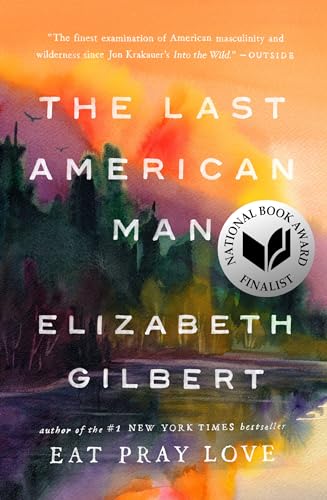
From the New York Times bestselling author of Eat Pray Love, Big Magic and City of Girls comes a riveting exploration of manhood and all its complicated meanings through the portrait of an American Mountain Man.
In this rousing examination of contemporary American male identity, acclaimed author and journalist Elizabeth Gilbert explores the fascinating true story of Eustace Conway. In 1977, at the age of seventeen, Conway left his family's comfortable suburban home to move to the Appalachian Mountains. For more than two decades he has lived there, making fire with sticks, wearing skins from animals he has trapped, and trying to convince Americans to give up their materialistic lifestyles and return with him back to nature. To Gilbert, Conway's mythical character challenges all our assumptions about what it is to be a modern man in America; he is a symbol of much we feel how our men should be, but rarely are.
Die Inhaltsangabe kann sich auf eine andere Ausgabe dieses Titels beziehen.
Über die Autorin bzw. den Autor
Elizabeth Gilbert is the #1 New York Times bestselling author of Big Magic, Eat Pray Love, and The Signature of All Things, as well as several other internationally bestselling books of fiction and nonfiction. She has been a finalist for the National Book Award, the National Book Critics Circle Award, and the PEN/Hemingway Award. Her latest novel, City of Girls, comes out in June, 2019.
Auszug. © Genehmigter Nachdruck. Alle Rechte vorbehalten.
CHAPTER ONE
What a wild life! What a fresh kind of existence!
-Henry Wadsworth Longfellow, considering the possibility of writing an epic poem about the American explorer John Fremont
By the time Eustace Conway was seven years old, he could throw a knife accurately enough to nail a chipmunk to a tree. By the time he was ten, he could hit a running squirrel at fifty feet with a bow and arrow. When he turned twelve, he went out into the woods, alone and empty-handed, built himself a shelter, and survived off the land for a week. When he turned seventeen, he moved out of his family's home altogether and headed into the mountains, where he lived in a teepee of his own design, made fire by rubbing two sticks together, bathed in icy streams, and dressed in the skins of the animals he had hunted and eaten.
This move occurred in 1977, by the way. Which was the same year the film Star Wars was released.
The following year, when he was eighteen, Eustace Conway traveled the Mississippi River in a handmade wooden canoe, battling eddies so fierce, they could suck down a forty-foot tree and not release it to the surface again until a mile downriver. The next year, he set off on the two-thousand-mile Appalachian Trail, walking from Maine to Georgia and surviving almost exclusively on what he hunted and gathered along the way. And in the years that followed, Eustace hiked across the German Alps (in sneakers), kayaked across Alaska, scaled cliffs in New Zealand, and lived with the Navajo of New Mexico. When he was in his mid-twenties, he decided to study a primitive culture more closely in order to learn even more ancient skills. So he flew to Guatemala, got off the plane, and basically started asking, "Where are the primitive people at?" He was pointed toward the jungle, where he hiked for days and days until he found the remotest village of Mayan Indians, many of whom had never before seen a white person. He lived with the Maya for about five months, learning the language, studying the religion, perfecting his weaving skills. But his coolest adventure was probably in 1995, when Eustace got the notion to ride his horse across America. His younger brother, Judson, and a close family friend went with him. It was a mad act of whim. Eustace wasn't sure if it was possible or even legal to ride a horse across America. He just ate a big Christmas dinner with his family, strapped on his gun, hauled out an eighty-year-old U.S. Cavalry saddle (rubbed so thin in places that he could feel the heat of the animal between his legs as he rode), mounted his horse, and headed out. He reckoned that he and his partners could make it to the Pacific by Easter, although everyone he told this to laughed in his face.
The three riders galloped along, burning away nearly fifty miles a day. They ate roadkill deer and squirrel soup. They slept in barns and in the homes of awestruck locals, but when they reached the dry, open West, they fell off their horses every night and slept on the ground where they fell. They were nearly killed by swerving eighteen-wheelers when their horses went wild on a busy interstate bridge one afternoon. They were nearly arrested in Mississippi for not wearing shirts. In San Diego, they picketed their horses along a patch of grass between a mall and an eight-lane highway. They slept there that night and arrived at the Pacific Ocean the next afternoon. Eustace Conway rode his horse right into the surf. It was ten hours before Easter. He had crossed the country in 103 days, setting, while he was at it, a world record.
From coast to coast, Americans of every conceivable background had looked up at Eustace Conway on his horse and said wistfully, "I wish I could do what you're doing." And to every last citizen, Eustace had replied, "You can." But I'm getting ahead of my story here.
Eustace Conway was born in South Carolina in 1961. The Conways lived in a comfortable suburban home in a new neighborhood full of the same, but there was a fine patch of woods, standing right behind their house, that had not yet been cleared for development. It was, in fact, a wild, undisturbed, first-growth forest without so much as a trail cut through it. It was an old world forest, still filled with quicksand and bears. And it was here that Eustace Conway's father-whose name was also Eustace Conway and who knew everything-used to take his young son to teach him how to identify the plants, birds, and mammals of the American South. They would wander together in those woods for hours, looking up into the trees and discussing the shapes of the leaves. So these are Eustace Conway's first memories: the cosmic scope of the woods; the stipple of sunlight slanting through a verdant natural awning; the enlightening voice of the father; the loveliness of the words locust, birch, and tulip poplar; the new intellectual pleasure of study enhanced by the distinct physical sensation of his wobbly toddler's head tilting so far back that he might have toppled over from the effort of looking up so hard at so many trees for such a long time.
As for the rest, and over the years, it was his mother who taught Eustace. She taught him how to camp, bait a hook, build a fire, handle wildlife, weave grasses into rope, and find clay in river bottoms. She taught him how to read books with wonderful titles, like Davy Crockett: Young Adventurer and Wild Wood Wisdom. She taught him to sew buckskin. She taught him how to execute every task with ardent perfection. Eustace Conway's mother was not exactly like the other mothers of the day. She was a little gutsier than the average mom in the American South in the early 1960s. She'd been raised like a boy at a summer camp that her family had owned in the mountains of Asheville, North Carolina. She was an unrepentant tomboy, a proficient horseback rider, and a capable woodsman who, at the age of twenty-two, had sold her silver flute for passage to Alaska, where she lived in a tent by a river with her gun and her dog.
By the time Eustace was five years old, the forest behind his house had been leveled by the real estate market, but the family soon moved to a four-bedroom home in another suburban development. It was in Gastonia, North Carolina, and had its own dense forest standing behind it. Mrs. Conway let Eustace and his young siblings have the run of the woods from the time they could walk-barefoot and shirtless and without supervision-from sunup to sundown, every moment of their childhood, except for those few interruptions for mandatory schooling and churchgoing (because it wasn't as though she were raising savages).
"I suppose I was a bad mother," Mrs. Conway says today, not very convincingly. The other mothers of Gastonia naturally were horrified by this childrearing technique, such as it was. Some of them, alarmed, would call Mrs. Conway on the telephone and say, "You can't let your babies play in those woods! There are poisonous snakes out there!" Thirty years later, Mrs. Conway still finds their concern amusing and adorable. "For heaven's sake!" she says. "My children always knew the difference between poisonous snakes and regular snakes! They did just fine out there."
Briefly, the history of America goes like this: there was a frontier, and then there was no longer a frontier. It all happened rather quickly. There were Indians, then explorers, then settlers, then towns, then cities. Nobody was really paying attention until the moment the wilderness was officially tamed, at which point everybody wanted it back. Within the general spasm of nostalgia that ensued (Buffalo Bill's Wild West Show, Frederic Remington's cowboy paintings) there came a very specific cultural panic, rooted in the question What will become of our boys?
The problem was that, while the classic European coming-of-age story generally featured a provincial boy who moved to the city and was transformed into a refined...
„Über diesen Titel“ kann sich auf eine andere Ausgabe dieses Titels beziehen.
Suchergebnisse für The Last American Man

Beispielbild für diese ISBN
The Last American Man
Anbieter: World of Books (was SecondSale), Montgomery, IL, USA
Verkäuferbewertung 5 von 5 Sternen

Paperback. Zustand: Good. Finalist for the National Book Award From the New York Times bestselling author of Eat Pray Love, Big Magic and City of Girls comes a riveting exploration of manhood and all its complicated meanings through the portrait of an American Mountain Man. In this rousing examination of contemporary American male identity, acclaimed author and journalist Elizabeth Gilbert explores the fascinating true story of Eustace Conway. In 1977, at the age of seventeen, Conway left his family's comfortable suburban home to move to the Appalachian Mountains. For more than two decades he has lived there, making fire with sticks, wearing skins from animals he has trapped, and trying to convince Americans to give up their materialistic lifestyles and return with him back to nature. To Gilbert, Conway's mythical character challenges all our assumptions about what it is to be a modern man in America; he is a symbol of much we feel how our men should be, but rarely are. Artikel-Nr. 00099151939
Gebraucht kaufen
EUR 3,72
Versand gratis
Versand innerhalb von USA
Versand innerhalb von USA
Anzahl: Mehr als 20 verfügbar
Beispielbild für diese ISBN
The Last American Man
Anbieter: World of Books (was SecondSale), Montgomery, IL, USA
Verkäuferbewertung 5 von 5 Sternen
Paperback. Zustand: Fair. Finalist for the National Book Award From the New York Times bestselling author of Eat Pray Love, Big Magic and City of Girls comes a riveting exploration of manhood and all its complicated meanings through the portrait of an American Mountain Man. In this rousing examination of contemporary American male identity, acclaimed author and journalist Elizabeth Gilbert explores the fascinating true story of Eustace Conway. In 1977, at the age of seventeen, Conway left his family's comfortable suburban home to move to the Appalachian Mountains. For more than two decades he has lived there, making fire with sticks, wearing skins from animals he has trapped, and trying to convince Americans to give up their materialistic lifestyles and return with him back to nature. To Gilbert, Conway's mythical character challenges all our assumptions about what it is to be a modern man in America; he is a symbol of much we feel how our men should be, but rarely are. Artikel-Nr. 00099107077
Gebraucht kaufen
EUR 3,72
Versand gratis
Versand innerhalb von USA
Versand innerhalb von USA
Anzahl: 16 verfügbar
Foto des Verkäufers
The Last American Man
Anbieter: Dream Books Co., Denver, CO, USA
Verkäuferbewertung 5 von 5 Sternen
Zustand: very_good. Pages are clean with no markings. May show minor signs of wear or cosmetic defects marks, cuts, bends, or scuffs on the cover, spine, pages, or dust jacket. May have remainder marks on edges. Artikel-Nr. DBV.0142002836.VG
Gebraucht kaufen
EUR 3,78
Versand gratis
Versand innerhalb von USA
Versand innerhalb von USA
Anzahl: 2 verfügbar
Beispielbild für diese ISBN
The Last American Man
Verlag:
Riverhead Books (edition Reissue), 2003
ISBN 10: 0142002836
ISBN 13: 9780142002834
Gebraucht
Paperback
Anbieter: BooksRun, Philadelphia, PA, USA
Verkäuferbewertung 5 von 5 Sternen
Paperback. Zustand: Very Good. Reissue. It's a well-cared-for item that has seen limited use. The item may show minor signs of wear. All the text is legible, with all pages included. It may have slight markings and/or highlighting. Artikel-Nr. 0142002836-11-18
Gebraucht kaufen
EUR 4,54
Versand gratis
Versand innerhalb von USA
Versand innerhalb von USA
Anzahl: 1 verfügbar
Beispielbild für diese ISBN
The Last American Man
Verlag:
Riverhead Books (edition Reissue), 2003
ISBN 10: 0142002836
ISBN 13: 9780142002834
Gebraucht
Paperback
Anbieter: BooksRun, Philadelphia, PA, USA
Verkäuferbewertung 5 von 5 Sternen
Paperback. Zustand: Very Good. Reissue. It's a well-cared-for item that has seen limited use. The item may show minor signs of wear. All the text is legible, with all pages included. It may have slight markings and/or highlighting. Artikel-Nr. 0142002836-11-6
Gebraucht kaufen
EUR 4,79
Versand gratis
Versand innerhalb von USA
Versand innerhalb von USA
Anzahl: 1 verfügbar
Beispielbild für diese ISBN
The Last American Man
Anbieter: ThriftBooks-Reno, Reno, NV, USA
Verkäuferbewertung 5 von 5 Sternen
Paperback. Zustand: Good. No Jacket. Pages can have notes/highlighting. Spine may show signs of wear. ~ ThriftBooks: Read More, Spend Less. Artikel-Nr. G0142002836I3N00
Gebraucht kaufen
EUR 6,01
Versand gratis
Versand innerhalb von USA
Versand innerhalb von USA
Anzahl: 5 verfügbar
Beispielbild für diese ISBN
The Last American Man
Anbieter: ThriftBooks-Phoenix, Phoenix, AZ, USA
Verkäuferbewertung 5 von 5 Sternen
Paperback. Zustand: Good. No Jacket. Pages can have notes/highlighting. Spine may show signs of wear. ~ ThriftBooks: Read More, Spend Less. Artikel-Nr. G0142002836I3N00
Gebraucht kaufen
EUR 6,01
Versand gratis
Versand innerhalb von USA
Versand innerhalb von USA
Anzahl: 5 verfügbar
Beispielbild für diese ISBN
The Last American Man
Anbieter: ThriftBooks-Dallas, Dallas, TX, USA
Verkäuferbewertung 5 von 5 Sternen
Paperback. Zustand: Good. No Jacket. Pages can have notes/highlighting. Spine may show signs of wear. ~ ThriftBooks: Read More, Spend Less. Artikel-Nr. G0142002836I3N00
Gebraucht kaufen
EUR 6,03
Versand gratis
Versand innerhalb von USA
Versand innerhalb von USA
Anzahl: 6 verfügbar
Beispielbild für diese ISBN
The Last American Man
Anbieter: ThriftBooks-Atlanta, AUSTELL, GA, USA
Verkäuferbewertung 5 von 5 Sternen
Paperback. Zustand: Good. No Jacket. Pages can have notes/highlighting. Spine may show signs of wear. ~ ThriftBooks: Read More, Spend Less. Artikel-Nr. G0142002836I3N00
Gebraucht kaufen
EUR 6,03
Versand gratis
Versand innerhalb von USA
Versand innerhalb von USA
Anzahl: 5 verfügbar
Beispielbild für diese ISBN
The Last American Man
Verlag:
Penguin Publishing Group, 2003
ISBN 10: 0142002836
ISBN 13: 9780142002834
Gebraucht
Softcover
Anbieter: Better World Books: West, Reno, NV, USA
Verkäuferbewertung 5 von 5 Sternen
Zustand: Very Good. Reissue. Former library copy. Pages intact with possible writing/highlighting. Binding strong with minor wear. Dust jackets/supplements may not be included. Includes library markings. Stock photo provided. Product includes identifying sticker. Better World Books: Buy Books. Do Good. Artikel-Nr. GRP88652731
Gebraucht kaufen
EUR 6,19
Versand gratis
Versand innerhalb von USA
Versand innerhalb von USA
Anzahl: 4 verfügbar