
Verwandte Artikel zu The Flower Drum Song
Inhaltsangabe
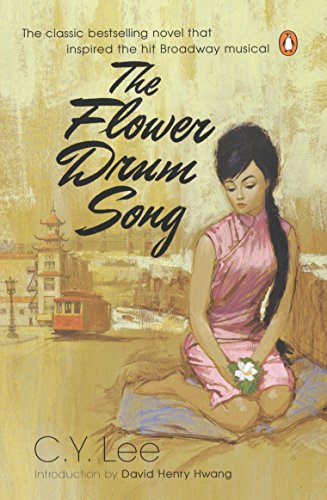
Originally published in 1957, The Flower Drum Song was a groundbreaking work of popular literature. An immediate bestseller, it inspired the classic Rodgers and Hammerstein musical. This charming, bittersweet tale of romance and the powerful bonds of family tells the story of Wang Ta, who wants what every young American man wants: a great career and a woman to love. Living in San Francisco's Chinatown-with his widowed father, Old Master Wang, who misses the old way of life in China, and his younger brother, who just wants to be a normal American teenager-Wang Ta becomes involved with a series of women as he searches for love and the American dream. Comic, poignant, and sexy, The Flower Drum Song is an astute portrayal of immigrants struggling with assimilation. This edition features a new introduction by David Henry Hwang.
Die Inhaltsangabe kann sich auf eine andere Ausgabe dieses Titels beziehen.
Über die Autorin bzw. den Autor
C. Y. Lee (1915–2018) arrived in the United States in 1943 and graduated from Yale in 1947 with an MFA in playwriting. He was a contributor to Radio Free Asia and an editor at Chinese World and Young China.
David Henry Hwang (introduction), acclaimed playwright, screenwriter, and librettist, won the Tony Award for his play M. Butterfly.
Auszug. © Genehmigter Nachdruck. Alle Rechte vorbehalten.
PENGUIN BOOKS
THE FLOWER DRUM SONG
Chin Y. Lee was born in Hunan, China, in 1917. He received his B.A. from the National Southwest Associated University, Kunming, China, in 1940. He came to the United States in 1943 and attended Yale University, graduating in 1947 with his M.F.A. in playwriting. In San Francisco, he worked as city editor for the newspapers Chinese World and Young China, as well as a feature program writer for Radio Free Asia. The Flower Drum Song, published in 1957, was his first novel, and was the basis for a Rodgers and Hammerstein musical that ran on Broadway and subsequently became a film. Lee has published a number of other novels, and his stories and articles have appeared in The New Yorker, Theatre Arts, Writer’s Digest, and Ellery Queen’s Mystery Magazine, among others. He has worked as a scriptwriter for Twentieth Century Fox. His honors include a California Commonwealth Club Gold Medal Fiction Award, a San Francisco Press Club and Union League Annual Award, a Writer’s Guild Annual Award for Writing Achievement, a Box Office Blue Ribbon Award, and the key to the City of San Francisco. A C. Y. Lee Archive has been established at Boston University’s Mugar Memorial Library. Lee lives in Alhambra, California.
David Henry Hwang was awarded the 1988 Tony, Drama Desk, Outer Critics, and John Gassner awards for his Broadway debut play, M. Butterfly, which was also a finalist for the Pulitzer Prize. His other plays include FOB, which won a 1981 OBIE Award, and Golden Child, which received a 1998 Tony nomination and a 1997 OBIE Award. He co-wrote the book for the Broadway production of Aida; his libretti include two for composer Philip Glass; and he has written screenplays for M. Butterfly, Golden Gate, and Possession. Hwang wrote a new book for the revival of the Rodgers and Hammerstein musical Flower Drum Song, which premiered in 2001. He lives in New York City.
The
Flower Drum
Song
by C. Y. Lee
Table of Contents
Author’s Note
In the late forties, Chinatown in Los Angeles was a roofed bazaar the size of two football fields. I’d moved there after escaping China during the Second World War on a student visa and subsequently finding that the Master’s in Fine Arts I had from Yale wasn’t helpful in making me a successful playwright or getting a job at the U.N. as an interpreter.
One morning, as I was having my daily 25-cent bowl of noodles, I read an announcement in the Chinese World that would turn my life around. The paper was preparing to publish an English section and needed a columnist. I went home and wrote two sample manuscripts, naming my proposed column “So I Say.” A week later, I received a check for ten dollars and a letter from the editor asking me to submit five columns a week, for which he would pay me $5 each. I calculated on my fingers: $25 a week would buy a lot of noodles. I threw my arms into the air and cheered. For the first time in my life I could make money from writing.
I wrote about life, love, and emotions to appeal to the younger generation who could read English, and my column became quite popular. I was promoted to assistant editor and, in addition to my regular column, began translating some news stories from the American papers. The paper was based in San Francisco, and I could move there if I was interested. I moved immediately.
Mr. Li Ta-Ming’s Chinese World occupied a large upstairs room on Grand Avenue in San Francisco. It was crowded, busy, and noisy. My duties now included searching for some city scandals from the English papers—and inventing a few if necessary. I rented a little room above a Filipino nightclub on Kearney Street, a short walk from the office. The room was cheap because of the noise from the club. I settled into San Francisco life and began my first novel.
One afternoon, just as I finished that day’s column, I received a call from a man with a gravelly voice. He started asking me all kinds of questions, and I immediately thought he was from the Immigration Service. “Officer,” I said, “I’m all packed. Deport me any time.” The caller didn’t know what I was talking about. It turned out he was the editor of Writer’s Digest informing me that I had won first prize in their short story contest. He wanted to make sure I was the right Lee before he sent me the prize money of $750. When the editor’s formal letter and check arrived, I brought them to the Immigration Service to apply for an extension of stay. The pokerfaced officer studied my case, shoved some papers at me and told me to fill them in and sign. They were papers for permanent residence. If approved, I could become an American citizen in five years.
I finished my novel and found an agent, Ann Elmo, to represent it. Ann called one summer day to give me an update: my novel, The Flower Drum Song, had been turned down by almost every major publisher in New York. She hinted that after one more rejection, she would return it and I should think of another line of occupation. A week later she called again and said, “Keep writing, Lee. A highbrow publisher, Farrar, Straus and Cudahy, has bought your book.” She added that the publisher liked it because it was quaint and episodic—the very reasons the other publishers had turned it down.
A month later I took a trip to New York and had a chance to meet John Farrar, my editor and a senior partner at the publishing house. He told me that my manuscript of The Flower Drum Song had first landed on the sick bed of an eighty-year-old reader who worked for the publisher screening submissions. The elderly gentleman, having finished the book, didn’t have enough energy to write a detailed critique. With his last bit of strength, he scribbled on the dog-eared cover, “Read This,” and died. I especially enjoyed retelling this story when The Flower Drum Song climbed onto The New York Times bestseller list. Radio Free Asia soon offered me a job. I took it and resigned from the newspaper, but I still kept that cheap room on Kearney Street.
One late afternoon Ann Elmo called me from New York with some good news. There were quite a few nibbles for The Flower Drum Song, and two of them were very promising. A Broadway producer had offered $3,000 to option the book for two years to make a stage play, and an independent Hollywood producer had offered $50,000 to buy all the dramatic rights outright, including film. Ann wanted me to choose one of these two offers. I promised my agent that I would give her my answer the next morning.
That night I didn’t write. I returned to my room to think things over. If I took the $3,000 I could collect future royalties from the play. If the play failed, though, I wouldn’t get anything but the $3,000. If I accepted the Hollywood producer’s money, I would be quite rich for a while. I could move to Nob Hill, take a trip to Europe, and come home with plenty of money left in the bank. For a while.
I lay on my squeaky bed and stared at the ceiling. For the first time I didn’t mind the roof-shaking music; it gave my room a festive mood. I could have jumped at the guaranteed big money, and yet, something seemed to hold me back. My frugal nature and my desire for instant security were pushing me one way, but something else, maybe a gambling gene telling me to throw the dice, was pulling me the other way. Finally, I decided to get a drink. I went downstairs and bought a Budweiser, the best in the Filipino nightclub. Sipping my beer from the bottle, I began to relax, then I began to feel...
„Über diesen Titel“ kann sich auf eine andere Ausgabe dieses Titels beziehen.
Suchergebnisse für The Flower Drum Song

Beispielbild für diese ISBN
The Flower Drum Song
Anbieter: ThriftBooks-Dallas, Dallas, TX, USA
Verkäuferbewertung 5 von 5 Sternen

Paperback. Zustand: Good. No Jacket. Pages can have notes/highlighting. Spine may show signs of wear. ~ ThriftBooks: Read More, Spend Less. Artikel-Nr. G0142002186I3N00
Gebraucht kaufen
EUR 7,99
Versand gratis
Versand innerhalb von USA
Versand innerhalb von USA
Anzahl: 1 verfügbar
Beispielbild für diese ISBN
The Flower Drum Song
Verlag:
Penguin Publishing Group, 2002
ISBN 10: 0142002186
ISBN 13: 9780142002186
Gebraucht
Softcover
Anbieter: Better World Books: West, Reno, NV, USA
Verkäuferbewertung 5 von 5 Sternen
Zustand: Very Good. Reprint. Pages intact with possible writing/highlighting. Binding strong with minor wear. Dust jackets/supplements may not be included. Stock photo provided. Product includes identifying sticker. Better World Books: Buy Books. Do Good. Artikel-Nr. 6367818-6
Gebraucht kaufen
EUR 10,15
Versand gratis
Versand innerhalb von USA
Versand innerhalb von USA
Anzahl: 1 verfügbar
Beispielbild für diese ISBN
The Flower Drum Song
Anbieter: Revaluation Books, Exeter, Vereinigtes Königreich
Verkäuferbewertung 5 von 5 Sternen
Paperback. Zustand: Brand New. reprint edition. 272 pages. 8.00x5.25x0.75 inches. In Stock. Artikel-Nr. x-0142002186
Neu kaufen
EUR 26,20
EUR 12,00 Versand
Versand von Vereinigtes Königreich nach USA
Versand von Vereinigtes Königreich nach USA
Anzahl: 2 verfügbar
Foto des Verkäufers
Flower Drum Song
Verlag:
Penguin Publishing Group, 2002
ISBN 10: 0142002186
ISBN 13: 9780142002186
Gebraucht
Softcover
Anbieter: GreatBookPricesUK, Woodford Green, Vereinigtes Königreich
Verkäuferbewertung 5 von 5 Sternen
Zustand: As New. Unread book in perfect condition. Artikel-Nr. 638259
Gebraucht kaufen
EUR 25,70
EUR 18,00 Versand
Versand von Vereinigtes Königreich nach USA
Versand von Vereinigtes Königreich nach USA
Anzahl: Mehr als 20 verfügbar