
Verwandte Artikel zu Heart of Darkness: Ed. with an Introduction and Notes...
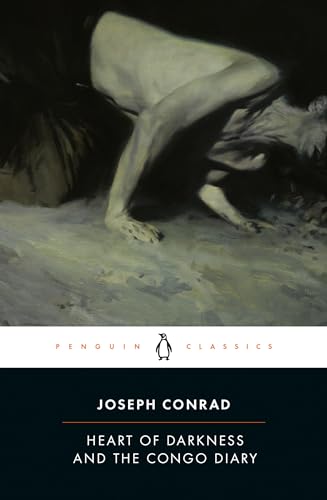
Heart of Darkness: Ed. with an Introduction and Notes by Owen Knowles. Ed. w. Notes by Robert Hampson (Penguin Classics) - Softcover
Inhaltsangabe
A haunting Modernist masterpiece and the inspiration for Francis Ford Coppola's Oscar-winning film Apocalypse Now, Heart of Darkness explores the limits of human experience and the nightmarish realities of imperialism.
Conrad's narrator Marlow, a seaman and wanderer, recounts his physical and psychological journey in search of the infamous ivory trader Kurtz: dying, insane, and guilty of unspeakable atrocities. Travelling upriver to the heart of the African continent, he gradually becomes obsessed by this enigmatic, wraith-like figure. Marlow's discovery of how Kurtz has gained his position of power over the local people involves him in a radical questioning, not only of his own nature and values, but also those of western civilisation.
Part of a major series of new editions of Conrad's most famous works in Penguin Classics, this volume contains Conrad's Congo Diary, a chronology, further reading, notes, a map of the Congo, a glossary and an introduction discussing the author's experiences in Africa, the narrative and symbolic complexities of Heart of Darkness and critical responses to the novel.
Edited with an introduction by Owen Knowles
'Seems to reach into the heart of Conrad himself' Peter Ackroyd
Die Inhaltsangabe kann sich auf eine andere Ausgabe dieses Titels beziehen.
Über die Autorin bzw. den Autor
Joseph Conrad was born in the Ukraine in 1857 and grew up under Tsarist autocracy. In 1874 Conrad travelled to Marseilles, where he served in French merchant vessels before joining a British ship in 1878 as an apprentice. In 1886 he obtained British nationality. Eight years later he left the sea to devote himself to writing, publishing his first novel, Almayer's Folly, in 1895. The following year he settled in Kent, where he produced within fifteen years such modern classics as Youth, Heart of Darkness, Lord Jim, Typhoon, Nostromo, The Secret Agent and Under Western Eyes. He continued to write until his death in 1924.
Von der hinteren Coverseite
Heart of Darkness has been considered for most of this century as a literary classic, and also as a powerful indictment of the evils of imperialism. It reflects the savage repressions carried out in the Congo by the Belgians in one of the largest acts of genocide committed up to that time. Conrad's narrator encounters at the end of the story a man named Kurtz, dying, insane, and guilty of unspeakable atrocities.
Auszug. © Genehmigter Nachdruck. Alle Rechte vorbehalten.
Introduction
Mention the name of Joseph Conrad and the answering response will commonly invoke his celebrated African novella of 1899, ‘Heart of Darkness’. If the work has acquired an iconic status comparable to that of Edvard Munch’s painting The Scream (1893), its title has by contrast become something of a tired cliché in being so repeatedly used by newspaper headline-makers. Conrad, who modestly hoped that the work might have a continuing ‘vibration’, would have been astonished by these contemporary reverberations.
The story’s emergence as a twentieth-century ‘classic’ forms a first stage in the history of its remarkable after-life. A key moment arrived with T. S. Eliot’s use of a fragment from ‘Heart of Darkness’ as an epigraph to his poem, ‘The Hollow Men’ (1925). Eliot’s epigraph signals a temporary kinship and establishes a bridge between two works, but it also probably signifies a more intangible sense of indebtedness -- to Conrad as an important founder-member of a tradition of British Modernist writing.
The story’s major re-discovery dates from the 1950s when its apocalyptic symbolism and existentialist uncertainty seem to have entered the collective consciousness of a generation who lived through the Second World War or were coming to terms with its legacy. As one critic of the time put it, the story had become ‘a Pilgrim’s Progress for our pessimistic and psychologizing age’ (Guerard, p. 33). Its more recent impact has been equally dramatic, if more controversial. Now standing at the centre of a wider contemporary debate about race, imperialism and feminism, its æsthetic dimensions and experimental character have almost been left behind. It has acquired the character of an awkward problem-novel, a standard text in the classroom and -- for better or worse -- a litmus-test for a variety of theoretical preoccupations. As a modern quest parable translated into many languages, it has simultaneously had a powerful generative effect upon twentieth-century writers and film-makers, inspiring emulations, adaptations and counter-versions.
I
Conrad’s direct and indirect engagement with things African has a long pre-history. It extends as far back as his childhood, when the young Pole pored over maps of the continent, devoured tales of the first European explorers in Africa and vicariously shared the perils of Dr Livingstone’s travels. Like all dreams of heroic adventure, this one was destined to meet with a rude awakening. In 1890, towards the end of his career as a merchant seaman, the thirty-three-year-old Conrad signed a long-term contract to work for a Belgian company in the Congo Free State. The country he entered had since 1885 been the personal possession of King Leopold II of Belgium who, under the guise of a philanthropic concern to bring ‘light’ to the ‘dark’ continent, was brutally engaged in what Conrad later described as ‘the vilest scramble for loot that ever disfigured the history of human conscience and geographical exploration’ (Last Essays, p. 17).
Conrad’s growing desire to return to Europe was unexpectedly realized when he suffered a physical breakdown: plagued with the after-effects of dysentery and malaria, he ended his stay after seven months, returned to a period of hospitalization in London and suffered a legacy of ill-health for the rest of his life. His first-hand encounter with the effects of Leopold’s rule in the Congo almost certainly left him with deeper scars: according to a close friend, the episode formed ‘the turning-point in his mental life’, shaped ‘his transformation from a sailor to a writer’ and ‘swept away the generous illusions of his youth’ (Garnett, p. xii).
One of the products of this period was The Congo Diary (reprinted in this edition), Conrad’s record of his daily movements during the first part of his stay. Severely factual and never intended for publication, the diary nevertheless offers his earliest written account of a peopled Africa and may have been kept to preserve material that would be of use to the later writer.
Conrad’s first African work, ‘An Outpost of Progress’, was composed six years later. A fine short story in its own right, ‘An Outpost’ also represents an important stage in Conrad’s attempt to fashion a serious and grown-up colonial fiction distinct from the boyish adventure stories of G. A. Henty and Rider Haggard. From his early Eastern novels, the story inherits the large spectacle of the European abroad, removed from the constraints of the Western ‘crowd’, isolated in the wilderness and undergoing swift collapse. Here, however, the predicament is shaped by an acutely political awareness, with the focus partly upon its two carefully chosen types (a bureaucrat and a soldier) and partly upon the representative imperialist fictions arriving from Europe with them.
The degeneration of the two supposed ‘light-bringers’ is remorseless: they arrive in Africa voicing the conventional view that as racially superior Europeans they have the right and duty to civilize ‘backward’ peoples, but ironies emerge when it transpires that, as two of Europe’s failed rejects, they are happy to cultivate failure, content with their fellowship in idleness and oblivious to the civilized litter they leave around an increasingly inefficient trading-post. Ultimately, however, the strengths of the story as a polemic -- its aloof omniscient narration, singleness of focus and sparkling sarcasm -- also serve to define its limits. In Conrad’s later view, ‘An Outpost’ was mainly an important stepping-stone towards ‘Heart of Darkness’, in which an English narrator, Marlow, agitatedly reflects upon an earlier visit to Africa and his quest there towards the charismatic European trader, Kurtz. According to Conrad, his return to an African subject coincided with a widening sense of its possibilities and was accompanied by an intense ‘nightmare feeling’ (Letters, II, 162).
II
Enigmatic though ‘Heart of Darkness’ may finally prove to be, its early episodes are remarkable for their trenchant topicality. At the outset of composition, Conrad described the story as being of ‘our time distinc[t]ly’ in its concern with the ‘criminality of inefficiency and pure selfishness when tackling the civilizing work in Africa’ (Letters, II, 140-41). For his subject, he again returned to what was bluntly described in a coinage of 1884 as the ‘Scramble for Africa’, one resulting in the systematic annexation and exploitation of Africa by European powers during the last decades of the nineteenth century.
At an early point, the story offers a summary of these developments. The map of Central Africa available to the youthful Marlow presents it as a white blankness, an unexplored and unnamed terra incognita. To the older Marlow, the area has become, presumably as a result of European expansion, a more impenetrable and menacing ‘place of darkness’ (p. 00), while yet another map of the continent presents him with a multi-coloured chart, its pattern the visible evidence of European territorial possessions. Even more topically, the story’s opening sequences confronted its first readers with echoes of their most recent newspaper-headlines -- as in references to the building of a railway or to expanding trade-syndicates or to increasing militarization in Africa, as signalled by the presence of mercenary soldiers and a blockading French gun-boat.
This sense of topical issue is,...
„Über diesen Titel“ kann sich auf eine andere Ausgabe dieses Titels beziehen.
Suchergebnisse für Heart of Darkness: Ed. with an Introduction and Notes...

Beispielbild für diese ISBN
Heart of Darkness
Anbieter: World of Books (was SecondSale), Montgomery, IL, USA
Verkäuferbewertung 5 von 5 Sternen

Paperback. Zustand: Good. Marlow, a seaman and wanderer, recounts his physical and psychological journey in search of the infamous ivory trader Kurtz: dying, insane, and guilty of unspeakable atrocities. Travelling upriver to the heart of the African continent, he gradually becomes obsessed by this enigmatic, wraith-like figure. Artikel-Nr. 00108869837
Gebraucht kaufen
EUR 4,95
Versand gratis
Versand innerhalb von USA
Versand innerhalb von USA
Anzahl: 3 verfügbar
Beispielbild für diese ISBN
Heart of Darkness and the Congo Diary (Penguin Classics)
Anbieter: Wonder Book, Frederick, MD, USA
Verkäuferbewertung 5 von 5 Sternen
Zustand: Good. Good condition. A copy that has been read but remains intact. May contain markings such as bookplates, stamps, limited notes and highlighting, or a few light stains. Artikel-Nr. H02H-00567
Gebraucht kaufen
EUR 6,33
Versand gratis
Versand innerhalb von USA
Versand innerhalb von USA
Anzahl: 1 verfügbar
Foto des Verkäufers
Heart of Darkness: Joseph Conrad (Penguin Classics)
Anbieter: WeBuyBooks, Rossendale, LANCS, Vereinigtes Königreich
Verkäuferbewertung 5 von 5 Sternen
paperback. Zustand: Good. Most items will be dispatched the same or the next working day. A copy that has been read but remains in clean condition. All of the pages are intact and the cover is intact and the spine may show signs of wear. The book may have minor markings which are not specifically mentioned. Artikel-Nr. rev9089636247
Gebraucht kaufen
EUR 3,10
EUR 5,33 Versand
Versand von Vereinigtes Königreich nach USA
Versand von Vereinigtes Königreich nach USA
Anzahl: 1 verfügbar
Beispielbild für diese ISBN
Heart of Darkness and the Congo Diary
Verlag:
Penguin Publishing Group, 2007
ISBN 10: 0141441674
ISBN 13: 9780141441672
Gebraucht
Softcover
Anbieter: Better World Books, Mishawaka, IN, USA
Verkäuferbewertung 5 von 5 Sternen
Zustand: Good. darkness Edition. Pages intact with minimal writing/highlighting. The binding may be loose and creased. Dust jackets/supplements are not included. Stock photo provided. Product includes identifying sticker. Better World Books: Buy Books. Do Good. Artikel-Nr. GRP92250827
Gebraucht kaufen
EUR 9,09
Versand gratis
Versand innerhalb von USA
Versand innerhalb von USA
Anzahl: 2 verfügbar
Beispielbild für diese ISBN
Heart of Darkness and the Congo Diary
Verlag:
Penguin Publishing Group, 2007
ISBN 10: 0141441674
ISBN 13: 9780141441672
Gebraucht
Softcover
Anbieter: Better World Books, Mishawaka, IN, USA
Verkäuferbewertung 5 von 5 Sternen
Zustand: Very Good. darkness Edition. Pages intact with possible writing/highlighting. Binding strong with minor wear. Dust jackets/supplements may not be included. Stock photo provided. Product includes identifying sticker. Better World Books: Buy Books. Do Good. Artikel-Nr. 4275141-6
Gebraucht kaufen
EUR 9,09
Versand gratis
Versand innerhalb von USA
Versand innerhalb von USA
Anzahl: 1 verfügbar
Beispielbild für diese ISBN
Heart of Darkness and the Congo Diary
Verlag:
Penguin Publishing Group, 2007
ISBN 10: 0141441674
ISBN 13: 9780141441672
Gebraucht
Softcover
Anbieter: Better World Books Ltd, Dunfermline, Vereinigtes Königreich
Verkäuferbewertung 5 von 5 Sternen
Zustand: Good. darkness Edition. Former library copy. Pages intact with minimal writing/highlighting. The binding may be loose and creased. Dust jackets/supplements are not included. Includes library markings. Stock photo provided. Product includes identifying sticker. Better World Books: Buy Books. Do Good. Artikel-Nr. GRP15614292
Gebraucht kaufen
EUR 5,67
EUR 5,81 Versand
Versand von Vereinigtes Königreich nach USA
Versand von Vereinigtes Königreich nach USA
Anzahl: 2 verfügbar
Beispielbild für diese ISBN
Heart of Darkness and the Congo Diary
Anbieter: Majestic Books, Hounslow, Vereinigtes Königreich
Verkäuferbewertung 4 von 5 Sternen

Zustand: New. pp. 192. Artikel-Nr. 8236087
Neu kaufen
EUR 6,06
EUR 7,55 Versand
Versand von Vereinigtes Königreich nach USA
Versand von Vereinigtes Königreich nach USA
Anzahl: 10 verfügbar
Beispielbild für diese ISBN
Heart of Darkness
Anbieter: PBShop.store UK, Fairford, GLOS, Vereinigtes Königreich
Verkäuferbewertung 5 von 5 Sternen
PAP. Zustand: New. New Book. Shipped from UK. Established seller since 2000. Artikel-Nr. GB-9780141441672
Neu kaufen
EUR 12,52
EUR 3,82 Versand
Versand von Vereinigtes Königreich nach USA
Versand von Vereinigtes Königreich nach USA
Anzahl: 15 verfügbar
Beispielbild für diese ISBN
Heart of Darkness: Joseph Conrad (Penguin Classics)
Verlag:
Penguin Books Ltd, United Kingdom, London, 2007
ISBN 10: 0141441674
ISBN 13: 9780141441672
Gebraucht
Paperback
Anbieter: WorldofBooks, Goring-By-Sea, WS, Vereinigtes Königreich
Verkäuferbewertung 5 von 5 Sternen
Paperback. Zustand: Very Good. A haunting Modernist masterpiece and the inspiration for Francis Ford Coppola's Oscar-winning film Apocalypse Now, Heart of Darkness explores the limits of human experience and the nightmarish realities of imperialism. Conrad's narrator Marlow, a seaman and wanderer, recounts his physical and psychological journey in search of the infamous ivory trader Kurtz: dying, insane, and guilty of unspeakable atrocities. Travelling upriver to the heart of the African continent, he gradually becomes obsessed by this enigmatic, wraith-like figure. Marlow's discovery of how Kurtz has gained his position of power over the local people involves him in a radical questioning, not only of his own nature and values, but also those of western civilisation. Part of a major series of new editions of Conrad's most famous works in Penguin Classics, this volume contains Conrad's Congo Diary, a chronology, further reading, notes, a map of the Congo, a glossary and an introduction discussing the author's experiences in Africa, the narrative and symbolic complexities of Heart of Darkness and critical responses to the novel.Edited with an introduction by Owen Knowles'Seems to reach into the heart of Conrad himself' Peter Ackroyd. The book has been read, but is in excellent condition. Pages are intact and not marred by notes or highlighting. The spine remains undamaged. Artikel-Nr. GOR001361514
Gebraucht kaufen
EUR 11,96
EUR 6,50 Versand
Versand von Vereinigtes Königreich nach USA
Versand von Vereinigtes Königreich nach USA
Anzahl: 7 verfügbar
Beispielbild für diese ISBN
Heart of Darkness
Anbieter: Anybook.com, Lincoln, Vereinigtes Königreich
Verkäuferbewertung 5 von 5 Sternen
Zustand: Poor. This is an ex-library book and may have the usual library/used-book markings inside.This book has soft covers. In poor condition, suitable as a reading copy. Please note the Image in this listing is a stock photo and may not match the covers of the actual item,200grams, ISBN:9780141441672. Artikel-Nr. 9404584
Gebraucht kaufen
EUR 3,00
EUR 15,80 Versand
Versand von Vereinigtes Königreich nach USA
Versand von Vereinigtes Königreich nach USA
Anzahl: 1 verfügbar