
Verwandte Artikel zu The Secret Agent: A Simple Tale (Penguin Classics)
Inhaltsangabe
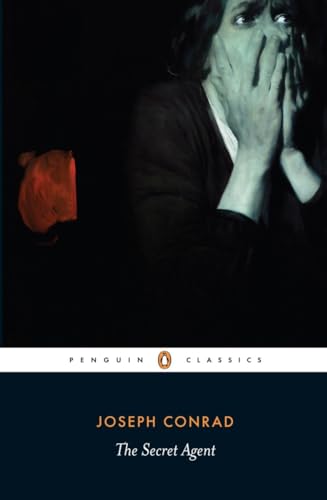
The Secret Agent is Joseph Conrad's dark satire on English society, edited with an introduction and notes by Michael Newton in Penguin Classics.
In the only novel Conrad set in London, The Secret Agent communicates a profoundly ironic view of human affairs. The story is woven around an attack on the Greenwich Observatory in 1894 masterminded by Verloc, a Russian spy working for the police, and ostensibly a member of an anarchist group in Soho. His masters instruct him to discredit the anarchists in a humiliating fashion, and when his evil plan goes horribly awry, Verloc must deal with the repercussions of his actions. While rooted in the Edwardian period, Conrad's tale remains strikingly contemporary, with its depiction of Londoners gripped by fear of the terrorists living in their midst.
This edition of The Secret Agent contains a chronology, further reading, notes and maps of London and Greenwich. In his introduction, Michael Newton discusses London's real-life world of political anarchy, and Conrad's portrayal of the Verlocs' marriage.
Joseph Conrad (1857-1924) was born in the Ukraine and grew up under Tsarist autocracy. After spending years in the French, and later the British Merchant Navy, Conrad left the sea to devote himself to writing. In 1896 he settled in Kent, where he produced within fifteen years such modern classics as Youth, Heart of Darkness, Lord Jim, Typhoon, Nostromo, The Secret Agent and Under Western Eyes.
If you enjoyed The Secret Agent, you might like Fyodor Dostoyevsky's Demons, also available in Penguin Classics.
'A brilliant book, one of the greatest works of modern irony'
Malcolm Bradbury
Die Inhaltsangabe kann sich auf eine andere Ausgabe dieses Titels beziehen.
Über die Autorin bzw. den Autor
Joseph Conrad's major works (all published by Penguin Classics) include Heart of Darkness, Nostromo, Lord Jim,Under Western Eyes, The Secret Agent and Typhoon.
Auszug. © Genehmigter Nachdruck. Alle Rechte vorbehalten.
I
Mr. Verloc, going out in the morning, left his shop nominally in charge of his brother-in-law. It could be done, because there was very little business at any time, and practically none at all before the evening. Mr. Verloc cared but little about his ostensible business. And, moreover, his wife was in charge of his brother-in-law.
The shop was small, and so was the house. It was one of those grimy brick houses which existed in large quantities before the era of reconstruction dawned upon London.1 The shop was a square box of a place, with the front glazed in small panes. In the daytime the door remained closed; in the evening it stood discreetly but suspiciously ajar.
The window contained photographs of more or less undressed dancing girls; nondescript packages in wrappers like patent medicines; closed yellow paper envelopes, very flimsy, and marked two and six in heavy black figures; a few numbers of ancient French comic publications hung across a string as if to dry; a dingy blue china bowl, a casket of black wood, bottles of marking ink, and rubber stamps; a few books, with titles hinting at impropriety; a few apparently old copies of obscure newspapers, badly printed, with titles like The Torch, The Gong—rousing titles.2 And the two gas jets inside the panes were always turned low, either for economy’s sake or for the sake of the customers.
These customers were either very young men, who hung about the window for a time before slipping in suddenly; or men of a more mature age, but looking generally as if they were not in funds. Some of that last kind had the collars of their overcoats turned right up to their moustaches, and traces of mud on the bottom of their nether garments, which had the appearance of being much worn and not very valuable. And the legs inside them did not, as a general rule, seem of much account either. With their hands plunged deep in the side pockets of their coats, they dodged in sideways, one shoulder first, as if afraid to start the bell going.
The bell, hung on the door by means of a curved ribbon of steel, was difficult to circumvent. It was hopelessly cracked; but of an evening, at the slightest provocation, it clattered behind the customer with impudent virulence.
It clattered; and at that signal, through the dusty glass door behind the painted deal counter, Mr. Verloc would issue hastily from the parlour at the back. His eyes were naturally heavy; he had an air of having wallowed, fully dressed, all day on an unmade bed. Another man would have felt such an appearance a distinct disadvantage. In a commercial transaction of the retail order much depends on the seller’s engaging and amiable aspect. But Mr. Verloc knew his business, and remained undisturbed by any sort of æsthetic doubt about his appearance. With a firm, steady eyed impudence, which seemed to hold back the threat of some abominable menace, he would proceed to sell over the counter some object looking obviously and scandalously not worth the money which passed in the transaction: a small cardboard box with apparently nothing inside, for instance, or one of those carefully closed yellow flimsy envelopes, or a soiled volume in paper covers with a promising title. Now and then it happened that one of the faded, yellow dancing-girls would get sold to an amateur, as though she had been alive and young.
Sometimes it was Mrs. Verloc who would appear at the call of the cracked bell. Winnie Verloc was a young woman with a full bust, in a tight bodice, and with broad hips. Her hair was very tidy. Steady eyed like her husband, she preserved an air of unfathomable indifference behind the rampart of the counter. Then the customer of comparatively tender years would get suddenly disconcerted at having to deal with a woman, and with rage in his heart would proffer a request for a bottle of marking ink, retail value sixpence (price in Verloc’s shop one and sixpence), which, once outside, he would drop stealthily into the gutter.
The evening visitors—the men with collars turned up and soft hats rammed down—nodded familiarly to Mrs. Verloc, and with a muttered greeting, lifted up the flap at the end of the counter in order to pass into the back parlour, which gave access to a passage and to a steep flight of stairs. The door of the shop was the only means of entrance to the house in which Mr. Verloc carried on his business of a seller of shady wares, exercised his vocation of a protector of society, and cultivated his domestic virtues. These last were pronounced. He was thoroughly domesticated. Neither his spiritual, nor his mental, nor his physical needs were of the kind to take him much abroad. He found at home the ease of his body and the peace of his conscience, together with Mrs. Verloc’s wifely attentions and Mrs. Verloc’s mother’s deferential regard.
Winnie’s mother was a stout, wheezy woman, with a large brown face. She wore a black wig under a white cap. Her swollen legs rendered her inactive. She considered herself to be of French descent, which might have been true; and after a good many years of married life with a licensed victualler3 of the more common sort, she provided for the years of widowhood by letting furnished apartments for gentlemen near Vauxhall Bridge Road in a square once of some splendour and still included in the district of Belgravia.4 This topographical fact was of some advantage in advertising her rooms; but the patrons of the worthy widow were not exactly of the fashionable kind. Such as they were, her daughter Winnie helped to look after them. Traces of the French descent which the widow boasted of were apparent in Winnie too. They were apparent in the extremely neat and artistic arrangement of her glossy dark hair. Winnie had also other charms: her youth; her full, rounded form; her clear complexion; the provocation of her unfathomable reserve, which never went so far as to prevent conversation, carried on on the lodgers’ part with animation, and on hers with an equable amiability. It must be that Mr. Verloc was susceptible to these fascinations. Mr. Verloc was an intermittent patron. He came and went without any very apparent reason. He generally arrived in London (like the influenza) from the Continent, only he arrived unheralded by the Press; and his visitations set in with great severity. He breakfasted in bed, and remained wallowing there with an air of quiet enjoyment till noon every day—and sometimes even to a later hour. But when he went out he seemed to experience a great difficulty in finding his way back to his temporary home in the Belgravian square. He left it late, and returned to it early—as early as three or four in the morning; and on waking up at ten addressed Winnie, bringing in the breakfast tray, with jocular, exhausted civility, in the hoarse, failing tones of a man who had been talking vehemently for many hours together. His prominent, heavy-lidded eyes rolled sideways amorously and languidly, the bedclothes were pulled up to his chin, and his dark smooth moustache covered his thick lips capable of much honeyed banter.
In Winnie’s mother’s opinion Mr. Verloc was a very nice gentleman. From her life’s experience gathered in various “business houses” the good woman had taken into her retirement an ideal of gentlemanliness as exhibited by the patrons of private-saloon bars. Mr. Verloc approached that ideal; he attained it, in fact.
“Of course, we’ll take over your furniture, mother,” Winnie had remarked.
The lodging house was to be given up. It seems it would not answer to carry it on. It would have been too much trouble for Mr. Verloc. It would not have been convenient for his other business. What his business was he did not say; but after his engagement to Winnie he took the trouble to get up before...
„Über diesen Titel“ kann sich auf eine andere Ausgabe dieses Titels beziehen.
Suchergebnisse für The Secret Agent: A Simple Tale (Penguin Classics)

Beispielbild für diese ISBN
The Secret Agent: A Simple Tale (Penguin Classics)
Verlag:
Penguin Classics (edition 1), 2007
ISBN 10: 0141441585
ISBN 13: 9780141441580
Gebraucht
Paperback
Anbieter: BooksRun, Philadelphia, PA, USA
Verkäuferbewertung 5 von 5 Sternen

Paperback. Zustand: Very Good. 1. It's a well-cared-for item that has seen limited use. The item may show minor signs of wear. All the text is legible, with all pages included. It may have slight markings and/or highlighting. Artikel-Nr. 0141441585-11-1
Gebraucht kaufen
EUR 4,33
Versand gratis
Versand innerhalb von USA
Versand innerhalb von USA
Anzahl: 1 verfügbar
Beispielbild für diese ISBN
The Secret Agent: A Simple Tale (Penguin Classics)
Verlag:
Penguin Classics (edition 1), 2007
ISBN 10: 0141441585
ISBN 13: 9780141441580
Gebraucht
Paperback
Anbieter: BooksRun, Philadelphia, PA, USA
Verkäuferbewertung 5 von 5 Sternen
Paperback. Zustand: Fair. 1. The item might be beaten up but readable. May contain markings or highlighting, as well as stains, bent corners, or any other major defect, but the text is not obscured in any way. Artikel-Nr. 0141441585-7-1
Gebraucht kaufen
EUR 5,63
Versand gratis
Versand innerhalb von USA
Versand innerhalb von USA
Anzahl: 1 verfügbar
Beispielbild für diese ISBN
The Secret Agent: A Simple Tale
Anbieter: ThriftBooks-Atlanta, AUSTELL, GA, USA
Verkäuferbewertung 5 von 5 Sternen
Paperback. Zustand: Good. No Jacket. Pages can have notes/highlighting. Spine may show signs of wear. ~ ThriftBooks: Read More, Spend Less. Artikel-Nr. G0141441585I3N00
Gebraucht kaufen
EUR 5,81
Versand gratis
Versand innerhalb von USA
Versand innerhalb von USA
Anzahl: 1 verfügbar
Beispielbild für diese ISBN
The Secret Agent: A Simple Tale
Anbieter: ThriftBooks-Atlanta, AUSTELL, GA, USA
Verkäuferbewertung 5 von 5 Sternen
Paperback. Zustand: Fair. No Jacket. Readable copy. Pages may have considerable notes/highlighting. ~ ThriftBooks: Read More, Spend Less. Artikel-Nr. G0141441585I5N00
Gebraucht kaufen
EUR 5,81
Versand gratis
Versand innerhalb von USA
Versand innerhalb von USA
Anzahl: 1 verfügbar
Beispielbild für diese ISBN
The Secret Agent : A Simple Tale
Verlag:
Penguin Publishing Group, 2007
ISBN 10: 0141441585
ISBN 13: 9780141441580
Gebraucht
Softcover
Anbieter: Better World Books, Mishawaka, IN, USA
Verkäuferbewertung 5 von 5 Sternen
Zustand: Good. Former library copy. Pages intact with minimal writing/highlighting. The binding may be loose and creased. Dust jackets/supplements are not included. Includes library markings. Stock photo provided. Product includes identifying sticker. Better World Books: Buy Books. Do Good. Artikel-Nr. 4235003-6
Gebraucht kaufen
EUR 6,37
Versand gratis
Versand innerhalb von USA
Versand innerhalb von USA
Anzahl: 2 verfügbar
Beispielbild für diese ISBN
The Secret Agent : A Simple Tale
Verlag:
Penguin Publishing Group, 2007
ISBN 10: 0141441585
ISBN 13: 9780141441580
Gebraucht
Softcover
Anbieter: Better World Books, Mishawaka, IN, USA
Verkäuferbewertung 5 von 5 Sternen
Zustand: Good. Pages intact with minimal writing/highlighting. The binding may be loose and creased. Dust jackets/supplements are not included. Stock photo provided. Product includes identifying sticker. Better World Books: Buy Books. Do Good. Artikel-Nr. GRP64748795
Gebraucht kaufen
EUR 6,37
Versand gratis
Versand innerhalb von USA
Versand innerhalb von USA
Anzahl: 4 verfügbar
Beispielbild für diese ISBN
The Secret Agent : A Simple Tale
Verlag:
Penguin Publishing Group, 2007
ISBN 10: 0141441585
ISBN 13: 9780141441580
Gebraucht
Softcover
Anbieter: Better World Books, Mishawaka, IN, USA
Verkäuferbewertung 5 von 5 Sternen
Zustand: Very Good. Pages intact with possible writing/highlighting. Binding strong with minor wear. Dust jackets/supplements may not be included. Stock photo provided. Product includes identifying sticker. Better World Books: Buy Books. Do Good. Artikel-Nr. 6428067-6
Gebraucht kaufen
EUR 6,37
Versand gratis
Versand innerhalb von USA
Versand innerhalb von USA
Anzahl: 1 verfügbar
Beispielbild für diese ISBN
The Secret Agent: A Simple Tale (Penguin Classics)
Anbieter: Wonder Book, Frederick, MD, USA
Verkäuferbewertung 5 von 5 Sternen
Zustand: Good. Good condition. A copy that has been read but remains intact. May contain markings such as bookplates, stamps, limited notes and highlighting, or a few light stains. Artikel-Nr. F01A-04762
Gebraucht kaufen
EUR 7,13
Versand gratis
Versand innerhalb von USA
Versand innerhalb von USA
Anzahl: 1 verfügbar
Beispielbild für diese ISBN
The Secret Agent A Simple Tale
Anbieter: World of Books (was SecondSale), Montgomery, IL, USA
Verkäuferbewertung 5 von 5 Sternen
Zustand: Good. Item in good condition. Textbooks may not include supplemental items i.e. CDs, access codes etc. Artikel-Nr. 00110099672
Gebraucht kaufen
EUR 7,22
Versand gratis
Versand innerhalb von USA
Versand innerhalb von USA
Anzahl: 1 verfügbar
Beispielbild für diese ISBN
The Secret Agent A Simple Tale
Anbieter: World of Books (was SecondSale), Montgomery, IL, USA
Verkäuferbewertung 5 von 5 Sternen
Zustand: Acceptable. Item in acceptable condition! Textbooks may not include supplemental items i.e. CDs, access codes etc. Artikel-Nr. 00110201570
Gebraucht kaufen
EUR 7,22
Versand gratis
Versand innerhalb von USA
Versand innerhalb von USA
Anzahl: 1 verfügbar