
Verwandte Artikel zu The Carter of 'La Providence': Inspector Maigret
Inhaltsangabe
'Compelling, remorseless, brilliant' John Gray
What was the woman doing here? In a stable, wearing pearl earrings, her stylish bracelet and white buckskin shoes! She must have been alive when she got there because the crime had been committed after ten in the evening.
But how? And why? And no one had heard a thing! She had not screamed. The two carters had not woken up.
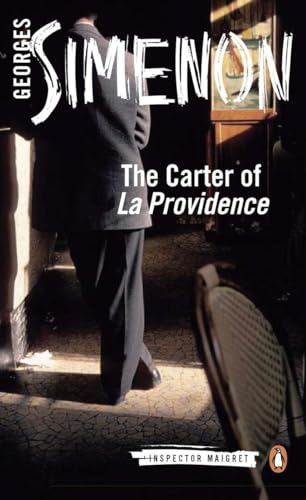
Inspector Maigret is standing in the pouring rain by a canal. A well-dressed woman, Mary Lampson, has been found strangled in a stable nearby. Why did her glamorous, hedonistic life come to such a brutal end here? Surely her taciturn husband Sir Walter knows - or maybe the answers lie with the crew of the barge La Providence.
This novel has been published in previous translations as Lock 14 and Maigret Meets a Milord.
'One of the greatest writers of the twentieth century' Guardian
Die Inhaltsangabe kann sich auf eine andere Ausgabe dieses Titels beziehen.
Über die Autorin bzw. den Autor
Georges Simenon (Author)
Georges Simenon was born in Liège, Belgium, in 1903. An intrepid traveller with a profound interest in people, Simenon strove on and off the page to understand, rather than to judge, the human condition in all its shades. His novels include the Inspector Maigret series and a richly varied body of wider work united by its evocative power, its economy of means, and its penetrating psychological insight. He is among the most widely read writers in the global canon. He died in 1989 in Lausanne, Switzerland, where he had lived for the latter part of his life.
David Coward (Translator)
David Coward is Emeritus Professor of French at the University of Leeds and has translated many books from French for Penguin Classics.
Auszug. © Genehmigter Nachdruck. Alle Rechte vorbehalten.
Georges Simenon
THE CARTER OF LA PROVIDENCE
Translated by David Coward1. Lock 14
2. The Passengers on Board the Southern Cross
3. Mary Lampson’s Necklace
4. The Lover
5. The YCF Badge
6. The American Sailor’s Cap
7. The Bent Pedal
8. Ward 10
9. The Doctor
10. The Two Husbands
11. Right of Way
EXTRA: Chapter 1 from The Yellow Dog
ABOUT THE AUTHORGeorges Simenon was born on 12 February 1903 in Liège, Belgium, and died in 1989 in Lausanne, Switzerland, where he had lived for the latter part of his life. He published seventy-five novels and twenty-eight short stories featuring InspectorMaigret.
Simenon was very fond of boats and spent six months in 1928 navigating the rivers and canals of France. The Carter of La Providence is one of several novels written on board his boat the Ostrogoth.
‘I had my second boat built at Fécamp, the Ostrogoth. I brought it first to Paris, where I had it christened (on a whim) by the priest of Notre Dame … then Belgium, Holland, Germany.’
PENGUIN CLASSICS
THE CARTER OF LA PROVIDENCE‘I love reading Simenon. He makes me think of Chekhov’
William Faulkner
‘A truly wonderful writer … marvellously readable – lucid, simple, absolutely in tune with the world he creates’
Muriel Spark
‘Few writers have ever conveyed with such a sure touch, the bleakness of human life’
A. N. Wilson
‘One of the greatest writers of the twentieth century … Simenon was unequalled at making us look inside, though the ability was masked by his brilliance at absorbing us obsessively in his stories’
Guardian
‘A novelist who entered his fictional world as if he were part of it’
Peter Ackroyd
‘The greatest of all, the most genuine novelist we have had in literature’
André Gide
‘Superb … The most addictive of writers … A unique teller of tales’
Observer
‘The mysteries of the human personality are revealed in all their disconcerting complexity’
Anita Brookner
‘A writer who, more than any other crime novelist, combined a high literary reputation with popular appeal’
P. D. James
‘A supreme writer … Unforgettable vividness’
Independent
‘Compelling, remorseless, brilliant’
John Gray
‘Extraordinary masterpieces of the twentieth century’
John Banville
1. Nobody’s Dog
Friday, 7 November. Concarneau is empty. The lighted clock in the Old Town glows above the ramparts; it is five minutes to eleven.
The tide is in, and a south-westerly gale is slamming the boats together in the harbour. The wind surges through the streets. Here and there a scrap of paper scuttles swiftly along the ground.
There is not a single light on Quai de l’Aiguillon. Everything is closed. Everyone is asleep. Only the three windows of the Admiral Hotel, on the square where it meets the quay, are still lighted.
They have no shutters, but through their murky greenish panes the figures inside are just barely visible. Huddled in his booth less than a hundred metres away, the customs guard stares enviously at the people lingering in the café.
Across from him in the harbour is a coaster that had come in for shelter that afternoon. There is no one on deck. Its blocks creak, and a loose jib snaps in the wind. And there is the relentless din of the gale and the rattle of the tower clock asit prepares to toll eleven.
The hotel door opens. A man appears, still talking to the people inside. The gale snatches at him, flaps his coattails, lifts off his bowler hat. He catches it in time and jams it on his head as he walks away.
Even from a distance, it is clear that he is a bit tipsy; he is unsteady on his legs and is humming a tune. The customs guard watches him and grins when the man decides to light a cigar. A comic struggle then develops between the drunk and thewind, which tears at his coat and his hat as it pushes him along the pavement. Ten matches are blown out.
The man spots a doorway up two steps, takes cover there and leans forwards. A match flickers, very briefly. The smoker staggers, grabs for the doorknob.
Was that noise part of the storm, the customs guard wonders. He can’t be sure. He laughs as he sees the fellow lose his balance and reel backwards at an impossible angle.
The man lands on the ground at the kerb, his head in the filth of the gutter. The customs guard beats his hands against his sides to warm them and scowls at the jib, irritated by its racket.
A minute, two minutes pass. He takes another glance at the drunk, who has not moved. A dog has turned up from somewhere and is sniffing at him.
‘That was when I first got the feeling there was something wrong,’ the customs guard said later, at the hearing.
The comings and goings that followed are harder to establish in strict chronological order. The customs guard approaches the fallen man, not reassured by the presence of the dog, a big snarling yellow animal. There is a street lamp eight or tenmetres away. At first he sees nothing unusual. Then he notices a hole in the drunk’s overcoat and a thick fluid flowing from the hole.
He runs to the Admiral Hotel. The café is nearly empty. Leaning on the till is a waitress. At a marble table, two men, their chairs tilted back, their legs stretched out, are finishing their cigars.
‘Quick! A crime … I don’t know …’
The customs guard looks down. The yellow dog has followed him in and is lying at the waitress’s feet.
There is hesitation, a vague feeling of fright in the air.
‘Your friend, the man who just left here …’
Some seconds later, the three of them are leaning over the body, still sprawled at the kerb. A few steps away is the town hall, with the police station. The customs guard, needing to do something, dashes over and then, breathless, runs to adoctor’s doorbell.
Unable to shake off the sight, he keeps repeating, ‘He staggered backwards like a drunk, and he went three or four steps, like this …’
Five men, then six, seven. Windows opening everywhere. Whispering …
On his knees in the mud, the doctor declares: ‘A bullet fired point-blank into the belly. He must be operated on right away. Someone phone the hospital!’
Everyone recognizes the wounded man. It is Monsieur Mostaguen, Concarneau’s biggest wine dealer, a good fellow, without an enemy in the world.
The two uniformed policemen – one of them has come out without his cap – don’t know where to begin the investigation.
Someone is talking: Monsieur Le Pommeret, whose manner and voice show him to be someone important. ‘He and I were playing cards at the Admiral café, with Servières and Dr Michoux. The doctor left first, half an hour ago. And then Mostaguen… He’s afraid of his wife; he left on the stroke of eleven …’
A tragicomedy: everyone is listening to Monsieur Le Pommeret; they have forgotten about the wounded man. Suddenly he opens his eyes, tries to get up, and, in a voice so surprised, so gentle, so feeble that the waitress bursts into nervous laughter,he whispers, ‘What happened?’
But a spasm of pain racks him. His lips twist. The muscles of his face tighten as the doctor prepares his syringe for a...
„Über diesen Titel“ kann sich auf eine andere Ausgabe dieses Titels beziehen.
Suchergebnisse für The Carter of 'La Providence': Inspector Maigret

Beispielbild für diese ISBN
The Carter of La Providence
Anbieter: ThriftBooks-Phoenix, Phoenix, AZ, USA
Verkäuferbewertung 5 von 5 Sternen

Paperback. Zustand: Good. No Jacket. Pages can have notes/highlighting. Spine may show signs of wear. ~ ThriftBooks: Read More, Spend Less. Artikel-Nr. G0141393467I3N00
Gebraucht kaufen
EUR 6,22
Versand gratis
Versand innerhalb von USA
Versand innerhalb von USA
Anzahl: 1 verfügbar
Beispielbild für diese ISBN
The Carter of La Providence
Anbieter: ThriftBooks-Reno, Reno, NV, USA
Verkäuferbewertung 5 von 5 Sternen
Paperback. Zustand: Good. No Jacket. Pages can have notes/highlighting. Spine may show signs of wear. ~ ThriftBooks: Read More, Spend Less. Artikel-Nr. G0141393467I3N00
Gebraucht kaufen
EUR 6,22
Versand gratis
Versand innerhalb von USA
Versand innerhalb von USA
Anzahl: 1 verfügbar
Beispielbild für diese ISBN
The Carter of La Providence
Anbieter: ThriftBooks-Dallas, Dallas, TX, USA
Verkäuferbewertung 5 von 5 Sternen
Paperback. Zustand: Good. No Jacket. Pages can have notes/highlighting. Spine may show signs of wear. ~ ThriftBooks: Read More, Spend Less. Artikel-Nr. G0141393467I3N00
Gebraucht kaufen
EUR 6,23
Versand gratis
Versand innerhalb von USA
Versand innerhalb von USA
Anzahl: 1 verfügbar
Beispielbild für diese ISBN
The Carter of La Providence
Anbieter: ThriftBooks-Atlanta, AUSTELL, GA, USA
Verkäuferbewertung 5 von 5 Sternen
Paperback. Zustand: Good. No Jacket. Pages can have notes/highlighting. Spine may show signs of wear. ~ ThriftBooks: Read More, Spend Less. Artikel-Nr. G0141393467I3N00
Gebraucht kaufen
EUR 6,23
Versand gratis
Versand innerhalb von USA
Versand innerhalb von USA
Anzahl: 2 verfügbar
Beispielbild für diese ISBN
The Carter of La Providence
Anbieter: ThriftBooks-Atlanta, AUSTELL, GA, USA
Verkäuferbewertung 5 von 5 Sternen
Paperback. Zustand: Very Good. No Jacket. May have limited writing in cover pages. Pages are unmarked. ~ ThriftBooks: Read More, Spend Less. Artikel-Nr. G0141393467I4N00
Gebraucht kaufen
EUR 6,23
Versand gratis
Versand innerhalb von USA
Versand innerhalb von USA
Anzahl: 1 verfügbar
Beispielbild für diese ISBN
The Carter of La Providence
Anbieter: ThriftBooks-Dallas, Dallas, TX, USA
Verkäuferbewertung 5 von 5 Sternen
Paperback. Zustand: Good. No Jacket. Former library book; Pages can have notes/highlighting. Spine may show signs of wear. ~ ThriftBooks: Read More, Spend Less. Artikel-Nr. G0141393467I3N10
Gebraucht kaufen
EUR 6,23
Versand gratis
Versand innerhalb von USA
Versand innerhalb von USA
Anzahl: 1 verfügbar
Beispielbild für diese ISBN
The Carter of 'La Providence' (Inspector Maigret)
Anbieter: Wonder Book, Frederick, MD, USA
Verkäuferbewertung 5 von 5 Sternen
Zustand: Good. Good condition. A copy that has been read but remains intact. May contain markings such as bookplates, stamps, limited notes and highlighting, or a few light stains. Artikel-Nr. M11O-1226
Gebraucht kaufen
EUR 6,42
Versand gratis
Versand innerhalb von USA
Versand innerhalb von USA
Anzahl: 1 verfügbar
Beispielbild für diese ISBN
The Carter of 'La Providence' (Inspector Maigret)
Anbieter: Magers and Quinn Booksellers, Minneapolis, MN, USA
Verkäuferbewertung 5 von 5 Sternen
paperback. Zustand: Like New. May have light shelf wear and/or a remainder mark. Complete. Clean pages. Artikel-Nr. 1517106
Gebraucht kaufen
EUR 6,19
EUR 3,56 Versand
Versand innerhalb von USA
Versand innerhalb von USA
Anzahl: 4 verfügbar
Beispielbild für diese ISBN
The Carter of 'La Providence': Inspector Maigret
Verlag:
Penguin Books Ltd, United Kingdom, London, 2014
ISBN 10: 0141393467
ISBN 13: 9780141393469
Gebraucht
Paperback
Anbieter: WorldofBooks, Goring-By-Sea, WS, Vereinigtes Königreich
Verkäuferbewertung 5 von 5 Sternen
Paperback. Zustand: Very Good. 'Compelling, remorseless, brilliant' John Gray What was the woman doing here? In a stable, wearing pearl earrings, her stylish bracelet and white buckskin shoes! She must have been alive when she got there because the crime had been committed after ten in the evening.But how? And why? And no one had heard a thing! She had not screamed. The two carters had not woken up.Inspector Maigret is standing in the pouring rain by a canal. A well-dressed woman, Mary Lampson, has been found strangled in a stable nearby. Why did her glamorous, hedonistic life come to such a brutal end here? Surely her taciturn husband Sir Walter knows - or maybe the answers lie with the crew of the barge La Providence.This novel has been published in previous translations as Lock 14 and Maigret Meets a Milord.'One of the greatest writers of the twentieth century' Guardian. The book has been read, but is in excellent condition. Pages are intact and not marred by notes or highlighting. The spine remains undamaged. Artikel-Nr. GOR005423085
Gebraucht kaufen
EUR 3,79
EUR 6,61 Versand
Versand von Vereinigtes Königreich nach USA
Versand von Vereinigtes Königreich nach USA
Anzahl: 4 verfügbar
Beispielbild für diese ISBN
The Carter of 'la Providence'
Verlag:
Penguin Publishing Group, 2014
ISBN 10: 0141393467
ISBN 13: 9780141393469
Gebraucht
Softcover
Anbieter: Better World Books Ltd, Dunfermline, Vereinigtes Königreich
Verkäuferbewertung 5 von 5 Sternen
Zustand: Good. Pages intact with minimal writing/highlighting. The binding may be loose and creased. Dust jackets/supplements are not included. Stock photo provided. Product includes identifying sticker. Better World Books: Buy Books. Do Good. Artikel-Nr. 5545655-6
Gebraucht kaufen
EUR 6,72
EUR 5,90 Versand
Versand von Vereinigtes Königreich nach USA
Versand von Vereinigtes Königreich nach USA
Anzahl: 2 verfügbar