
Verwandte Artikel zu Love's Labor's Lost (Revised Edition) (The...
Inhaltsangabe
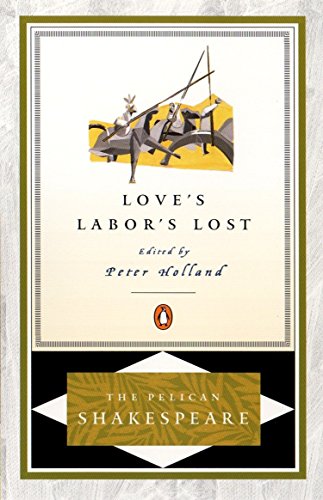
The acclaimed Pelican Shakespeare series edited by A. R. Braunmuller and Stephen Orgel
The legendary Pelican Shakespeare series features authoritative and meticulously researched texts paired with scholarship by renowned Shakespeareans. Each book includes an essay on the theatrical world of Shakespeare’s time, an introduction to the individual play, and a detailed note on the text used. Updated by general editors Stephen Orgel and A. R. Braunmuller, these easy-to-read editions incorporate over thirty years of Shakespeare scholarship undertaken since the original series, edited by Alfred Harbage, appeared between 1956 and 1967. With definitive texts and illuminating essays, the Pelican Shakespeare will remain a valued resource for students, teachers, and theater professionals for many years to come.
For more than seventy years, Penguin has been the leading publisher of classic literature in the English-speaking world. With more than 1,700 titles, Penguin Classics represents a global bookshelf of the best works throughout history and across genres and disciplines. Readers trust the series to provide authoritative texts enhanced by introductions and notes by distinguished scholars and contemporary authors, as well as up-to-date translations by award-winning translators.
Die Inhaltsangabe kann sich auf eine andere Ausgabe dieses Titels beziehen.
Über die Autorinnen und Autoren
A. R. Braunmuller is Professor of English and Comparative Literature at the University of California at Los Angeles, where he teaches courses on English and European drama from 1500 to the present. He has written critical volumes on George Peele and George Chapman and has edited plays in both the Oxford (King John) and Cambridge (Macbeth) series of Shakespeare editions. He is also general editor of The New Cambridge Shakespeare.
William Shakespeare was born to John Shakespeare and Mary Arden in late April 1564 in Stratford-upon-Avon. He wrote about 38 plays (the precise number is uncertain), many of which are regarded as the most exceptional works of drama ever produced, including Romeo and Juliet (1595), Henry V (1599), Hamlet (1601), Othello (1604), King Lear (1606) and Macbeth (1606), as well as a collection of 154 sonnets, which number among the most profound and influential love poetry in English. Shakespeare died in Stratford in 1616.
Auszug. © Genehmigter Nachdruck. Alle Rechte vorbehalten.
Love's Labor's Lost
¥ I.1 Enter Ferdinand King of Navarre, Berowne, Longaville, and Dumaine.
king
Let fame, that all hunt after in their lives,
Live registered upon our brazen tombs
2
And then grace us in the disgrace of death,
3
When, spite of cormorant devouring Time,
4
Th' endeavor of this present breath may buy
5
That honor which shall bate his scythe's keen edge
6
And make us heirs of all eternity.
Therefore, brave conquerors-for so you are
That war against your own affections
9
And the huge army of the world's desires-
10
Our late edict shall strongly stand in force:
11
Navarre shall be the wonder of the world;
Our court shall be a little academe,
13
Still and contemplative in living art.
14
You three-Berowne, Dumaine, and Longaville-
Have sworn for three years' term to live with me
My fellow scholars, and to keep those statutes
That are recorded in this schedule here.
18
Your oaths are passed; and now subscribe your names,
19
That his own hand may strike his honor down
20
That violates the smallest branch herein.
21
If you are armed to do as sworn to do,
22
Subscribe to your deep oaths, and keep it too.
longaville
I am resolved. 'Tis but a three years' fast.
The mind shall banquet though the body pine.
Fat paunches have lean pates, and dainty bits
26
Make rich the ribs, but bankrupt quite the wits.
dumaine
My loving lord, Dumaine is mortified.
28
The grosser manner of these world's delights
He throws upon the gross world's baser slaves.
30
To love, to wealth, to pomp, I pine and die,
With all these living in philosophy.
32
berowne
I can but say their protestation over.
33
So much, dear liege, I have already sworn,
34
That is, to live and study here three years.
But there are other strict observances:
As not to see a woman in that term,
Which I hope well is not enroll�d there;
38
And one day in a week to touch no food,
And but one meal on every day beside,
40
The which I hope is not enroll�d there;
And then to sleep but three hours in the night,
And not be seen to wink of all the day
43
(When I was wont to think no harm all night
44
And make a dark night too of half the day),
Which I hope well is not enroll�d there.
O, these are barren tasks, too hard to keep-
Not to see ladies, study, fast, not sleep.
king
Your oath is passed to pass away from these.
berowne
Let me say no, my liege, an if you please.
50
I only swore to study with your grace
And stay here in your court for three years' space.
longaville
You swore to that, Berowne, and to the rest.
berowne
By yea and nay, sir, then I swore in jest.
54
What is the end of study, let me know?
king
Why, that to know which else we should not know.
berowne
Things hid and barred, you mean, from common sense?
57
king
Ay, that is study's godlike recompense.
berowne
Come on then, I will swear to study so,
59
To know the thing I am forbid to know,
60
As thus-to study where I well may dine
When I to feast expressly am forbid;
Or study where to meet some mistress fine
When mistresses from common sense are hid;
Or having sworn too hard-a-keeping oath,
Study to break it and not break my troth.
If study's gain be thus, and this be so,
Study knows that which yet it doth not know.
68
Swear me to this, and I will ne'er say no.
king
These be the stops that hinder study quite,
70
And train our intellects to vain delight.
71
berowne
Why, all delights are vain, but that most vain
72
Which, with pain purchased, doth inherit pain:
73
As, painfully to pore upon a book,
To seek the light of truth, while truth the while
Doth falsely blind the eyesight of his look.
76
Light seeking light doth light of light beguile;
77
So, ere you find where light in darkness lies,
Your light grows dark by losing of your eyes.
79
Study me how to please the eye indeed,
80
By fixing it upon a fairer eye,
81
Who dazzling so, that eye shall be his heed,
82
And give him light that it was blinded by.
83
Study is like the heaven's glorious sun,
That will not be deep-searched with saucy looks:
85
Small have continual plodders ever won,
Save base authority from others' books.
These earthly godfathers of heaven's lights,
88
That give a name to every fix�d star,
Have no more profit of their shining nights
90
Than those that walk and wot not what they are.
91
Too much to know is to know nought but fame;
92
And every godfather can give a name.
93
king
How well he's read to reason against reading!
94
dumaine
Proceeded well, to stop all good proceeding!
95
longaville
He weeds the corn, and still lets grow the weeding.
96
berowne
The spring is near, when green geese are a-breeding.
97
dumaine
How follows that?
98
berowne Fit in his place and time.
dumaine
In reason nothing.
99
berowne Something then in rhyme.
king
Berowne is like an envious sneaping frost
100
That bites the first-born infants of the spring.
101
berowne
Well, say I am; why should proud summer boast
102
Before the birds have any cause to sing?
Why should I joy in any abortive birth?
At Christmas I no more desire a rose
Than wish a snow in May's newfangled shows,
But like of each thing that in season grows.
107
So you, to study now it is too late,
108
Climb o'er the house to unlock the little gate.
109
king
Well, sit you out. Go home, Berowne. Adieu.
110
berowne
No, my good lord, I have sworn to stay with you;
And though I have for barbarism spoke more
112
Than for that angel knowledge you can say,
Yet confident I'll keep what I have sworn,
And bide the penance of each three years' day.
115
Give me the paper, let me read the same,
And to the strict'st decrees I'll write my name.
king [Handing over the paper]
How well this yielding rescues thee from shame!
berowne [Reads.] "Item: that no woman shall come within a mile of my court-" Hath this been proclaimed?
120
longaville Four days ago.
berowne Let's see the penalty. "-on pain of losing her tongue." Who devised this penalty?
longaville
Marry, that did I.
124
berowne Sweet lord, and why?
longaville
To fright them hence with that dread penalty.
berowne
A dangerous law against gentility!
126
...
„Über diesen Titel“ kann sich auf eine andere Ausgabe dieses Titels beziehen.
Suchergebnisse für Love's Labor's Lost (Revised Edition) (The...

Beispielbild für diese ISBN
Loves Labors Lost The Pelican
Verlag:
Penguin Publishing Group, 2000
ISBN 10: 0140714774
ISBN 13: 9780140714777
Gebraucht
Softcover
Anbieter: World of Books (was SecondSale), Montgomery, IL, USA
Verkäuferbewertung 5 von 5 Sternen

Zustand: Good. Item in good condition. Textbooks may not include supplemental items i.e. CDs, access codes etc. Artikel-Nr. 00110461050
Gebraucht kaufen
EUR 3,42
Versand gratis
Versand innerhalb von USA
Versand innerhalb von USA
Anzahl: 1 verfügbar
Beispielbild für diese ISBN
Loves Labors Lost The Pelican
Verlag:
Penguin Publishing Group, 2000
ISBN 10: 0140714774
ISBN 13: 9780140714777
Gebraucht
Softcover
Anbieter: World of Books (was SecondSale), Montgomery, IL, USA
Verkäuferbewertung 5 von 5 Sternen
Zustand: Acceptable. Item in acceptable condition! Textbooks may not include supplemental items i.e. CDs, access codes etc. Artikel-Nr. 00109488133
Gebraucht kaufen
EUR 3,42
Versand gratis
Versand innerhalb von USA
Versand innerhalb von USA
Anzahl: 1 verfügbar
Beispielbild für diese ISBN
Love's Labor's Lost
Verlag:
Penguin Publishing Group, 2000
ISBN 10: 0140714774
ISBN 13: 9780140714777
Gebraucht
Softcover
Anbieter: Better World Books: West, Reno, NV, USA
Verkäuferbewertung 5 von 5 Sternen
Zustand: Very Good. Pages intact with possible writing/highlighting. Binding strong with minor wear. Dust jackets/supplements may not be included. Stock photo provided. Product includes identifying sticker. Better World Books: Buy Books. Do Good. Artikel-Nr. 5521887-75
Gebraucht kaufen
EUR 6,09
Versand gratis
Versand innerhalb von USA
Versand innerhalb von USA
Anzahl: 1 verfügbar
Beispielbild für diese ISBN
Love's Labor's Lost
Verlag:
Penguin Publishing Group, 2000
ISBN 10: 0140714774
ISBN 13: 9780140714777
Gebraucht
Softcover
Anbieter: Better World Books, Mishawaka, IN, USA
Verkäuferbewertung 5 von 5 Sternen
Zustand: Good. Former library copy. Pages intact with minimal writing/highlighting. The binding may be loose and creased. Dust jackets/supplements are not included. Includes library markings. Stock photo provided. Product includes identifying sticker. Better World Books: Buy Books. Do Good. Artikel-Nr. 3127420-6
Gebraucht kaufen
EUR 6,09
Versand gratis
Versand innerhalb von USA
Versand innerhalb von USA
Anzahl: 2 verfügbar
Beispielbild für diese ISBN
Love's Labor's Lost
Verlag:
Penguin Publishing Group, 2000
ISBN 10: 0140714774
ISBN 13: 9780140714777
Gebraucht
Paperback
Anbieter: ThriftBooks-Dallas, Dallas, TX, USA
Verkäuferbewertung 5 von 5 Sternen
Paperback. Zustand: Good. No Jacket. Pages can have notes/highlighting. Spine may show signs of wear. ~ ThriftBooks: Read More, Spend Less. Artikel-Nr. G0140714774I3N00
Gebraucht kaufen
EUR 6,32
Versand gratis
Versand innerhalb von USA
Versand innerhalb von USA
Anzahl: 1 verfügbar
Beispielbild für diese ISBN
Love's Labor's Lost (The Pelican Shakespeare)
Anbieter: Roundabout Books, Greenfield, MA, USA
Verkäuferbewertung 4 von 5 Sternen

paperback. Zustand: Near Fine. Condition Notes: Excellent, unmarked copy with little wear and tight binding. We ship in recyclable American-made mailers. 100% money-back guarantee on all orders. Artikel-Nr. 1581371
Gebraucht kaufen
EUR 13,60
Versand gratis
Versand innerhalb von USA
Versand innerhalb von USA
Anzahl: 1 verfügbar
Beispielbild für diese ISBN
Love's Labor's Lost
Verlag:
Penguin Publishing Group, 2000
ISBN 10: 0140714774
ISBN 13: 9780140714777
Gebraucht
Softcover
Anbieter: Better World Books Ltd, Dunfermline, Vereinigtes Königreich
Verkäuferbewertung 5 von 5 Sternen
Zustand: Good. Former library copy. Pages intact with minimal writing/highlighting. The binding may be loose and creased. Dust jackets/supplements are not included. Includes library markings. Stock photo provided. Product includes identifying sticker. Better World Books: Buy Books. Do Good. Artikel-Nr. 3127420-6
Gebraucht kaufen
EUR 7,90
EUR 5,81 Versand
Versand von Vereinigtes Königreich nach USA
Versand von Vereinigtes Königreich nach USA
Anzahl: 1 verfügbar
Beispielbild für diese ISBN
Love's Labor's Lost
Anbieter: Revaluation Books, Exeter, Vereinigtes Königreich
Verkäuferbewertung 5 von 5 Sternen
Paperback. Zustand: Brand New. reprint edition. 160 pages. 7.75x5.25x0.25 inches. In Stock. Artikel-Nr. x-0140714774
Neu kaufen
EUR 15,23
EUR 11,63 Versand
Versand von Vereinigtes Königreich nach USA
Versand von Vereinigtes Königreich nach USA
Anzahl: 2 verfügbar
Beispielbild für diese ISBN
Love's Labor's Lost (The Pelican Shakespeare)
Anbieter: Kennys Bookstore, Olney, MD, USA
Verkäuferbewertung 5 von 5 Sternen
Zustand: New. Artikel-Nr. V9780140714777
Neu kaufen
EUR 21,45
EUR 9,23 Versand
Versand innerhalb von USA
Versand innerhalb von USA
Anzahl: Mehr als 20 verfügbar