
Verwandte Artikel zu The English Year
Inhaltsangabe
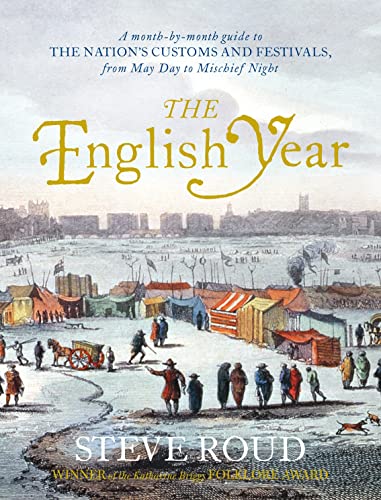
The English Year is a lavishly illustrated month-by-month, day-by-day guide to all the customs and festivals of England, from the national celebrations to herald the new year down to small local traditions such as the Minehead Hobby Horse or Duck Racing in Oxfordshire. If you want to know where you can get free bread and beer on any day of the year; if you want to know where Mayday comes from or why you sould protect yourself on Mischief Night; or why the English go in for all kinds of arcane celebrations but can't be bothered with St George's Day - the is the book for you.
Die Inhaltsangabe kann sich auf eine andere Ausgabe dieses Titels beziehen.
Über die Autorin bzw. den Autor
Steve Roud has been researching British folklore for over thirty years. He is the joint author of the Oxford Dictionary of English Folklore and the author of The Penguin Guide to the Superstitions of Britain and Ireland, winner of the 2004 Katharine Briggs Folklore. He lives in Sussex.
Auszug. © Genehmigter Nachdruck. Alle Rechte vorbehalten.
Some fruits of English-ness, taken from Steve Roud's The English Year
September
Barnet Horse Fair
4, 5 and 6 September
There is something romantic and slightly dangerous about a horse fair, which other livestock marts cannot hope to equal. Perhaps it is simply that Gypsies do not gather to exchange handfuls of money over sheep, or gentlemen wager their families’ fortunes on a cow race. This fair was chartered in 1588, and for centuries was one of the busiest livestock marts in the region – although Barnet’s real fame was for horse-racing, which drew large unruly crowds from north London until it ceased in 1870. The associated horse fair was similarly patronized by dealers and buyers from the capital, and was so well attended by street traders in mid Victorian times that it was known in some circles as the ‘costermongers’ carnival’. According to James Greenwood’s Unsentimental Journeys (1867), it enjoyed an extremely raffish reputation:
My first impression was my last, and still remains – viz, that Barnet Fair is a disgrace to civilisation. I have witnessed a Warwickshire ‘mop’ fair; I have some recollection of ‘Bartlemy’; I was at Greenwich when, on account of its increasing abominations, the fair that so long afflicted that Kentish borough was held for the last time; but take all these, and skim them for their scum and precipitate them for their dregs, and even then, unless you throw in a very strong flavouring of the essence of Old Smithfield on a Friday, and a good armful of Colney Hatch and Earlswood sprigs, you will fail to make a brew equal to that at Barnet. It is appalling.
Given this kind of write-up, it is remarkable that Barnet Horse Fair survived at all, but while the races and the general livestock have long been forgotten, the horse fair persists to this day, albeit somewhat shakily. By the mid twentieth century, the glory days were well over, but it was still a significant date on the horse-lover’s calendar, as William Addison indicates in his English Fairs and Markets (1953):
Barnet Fair is still the most racy event of its kind near London. Even in 1952, 620 horses were sold, including 74 sturdy Welsh cobs from Glamorgan, most of which changed hands within a couple of hours.
However, the real threat to the fair came not from human opposition but the inexorable march of bricks and mortar, as the area rapidly developed from Hertfordshire countryside into a north London borough. The site of the fair changed many times in the interwar years, and it was increasingly seen as a historical relic. On 6 September 1954, The Times commented:
In a 20-acre field which once afforded wider vistas, Barnet horse fair opened today, bringing its annual touch of medieval muddle to what tidy modern planners know as the South Hertfordshire conurbation. New facets of the fair’s surroundings add point to the remarkable fact of its survival each year; since last September council flats have risen on waste ground close by and beyond the fairground stands the vitreous contemporary cube of a new school.
A mere shadow of its former self, Barnet Horse Fair is now held at Greengates Stables, on 4, 5, and 6 September, unless one of those dates is a Sunday, in which case it continues on the following day.
Chalk-Back Day
Third Thursday in September
Chalk-Back Day was a little-known annual custom recorded in Diss, Norfolk, but with possible connections elsewhere. The earliest record of it goes back only to 1851, in Notes & Queries:
It is customary for the juvenile populace, on the Thursday before the third Friday in September... to mark and disfigure each other’s dress with white chalk, pleading a prescriptive right to be mischievous on ‘chalk-back day’.
This account is confirmed by later writers, who show that it was not simply a short-lived craze but survived until about 1900. The local hiring fair was held on the same day, and this may be a clue to its meaning, as an account from Yorkshire in 1890 makes clear:
At Bridlington, on the Sunday night preceding the fair, which is held on the Monday before Whit Sunday, the boys used to assemble on the Church Green, where the fair was held, each armed with a lump of chalk, and each intent on chalking the backs of as many of the other boys as possible. This often led to quarrels, as the boys then had on their Sunday clothes.
There is also a strange echo of this behaviour in reports of Greenwich Fair in mid Victorian times, where a local craze involved running wooden ‘rattlers’ down people’s backs. Another possible link comes from further afield: ‘Chalk Sunday’ (usually the first Sunday in Lent) was widely held in Ireland in the nineteenth century and up to about 1930. As at Diss, Irish children chalked people’s backs on the day, but there it was specifically those who were unmarried, which could be a gentle joke or an unpleasant comment on the popularity, or otherwise, of the victim, depending on the circumstances. Further examples from England are needed before we can hope to speculate on its meaning or origin.
Egremont Crab-Apple Fair
Third Saturday in September
Egremont Fair, in Cumbria, consciously preserves many of the traditional games and pastimes of old-time country fairs, such as gurning (and Egremont is said to hold the World Championship competition), climbing the greasy pole, wrestling, tug-of-war, and children’s races; but it has also introduced a number of others that are probably unique, including a pipe-smoking contest, ferret show, and the singing of hunting songs. The fine art of pole greasing was described by Egremont locals in John Bull magazine in 1955:
We haven’t been able to grease the pole properly since before the war... Nowadays, wagon grease is used... but really it should be soft soap covered by lard... A sheep’s head or a leg of mutton trailing coloured ribbons is tied to the top of the pole and anyone who can bring down a ribbon wins the prize... The greasy pole is the bane of wives and mothers, and the delight of the outfitters.
The fair gets its name from the custom of throwing apples from a slow-moving lorry, to the waiting crowds, at midday. They used to be crab apples, but nowadays ordinary eating apples are thrown. Organizers claim that Egremont’s fair has been held every year since its charter was granted in 1267 (except during the two world wars), and this could well be true.
Blackberries
An extremely widespread superstition, found all over the British Isles, maintained that blackberries were bad, or even poisonous, after a certain date. This date varied from place to place, ranging from Michaelmas to 10 or 11 October, and as the latter equates to 29 September before the change of calendar in 1752, it is clear that Michaelmas is the key day. The reason for the blackberries’ sudden decline was that the Devil interfered on that day. In 1882, the Western Antiquary reported:
The belief that it is unlucky to eat blackberries after Michaelmas Day, because ‘His Royal Highness’ then tampers with them, still lingers in Exeter and neighbourhood. Some time ago, whilst walking in the country round here, a young friend who was with me warned me against plucking any blackberries: ‘Because,’ said he, grimly, ‘it’s past Michaelmas Day and the Devil’s been at ’em.’
In the polite versions of this superstition, the Devil puts his foot on the berries, or wipes his club or tail over them, but in more graphic versions he defiles them in more earthy ways. The belief certainly dates back to the early eighteenth century, but was particularly well known in the nineteenth, and can still be heard...
„Über diesen Titel“ kann sich auf eine andere Ausgabe dieses Titels beziehen.
Suchergebnisse für The English Year

Beispielbild für diese ISBN
The English Year
Verlag:
Penguin Books Ltd, United Kingdom, London, 2006
ISBN 10: 0140515542
ISBN 13: 9780140515541
Gebraucht
Paperback
Anbieter: WorldofBooks, Goring-By-Sea, WS, Vereinigtes Königreich
Verkäuferbewertung 5 von 5 Sternen

Paperback. Zustand: Very Good. The English Year is a lavishly illustrated month-by-month, day-by-day guide to all the customs and festivals of England, from the national celebrations to herald the new year down to small local traditions such as the Minehead Hobby Horse or Duck Racing in Oxfordshire. If you want to know where you can get free bread and beer on any day of the year; if you want to know where Mayday comes from or why you sould protect yourself on Mischief Night; or why the English go in for all kinds of arcane celebrations but can't be bothered with St George's Day - the is the book for you. The book has been read, but is in excellent condition. Pages are intact and not marred by notes or highlighting. The spine remains undamaged. Artikel-Nr. GOR002637028
Gebraucht kaufen
EUR 2,32
EUR 6,64 Versand
Versand von Vereinigtes Königreich nach USA
Versand von Vereinigtes Königreich nach USA
Anzahl: Mehr als 20 verfügbar
Beispielbild für diese ISBN
The English Year :
Anbieter: WorldofBooks, Goring-By-Sea, WS, Vereinigtes Königreich
Verkäuferbewertung 5 von 5 Sternen
Hardback. Zustand: Fair. A readable copy of the book which may include some defects such as highlighting and notes. Cover and pages may be creased and show discolouration. Artikel-Nr. GOR003397094
Gebraucht kaufen
EUR 2,32
EUR 6,64 Versand
Versand von Vereinigtes Königreich nach USA
Versand von Vereinigtes Königreich nach USA
Anzahl: 1 verfügbar
Beispielbild für diese ISBN
The English Year : A Month-by-Month Guide to the Nation's Customs and Festivals, from May Day to Mischief Night
Verlag:
Penguin Publishing Group, 2008
ISBN 10: 0140515542
ISBN 13: 9780140515541
Gebraucht
Hardcover
Anbieter: Better World Books Ltd, Dunfermline, Vereinigtes Königreich
Verkäuferbewertung 5 von 5 Sternen
Zustand: Very Good. illustrated edition. Former library copy. Pages intact with possible writing/highlighting. Binding strong with minor wear. Dust jackets/supplements may not be included. Includes library markings. Stock photo provided. Product includes identifying sticker. Better World Books: Buy Books. Do Good. Artikel-Nr. 6535154-6
Gebraucht kaufen
EUR 6,71
EUR 5,93 Versand
Versand von Vereinigtes Königreich nach USA
Versand von Vereinigtes Königreich nach USA
Anzahl: 1 verfügbar
Beispielbild für diese ISBN
The English Year
Anbieter: ThriftBooks-Dallas, Dallas, TX, USA
Verkäuferbewertung 5 von 5 Sternen
Hardcover. Zustand: Very Good. No Jacket. May have limited writing in cover pages. Pages are unmarked. ~ ThriftBooks: Read More, Spend Less. Artikel-Nr. G0140515542I4N00
Gebraucht kaufen
EUR 16,80
Versand gratis
Versand innerhalb von USA
Versand innerhalb von USA
Anzahl: 1 verfügbar
Beispielbild für diese ISBN
The English Year :
Verlag:
Penguin Books Ltd. 26/10/2006, 2006
ISBN 10: 0140515542
ISBN 13: 9780140515541
Gebraucht
Hardcover
Anbieter: AwesomeBooks, Wallingford, Vereinigtes Königreich
Verkäuferbewertung 5 von 5 Sternen
Zustand: Very Good. This book is in very good condition and will be shipped within 24 hours of ordering. The cover may have some limited signs of wear but the pages are clean, intact and the spine remains undamaged. This book has clearly been well maintained and looked after thus far. Money back guarantee if you are not satisfied. See all our books here, order more than 1 book and get discounted shipping. . Artikel-Nr. 7719-9780140515541
Gebraucht kaufen
EUR 12,19
EUR 4,89 Versand
Versand von Vereinigtes Königreich nach USA
Versand von Vereinigtes Königreich nach USA
Anzahl: 1 verfügbar
Foto des Verkäufers
The English Year :
Anbieter: WeBuyBooks, Rossendale, LANCS, Vereinigtes Königreich
Verkäuferbewertung 5 von 5 Sternen
hardcover. Zustand: Good. Most items will be dispatched the same or the next working day. A copy that has been read but remains in clean condition. All of the pages are intact and the cover is intact and the spine may show signs of wear. The book may have minor markings which are not specifically mentioned. Artikel-Nr. rev5581548546
Gebraucht kaufen
EUR 1,58
EUR 16,83 Versand
Versand von Vereinigtes Königreich nach USA
Versand von Vereinigtes Königreich nach USA
Anzahl: 1 verfügbar
Beispielbild für diese ISBN
The English Year :
Verlag:
Penguin Books Ltd. 26/10/2006, 2006
ISBN 10: 0140515542
ISBN 13: 9780140515541
Gebraucht
Hardcover
Anbieter: Bahamut Media, Reading, Vereinigtes Königreich
Verkäuferbewertung 4 von 5 Sternen

Zustand: Very Good. Shipped within 24 hours from our UK warehouse. Clean, undamaged book with no damage to pages and minimal wear to the cover. Spine still tight, in very good condition. Remember if you are not happy, you are covered by our 100% money back guarantee. Artikel-Nr. 6545-9780140515541
Gebraucht kaufen
EUR 12,19
EUR 8,28 Versand
Versand von Vereinigtes Königreich nach USA
Versand von Vereinigtes Königreich nach USA
Anzahl: 1 verfügbar
Foto des Verkäufers
The English Year :
Anbieter: BoundlessBookstore, Wallingford, Vereinigtes Königreich
Verkäuferbewertung 5 von 5 Sternen
Hardcover. Zustand: Good. Light wear to boards. Content is clean with slight age tone to page edges. DJ with some edge wear and slight age tone. Artikel-Nr. 9999-999108985656
Gebraucht kaufen
EUR 12,22
EUR 8,28 Versand
Versand von Vereinigtes Königreich nach USA
Versand von Vereinigtes Königreich nach USA
Anzahl: 1 verfügbar
Foto des Verkäufers
The English year : a month-by-month guide to the nation's customs and festivals, from May Day to Mischief Night / Steve Roud
Verlag:
London : Penguin, 2006
ISBN 10: 0140515542
ISBN 13: 9780140515541
Gebraucht
Hardcover
Erstausgabe
Anbieter: MW Books, New York, NY, USA
Verkäuferbewertung 5 von 5 Sternen
First Edition. Fine cloth copy in an equally fine dust-wrapper. Particularly well-preserved overall; tight, bright, clean and especially sharp-cornered. Physical description; xxviii, 467 pages : color illustrations ; 26 cm. Subjects; Rites and ceremonies Great Britain. Festivals England ; Calendars. Festivals Great Britain. Folklore England ; Calendars. Manners and customs England. England Social life and customs. 1 Kg. Artikel-Nr. 373844
Gebraucht kaufen
EUR 30,85
Versand gratis
Versand innerhalb von USA
Versand innerhalb von USA
Anzahl: 2 verfügbar
Foto des Verkäufers
The English Year - A Month - by-Month guide to The Nation's Customs and Festivals, from May Day to Mischief Night
Verlag:
Penguin Books, UK, 2004
ISBN 10: 0140515542
ISBN 13: 9780140515541
Gebraucht
Hardcover
Erstausgabe
Anbieter: powellbooks Somerset UK., Ilminster, SOM, Vereinigtes Königreich
Verkäuferbewertung 3 von 5 Sternen

Hardcover. Zustand: Fine. Zustand des Schutzumschlags: Fine. 1st Edition. The red boards and binding are square, tight and clean, the text block is clean and bright and illustrated with B/W and Coloured photos and drawings, the dust wrapper is also Near Fine. Book price includes 2nd class post in UK only. Artikel-Nr. 09875
Gebraucht kaufen
EUR 42,75
EUR 39,14 Versand
Versand von Vereinigtes Königreich nach USA
Versand von Vereinigtes Königreich nach USA
Anzahl: 1 verfügbar