
Verwandte Artikel zu The Monk: A Romance. Ed. w. an introd. and notes by...
The Monk: A Romance. Ed. w. an introd. and notes by Christopher MacLachlan. Ed. w. an introd. and notes by Christopher MacLachlan (Penguin Classics) - Softcover
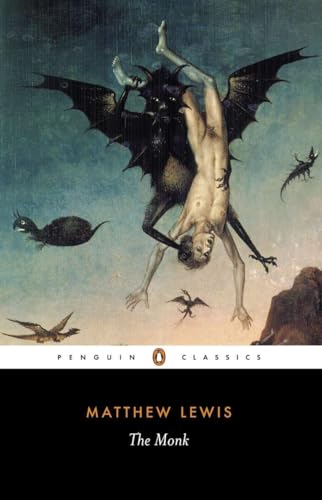
Inhaltsangabe
Matthew Lewis's Gothic masterpiece, depicting a holy man slowly becoming entangled in a web of sin, The Monk is edited with an introduction by Christopher MacLachlan in Penguin Classics.
Savaged by critics for its blasphemy and obscenity, particularly since the author was a Member of Parliament, The Monk soon attracted thousands of readers keen to see if this Gothic novel lived up to its lurid reputation. With acute psychological insight, Lewis shows the diabolical decline of Ambrosio, a worthy superior of the Capuchins of Madrid who is tempted by Matilda, a young girl who has entered his monastery disguised as a boy. Descending into a hell of his own creation, Ambrosio is driven to magic and murder in an attempt to conceal his crimes from the Inquisition. The Monk was greatly admired by the Marquis de Sade, who saw it as a response to the upheavals of the French Revolution, yet it also reveals something more universal: the way violent and erotic impulses lurking within us all can break through every barrier of social restraint.
Matthew Gregory Lewis (1775-1818) was educated at Oxford after which he held a position in the British Embassy at The Hague. It was there in 1794, that he wrote the racy novel The Monk, under the influence of the early German romantics. Its controversial publication in 1796, due to Lewis' new status as MP, earned him fame and the book a great deal of popularity.
If you enjoyed The Monk, you might like Horace Walpole's The Castle of Otranto, also available in Penguin Classics.
Die Inhaltsangabe kann sich auf eine andere Ausgabe dieses Titels beziehen.
Über die Autorin bzw. den Autor
Matthew Gregory Lewis (1775-1818) was educated at Oxford after which he held a position in the British Embassy at The Hague. It was there in 1794, that he wrote the racy novel THE MONK, under the influence of the early German romantics. Its controversial publication in 1796, due to Lewis' new status as MP, earned him fame and the book a great deal of popularity.
Christopher MacLachlan is a Lecturer at the University of St Andrews. He has published books and articles on Pope, Hume and Burns.
Auszug. © Genehmigter Nachdruck. Alle Rechte vorbehalten.
Chapter I
———Lord Angelo is precise;
Stands at a guard with envy; scarce confesses
That his blood flows, or that his appetite
Is more to bread than stone.
Measure for Measure.
Scarcely had the abbey-bell tolled for five minutes, and already was the church of the Capuchins thronged with auditors. Do not encourage the idea, that the crowd was assembled either from motives of piety or thirst of information. But very few were influenced by those reasons; and in a city where superstition reigns with such despotic sway as in Madrid, to seek for true devotion would be a fruitless attempt. The audience now assembled in the Capuchin church was collected by various causes, but all of them were foreign to the ostensible motive. The women came to show themselves, the men to see the women: some were attracted by curiosity to hear an orator so celebrated; some came, because they had no better means of employing their time till the play began; some, from being assured that it would be impossible to find places in the church; and one half of Madrid was brought thither by expecting to meet the other half. The only persons truly anxious to hear the preacher, were a few antiquated devotees, and half a dozen rival orators, determined to find fault with and ridicule the discourse. As to the remainder of the audience, the sermon might have been omitted altogether, certainly without their being disappointed, and very probably without their perceiving the omission.
Whatever was the occasion, it is at least certain, that the Capuchin church had never witnessed a more numerous assembly. Every corner was filled, every seat was occupied. The very statues which ornamented the long aisles were pressed into the service. Boys suspended themselves upon the wings of cherubims; St. Francis and St. Mark bore each a spectator on his shoulders; and St. Agatha found herself under the necessity of carrying double. The consequence was, that, in spite of all their hurry and expedition, our two newcomers, on entering the church, looked round in vain for places.
However, the old woman continued to move forwards. In vain were exclamations of displeasure vented against her from all sides: in vain was she addressed with—“I assure you, Segnora, there are no places here.”—“I beg, Segnora, that you will not crowd me so intolerably!”—“Segnora, you cannot pass this way. Bless me! How can people be so troublesome!”—The old woman was obstinate, and on she went. By dint of perseverance and two brawny arms she made a passage through the crowd, and managed to bustle herself into the very body of the church, at no great distance from the pulpit. Her companion had followed her with timidity and in silence, profiting by the exertions of her conductress.
“Holy Virgin!” exclaimed the old woman in a tone of disappointment, while she threw a glance of enquiry round her; “Holy Virgin! what heat! what a crowd! I wonder what can be the meaning of all this. I believe we must return: there is no such thing as a seat to be had, and nobody seems kind enough to accommodate us with theirs.”
This broad hint attracted the notice of two cavaliers, who occupied stools on the right hand, and were leaning their backs against the seventh column from the pulpit. Both were young, and richly habited. Hearing this appeal to their politeness pronounced in a female voice, they interrupted their conversation to look at the speaker. She had thrown up her veil in order to take a clearer look round the cathedral. Her hair was red, and she squinted. The cavaliers turned round, and renewed their conversation.
“By all means,” replied the old woman’s companion; “by all means, Leonella, let us return home immediately; the heat is excessive, and I am terrified at such a crowd.”
These words were pronounced in a tone of unexampled sweetness. The cavaliers again broke off their discourse, but for this time they were not contented with looking up: both started involuntarily from their seats, and turned themselves towards the speaker.
The voice came from a female, the delicacy and elegance of whose figure inspired the youths with the most lively curiosity to view the face to which it belonged. This satisfaction was denied them. Her features were hidden by a thick veil; but struggling through the crowd had deranged it sufficiently to discover a neck which for symmetry and beauty might have vied with the Medicean Venus. It was of the most dazzling whiteness, and received additional charms from being shaded by the tresses of her long fair hair, which descended in ringlets to her waist. Her figure was rather below than above the middle size: it was light and airy as that of an Hamadryad. Her bosom was carefully veiled. Her dress was white; it was fastened by a blue sash, and just permitted to peep out from under it a little foot of the most delicate proportions. A chaplet of large grains hung upon her arm, and her face was covered with a veil of thick black gauze. Such was the female, to whom the youngest of the cavaliers now offered his seat, while the other thought it necessary to pay the same attention to her companion.
The old lady with many expressions of gratitude, but without much difficulty, accepted the offer, and seated herself: the young one followed her example, but made no other compliment than a simple and graceful reverence. Don Lorenzo (such was the cavalier’s name, whose seat she had accepted) placed himself near her; but first he whispered a few words in his friend’s ear, who immediately took the hint, and endeavoured to draw off the old woman’s attention from her lovely charge.
“You are doubtless lately arrived at Madrid,” said Lorenzo to his fair neighbour; “it is impossible that such charms should have long remained unobserved; and had not this been your first public appearance, the envy of the women and adoration of the men would have rendered you already sufficiently remarkable.”
He paused, in expectation of an answer. As his speech did not absolutely require one, the lady did not open her lips: After a few moments he resumed his discourse:
“Am I wrong in supposing you to be a stranger to Madrid?”
The lady hesitated; and at last, in so low a voice as to be scarcely intelligible, she made shift to answer,—“No, Segnor.”
“Do you intend making a stay of any length?”
“Yes, Segnor.”
“I should esteem myself fortunate, were it in my power to contribute to making your abode agreeable. I am well known at Madrid, and my family has some interest at court. If I can be of any service, you cannot honour or oblige me more than by permitting me to be of use to you.”—“Surely,” said he to himself, “she cannot answer that by a monosyllable; now she must say something to me.”
Lorenzo was deceived, for the lady answered only by a bow.
By this time he had discovered, that his neighbour was not very conversible; but whether her silence proceeded from pride, discretion, timidity, or idiotism, he was still unable to decide.
After a pause of some minutes—“It is certainly from your being a stranger,” said he, “and as yet unacquainted with our customs, that you continue to wear your veil. Permit me to remove it.”
At the same time he advanced his hand towards the gauze: the lady raised hers to prevent him.
“I never unveil in public, Segnor.”
“And where is the harm, I pray you?” interrupted her companion somewhat sharply. “Do not you see, that the other ladies have all laid their veils aside, to do honour no doubt to the holy place in which we are? I have taken...
„Über diesen Titel“ kann sich auf eine andere Ausgabe dieses Titels beziehen.
Suchergebnisse für The Monk: A Romance. Ed. w. an introd. and notes by...

Beispielbild für diese ISBN
The Monk (Penguin Classics)
Anbieter: Majestic Books, Hounslow, Vereinigtes Königreich
Verkäuferbewertung 4 von 5 Sternen

Zustand: New. pp. 416. Artikel-Nr. 8238666
Neu kaufen
EUR 9,42
EUR 7,60 Versand
Versand von Vereinigtes Königreich nach USA
Versand von Vereinigtes Königreich nach USA
Anzahl: 4 verfügbar
Beispielbild für diese ISBN
The Monk
Anbieter: Revaluation Books, Exeter, Vereinigtes Königreich
Verkäuferbewertung 5 von 5 Sternen

Paperback. Zustand: Brand New. new ed edition. 416 pages. 8.00x5.25x0.75 inches. In Stock. Artikel-Nr. __0140436030
Neu kaufen
EUR 12,70
EUR 11,70 Versand
Versand von Vereinigtes Königreich nach USA
Versand von Vereinigtes Königreich nach USA
Anzahl: 2 verfügbar
Beispielbild für diese ISBN
The Monk: A Romance
Anbieter: Revaluation Books, Exeter, Vereinigtes Königreich
Verkäuferbewertung 5 von 5 Sternen
Paperback. Zustand: Brand New. new ed edition. 416 pages. 8.00x5.25x0.75 inches. In Stock. Artikel-Nr. x-0140436030
Neu kaufen
EUR 13,54
EUR 11,70 Versand
Versand von Vereinigtes Königreich nach USA
Versand von Vereinigtes Königreich nach USA
Anzahl: 2 verfügbar
Beispielbild für diese ISBN
The Monk: A Romance (Penguin Classics)
Anbieter: Kennys Bookstore, Olney, MD, USA
Verkäuferbewertung 5 von 5 Sternen
Zustand: New. 1998. Revised ed. Paperback. Shows the diabolical decline of Ambrosio, a worthy superior of the Capuchins of Madrid who is tempted by Matilda, a young girl who has entered his monastery disguised as a boy. Descending into a hell of his own creation, Ambrosio is driven to magic and murder in an attempt to conceal his crimes from the Inquisition. Num Pages: 416 pages. BIC Classification: FC. Category: (G) General (US: Trade). Dimension: 197 x 129 x 19. Weight in Grams: 286. . . . . . Books ship from the US and Ireland. Artikel-Nr. V9780140436037
Neu kaufen
EUR 16,33
EUR 9,06 Versand
Versand innerhalb von USA
Versand innerhalb von USA
Anzahl: Mehr als 20 verfügbar
Beispielbild für diese ISBN
The Monk (Penguin Classics)
Anbieter: Ria Christie Collections, Uxbridge, Vereinigtes Königreich
Verkäuferbewertung 5 von 5 Sternen
Zustand: New. In. Artikel-Nr. ria9780140436037_new
Neu kaufen
EUR 15,02
EUR 14,01 Versand
Versand von Vereinigtes Königreich nach USA
Versand von Vereinigtes Königreich nach USA
Anzahl: Mehr als 20 verfügbar
Beispielbild für diese ISBN
MONK
Anbieter: Speedyhen, Hertfordshire, Vereinigtes Königreich
Verkäuferbewertung 5 von 5 Sternen
Zustand: NEW. Artikel-Nr. NW9780140436037
Neu kaufen
EUR 12,74
EUR 47,96 Versand
Versand von Vereinigtes Königreich nach USA
Versand von Vereinigtes Königreich nach USA
Anzahl: Mehr als 20 verfügbar
Foto des Verkäufers
The Monk
Anbieter: moluna, Greven, Deutschland
Verkäuferbewertung 5 von 5 Sternen
Zustand: New. Hugh Thomas (Lord Thomas of Swynnerton) is widely known for his work on the history of Spain, including his epic masterpiece The Spanish Civil War, available as a Modern Library Paperback.&lsquoFew could sustain the glance of his eye, . Artikel-Nr. 594369891
Neu kaufen
EUR 17,24
EUR 48,99 Versand
Versand von Deutschland nach USA
Versand von Deutschland nach USA
Anzahl: Mehr als 20 verfügbar
Beispielbild für diese ISBN
The Monk
Anbieter: BOOKIT!, Genève, Schweiz
Verkäuferbewertung 3 von 5 Sternen

Zustand: Used: Like New. LIVRE A L?ETAT DE NEUF. EXPEDIE SOUS 3 JOURS OUVRES. NUMERO DE SUIVI COMMUNIQUE AVANT ENVOI, EMBALLAGE RENFORCE. EAN:9780140436037. Artikel-Nr. 9780140436037
Gebraucht kaufen
EUR 19,35
EUR 53,50 Versand
Versand von Schweiz nach USA
Versand von Schweiz nach USA
Anzahl: 1 verfügbar
Foto des Verkäufers
The Monk
Anbieter: AHA-BUCH GmbH, Einbeck, Deutschland
Verkäuferbewertung 5 von 5 Sternen
Taschenbuch. Zustand: Neu. Neuware - Few could sustain the glance of his eye, at once fiery and penetrating Savaged by critics for its supposed profanity and obscenity, and bought in large numbers by readers eager to see whether it lived up to its lurid reputation, The Monk became a succès de scandale when it was published in 1796 not least because its author was a member of parliament and only twenty years old. It recounts the diabolical decline of Ambrosio, a Capuchin superior, who succumbs first to temptations offered by a young girl who has entered his monastery disguised as a boy, and continues his descent with increasingly depraved acts of sorcery, murder, incest and torture. Combining sensationalism with acute psychological insight, this masterpiece of Gothic fiction is a powerful exploration of how violent and erotic impulses can break through the barriers of social and moral restraint.This edition is based on the first edition of 1796, which appeared before Lewis s revisions to avoid charges of blasphemy. In his introduction, Christopher MacLachlan discusses the novel s place within the Gothic genre, and its themes of sexual desire and the abuse of power.For more than seventy years, Penguin has been the leading publisher of classic literature in the English-speaking world. With more than 1,700 titles, Penguin Classics represents a global bookshelf of the best works throughout history and across genres and disciplines. Readers trust the series to provide authoritative texts enhanced by introductions and notes by distinguished scholars and contemporary authors, as well as up-to-date translations by award-winning translators. Artikel-Nr. 9780140436037
Neu kaufen
EUR 13,74
EUR 61,54 Versand
Versand von Deutschland nach USA
Versand von Deutschland nach USA
Anzahl: 2 verfügbar
Foto des Verkäufers
The Monk
Anbieter: preigu, Osnabrück, Deutschland
Verkäuferbewertung 5 von 5 Sternen
Taschenbuch. Zustand: Neu. The Monk | Matthew Lewis | Taschenbuch | XXVIII | Englisch | 2003 | Sourcebooks Explore | EAN 9780140436037 | Verantwortliche Person für die EU: Petersen Buchimport GmbH, Vertrieb, Weidestr. 122a, 22083 Hamburg, gpsr[at]petersen-buchimport[dot]com | Anbieter: preigu. Artikel-Nr. 106799162
Neu kaufen
EUR 18,90
EUR 70,00 Versand
Versand von Deutschland nach USA
Versand von Deutschland nach USA
Anzahl: 5 verfügbar