Inhaltsangabe
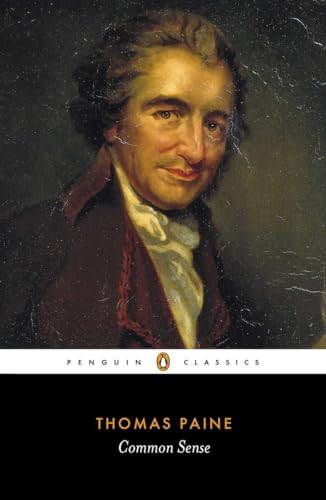
Published anonymously in 1776, the year of the American Declaration of Independence, Paine's Common Sense became an immediate best-seller, with fifty-six editions printed in that year alone. It was this pamphlet, more than any other factor, which helped to spark off the movement that established the independence of the United States. From his experience of revolutionary politics, Paine drew those principles of fundamental human rights which, he felt, must stand no matter what excesses are committed to obtain them, and which he later formulated in his Rights of Man.
Die Inhaltsangabe kann sich auf eine andere Ausgabe dieses Titels beziehen.
Über die Autorin bzw. den Autor
Thomas Paine was born in1737 at Thetford, Norfolk in England, as a son of a Quaker. He immigrated to America in 1774. There he published works criticising the slavery and supporting American independence. He became very popular but returned to England where he became involved in the French Revolution. After that he returned to America where he died in 1802.
Isaac Kramnick is Professor of Government at Cornell University and has edited of The Federalist Papers and the Thomas Paine Reader.
„Über diesen Titel“ kann sich auf eine andere Ausgabe dieses Titels beziehen.
Weitere beliebte Ausgaben desselben Titels

Suchergebnisse für Common Sense (Penguin Classics)

Beispielbild für diese ISBN
Common Sense (Penguin Books for Political Science)
Anbieter: Wonder Book, Frederick, MD, USA
Verkäuferbewertung 5 von 5 Sternen

Zustand: Good. Good condition. A copy that has been read but remains intact. May contain markings such as bookplates, stamps, limited notes and highlighting, or a few light stains. Artikel-Nr. K06T-00150
Beispielbild für diese ISBN
Common Sense
Verlag:
Penguin Publishing Group, 2003
ISBN 10: 0140390162
ISBN 13: 9780140390162
Gebraucht
Softcover
Anbieter: Better World Books, Mishawaka, IN, USA
Verkäuferbewertung 5 von 5 Sternen
Zustand: Good. 1 Edition. Used book that is in clean, average condition without any missing pages. Artikel-Nr. GRP7637594
Foto des Verkäufers
Common Sense (Penguin Classics)
Anbieter: WeBuyBooks, Rossendale, LANCS, Vereinigtes Königreich
Verkäuferbewertung 5 von 5 Sternen
Zustand: Good. Most items will be dispatched the same or the next working day. A copy that has been read but remains in clean condition. All of the pages are intact and the cover is intact and the spine may show signs of wear. The book may have minor markings which are not specifically mentioned. Artikel-Nr. rev1784348755
Gebraucht kaufen
EUR 1,95
Versand:
EUR 5,15
Von Vereinigtes Königreich nach USA
Anzahl: 2 verfügbar
Beispielbild für diese ISBN
Common Sense
Verlag:
Penguin Publishing Group, 2003
ISBN 10: 0140390162
ISBN 13: 9780140390162
Gebraucht
Softcover
Anbieter: Better World Books Ltd, Dunfermline, Vereinigtes Königreich
Verkäuferbewertung 5 von 5 Sternen
Zustand: Good. 1 Edition. Ships from the UK. Former library book; may include library markings. Used book that is in clean, average condition without any missing pages. Artikel-Nr. GRP83182948
Gebraucht kaufen
EUR 5,39
Versand:
EUR 9,16
Von Vereinigtes Königreich nach USA
Anzahl: 1 verfügbar
Beispielbild für diese ISBN
Common Sense
Verlag:
Penguin Publishing Group, 2003
ISBN 10: 0140390162
ISBN 13: 9780140390162
Gebraucht
Softcover
Anbieter: Better World Books Ltd, Dunfermline, Vereinigtes Königreich
Verkäuferbewertung 5 von 5 Sternen
Zustand: Very Good. 1 Edition. Ships from the UK. Used book that is in excellent condition. May show signs of wear or have minor defects. Artikel-Nr. 4894534-6
Gebraucht kaufen
EUR 5,39
Versand:
EUR 9,16
Von Vereinigtes Königreich nach USA
Anzahl: 1 verfügbar
Beispielbild für diese ISBN
Common Sense
Verlag:
Penguin Publishing Group, 2003
ISBN 10: 0140390162
ISBN 13: 9780140390162
Gebraucht
Softcover
Anbieter: Better World Books Ltd, Dunfermline, Vereinigtes Königreich
Verkäuferbewertung 5 von 5 Sternen
Zustand: Very Good. 1 Edition. Ships from the UK. Former library book; may include library markings. Used book that is in excellent condition. May show signs of wear or have minor defects. Artikel-Nr. GRP88639857
Gebraucht kaufen
EUR 5,39
Versand:
EUR 9,16
Von Vereinigtes Königreich nach USA
Anzahl: 1 verfügbar
Beispielbild für diese ISBN
Common Sense
Verlag:
Penguin Classics, New York, 1986
ISBN 10: 0140390162
ISBN 13: 9780140390162
Gebraucht
Mass market paperback
Anbieter: Ground Zero Books, Ltd., Silver Spring, MD, USA
Verkäuferbewertung 4 von 5 Sternen

Mass market paperback. Zustand: Good. Later printing. 128 pages. Editor's Introduction, Notes. to the Editor's Introduction. Notes on the Text. Suggestions for Further Reading Tabular data. Appendix. Sticker residue on the front cover. There is some general wear and tear along with a one inch rip at the top left of the front cover. Published anonymously in 1776, the year of the American Declaration of Independence, Paine's Common Sense became an immediate bestseller, with fifty-six editions printed in that year alone. It was this pamphlet, more than any other factor, which helped to spark off the movement that established the independence of the United States. From his experience of revolutionary politics, Paine drew those principles of fundamental human rights which, he felt, must stand no matter what excesses are committed to obtain them, and which he later formulated in his Rights of Man. Thomas Paine (born Thomas Pain; February 9, 1737 [O.S. January 29, 1736] June 8, 1809) was an English-born American Founding Father, French Revolutionary, inventor, and political philosopher. He authored Common Sense (1776) and The American Crisis (17761783), two of the most influential pamphlets at the start of the American Revolution, and he helped to inspire the colonial era patriots in 1776 to declare independence from Great Britain. His ideas reflected Enlightenment-era ideals of human rights. Isaac Kramnick (March 6, 1938 December 21, 2019) was a political theorist, historian of political thought, political scientist, and the Richard J. Schwartz Professor of Government at Cornell University. Common Sense is a pamphlet written by Thomas Paine. It was first published anonymously on January 10, 1776, during the American Revolution. Paine wrote it with editorial feedback from Benjamin Rush, who came up with the title. The document denounced British rule and, through its immense popularity, contributed to stimulating the American Revolution. The second edition was published soon thereafter. A third edition, with an accounting of the worth of the British navy, an expanded appendix, and a response to criticism by the Quakers, was published on February 14, 1776. Paine's original title for the pamphlet was Plain Truth, but Paine's friend, pro-independence advocate Benjamin Rush, suggested Common Sense instead. Finding a printer who was daring enough to commit his print shop to the printing of Common Sense was not easy. At the advice of Rush, Paine commissioned Robert Bell to print his work. The pamphlet came into circulation in January 1776, after the Revolution had started. It was passed around and often read aloud in taverns, contributing significantly to spreading the idea of republicanism, bolstering enthusiasm for separation from Britain, and encouraging recruitment for the Continental Army. Paine provided a new and convincing argument for independence by advocating a complete break with history. Common Sense is oriented to the future in a way that compels the reader to make an immediate choice. It offers a solution for Americans disgusted with and alarmed at the threat of tyranny. Paine's attack on monarchy in Common Sense was essentially an attack on King George III. Whereas colonial resentments were originally directed primarily against the king's ministers and Parliament, Paine laid the responsibility firmly at the king's door. Common Sense was the most widely read pamphlet of the American Revolution. It was a clarion call for unity against the corrupt British court, so as to realize America's providential role in providing an asylum for liberty. Written in a direct and lively style, it denounced the decaying despotisms of Europe and pilloried hereditary monarchy as an absurdity. At a time when many still hoped for reconciliation with Britain, Common Sense demonstrated to many the inevitability of separation. Paine was not on the whole expressing original ideas in Common Sense, but rather employing rhetoric as a means to arouse resentment of the Crown. To achieve these ends, he pioneered a style of political writing suited to the democratic society he envisioned, with Common Sense serving as a primary example. Part of Paine's work was to render complex ideas intelligible to average readers of the day, with clear, concise writing unlike the formal, learned style favored by many of Paine's contemporaries. Scholars have put forward various explanations to account for its success, including the historic moment, Paine's easy-to-understand style, his democratic ethos, and his use of psychology and ideology. Common Sense was immensely popular in disseminating to a very wide audience ideas that were already in common use among the elite who comprised Congress and the leadership cadre of the emerging nation, who rarely cited Paine's arguments in their public calls for independence. Paine used "common sense" as a weapon to de-legitimize the monarchy and overturn prevailing conventional wisdom. Rosenfeld concludes that the phenomenal appeal of his pamphlet resulted from his synthesis of popular and elite elements in the independence movement. Paine also denounced aristocracy, which together with monarchy were "two ancient tyrannies." They violated the laws of nature, human reason, and the "universal order of things," which began with God. That was, Middlekauff says, exactly what most Americans wanted to hear. He calls the Revolutionary generation "the children of the twice-born". because in their childhood they had experienced the Great Awakening, which, for the first time, had tied Americans together, transcending denominational and ethnic boundaries and giving them a sense of patriotism. Artikel-Nr. 89494
Beispielbild für diese ISBN
Common Sense
Anbieter: Revaluation Books, Exeter, Vereinigtes Königreich
Verkäuferbewertung 5 von 5 Sternen
Paperback. Zustand: Brand New. reissue edition. 128 pages. 8.00x5.25x0.50 inches. In Stock. Artikel-Nr. __0140390162
Neu kaufen
EUR 10,85
Versand:
EUR 11,45
Von Vereinigtes Königreich nach USA
Anzahl: 2 verfügbar
Foto des Verkäufers
COMMON SENSE
Anbieter: GfB, the Colchester Bookshop, Colchester, Vereinigtes Königreich
Verkäuferbewertung 5 von 5 Sternen
Paperback. Zustand: Good. No jacket. Penguin Books, 1986, reprint. Paperback, 8vo, 128pp. A little yellowed. A fair copy. 0140390162/0.2uk . (Please note that our condition gradings are stricter than those of Abebooks and many other sellers. There may therefore be a discrepancy between this description and its listed condition grading). Artikel-Nr. 382491
Gebraucht kaufen
EUR 4,72
Versand:
EUR 18,37
Von Vereinigtes Königreich nach USA
Anzahl: 1 verfügbar
Beispielbild für diese ISBN
Common Sense (Penguin Classics)
Anbieter: HALCYON BOOKS, LONDON, Vereinigtes Königreich
Verkäuferbewertung 5 von 5 Sternen
paperback. Zustand: Very Good. ALL ITEMS ARE DISPATCHED FROM THE UK WITHIN 48 HOURS ( BOOKS ORDERED OVER THE WEEKEND DISPATCHED ON MONDAY) ALL OVERSEAS ORDERS SENT BY TRACKABLE AIR MAIL. IF YOU ARE LOCATED OUTSIDE THE UK PLEASE ASK US FOR A POSTAGE QUOTE FOR MULTI VOLUME SETS BEFORE ORDERING. Artikel-Nr. mon0000942364
Gebraucht kaufen
EUR 4,13
Versand:
EUR 20,61
Von Vereinigtes Königreich nach USA
Anzahl: 1 verfügbar