
Verwandte Artikel zu The Marketmaker
Inhaltsangabe
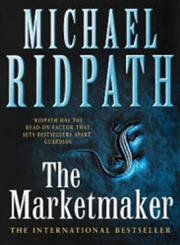
Tough City brokers Dekker Ward created, and dominate, the turbulent market in Latin American bonds. Ricardo Ross is their most successful trader: they call him the Marketmaker. You're either with him or you've made an enemy for life. Disgruntledacademic Nick Elliot is Dekker's greenest trader, content to ride his luck as the new boy on the stand. Until strange things start happening to Dekker's employees. One top trader is fired, another dies in a bungled robbery. Nick falls for his colleague Isabel. Then she is kidnapped. Just what sort of business is he involved in? And has he left it too late to run away?
Die Inhaltsangabe kann sich auf eine andere Ausgabe dieses Titels beziehen.
Über die Autorin bzw. den Autor
Michael Ridpath is the author of FREE TO TRADE and TRADING REALITY. A former venture capitalist, he is now committed to a full-time writing career. He lives in North London with his wife and three children.
Auszug. © Genehmigter Nachdruck. Alle Rechte vorbehalten.
I was sweating like a pig as I trudged up the dusty path under the mid-afternoon sun. I panted hard, each breath pulling in the foul smell of human waste, sweetened occasionally by the aroma of stale food or alcohol. In England I would be described as tall, dark and thin. Here, clambering up this hill of dirt and slime, I felt like a big, white, fat, rich man.
We had left LuLs's car and driver well behind to begin the ascent of the hill. Most of the favelas are on hills, land too steep to build real houses. Makeshift dwellings crowded together on either side of the path. They were constructed from all kinds of different materials, although brick and plywood seemed to predominate. Small holes in the walls served for windows, and occasionally I heard a mysterious rustle of movement from the darkness within. Washing hanging from window ledges added splashes of colour to the red-brick or grey-plastered walls. There were children everywhere, most of the boys wearing nothing but shorts. One group was playing with a hoop; another was kicking a football, a difficult business on this slope. A two-year-old staggered in front of us crying, his hair a shock of yellow. A black woman trotted after him and picked him up.
We passed a small row of stalls selling vegetables and fruit. Behind one of them, a nut-brown man sported a yellow T-shirt proclaiming in English, Who dies with the most toys wins. Where the hell did he get that, I wondered. A group of older kids eyed us with cold, proud eyes as we climbed past. They were passing round a bag: each one breathed deeply from it with an air of solemn concentration.
'Are you sure it's not dangerous here?' I asked.
'No,' said Isabel, puffing a few steps ahead.
'So, it is dangerous?'
'Yes.'
'Oh.'
It hadn't rained for a couple of days, but every now and then the ground underfoot changed from dust to mud. An open sewer ran along the side of the path. I tried not to think what I was stepping in.
Eventually we came to a small plateau, which supported a tiny white makeshift church, and a larger rectangular structure, decorated with brightly coloured murals. I turned and paused for breath. Beneath me was one of the most spectacular views I had ever seen. The white buildings of the city snaked between green-clad hills down to the sea glistening in the distance. I looked for the statue of Christ, visible from almost anywhere in Rio, but it was lost in a cloud that clung to the mountains behind.
'You would think someone would pay a lot for this location,' I said.
'Believe me, you pay to live here. And with more than just cash.'
We approached the entrance of the building, stepping carefully through a small but well-kept garden. The splashes of red, blue, yellow and white were a welcome relief from the reddish-brown dirt.
The door opened, and a woman rushed out, hogging Isabel. There was a family resemblance, although Cordelia was heavier, older and tougher. Her face was lined, marks of both compassion and strength.
We shook hands.
'Cordelia, this is a colleague of mine, Nick Elliot,' Isabel said in English. 'I've brought him along to show him what you do here. You don't mind, do you?'
'Not at all,' said Cordelia, with a warm smile. 'The more people who see, the better. So how much has Isabel told you?' Her English was slow and precise, her accent much more pronounced than her sister's.
'Not much. Something about running a shelter for street children?'
'That's right. It's a place for them to come to get a proper meal, to talk to someone, to feel that they belong somewhere.'
'Do they stay the night?'
'We only have room for a few. Those children who are genuinely afraid for their lives.'
'Who are they afraid of?'
'The police, mostly. Or the death squads. Groups of men who promise the shopkeepers they will keep the children off the streets. They beat them up or kill them.' Cordelia said this without emotion.
'Why? What have they done?'
'All kinds of things. Stealing, mostly. Although it doesn't even have to be that. A nine-year-old boy called PatrLcio used to come here. Last month he was killed, strangled. His body was found on the beach with a note: "I killed you because you didn't go to school and had no future."'
I recoiled. I looked closely at Cordelia's face. I could hardly believe what she was saying. In a way I didn't want to believe her. I looked for signs of exaggeration. But her face was blank. She was stating fact.
'How do they get away with it? Don't the police do anything?'
'It's the police who do most of the killing. Either in uniform or out of it.'
'But what about ordinary people? How do they put up with it?'
'They ignore it. They pretend it doesn't happen. Or they praise the police for clearing up the streets.'
I grimaced. 'I can't believe it.'
She shrugged. 'Do you want to see some of the children?'
She led us into the building. It was dark, cool and clean, after the chaotic dust and heat of the favela. We walked along a long corridor, dodging children of all shapes and sizes. Paintings in bright unsteady colours covered the walls. We entered a kind of classroom where a number of children were playing, talking, or just sitting silently, staring.
'Don't these children have parents?' I asked.
'Many don't know their fathers. They might have a dozen brothers and sisters who all live together in one of those shacks down there, in one dark room. They're beaten and abused by stepfathers. Often the mothers spend their days in a drunken stupor. For these kids life on the street is better. They go down into the city during the day to work or beg or steal, and in the evening they stay down there if they can, or come up here.'
„Über diesen Titel“ kann sich auf eine andere Ausgabe dieses Titels beziehen.
Suchergebnisse für The Marketmaker

Beispielbild für diese ISBN
The Marketmaker
Anbieter: Wonder Book, Frederick, MD, USA
Verkäuferbewertung 5 von 5 Sternen

Zustand: Good. Good condition. A copy that has been read but remains intact. May contain markings such as bookplates, stamps, limited notes and highlighting, or a few light stains. Artikel-Nr. I08A-06513
Gebraucht kaufen
EUR 6,27
Versand gratis
Versand innerhalb von USA
Versand innerhalb von USA
Anzahl: 1 verfügbar
Beispielbild für diese ISBN
The Marketmaker
Anbieter: Better World Books: West, Reno, NV, USA
Verkäuferbewertung 5 von 5 Sternen
Zustand: Very Good. Pages intact with possible writing/highlighting. Binding strong with minor wear. Dust jackets/supplements may not be included. Stock photo provided. Product includes identifying sticker. Better World Books: Buy Books. Do Good. Artikel-Nr. 39197354-6
Gebraucht kaufen
EUR 6,85
Versand gratis
Versand innerhalb von USA
Versand innerhalb von USA
Anzahl: 1 verfügbar
Foto des Verkäufers
The Marketmaker
Anbieter: WeBuyBooks, Rossendale, LANCS, Vereinigtes Königreich
Verkäuferbewertung 5 von 5 Sternen
Zustand: Good. Most items will be dispatched the same or the next working day. A copy that has been read but remains in clean condition. All of the pages are intact and the cover is intact and the spine may show signs of wear. The book may have minor markings which are not specifically mentioned. Artikel-Nr. rev6860408579
Gebraucht kaufen
EUR 1,38
EUR 6,35 Versand
Versand von Vereinigtes Königreich nach USA
Versand von Vereinigtes Königreich nach USA
Anzahl: 1 verfügbar
Beispielbild für diese ISBN
The Marketmaker
Anbieter: AwesomeBooks, Wallingford, Vereinigtes Königreich
Verkäuferbewertung 5 von 5 Sternen
Zustand: Very Good. This book is in very good condition and will be shipped within 24 hours of ordering. The cover may have some limited signs of wear but the pages are clean, intact and the spine remains undamaged. This book has clearly been well maintained and looked after thus far. Money back guarantee if you are not satisfied. See all our books here, order more than 1 book and get discounted shipping. . Artikel-Nr. 7719-9780140271775
Gebraucht kaufen
EUR 3,38
EUR 4,81 Versand
Versand von Vereinigtes Königreich nach USA
Versand von Vereinigtes Königreich nach USA
Anzahl: 4 verfügbar
Foto des Verkäufers
The Marketmaker
Anbieter: WeBuyBooks, Rossendale, LANCS, Vereinigtes Königreich
Verkäuferbewertung 5 von 5 Sternen
Zustand: Very Good. Most items will be dispatched the same or the next working day. A copy that has been read, but is in excellent condition. Pages are intact and not marred by notes or highlighting. The spine remains undamaged. Artikel-Nr. rev5326729934
Gebraucht kaufen
EUR 2,12
EUR 6,35 Versand
Versand von Vereinigtes Königreich nach USA
Versand von Vereinigtes Königreich nach USA
Anzahl: 1 verfügbar
Beispielbild für diese ISBN
The Marketmaker
Anbieter: WorldofBooks, Goring-By-Sea, WS, Vereinigtes Königreich
Verkäuferbewertung 5 von 5 Sternen
Paperback. Zustand: Very Good. The book has been read, but is in excellent condition. Pages are intact and not marred by notes or highlighting. The spine remains undamaged. Artikel-Nr. GOR002895252
Gebraucht kaufen
EUR 2,52
EUR 6,53 Versand
Versand von Vereinigtes Königreich nach USA
Versand von Vereinigtes Königreich nach USA
Anzahl: 1 verfügbar
Beispielbild für diese ISBN
The Marketmaker
Anbieter: MusicMagpie, Stockport, Vereinigtes Königreich
Verkäuferbewertung 5 von 5 Sternen
Zustand: Very Good. 1785248052. 7/28/2026 2:14:12 PM. Artikel-Nr. U9780140271775
Gebraucht kaufen
EUR 3,65
EUR 6,40 Versand
Versand von Vereinigtes Königreich nach USA
Versand von Vereinigtes Königreich nach USA
Anzahl: 1 verfügbar
Beispielbild für diese ISBN
The Marketmaker
Anbieter: Better World Books Ltd, Dunfermline, Vereinigtes Königreich
Verkäuferbewertung 5 von 5 Sternen
Zustand: Good. Former library copy. Pages intact with minimal writing/highlighting. The binding may be loose and creased. Dust jackets/supplements are not included. Includes library markings. Stock photo provided. Product includes identifying sticker. Better World Books: Buy Books. Do Good. Artikel-Nr. 39022867-20
Gebraucht kaufen
EUR 5,62
EUR 5,83 Versand
Versand von Vereinigtes Königreich nach USA
Versand von Vereinigtes Königreich nach USA
Anzahl: 1 verfügbar
Beispielbild für diese ISBN
The Marketmaker
Anbieter: Bahamut Media, Reading, Vereinigtes Königreich
Verkäuferbewertung 4 von 5 Sternen

Zustand: Very Good. Shipped within 24 hours from our UK warehouse. Clean, undamaged book with no damage to pages and minimal wear to the cover. Spine still tight, in very good condition. Remember if you are not happy, you are covered by our 100% money back guarantee. Artikel-Nr. 6545-9780140271775
Gebraucht kaufen
EUR 4,11
EUR 8,14 Versand
Versand von Vereinigtes Königreich nach USA
Versand von Vereinigtes Königreich nach USA
Anzahl: 4 verfügbar
Beispielbild für diese ISBN
The Marketmaker
Anbieter: Sell Books, Elland, YORKS, Vereinigtes Königreich
Verkäuferbewertung 5 von 5 Sternen
paperback. Zustand: Good. Our good condition books are generally good for reading but not for gifting or collecting. They could have imperfections such as creasing, fanning, inscriptions, margin notes, yellowing, staining on edge or cover or pages, bumps, scuffs, etc etc (sometimes multiple of these). It's a wide category that encompasses anything that isn't almost-new down to anything that is slightly better than poor. We would NOT recommend gifting Good books - these should be considered reading copies. Our books are dispatched from a Yorkshire former cotton mill. We list via barcode/ISBN so please note that the images are stock images and may not be the exact copy you receive, furthermore the details about edition and year might not be accurate as many publishers reuse the same ISBN for multiple editions and as we simply scan a barcode or enter an ISBN we do not check the validity of the edition data when listing. If you're looking for an exact edition please don't order (at least not without checking with us first, although we don't always have time to check). We aim to dispatch prompty, the service used will depend on order value and book size. We can ship to most countries, see our shipping policies. Payment is via Abe only. Artikel-Nr. P-BGA00228-RAG-20230512-G
Gebraucht kaufen
EUR 0,89
EUR 14,17 Versand
Versand von Vereinigtes Königreich nach USA
Versand von Vereinigtes Königreich nach USA
Anzahl: 1 verfügbar