
Verwandte Artikel zu Summer: Edith Wharton (Twentieth-Century Classics)
Inhaltsangabe
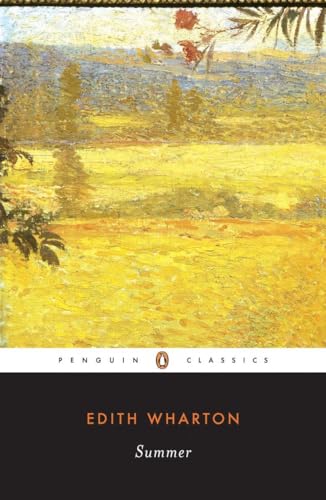
A tale of forbidden sexual passion and thwarted dreams played out against the lush, summer backdrop of the Massachusetts Berkshires Edith Wharton called Summer her 'hot Ethan'. In their rural settings and their poor, uneducated protagonists, Summer (1916) and Ethan Frome represent a sharp departure from Wharton's familiar depictions of the urban upper class. Charity Royall lives unhappily with her hard-drinking adoptive father in an isolated village, until a visiting architect awakens her sexual passion and the hope for escape. Exploring Charity's relation to her father and her lover, Wharton delves into dark cultural territory: repressed sexuality, small-town prejudice, and, in subtle hints, incest.
Die Inhaltsangabe kann sich auf eine andere Ausgabe dieses Titels beziehen.
Über die Autorin bzw. den Autor
Edith Wharton was born into a wealthy New York family in 1862, during the American Civil War. She married at twenty-three, and subsequently divided her time between homes in New York, Rhode Island and Massachusetts. The House of Mirth, perhaps her most famous work, appeared in 1905, and was followed by Ethan Frome, The Custom of the Country, Summer and The Age of Innocence. Wharton was the first woman to win the Pulitzer Prize for Fiction. She died in 1937.
Von der hinteren Coverseite
A tale of forbidden sexual passion and thwarted dreams played out against the lush, summer backdrop of the Massachusetts Berkshires Edith Wharton called Summer her 'hot Ethan'.
In their rural settings and their poor, uneducated protagonists, Summer (1916) and Ethan Frome represent a sharp departure from Wharton's familiar depictions of the urban upper class. Charity Royall lives unhappily with her hard-drinking adoptive father in an isolated village, until a visiting architect awakens her sexual passion and the hope for escape.
Exploring Charity's relation to her father and her lover, Wharton delves into dark cultural territory: repressed sexuality, small-town prejudice, and, in subtle hints, incest.
Auszug. © Genehmigter Nachdruck. Alle Rechte vorbehalten.
Chapter One
A GIRL CAME out of lawyer Royall's house, at the end of the one street of North Dormer, and stood on the doorstep.
It was the beginning of a June afternoon. The spring–like transparent sky shed a rain of silver sunshine on the roofs of the village, and on the pastures and larchwoods surrounding it. A little wind moved among the round white clouds on the shoulders of the hills, driving their shadows across the fields and down the grassy road that takes the name of street when it passes through North Dormer. The place lies high and in the open, and lacks the lavish shade of the more protected New England villages. The clump of weeping–willows about the duck pond, and the Norway spruces in front of the Hatchard gate, cast almost the only roadside shadow between lawyer Royall's house and the point where, at the other end of the village, the road rises above the church and skirts the black hemlock wall enclosing the cemetery.
The little June wind, frisking down the street, shook the doleful fringes of the Hatchard spruces, caught the straw hat of a young man just passing under them, and spun it clean across the road into the duck pond.
As he ran to fish it out the girl on lawyer Royall's doorstep noticed that he was a stranger, that he wore city clothes, and that he was laughing with all his teeth, as the young and careless laugh at such mishaps.
Her heart contracted a little, and the shrinking that sometimes came over her when she saw people with holiday faces made her draw back into the house and pretend to look for the key that she knew she had already put into her pocket. A narrow greenish mirror with a gilt eagle over it hung on the passage wall, and she looked critically at her reflection, wished for the thousandth time that she had blue eyes like Annabel Balch, the girl who sometimes came from Springfield to spend a week with old Miss Hatchard, straightened the sunburnt hat over her small swarthy face, and turned out again into the sunshine.
"How I hate everything!" she murmured.
The young man had passed through the Hatchard gate, and she had the street to herself. North Dormer is at all times an empty place, and at three o'clock on a June afternoon its few able–bodied men are off in the fields or woods, and the women indoors, engaged in languid household drudgery.
The girl walked along, swinging her key on a finger, and looking about her with the heightened attention produced by the presence of a stranger in a familiar place. What, she wondered, did North Dormer look like to people from other parts of the world? She herself had lived there since the age of five, and had long supposed it to be a place of some importance. But about a year before, Mr. Miles, the new Episcopal clergyman at Hepburn, who drove over every other Sunday–when the roads were not ploughed up by hauling–to hold a service in the North Dormer church, had proposed, in a fit of missionary zeal, to take the young people down to Nettleton to hear an illustrated lecture on the Holy Land; and the dozen girls and boys who represented the future of North Dormer had been piled into a farmwagon, driven over the hills to Hepburn, put into a way–train and carried to Nettleton. In the course of that incredible day Charity Royall had, for the first and only time, experienced railway–travel, looked into shops with plate–glass fronts, tasted cocoa–nut pie, sat in a theatre, and listened to a gentleman saying unintelligible things before pictures that she would have enjoyed looking at if his explanations had not prevented her from understanding them. This initiation had shown her that North Dormer was a small place, and developed in her a thirst for information that her position as custodian of the village library had previously failed to excite. For a month or two she dipped feverishly and disconnectedly into the dusty volumes of the Hatchard Memorial Library; then the impression of Nettleton began to fade, and she found it easier to take North Dormer as the norm of the universe than to go on reading.
The sight of the stranger once more revived memories of Nettleton, and North Dormer shrank to its real size. As she looked up and down it, from lawyer Royall's faded red house at one end to the white church at the other, she pitilessly took its measure. There it lay, a weather–beaten sunburnt village of the hills, abandoned of men, left apart by railway, trolley, telegraph, and all the forces that link life to life in modern communities. It had no shops, no theatres, no lectures, no "business block"; only a church that was opened every other Sunday if the state of the roads permitted, and a library for which no new books had been bought for twenty years, and where the old ones mouldered undisturbed on the damp shelves. Yet Charity Royall had always been told that she ought to consider it a privilege that her lot had been cast in North Dormer. She knew that, compared to the place she had come from, North Dormer represented all the blessings of the most refined civilization. Everyone in the village had told her so ever since she had been brought there as a child. Even old Miss Hatchard had said to her, on a terrible occasion in her life: "My child, you must never cease to remember that it was Mr. Royall who brought you down from the Mountain."
She had been "brought down from the Mountain"; from the scarred cliff that lifted its sullen wall
above the lesser slopes of Eagle Range, making a perpetual background of gloom to the lonely valley. The Mountain was a good fifteen miles away, but it rose so abruptly from the lower hills that it seemed almost to cast its shadow over North Dormer. And it was like a great magnet drawing the clouds and scattering them in storm across the valley. If ever, in the purest summer sky, there trailed a thread of vapour over North Dormer, it drifted to the Mountain as a ship drifts to a whirlpool, and was caught among the rocks, torn up and multiplied, to sweep back over the village in rain and darkness.
Charity was not very clear about the Mountain; but she knew it was a bad place, and a shame to have come from, and that, whatever befell her in North Dormer, she ought, as Miss Hatchard had once reminded her, to remember that she had been brought down from there, and hold her tongue and be thankful. She looked up at the Mountain, thinking of these things, and tried as usual to be thankful. But the sight of the young man turning in at Miss Hatchard's gate had brought back the vision of the glittering streets of Nettleton, and she felt ashamed of her old sun–hat, and sick of North Dormer, and jealously aware of Annabel Balch of Springfield, opening her blue eyes somewhere far off on glories greater than the glories of Nettleton.
"How I hate everything!" she said again.
Half–way down the street she stopped at a weak–hinged gate. Passing through it, she walked down a brick path to a queer little brick temple with white wooden columns supporting a pediment on which was inscribed in tarnished gold letters; "The Honorius Hatchard Memorial Library, 1832."
Honorius Hatchard had been old Miss Hatchard's great–uncle; though she would undoubtedly have reversed the phrase, and put forward, as her only claim to distinction, the fact that she was his great–niece. For Honorius Hatchard, in the early years of the nineteenth century, had enjoyed a modest celebrity. As the marble tablet in the interior of the library informed its infrequent visitors, he had possessed marked literary gifts, written a series of papers called "The Recluse of Eagle Range," enjoyed the acquaintance of Washington Irving and Fitz–Greene Halleck, and been cut off in his flower by a fever contracted in Italy. Such had been the...
„Über diesen Titel“ kann sich auf eine andere Ausgabe dieses Titels beziehen.
Suchergebnisse für Summer: Edith Wharton (Twentieth-Century Classics)

Beispielbild für diese ISBN
Summer: Edith Wharton (Penguin
Anbieter: World of Books (was SecondSale), Montgomery, IL, USA
Verkäuferbewertung 5 von 5 Sternen

Zustand: Good. Item in good condition. Textbooks may not include supplemental items i.e. CDs, access codes etc. Artikel-Nr. 00109165028
Gebraucht kaufen
EUR 8,50
Versand gratis
Versand innerhalb von USA
Versand innerhalb von USA
Anzahl: 2 verfügbar
Beispielbild für diese ISBN
Summer: Edith Wharton (Penguin
Anbieter: World of Books (was SecondSale), Montgomery, IL, USA
Verkäuferbewertung 5 von 5 Sternen
Zustand: Acceptable. Item in acceptable condition! Textbooks may not include supplemental items i.e. CDs, access codes etc. Artikel-Nr. 00106649504
Gebraucht kaufen
EUR 8,50
Versand gratis
Versand innerhalb von USA
Versand innerhalb von USA
Anzahl: 1 verfügbar
Beispielbild für diese ISBN
Summer: Edith Wharton (Penguin Great Books of the 20th Century)
Verlag:
Penguin Books Ltd, United Kingdom, London, 1993
ISBN 10: 0140186794
ISBN 13: 9780140186796
Gebraucht
Paperback
Anbieter: WorldofBooks, Goring-By-Sea, WS, Vereinigtes Königreich
Verkäuferbewertung 5 von 5 Sternen
Paperback. Zustand: Very Good. A tale of forbidden sexual passion and thwarted dreams played out against the lush, summer backdrop of the Massachusetts Berkshires Edith Wharton called Summer her 'hot Ethan'. In their rural settings and their poor, uneducated protagonists, Summer (1916) and Ethan Frome represent a sharp departure from Wharton's familiar depictions of the urban upper class. Charity Royall lives unhappily with her hard-drinking adoptive father in an isolated village, until a visiting architect awakens her sexual passion and the hope for escape. Exploring Charity's relation to her father and her lover, Wharton delves into dark cultural territory: repressed sexuality, small-town prejudice, and, in subtle hints, incest. The book has been read, but is in excellent condition. Pages are intact and not marred by notes or highlighting. The spine remains undamaged. Artikel-Nr. GOR001399352
Gebraucht kaufen
EUR 8,15
EUR 6,52 Versand
Versand von Vereinigtes Königreich nach USA
Versand von Vereinigtes Königreich nach USA
Anzahl: 4 verfügbar
Beispielbild für diese ISBN
Summer
Anbieter: Majestic Books, Hounslow, Vereinigtes Königreich
Verkäuferbewertung 4 von 5 Sternen

Zustand: New. pp. 224. Artikel-Nr. 8237701
Neu kaufen
EUR 11,52
EUR 7,57 Versand
Versand von Vereinigtes Königreich nach USA
Versand von Vereinigtes Königreich nach USA
Anzahl: 3 verfügbar
Beispielbild für diese ISBN
Summer (Penguin Twentieth-Century Classics)
Anbieter: Roundabout Books, Greenfield, MA, USA
Verkäuferbewertung 4 von 5 Sternen
paperback. Zustand: New. Condition Notes: New from the publisher. Artikel-Nr. 1693352
Beispielbild für diese ISBN
Summer
Anbieter: Revaluation Books, Exeter, Vereinigtes Königreich
Verkäuferbewertung 5 von 5 Sternen
Paperback. Zustand: Brand New. 59329th edition. 224 pages. 7.75x5.00x0.75 inches. In Stock. Artikel-Nr. __0140186794
Neu kaufen
EUR 8,77
EUR 11,65 Versand
Versand von Vereinigtes Königreich nach USA
Versand von Vereinigtes Königreich nach USA
Anzahl: 2 verfügbar
Beispielbild für diese ISBN
Summer: Edith Wharton (Penguin Great Books of the 20th Century)
Anbieter: Kennys Bookstore, Olney, MD, USA
Verkäuferbewertung 5 von 5 Sternen
Zustand: New. 1993. 1st Edition. paperback. Charity Royall lives unhappily with her hard-drinking adoptive father in a village, until a visiting architect awakens her sexual passion and the hope for escape. Exploring Charity's relation to her father and her lover, this title delves into dark cultural territory: repressed sexuality, small-town prejudice, and, in subtle hints, incest. Series: Penguin Modern Classics. Num Pages: 224 pages. BIC Classification: FA; FC. Category: (G) General (US: Trade). Dimension: 196 x 132 x 15. Weight in Grams: 186. . . . . . Books ship from the US and Ireland. Artikel-Nr. V9780140186796
Neu kaufen
EUR 13,14
EUR 9,03 Versand
Versand innerhalb von USA
Versand innerhalb von USA
Anzahl: 7 verfügbar
Beispielbild für diese ISBN
Summer (Penguin Twentieth-Century Classics)
Anbieter: Ria Christie Collections, Uxbridge, Vereinigtes Königreich
Verkäuferbewertung 5 von 5 Sternen
Zustand: New. In English. Artikel-Nr. ria9780140186796_new
Neu kaufen
EUR 10,67
EUR 13,15 Versand
Versand von Vereinigtes Königreich nach USA
Versand von Vereinigtes Königreich nach USA
Anzahl: 18 verfügbar
Foto des Verkäufers
Summer
Verlag:
Penguin Publishing Group, 1993
ISBN 10: 0140186794
ISBN 13: 9780140186796
Gebraucht
Softcover
Anbieter: Hamelyn, Madrid, M, Spanien
Verkäuferbewertung 5 von 5 Sternen
Zustand: Good. : Sumérgete en la historia de Charity Royall, una joven que vive en un pueblo aislado y encuentra una chispa de esperanza y pasión en un arquitecto visitante. La novela explora temas de deseo prohibido, sueños frustrados y los prejuicios de los pueblos pequeños, todo ello en el contexto de los exuberantes paisajes de verano de Massachusetts. Edith Wharton teje una narrativa audaz y rica en imágenes que desafía las convenciones y celebra la alegría del amor sexual, sin importar el precio. EAN: 9780140186796 Tipo: Libros Categoría: Literatura y Ficción Título: Summer Autor: Edith Wharton Editorial: Penguin Publishing Group Idioma: en Páginas: 224 Formato: tapa blanda. Artikel-Nr. Happ-2026-08-06-8a891b48
Gebraucht kaufen
EUR 11,02
EUR 12,99 Versand
Versand von Spanien nach USA
Versand von Spanien nach USA
Anzahl: 1 verfügbar
Foto des Verkäufers
Summer
Anbieter: AHA-BUCH GmbH, Einbeck, Deutschland
Verkäuferbewertung 5 von 5 Sternen
Taschenbuch. Zustand: Neu. Neuware - A tale of forbidden sexual passion and thwarted dreams played out against the lush, summer backdrop of the Massachusetts Berkshires, Edith Wharton called Summer her 'hot Ethan.' In their rural settings and their poor, uneducated protagonists, Summer and Ethan Frome represent a sharp departure from Wharton's familiar depictions of the urban upper class. Charity Royall lives unhappily with her hard-drinking adoptive father in an isolated village, until a visiting architect awakens her sexual passion and the hope for escape. Exploring Charity's relation to her father and her lover, Wharton delves into dark cultural territory: repressed sexuality, small-town prejudice, and, in subtle hints, incest.For more than seventy years, Penguin has been the leading publisher of classic literature in the English-speaking world. With more than 1,700 titles, Penguin Classics represents a global bookshelf of the best works throughout history and across genres and disciplines. Readers trust the series to provide authoritative texts enhanced by introductions and notes by distinguished scholars and contemporary authors, as well as up-to-date translations by award-winning translators. Artikel-Nr. 9780140186796
Neu kaufen
EUR 11,74
EUR 30,50 Versand
Versand von Deutschland nach USA
Versand von Deutschland nach USA
Anzahl: 2 verfügbar