
Verwandte Artikel zu Biogeochemistry: An Analysis of Global Change
Inhaltsangabe
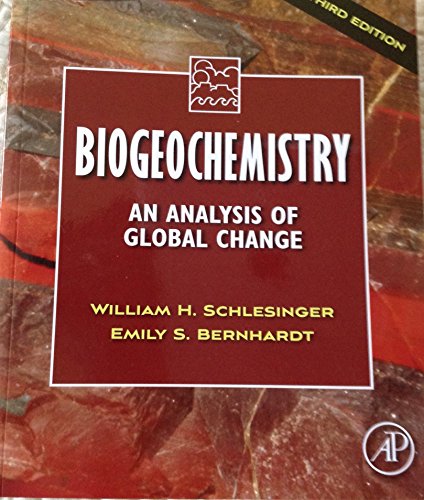
Biogeochemistry―winner of a 2014 Textbook Excellence Award (Texty) from the Text and Academic Authors Association―considers how the basic chemical conditions of the Earth, from atmosphere to soil to seawater, have been and are being affected by the existence of life. Human activities in particular, from the rapid consumption of resources to the destruction of the rainforests and the expansion of smog-covered cities, are leading to rapid changes in the basic chemistry of the Earth.
This expansive text pulls together the numerous fields of study encompassed by biogeochemistry to analyze the increasing demands of the growing human population on limited resources and the resulting changes in the planet's chemical makeup.
The book helps students extrapolate small-scale examples to the global level, and also discusses the instrumentation being used by NASA and its role in studies of global change. With extensive cross-referencing of chapters, figures and tables, and an interdisciplinary coverage of the topic at hand, this updated edition provides an excellent framework for courses examining global change and environmental chemistry, and is also a useful self-study guide.
Die Inhaltsangabe kann sich auf eine andere Ausgabe dieses Titels beziehen.
Über die Autorinnen und Autoren
Dr. Schlesinger is one of the nation’s leading ecologists and earth scientists and a passionate advocate for translating science for lay audiences. A member of the National Academy of Sciences, he has served as dean of the Nicholas School of the Environment at Duke and president of the Cary Institute of Ecosystem Studies. He lives in Down East Maine and Durham, N.C. and continues to analyze the impacts of humans on the chemistry of our natural environment.
Dr. Bernhardt is James B. Duke Distinguished Professor in the Department of Biology at Duke University. She is a Fellow of the Ecological Society of America and the Society for Freshwater Sciences and currently serves as the chair of Duke's Department of Biology. She lives in Durham, NC where she enjoys introducing Duke students to the wonders of ecology and biogeochemistry each year.
Von der hinteren Coverseite
Biogeochemistry: An Analysis of Global Change, Third Edition is the highly-anticipated update to one of Academic Press’ best-selling earth and environmental science textbooks. This book examines the effects of human activities on the chemistry of the Earth, including climate change, nitrogen pollution, and ocean acidification. It shows how current technology can help extrapolate the results of small-scale field studies to the global level. Key features:
- Easy readability, making a seemingly difficult subject fun and compelling
- Cohesive, comprehensive, and interdisciplinary approach
- Timely topics including the role of biogeochemistry in climate change research
- Synthesis of the current literature on the Earth’s biogeochemistry
New to this edition:
- Revised content and new figures and tables reflect the vast growth of this scientific field over the past decade
- End-of-chapter problem sets reinforce learning
- Color figures include numerous maps of global biogeochemical phenomena
- Addition of a substantial number of citations of material published since the last edition (more than 4,500 total), including many added as the book was going to press
- Companion website includes web links, recommended reading, and images from the book
„Über diesen Titel“ kann sich auf eine andere Ausgabe dieses Titels beziehen.
Suchergebnisse für Biogeochemistry: An Analysis of Global Change

Beispielbild für diese ISBN
Biogeochemistry : An Analysis of Global Change
Verlag:
Elsevier Science & Technology, 2013
ISBN 10: 0123858747
ISBN 13: 9780123858740
Gebraucht
Softcover
Anbieter: Better World Books, Mishawaka, IN, USA
Verkäuferbewertung 5 von 5 Sternen

Zustand: Good. Pages intact with minimal writing/highlighting. The binding may be loose and creased. Dust jackets/supplements are not included. Stock photo provided. Product includes identifying sticker. Better World Books: Buy Books. Do Good. Artikel-Nr. 7779148-6
Gebraucht kaufen
EUR 11,55
Versand gratis
Versand innerhalb von USA
Versand innerhalb von USA
Anzahl: 1 verfügbar
Beispielbild für diese ISBN
Biogeochemistry : An Analysis of Global Change
Verlag:
Elsevier Science & Technology, 2013
ISBN 10: 0123858747
ISBN 13: 9780123858740
Gebraucht
Softcover
Anbieter: Better World Books Ltd, Dunfermline, Vereinigtes Königreich
Verkäuferbewertung 5 von 5 Sternen
Zustand: Very Good. Former library copy. Pages intact with possible writing/highlighting. Binding strong with minor wear. Dust jackets/supplements may not be included. Includes library markings. Stock photo provided. Product includes identifying sticker. Better World Books: Buy Books. Do Good. Artikel-Nr. 45207100-75
Gebraucht kaufen
EUR 9,20
EUR 5,97 Versand
Versand von Vereinigtes Königreich nach USA
Versand von Vereinigtes Königreich nach USA
Anzahl: 1 verfügbar
Beispielbild für diese ISBN
Biogeochemistry: An Analysis of Global Change
Verlag:
Elsevier Science Publishing Co Inc, 2013
ISBN 10: 0123858747
ISBN 13: 9780123858740
Gebraucht
Paperback
Anbieter: World of Books (was SecondSale), Montgomery, IL, USA
Verkäuferbewertung 5 von 5 Sternen
Paperback. Zustand: Very Good. Considers how the basic chemical conditions of the Earth - from atmosphere to soil to seawater - have been and are being affected by the existence of life. This title helps students extrapolate small-scale examples to the global level, and also discusses the instrumentation being used by NASA and its role in studies of global change. Artikel-Nr. CIN0123858747VG
Gebraucht kaufen
EUR 18,44
Versand gratis
Versand innerhalb von USA
Versand innerhalb von USA
Anzahl: 1 verfügbar
Beispielbild für diese ISBN
Biogeochemistry: An Analysis of Global Change, 3rd Edition
Verlag:
Academic Press (edition 3), 2013
ISBN 10: 0123858747
ISBN 13: 9780123858740
Gebraucht
Paperback
Anbieter: BooksRun, Philadelphia, PA, USA
Verkäuferbewertung 5 von 5 Sternen
Paperback. Zustand: Very Good. 3. It's a well-cared-for item that has seen limited use. The item may show minor signs of wear. All the text is legible, with all pages included. It may have slight markings and/or highlighting. Artikel-Nr. 0123858747-11-1
Gebraucht kaufen
EUR 21,44
Versand gratis
Versand innerhalb von USA
Versand innerhalb von USA
Anzahl: 1 verfügbar