
Verwandte Artikel zu Crew Resource Management
Inhaltsangabe
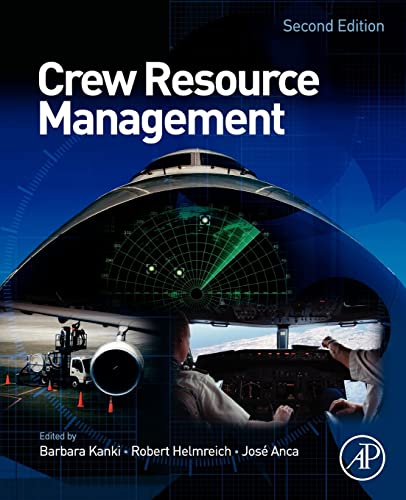
Crew (or Cockpit) Resource Management training originated from a NASA workshop in 1979 that focused on improving air safety. The NASA research at that time found the primary cause of the majority of aviation accidents to be human error, and further showed the main problems to be failures of interpersonal communication, leadership, and decision making in the cockpit. By the time of publication of our first editon of CRM, was celebrated as the convergence of a concept, an attitude and a very practical approach to pilot training. Equally important was the convergence and enthusiastic support of the research community, aviation regulators, transport operators and the pilot unions. CRM was maturing, implementing and developing all at the same time. Cockpit Resource Management (CRM) has gained increased attention from the airline industry in recent years due to the growing number of accidents and near misses in airline traffic. This book, authored by the first generation of CRM experts, is the first comprehensive work on CRM. Cockpit Resource Management is a far-reaching discussion of crew coordination, communication, and resources from both within and without the cockpit. A valuable resource for commercialand military airline training curriculum, the book is also a valuable reference for business professionals who are interested in effective communication among interactive personnel. Fifteen years later, CRM concepts have endured by not only integrating themselves into the fabric of training, but also expanding the team concept, evolving into new applications, and possibly most important to the original operators, inspiring development and integration of CRM into safety and quality assurance goals at the corporate level. A variety of CRM models have been successfully adapted to different types of industries and organizations, all based on the same basic concepts and principles. It has been adopted by the fire serv
Die Inhaltsangabe kann sich auf eine andere Ausgabe dieses Titels beziehen.
Über die Autorinnen und Autoren
Dr. Barbara Kanki served as a Research Scientist at the National Aeronautics and Space Administration (NASA), Ames Research Center (Moffett Field, California) in the Human Systems Integration Division. Over her tenure of more than 25 years, she conducted human performance research in support of NASA Aviation Safety Programs, Human Factors and Performance for Space Safety, and a variety of Human Factors programs for the Federal Aviation Administration (FAA). In a consulting role she worked with other high risk industries such as the medical and nuclear power fields.
Dr. Kanki’s research activities have ranged across human factors topics such as crew communication and coordination, organizational factors, information and workload management for aviation operations including flight crews, ground control, and technical operations. Her research interests include human-centered procedure and document design, integration and training for new technologies as well as safety topics such as voluntary reporting and event investigation. She has supported the space side of NASA in human and socio-technical risk factors, team training, and procedure design primarily for the space shuttle program at Kennedy Space Center and has participated on NASA mishap boards, safety assessments and National Transportation Safety Board human performance investigations. After retiring from NASA in 2014, Dr. Kanki continues to contribute to NASA projects and FAA/industry groups, and is the current chair of the Human Performance working group of the International Association for the Advancement of Space Safety.
Dr. Kanki received her doctorate in Behavioral Sciences from the University of Chicago, where she specialized in the areas of communication and group dynamics. She continues to author, edit, and review books, journals, and papers on human factors topics.
Joey Anca is the Human Risk Manager for Metro Trains Melbourne in Australia. Joey has a long career in aviation, having pioneered with Bob Helmreich the Cockpit Management Attitudes Questionnaire (CMAQ), when the known universe was grappling with the new-found pill of Crew Resource Management (CRM). Bob (the NASA/UT team, Joey and other aviation earthlings) took off into other safety-critical domains. Joey is a proud Filipino who has worked in a number of airlines and railways in Australasia. He lives in Melbourne, Australia and teaches Threat and Error Management (TEM) at Swinburne University of Technology. His day-job is keeping the railways in Melbourne safe.
Robert L. Helmreich is professor of psychology at the University of Texas at Austin. He received his Ph.D. in personality and social psychology from Yale University in 1966. He has conducted research on group processes and performance sponsored by NASA, the Office of Naval Research, and the FAA, as well as research on personality and motivation sponsored by the National Science Foundation and the National Institute of Mental Health. He is a fellow of the American Psychological Association and the American Psychological Society and former editor of the Journal of Personality and Social Psychology. He was chair of an FAA working group to develop the National Plan for Aviation Human Factors. He is a member of the National Academy of Sciences Committee on Space Biology and Medicine and Committee on Human Factors. He is Director of the NASA/University of Texas/FAA Aerospace Crew Performance Project investigating issues in crew selection, training, and performance evaluation in both aviation and space environments.
Von der hinteren Coverseite
Crew Resource Management, Second Edition continues to focus on CRM in the cockpit, but also emphasizes that the concepts and training applications provide generic guidance and lessons learned for a wide variety of "crews" in the aviation system as well as in the complex and high-risk operations of many non-aviation settings.
Long considered the "bible" in this field, much of the basic style and structure of the previous edition of Crew Resource Management is retained in the new edition. Textbooks are often heavily supplemented with or replaced entirely by course packs in advanced courses in the aviation field, as it is essential to provide students with cutting edge information from academic researchers, government agencies (FAA), pilot associations, and technology (Boeing, ALION). This edited textbook offers ideal coverage with first-hand information from each of these perspectives. Case examples, which are particularly important given the dangers inherent in real world aviation scenarios, are liberally supplied. An image collection and test bank make this the only text on the market with ancillary support.
New material includes: international and cultural aspects of CRM; design and implementation of Line-Oriented Flight Training (LOFT); airline applications beyond the cockpit; spaceflight resource management; non-aviation applications; AQP; LOSA; and special issues pertaining to low-cost airline carriers.
The second edition editors offer essential breath of experience in aviation human factors from multiple perspectives (academia, government, and private enterprise) and the contributors have all been chosen as experts in their fields who represent the diversity of the research of activities and organisational experience of CRM.
„Über diesen Titel“ kann sich auf eine andere Ausgabe dieses Titels beziehen.
Suchergebnisse für Crew Resource Management

Beispielbild für diese ISBN
Crew Resource Management
Anbieter: BooksRun, Philadelphia, PA, USA
Verkäuferbewertung 5 von 5 Sternen

Paperback. Zustand: Very Good. 2. It's a well-cared-for item that has seen limited use. The item may show minor signs of wear. All the text is legible, with all pages included. It may have slight markings and/or highlighting. Artikel-Nr. 0123749468-11-1
Gebraucht kaufen
EUR 6,96
Versand gratis
Versand innerhalb von USA
Versand innerhalb von USA
Anzahl: 1 verfügbar
Beispielbild für diese ISBN
Crew Resource Management
Anbieter: ThriftBooks-Dallas, Dallas, TX, USA
Verkäuferbewertung 5 von 5 Sternen
Paperback. Zustand: Good. No Jacket. Pages can have notes/highlighting. Spine may show signs of wear. ~ ThriftBooks: Read More, Spend Less. Artikel-Nr. G0123749468I3N00
Gebraucht kaufen
EUR 8,96
Versand gratis
Versand innerhalb von USA
Versand innerhalb von USA
Anzahl: 3 verfügbar
Beispielbild für diese ISBN
Crew Resource Management
Verlag:
Elsevier Science & Technology, 2010
ISBN 10: 0123749468
ISBN 13: 9780123749468
Gebraucht
Softcover
Anbieter: Better World Books: West, Reno, NV, USA
Verkäuferbewertung 5 von 5 Sternen
Zustand: Very Good. Pages intact with possible writing/highlighting. Binding strong with minor wear. Dust jackets/supplements may not be included. Stock photo provided. Product includes identifying sticker. Better World Books: Buy Books. Do Good. Artikel-Nr. 8774135-6
Gebraucht kaufen
EUR 10,53
Versand gratis
Versand innerhalb von USA
Versand innerhalb von USA
Anzahl: 1 verfügbar
Foto des Verkäufers
Crew Resource Management
Anbieter: WeBuyBooks, Rossendale, LANCS, Vereinigtes Königreich
Verkäuferbewertung 5 von 5 Sternen
paperback. Zustand: Good. Most items will be dispatched the same or the next working day. A copy that has been read but remains in clean condition. All of the pages are intact and the cover is intact and the spine may show signs of wear. The book may have minor markings which are not specifically mentioned. Artikel-Nr. rev5072443532
Gebraucht kaufen
EUR 9,95
EUR 12,17 Versand
Versand von Vereinigtes Königreich nach USA
Versand von Vereinigtes Königreich nach USA
Anzahl: 1 verfügbar
Foto des Verkäufers
Crew Resource Management
Verlag:
Amsterdam : Academic Press, 2010
ISBN 10: 0123749468
ISBN 13: 9780123749468
Gebraucht
Softcover/Paperback
Anbieter: Antiquarische Fundgrube e.U., Wien, Österreich
Verkäuferbewertung 5 von 5 Sternen
Softcover/Paperback. Second Edition = 2. Auflage. 524 S. Einband gering berieben L02 9780123749468 *.* Sprache: Englisch Gewicht in Gramm: 1150. Artikel-Nr. 268642
Gebraucht kaufen
EUR 76,00
EUR 55,00 Versand
Versand von Österreich nach USA
Versand von Österreich nach USA
Anzahl: 1 verfügbar
Beispielbild für diese ISBN
Crew Resource Management
Anbieter: Ria Christie Collections, Uxbridge, Vereinigtes Königreich
Verkäuferbewertung 5 von 5 Sternen
Zustand: New. In English. Artikel-Nr. ria9780123749468_new
Neu kaufen
EUR 136,38
EUR 17,50 Versand
Versand von Vereinigtes Königreich nach USA
Versand von Vereinigtes Königreich nach USA
Anzahl: Mehr als 20 verfügbar
Foto des Verkäufers
Crew Resource Management
Anbieter: preigu, Osnabrück, Deutschland
Verkäuferbewertung 5 von 5 Sternen
Taschenbuch. Zustand: Neu. Crew Resource Management | Barbara G. Kanki (u. a.) | Taschenbuch | Englisch | 2010 | Academic Press | EAN 9780123749468 | Verantwortliche Person für die EU: preigu GmbH & Co. KG, Lengericher Landstr. 19, 49078 Osnabrück, mail[at]preigu[dot]de | Anbieter: preigu. Artikel-Nr. 131313619
Neu kaufen
EUR 84,60
EUR 70,00 Versand
Versand von Deutschland nach USA
Versand von Deutschland nach USA
Anzahl: 5 verfügbar
Beispielbild für diese ISBN
Crew Resource Management
Anbieter: Mooney's bookstore, Den Helder, Niederlande
Verkäuferbewertung 4 von 5 Sternen

Zustand: Very Good. Artikel-Nr. DD6427352249E6C
Gebraucht kaufen
EUR 164,51
EUR 14,95 Versand
Versand von Niederlande nach USA
Versand von Niederlande nach USA
Anzahl: 1 verfügbar
Foto des Verkäufers
Crew Resource Management
Anbieter: moluna, Greven, Deutschland
Verkäuferbewertung 5 von 5 Sternen
Zustand: New. The only CRM text on the market offering an up-to-date synthesis of primary source material New edition thoroughly updated and revised to include major new findings, complete with discussion of the international and cultural aspects of CRM. Artikel-Nr. 5890556
Neu kaufen
EUR 138,88
EUR 48,99 Versand
Versand von Deutschland nach USA
Versand von Deutschland nach USA
Anzahl: Mehr als 20 verfügbar
Beispielbild für diese ISBN
Crew Resource Management Kanki, Barbara G., Robert Helmreich and José Anca
Verlag:
Amsterdam : Academic Press, 2010
ISBN 10: 0123749468
ISBN 13: 9780123749468
Gebraucht
Softcover
Anbieter: BUCHSERVICE / ANTIQUARIAT Lars Lutzer, Wahlstedt, Deutschland
Verkäuferbewertung 5 von 5 Sternen
Zustand: gut. 2010. Crew Resource Management In englischer Sprache. pages. Artikel-Nr. BN550007
Gebraucht kaufen
EUR 199,90
EUR 39,95 Versand
Versand von Deutschland nach USA
Versand von Deutschland nach USA
Anzahl: 1 verfügbar