
Verwandte Artikel zu Nature Cure
Inhaltsangabe
'Britain's greatest living nature writer' The Times
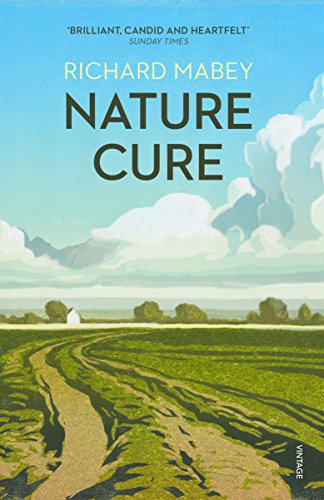
Rediscover the extraodinary power of nature and the British wilderness, from award-winning naturalist and author Richard Mabey
In the last year of the old millennium, Richard Mabey, Britain's foremost nature writer, fell into a severe depression. The natural world – which since childhood had been a source of joy and inspiration for him – became meaningless.
Then, cared for by friends, he moved to East Anglia and he started to write again. Having left the cosseting woods of the Chiltern hills for the open flatlands of Norfolk, Richard Mabey found exhilaration in discovering a whole new landscape and gained fresh insights into our place in nature.
Structured as intricately as a novel, a joy to read, truthful, exquisite and questing, Nature Cure is a book of hope, not just for individuals, but for our species.
'A brilliant, candid and heartfelt memoir...how he broke free of depression, reshaped his life and reconnected with the wild becomes nothing short of a manifesto for living...Mabey's particular vision, informed by a lifetime's reading and observation, is ultimately optimistic' Sunday Times
Die Inhaltsangabe kann sich auf eine andere Ausgabe dieses Titels beziehen.
Über die Autorin bzw. den Autor
Richard Mabey is the father of modern nature writing in the UK. Since 1972 he has written some forty influential books, including the prize-winning Nature Cure, Gilbert White: a Biography, and Flora Britannica. He is a Fellow of the Royal Society of Literature and Vice-President of the Open Spaces Society.
He spent the first half of his life amongst the Chiltern beechwoods, and now lives in Norfolk in a house surrounded by ash trees.
Auszug. © Genehmigter Nachdruck. Alle Rechte vorbehalten.
I
Flitting
I dwell on trifles like a child
I feel as ill becomes a man
And still my thoughts like weedlings wild
Grow up to blossom where they can.
John Clare, 'The Flitting'
IT'S OCTOBER, AN INDIAN summer. I'm standing on the threshold like some callow teenager, about to move house for the first time in my life. I've spent more than half a century in this place, in this undistinguished, comfortable town house on the edge of the Chiltern Hills, and had come to think we'd reached a pretty good accommodation. To have all mod cons on the doorstep of the quirkiest patch of countryside in south-east England had always seemed just the job for a rather solitary writing life. I'd use the house as a ground-base, and do my living in the woods, or in my head. I liked to persuade myself that the Chiltern landscape, with its folds and free-lines and constant sense of surprise, was what had shaped my prose, and maybe me too. But now I'm upping sticks and fleeing to the flatlands of East Anglia.
My past, or lack of it, had caught up with me. I'd been bogged down in the same place for too long, trapped by habits and memories. I was clotted with rootedness. And in the end I'd fallen ill and run out of words. My Irish grandfather, a day-worker who rarely stayed in one house long enough to pay the rent, knew what to do at times like this. In that word that catches all the shades of escape, from the young bird's flutter from the nest to the dodging of someone in trouble, he'd flit.
Yet hovering on the brink of this belated initiation, all I can do is think back again, to another wrenching journey. It had been a few summers before, when I was just beginning to slide into a state of melancholy and senselessness that were incomprehensible to me. I was due to go for a holiday in the Cevennes with some old friends, a few weeks in the limestone causses that had become something of a tradition, but could barely summon up enough spirit to leave home. Somehow I made it, and the Cevennes were, for that brief respite, as healing as ever, a time of sun and hedonism and companionship.
But towards the end of my stay something happened which lodged in my mind like a primal memory: a glimpse of another species' rite of passage. I'd travelled south to the Herault for a couple of days, and stayed overnight with my friends in a crooked stone house in Octon. In the morning we came across a fledgling swift beached in the attic. It had fallen out of the nest and lay with its crescent wings stretched out stiffly, unable to take off. Close to, its juvenile plumage wasn't the enigmatic black of those careering midsummer silhouettes, but a marbled mix of charcoal-grey and brown and powder-white. And we could see the price it paid for being so exquisitely adapted to a life that would be spent almost entirely in the air. Its prehensile claws, four facing to the front, were mounted on little more than feathered stumps, half-way down its body. We picked it up, carried it to the window and hurled it out. It was just six weeks old, and having its maiden flight and first experience of another species all in the same moment.
But whatever its emotions, they were overtaken by instinct and natural bravura. It went into a downward slide, winnowing furiously, skimmed so close to the road that we all gasped, and then flew up strongly towards the south-east. It would not touch down again until it came back to breed in two summers' time. How many miles is that? How many wing-beats? How much time off?
I tried to imagine the journey that lay ahead of it, the immense odyssey along a path never flown before, across chronic war-zones and banks of Mediterranean gunmen, through precipitous changes of weather and landscape. Its parents and siblings had almost certainly left already. It would be flying the 6,000 miles entirely on its own, on a course mapped out - or at least sketched out - deep in its central nervous system. Every one of its senses would be helping to guide it, checking its progress against genetic memories, generating who knows what astonishing experiences of consciousness. Maybe, like many seabirds, it would be picking up subtle changes in air-borne particles as it passed over seas and aromatic shrubland and the dusty thermals above African townships. It might be riding a magnetic trail detected by iron-rich cells in its forebrain. It would almost certainly be using, as navigation aids, landmarks whose shapes fitted templates in its genetic memories, and the sun too, and, on clear nights, the big constellations - which, half-way through its journey, would be replaced by a quite different set in the night sky of the southern hemisphere. Then, after three or four weeks, it would arrive in South Africa and earn its reward of nine months of unadulterated, aimless flying and playing. Come the following May, it and all the other first-year birds would come back to Europe and race recklessly about the sky just for the hell of it. That is what swifts do. It is their ancestral, unvarying destiny for the non-breeding months. But you would need to have a very sophisticated view of pleasure to believe they weren't also 'enjoying' themselves.
When that May came round I was blind to the swifts for the first time in my life. While they were en fête I was lying on my bed with my face away from the window, not really caring if I saw them again or not. In a strange and ironic turn-about, I had become the incomprehensible creature adrift in some insubstantial medium, out of kilter with the rest of creation. It didn't occur to me at the time, but maybe that is the way our whole species is moving.
* * * * *
So, about to become a first-time migrant myself, I can't get that fledgling swift out of my mind. This sudden swoop out of the nest and into the huge skies of East Anglia isn't something I've chosen or planned. Maybe some long-postponed maturation programme is guiding me, but it feels more like a cascade of dice-throws. To put it briefly, for now: I came to a kind of 'finish' in my work (but certainly not in the rest of my 'business'), drifted into a long and deep depression, couldn't work, used up most of my money, fell out with my sister - my house-mate - and had to sell the family home. Coming through was just as serendipitous. I was rescued by friends and slowly renovated, like an antique typewriter. I fell in love and started to write again, though with no idea of what I wanted to say. Then I caught a chance, as casually and as unexpectedly as one might a breeze. A couple of rooms in a friend's farmhouse happened to become vacant in East Anglia, which I'd seen as my second home since I was a teenager. Roofless and jobless, I jumped, and started again.
Now, packing the car, I feel like a tabula rasa, stripped down and open for offers. Even my belongings are, in both senses, spare. (I don't, for instance, have a single cooking utensil, telling myself they'll be 'provided' or at least available in my new habitat.) I have the tools of a trade whose survival value is debatable: a couple of manual typewriters and a drawerful of office gadgetry. But beyond that, my baggage is strictly sentimental. It includes a crystal of melon amethyst from Zambia, given to me for luck by my companion Poppy. A Victorian brass microscope, magnification approximately 100x. A picnic hamper full of elegant willow-pattern plates and cups, too posh ever to have been used. A badge inscribed with 'Cat Lovers Against The Bomb'. A sizeable chunk of the 1,500-year-old Selborne yew, which I have clung onto since it was blown down in 1990, convincing myself that I'm just waiting for the 'right carver'. Mum's favourite book, John Moore's The Waters Under the Earth (which if I'm right about the East Anglian landscape, may soon be mine too), with the Oxendale's catalogue order form she used as a bookmark. Emblems and...
„Über diesen Titel“ kann sich auf eine andere Ausgabe dieses Titels beziehen.
Suchergebnisse für Nature Cure

Beispielbild für diese ISBN
Nature Cure
Anbieter: World of Books (was SecondSale), Montgomery, IL, USA
Verkäuferbewertung 5 von 5 Sternen

Zustand: Good. Item in good condition. Textbooks may not include supplemental items i.e. CDs, access codes etc. Artikel-Nr. 00054081604
Gebraucht kaufen
EUR 3,17
Versand gratis
Versand innerhalb von USA
Versand innerhalb von USA
Anzahl: 1 verfügbar
Beispielbild für diese ISBN
Nature Cure
Anbieter: ThriftBooks-Dallas, Dallas, TX, USA
Verkäuferbewertung 5 von 5 Sternen
Paperback. Zustand: Very Good. No Jacket. May have limited writing in cover pages. Pages are unmarked. ~ ThriftBooks: Read More, Spend Less. Artikel-Nr. G0099531828I4N00
Gebraucht kaufen
EUR 6,09
Versand gratis
Versand innerhalb von USA
Versand innerhalb von USA
Anzahl: 1 verfügbar
Foto des Verkäufers
Nature Cure
Anbieter: WeBuyBooks, Rossendale, LANCS, Vereinigtes Königreich
Verkäuferbewertung 5 von 5 Sternen
paperback. Zustand: Good. Most items will be dispatched the same or the next working day. A copy that has been read but remains in clean condition. All of the pages are intact and the cover is intact and the spine may show signs of wear. The book may have minor markings which are not specifically mentioned. Artikel-Nr. rev3129684044
Gebraucht kaufen
EUR 1,38
EUR 5,56 Versand
Versand von Vereinigtes Königreich nach USA
Versand von Vereinigtes Königreich nach USA
Anzahl: 4 verfügbar
Beispielbild für diese ISBN
Nature Cure
Anbieter: AwesomeBooks, Wallingford, Vereinigtes Königreich
Verkäuferbewertung 5 von 5 Sternen
paperback. Zustand: Very Good. Nature Cure This book is in very good condition and will be shipped within 24 hours of ordering. The cover may have some limited signs of wear but the pages are clean, intact and the spine remains undamaged. This book has clearly been well maintained and looked after thus far. Money back guarantee if you are not satisfied. See all our books here, order more than 1 book and get discounted shipping. Artikel-Nr. 7719-9780099531821
Gebraucht kaufen
EUR 3,67
EUR 4,80 Versand
Versand von Vereinigtes Königreich nach USA
Versand von Vereinigtes Königreich nach USA
Anzahl: 2 verfügbar
Beispielbild für diese ISBN
Nature Cure
Verlag:
Vintage Publishing, United Kingdom, London, 2008
ISBN 10: 0099531828
ISBN 13: 9780099531821
Gebraucht
Paperback
Anbieter: WorldofBooks, Goring-By-Sea, WS, Vereinigtes Königreich
Verkäuferbewertung 5 von 5 Sternen
Paperback. Zustand: Very Good. 'Britain's greatest living nature writer' The TimesRediscover the extraodinary power of nature and the British wilderness, from award-winning naturalist and author Richard MabeyIn the last year of the old millennium, Richard Mabey, Britain's foremost nature writer, fell into a severe depression. The natural world which since childhood had been a source of joy and inspiration for him became meaningless. Then, cared for by friends, he moved to East Anglia and he started to write again. Having left the cosseting woods of the Chiltern hills for the open flatlands of Norfolk, Richard Mabey found exhilaration in discovering a whole new landscape and gained fresh insights into our place in nature. Structured as intricately as a novel, a joy to read, truthful, exquisite and questing, Nature Cure is a book of hope, not just for individuals, but for our species.'A brilliant, candid and heartfelt memoir.how he broke free of depression, reshaped his life and reconnected with the wild becomes nothing short of a manifesto for living.Mabey's particular vision, informed by a lifetime's reading and observation, is ultimately optimistic' Sunday Times. The book has been read, but is in excellent condition. Pages are intact and not marred by notes or highlighting. The spine remains undamaged. Artikel-Nr. GOR001762836
Gebraucht kaufen
EUR 2,28
EUR 6,53 Versand
Versand von Vereinigtes Königreich nach USA
Versand von Vereinigtes Königreich nach USA
Anzahl: Mehr als 20 verfügbar
Beispielbild für diese ISBN
Nature Cure
Anbieter: Better World Books Ltd, Dunfermline, Vereinigtes Königreich
Verkäuferbewertung 5 von 5 Sternen
Zustand: Good. Former library copy. Pages intact with minimal writing/highlighting. The binding may be loose and creased. Dust jackets/supplements are not included. Includes library markings. Stock photo provided. Product includes identifying sticker. Better World Books: Buy Books. Do Good. Artikel-Nr. GRP93339013
Gebraucht kaufen
EUR 5,67
EUR 5,83 Versand
Versand von Vereinigtes Königreich nach USA
Versand von Vereinigtes Königreich nach USA
Anzahl: 1 verfügbar
Beispielbild für diese ISBN
Nature Cure
Anbieter: Better World Books Ltd, Dunfermline, Vereinigtes Königreich
Verkäuferbewertung 5 von 5 Sternen
Zustand: Good. Pages intact with minimal writing/highlighting. The binding may be loose and creased. Dust jackets/supplements are not included. Stock photo provided. Product includes identifying sticker. Better World Books: Buy Books. Do Good. Artikel-Nr. GRP97016542
Gebraucht kaufen
EUR 5,67
EUR 5,83 Versand
Versand von Vereinigtes Königreich nach USA
Versand von Vereinigtes Königreich nach USA
Anzahl: 1 verfügbar
Foto des Verkäufers
Nature Cure
Anbieter: MusicMagpie, Stockport, Vereinigtes Königreich
Verkäuferbewertung 5 von 5 Sternen
Zustand: Very Good. 1783213831. 7/5/2026 1:10:31 AM. Artikel-Nr. U9780099531821
Gebraucht kaufen
EUR 5,37
EUR 6,40 Versand
Versand von Vereinigtes Königreich nach USA
Versand von Vereinigtes Königreich nach USA
Anzahl: 1 verfügbar
Beispielbild für diese ISBN
Nature Cure
Anbieter: PBShop.store UK, Fairford, GLOS, Vereinigtes Königreich
Verkäuferbewertung 5 von 5 Sternen
PAP. Zustand: New. New Book. Shipped from UK. Established seller since 2000. Artikel-Nr. AR-9780099531821
Neu kaufen
EUR 14,20
EUR 3,83 Versand
Versand von Vereinigtes Königreich nach USA
Versand von Vereinigtes Königreich nach USA
Anzahl: 4 verfügbar
Beispielbild für diese ISBN
Nature Cure
Anbieter: Bahamut Media, Reading, Vereinigtes Königreich
Verkäuferbewertung 4 von 5 Sternen

Zustand: Very Good. Shipped within 24 hours from our UK warehouse. Clean, undamaged book with no damage to pages and minimal wear to the cover. Spine still tight, in very good condition. Remember if you are not happy, you are covered by our 100% money back guarantee. Artikel-Nr. 6545-9780099531821
Gebraucht kaufen
EUR 11,98
EUR 8,14 Versand
Versand von Vereinigtes Königreich nach USA
Versand von Vereinigtes Königreich nach USA
Anzahl: 8 verfügbar