
Inhaltsangabe
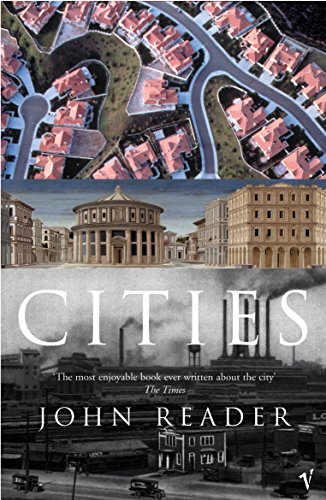
Cities is a fascinating exploration of the nature of the city and city life, of its structures, development and inhabitants.
From the ruins of the earliest cities to the present, Reader explores how cities coalesce, develop and thrive, how they can decline and die, how they remake themselves. He investigates their parasitic relationship with the countryside around them, the webs of trade and immigration they rely upon to survive, how they feed and water themselves and dispose of their wastes. It is a sweeping exploration of what the city is and has been, fit to stand alongside Lewis Mumford's 1962 classic The City in History.
Die Inhaltsangabe kann sich auf eine andere Ausgabe dieses Titels beziehen.
Über die Autorin bzw. den Autor
John Reader is an author and photojournalist. He holds an Honorary Research Fellowship in the Department of Anthropology at UCL and is a fellow of the Royal Anthropological Institute and the Royal Geographic Society.
Auszug. © Genehmigter Nachdruck. Alle Rechte vorbehalten.
1
First Impressions
Cities are the defining artifacts of civilisation. All the achievements and failings of humanity are here. Civic buildings, monuments, archives and institutions are the touchstones by which our cultural heritage is passed from one generation to the next. We shape the city, then it shapes us. Today, almost half the global population lives in cities. By 2030, the proportion is likely to be two-thirds.
I was born in London. My earliest urban memories are of cuddly barrage balloons anchored to a skyline of roofs and chimney-pots, and of airraids that sent us scuttling from the house in the middle of the night, down into the shelter at the bottom of the garden. Next morning, our street was littered with lumps of shrapnel which might still be hot if you went out to collect them early enough. I grew up in a city under reconstruction, much of it wrapped in a fascinating lattice of ladders and scaffolding and adorned with buckets dangling on pulley hoists. Buddleia flourished on the best bombsites – their flowers attracting lots of butterflies – red admirals, lesser and greater tortoiseshells, peacocks and, more rarely, painted ladies. We caught them in nets made from old muslin curtains, and a popular How To . . . book told us how to anaesthetise them in jam-jars half-filled with crushed laurel leaves, and how to prepare them for our collections with a pin through the thorax and the wings held outspread with thin strips of paper.
We took fruit from the trees of abandoned gardens (and some not so abandoned gardens – scrumping, we called it), built fires with matches illicitly obtained, experimented with Woodbines, baked potatoes we had pinched from the kitchen and ate them half-cooked. Sometimes, but rarely, we dared to venture at least a few stairs down into the frightening dark cellars of bombed-out houses. For an eight-year-old, post-war London was an adventure playground with minimal adult supervision.
Grown-ups used to joke that London would be a wonderful place when it was finished, but I could never understand what was so funny about that; it seemed perfectly possible that a time would come when all the building work would be over and done with and that would be that: London, finished. And though I don’t recall giving the matter any thought, I imagine now that my vision of the finished city would have been more or less the same as the London I knew, only just a bit tidier.
There were electric-powered trolley buses and trams as well as dieselengined buses and you could often sneak on and off them without paying, but bicycles offered an altogether free – and freer – means of getting around the city. We were adventurous, but quickly learned to avoid getting a wheel stuck in the tramlines at tricky junctions, and after just one fall you never forgot to ride cautiously along the woodblock surface of Borough High Street on rainy days, when it was as slippery as a sheet of glass.
London’s main rail terminals were the grand grimy cathedrals of the steam age in which we congregated to collect engine numbers. At Waterloo station, Victoria, Charing Cross, Paddington, Saint Pancras, Euston and Liverpool Street we scampered from platform to platform as the trains pulled up to the buffers – engines hissing steam and smoke. The locals and the expresses disgorged their passengers from third class and first class, while we peered into the Pullman carriages with their little table lamps alight at the windows.
We all either owned or yearned for a Hornby-oo electric train set, and given the opportunity would spend hours sprawled on the living room carpet, devising complex routes around the furniture. I cannot recall that any of us ever seriously wanted to be an engine-driver, but boys generally were supposed to cherish such ambitions and certainly our respect for the men who clambered up onto the footplates of the huge Golden Arrow and Castle class locomotives was unbounded. With fire and steam at their command, in grimy overalls and greasy caps they drove those magnificent creations of bright painted steel and shining brass across the length and breadth of Britain: the Flying Scotsman, the Atlantic Coast Express. The driving wheels – taller than a man – always juddered and skidded on the rails as the pistons began to push, and the locomotives really did seem to pant with the effort – just like Thomas the Tank Engine. Awesome is the word recollections of those engines bring to mind now, but at the time – well, they were impressive, yes, but no more than a part of everyday city life. For us, their main significance was as bearers of the numbers we ticked off in our books.
Smoke was another awesome fact of life that seemed commonplace then. My recollection is that everyone smoked – at home and at work, in trains, buses, cafés and cinemas. The entire country – not just the railways – ran on coal (though it was delivered to our houses by horse and cart). Smoke wafted from the chimneys of more than a million households. Every day, thousands of tons of coal were burned in London’s fireplaces, boilers, and furnaces. Clouds of steam, smoke and soot spewed continuously from locomotives, gas works, power stations and industrial smokestacks – with either Young’s brewery on Wandsworth High Street or the malodorous Battersea candle factory adding their own distinctive whiff to the air in our locality – depending on the direction of the wind.
Throughout the city, buildings were coated with a patina of soot which in some instances gave the impression that burnished black basalt, not white Portland stone, had been used in their construction. During most winters there would be occasions when a layer of cold air hung for days over London, trapping the smoke rising from the chimneys below. Soon a sulphurous mixture of smoke, soot and moisture would envelope the city – tinged green, and thick enough to become known as a peasouper. When you opened the front door, skeins of fog would drift into the hallway – and threaten to fill the house if you left the door open. On days when visibility was down to a yard or less, getting lost on the way home from school became almost a matter of pride: ‘couldn’t see my hand in front of my face,’ you’d say.
The pea-soupers killed hundreds of people every winter – anyone with asthma, or another respiratory problem, was at risk from inhaling the toxic mixture of fog, smoke and soot-laden air. The word smog entered the vocabulary as a definition of this very serious threat to public health in Britain’s cities (London was not the only city affected. The problem was as bad in all industrial cities). Widespread public demands for action over the number of deaths forced the government to act and a succession of Clean Air Acts were introduced during the 1950s and ’60s.
I left London before even the first Act of 1956 could begin to take effect, and went to live in Cape Town, on the southern tip of Africa, where a prevailing weather system of wet north-westerlies from the Atlantic and powerful dry south-easterlies from the Indian Ocean alternately washed and swept the city clean. Later I was based in Nairobi for a number of years. Meanwhile, the London I had known was being transformed.
Oil, gas and electricity steadily replaced coal as the city’s fuel for factories, power stations and domestic use. The widespread introduction of central heating rendered household fireplaces and chimneys obsolete. Slum clearance opened up the urban landscape, and by the time I moved back to London in 1978 the city had become a markedly cleaner place – even to the extent of inspiring property-owners to have the patina of black soot scrubbed from the...
„Über diesen Titel“ kann sich auf eine andere Ausgabe dieses Titels beziehen.
Weitere beliebte Ausgaben desselben Titels

Suchergebnisse für Cities

Beispielbild für diese ISBN
Cities
Anbieter: World of Books (was SecondSale), Montgomery, IL, USA
Verkäuferbewertung 5 von 5 Sternen

Zustand: Acceptable. Item in acceptable condition including possible liquid damage. As well, answers may be filled in. Lastly, may be missing components, e.g. missing DVDs, CDs, Access Code, etc. Artikel-Nr. 00035433873
Gebraucht kaufen
EUR 6,09
Versand gratis
Versand innerhalb von USA
Versand innerhalb von USA
Anzahl: 1 verfügbar
Beispielbild für diese ISBN
Cities
Anbieter: Better World Books, Mishawaka, IN, USA
Verkäuferbewertung 5 von 5 Sternen
Zustand: Fine. Used book that is in almost brand-new condition. May contain a remainder mark. Better World Books: Buy Books. Do Good. Artikel-Nr. 14433687-6
Gebraucht kaufen
EUR 6,68
Versand gratis
Versand innerhalb von USA
Versand innerhalb von USA
Anzahl: 1 verfügbar
Beispielbild für diese ISBN
Cities
Anbieter: AwesomeBooks, Wallingford, Vereinigtes Königreich
Verkäuferbewertung 5 von 5 Sternen
Paperback. Zustand: Very Good. Cities This book is in very good condition and will be shipped within 24 hours of ordering. The cover may have some limited signs of wear but the pages are clean, intact and the spine remains undamaged. This book has clearly been well maintained and looked after thus far. Money back guarantee if you are not satisfied. See all our books here, order more than 1 book and get discounted shipping. Artikel-Nr. 7719-9780099284260
Gebraucht kaufen
EUR 4,20
EUR 4,76 Versand
Versand von Vereinigtes Königreich nach USA
Versand von Vereinigtes Königreich nach USA
Anzahl: 2 verfügbar
Beispielbild für diese ISBN
Cities: xxiv
Anbieter: WorldofBooks, Goring-By-Sea, WS, Vereinigtes Königreich
Verkäuferbewertung 5 von 5 Sternen
Paperback. Zustand: Very Good. The book has been read, but is in excellent condition. Pages are intact and not marred by notes or highlighting. The spine remains undamaged. Artikel-Nr. GOR003100151
Gebraucht kaufen
EUR 4,79
EUR 6,48 Versand
Versand von Vereinigtes Königreich nach USA
Versand von Vereinigtes Königreich nach USA
Anzahl: 4 verfügbar
Beispielbild für diese ISBN
Cities
Anbieter: Better World Books Ltd, Dunfermline, Vereinigtes Königreich
Verkäuferbewertung 5 von 5 Sternen
Zustand: Very Good. Former library copy. Pages intact with possible writing/highlighting. Binding strong with minor wear. Dust jackets/supplements may not be included. Includes library markings. Stock photo provided. Product includes identifying sticker. Better World Books: Buy Books. Do Good. Artikel-Nr. 39239046-20
Gebraucht kaufen
EUR 5,57
EUR 5,78 Versand
Versand von Vereinigtes Königreich nach USA
Versand von Vereinigtes Königreich nach USA
Anzahl: 3 verfügbar
Beispielbild für diese ISBN
Cities
Anbieter: Bahamut Media, Reading, Vereinigtes Königreich
Verkäuferbewertung 5 von 5 Sternen
Zustand: Very Good. Shipped within 24 hours from our UK warehouse. Clean, undamaged book with no damage to pages and minimal wear to the cover. Spine still tight, in very good condition. Remember if you are not happy, you are covered by our 100% money back guarantee. Artikel-Nr. 6545-9780099284260
Gebraucht kaufen
EUR 3,92
EUR 8,07 Versand
Versand von Vereinigtes Königreich nach USA
Versand von Vereinigtes Königreich nach USA
Anzahl: 1 verfügbar
Beispielbild für diese ISBN
Cities
Anbieter: Anybook.com, Lincoln, Vereinigtes Königreich
Verkäuferbewertung 5 von 5 Sternen
Zustand: Good. This is an ex-library book and may have the usual library/used-book markings inside.This book has soft covers. In good all round condition. Please note the Image in this listing is a stock photo and may not match the covers of the actual item,400grams, ISBN:9780099284260. Artikel-Nr. 5558518
Gebraucht kaufen
EUR 4,15
EUR 15,73 Versand
Versand von Vereinigtes Königreich nach USA
Versand von Vereinigtes Königreich nach USA
Anzahl: 1 verfügbar
Beispielbild für diese ISBN
Cities
Anbieter: Anybook.com, Lincoln, Vereinigtes Königreich
Verkäuferbewertung 5 von 5 Sternen
Zustand: Good. This is an ex-library book and may have the usual library/used-book markings inside.This book has soft covers. In good all round condition. Please note the Image in this listing is a stock photo and may not match the covers of the actual item,450grams, ISBN:9780099284260. Artikel-Nr. 3959393
Gebraucht kaufen
EUR 4,38
EUR 15,73 Versand
Versand von Vereinigtes Königreich nach USA
Versand von Vereinigtes Königreich nach USA
Anzahl: 1 verfügbar