
Verwandte Artikel zu The Babes In The Wood
Inhaltsangabe
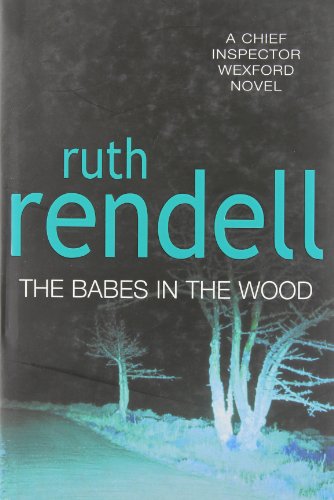
'I've just heard a crazy thing, thought it might amuse you. You look as though you need cheering up.' Burden seated himself on the corner of the desk, a favourite perch. Wexford thought he was thinner than ever. 'Woman phoned to say she and her husband went to Paris for the weekend, leaving their children with a - well, teen-sitter, I suppose, got back last night to find the lot gone and naturally she assumes they've all drowned.' 'That's amusing?' 'It's pretty bizarre, isn't it? The teenagers are fifteen and thirteen, the sitter's in her thirties, they can all swim and the house is miles above the floods.' There hadn't been anything like this kind of rain in living memory. The River Brede had burst its banks, and not a single house in the valley had escaped flooding. Even where Wexford lived, higher up in Kingsmarkham, the waters had nearly reached the mulberry tree in his once immaculate garden. The Subaqua Task Force could find no trace of Giles and Sophie Dade, let alone the woman who was keeping them company, Joanna Troy. But Mrs Dade was still convinced her children were dead. This was an investigation which would call into question many of Wexford's assumptions about the way people behaved, including his own family...
Die Inhaltsangabe kann sich auf eine andere Ausgabe dieses Titels beziehen.
Über die Autorin bzw. den Autor
Ruth Rendell has won many awards, including the Crime Writers' Association Gold Dagger for 1976's best crime novel with A Demon in My View; a second Edgar in 1984 from the Mystery Writers of America for the best short story, The New Girl Friend; a Gold Dagger award for Live Flesh in 1986. She was also the winner of the 1990 Sunday Times Literary award, as well as the Crime Writers' Association Cartier Diamond Dagger. In 1996 she was awarded the CBE and in 1997 became a Life Peer.
Auszug. © Genehmigter Nachdruck. Alle Rechte vorbehalten.
Chapter 1
The Kingsbrook was not usually visible from his window. Not its course, nor its twisty meanders, nor the willows which made a double fringe along its banks. But he could see it now, or rather see what it had become, a river as wide as the Thames but flat and still, a broad lake that filled its own valley, submerging its water meadows in a smooth silver sheet. Of the few houses that stood in that valley, along a lane which had disappeared leading from a bridge which had disappeared, only their roofs and upper storeys showed above the waters. He thought of his own house, on the other side of that gently rising lake, as yet clear of the floods, only the end of his garden lapped by an encroaching tide.
It was raining. But as he had remarked to Burden some four hours before, rain was no longer news, it was tedious to remark on it. The exciting thing worthy of comment was when it wasn't raining. He picked up the phone and called his wife.
'Much the same as when you went out,' she said. 'The end of the garden's under water but it hasn't reached the mulberry tree. I don't think it's moved. That's what I'm measuring by, the mulberry tree.'
'Good thing we don't breed silkworms,' said Wexford, leaving his wife to decipher this cryptic remark.
There hadn't been anything like it in this part of Sussex in living memory -- not, at least, in his memory. In spite of a double wall of sandbags the Kingsbrook had inundated the road at the High Street bridge, flooded the Job Centre and Sainsbury's but miraculously -- so far -- spared the Olive and Dove Hotel. It was a hilly place and most of the dwellings on higher ground had escaped. Not so the High Street, Glebe Road, Queen and York Streets with their ancient shopfronts and overhanging eaves. Here the water lay a foot, two feet, in places three feet, deep. In St Peter's churchyard the tops of tombstones pierced a grey, rain-punctured lake like rocks showing above the surface of the sea. And still it rained.
According to the Environment Agency, the land in the flood plains of England and Wales was saturated, was waterlogged, so that none of this latest onslaught could drain away. There were houses in Kingsmarkham, and even more in flatter low-lying Pomfret, which had been flooded in October and were flooded again now at the end of November. Newspapers helpfully informed their readers that such 'properties' would be unsaleable, worth nothing. Their owners had left them weeks ago, gone to stay with relatives or in temporarily rented flats. The local authority had used up all the ten thousand sandbags it had ordered, scoffing at the possibility of half of them being used. Now they were all under the waters and more had been sent for but not arrived.
Wexford tried not to think about what would happen if another inch of rain fell before nightfall and the water reached and passed Dora's gauge, the mulberry. On the house side of the tree, from that point, the land sloped very gradually downwards until it came to a low wall, quite useless as a flood defence, that separated lawn from terrace and french windows. He tried not to think about it but still he pictured the water reaching and then pouring over that wall . . . Once more he reached for the phone but this time he only touched the receiver and withdrew his hand as the door opened and Burden came in.
'Still raining,' he said.
Wexford just looked at him, the kind of look you'd give something you'd found at the back of the fridge with a sell-by date of three months before.
'I've just heard a crazy thing, thought it might amuse you. You look as if you need cheering up.' He seated himself on the corner of the desk, a favourite perch. Wexford thought he was thinner than ever and looked rather as if he'd just had a facelift, total body massage and three weeks at a health farm. 'Woman phoned to say she and her husband went to Paris for the weekend, leaving their children with a - well, a teen-sitter, I suppose, got back late last night to find the lot gone and naturally she assumes they've all drowned.'
'That's amusing?'
'It's pretty bizarre, isn't it? The teenagers are fifteen and thirteen, the sitter's in her thirties, they can all swim and the house is miles above the floods.'
'Where is it?'
'Lyndhurst Drive.'
'Not far from me then. But miles above the floods. The water's slowly creeping up my garden.'
Burden put one leg across the other and swung his elegantly shod foot in negligent fashion. 'Cheer up. It's worse in the Brede Valley. Not a single house has escaped.' Wexford had a vision of buildings growing legs and running, pursued by an angry tide. 'Jim Pemberton has gone up there. Lyndhurst Drive, I mean. And he's alerted the Subaqua Task Force.'
'The what?'
'You must have heard of it.' Burden just avoided saying 'even you'. 'It's the joint enterprise of Kingsmarkham Council and the Fire Brigade. Mostly volunteers in wetsuits.'
'If it's amusing,' said Wexford, 'that is to say, if we aren't taking it seriously, why such extreme measures?'
'No harm in being on the safe side,' said Burden comfortably.
'All right, let me get this straight. These children -- what are they, by the way? Boy and girl? And what's their name?'
'Dade. They're called Giles and Sophie Dade. I don't know the sitter's name. They can both swim. In fact, the boy's got some sort of silver medal for life-saving and the girl just missed getting into the county junior swimming team. God knows why the mother thinks they've drowned. They'd no reason to go near the floods as far as I know. Jim'll get it sorted.'
Wexford said no more. The rain had begun beating against the glass. He got up and went to the window but by the time he got there it was raining so hard that there was nothing to see, just a white fog and, near at hand, raindrops exploding on the sill. 'Where are you going to eat?' he said to Burden.
'Canteen, I suppose. I'm not going out in this.'
Pemberton came back at three to say that a couple of volunteer frogmen had begun searching for Giles and Sophie Dade but it was more a formality, an allaying of Mrs Dade's fears, than a genuine anxiety. None of the water lying in the Kingsmarkham area had reached a depth of four feet. It was over in the Brede Valley that things were more serious. A woman who couldn't swim had been drowned there a month before when she fell from the temporary walkway that had been built from one of her upper windows to the higher ground. She had tried to cling to the walkway struts but the floods came over her head and the rain and wind swept her away. Nothing like that could have happened to the Dade children, competent swimmers to whom twice the present depth of water would have presented no problems.
More a cause for concern in everyone's view was the looting currently going on from shops in the flooded High Street. A good many shopkeepers had removed their goods, clothes, books, magazines and stationery, china and glass, kitchen equipment to an upper floor and then removed themselves. Looters waded through the water by night -- some of them carrying ladders -- smashed upper windows and helped themselves to what they fancied. One thief, arrested by Detective Sergeant Vine, protested that the iron and microwave oven he had stolen were his by right. In his view, the goods were compensation for his ground-floor flat being inundated, he was sure he would get no other. Vine suspected that a bunch of teenagers, still at school, were responsible for stealing the entire CD and cassette stock from the York Audio Centre.
Wexford would have liked to check with his wife every half-hour but he controlled himself and didn't phone again until half past four. By then the heavy rain had given place to a thin relentless drizzle. The phone rang and rang, and he had almost decided...
„Über diesen Titel“ kann sich auf eine andere Ausgabe dieses Titels beziehen.
Suchergebnisse für The Babes In The Wood

Beispielbild für diese ISBN
The Babes in the Wood
Anbieter: Books From California, Simi Valley, CA, USA
Verkäuferbewertung 4 von 5 Sternen

hardcover. Zustand: Very Good. Artikel-Nr. mon0003077229
Gebraucht kaufen
EUR 3,58
EUR 4,35 Versand
Versand innerhalb von USA
Versand innerhalb von USA
Anzahl: 1 verfügbar
Beispielbild für diese ISBN
The Babes In The Wood (Inspector Wexford)
Anbieter: AwesomeBooks, Wallingford, Vereinigtes Königreich
Verkäuferbewertung 5 von 5 Sternen

Hardcover. Zustand: Very Good. The Babes In The Wood (Inspector Wexford) This book is in very good condition and will be shipped within 24 hours of ordering. The cover may have some limited signs of wear but the pages are clean, intact and the spine remains undamaged. This book has clearly been well maintained and looked after thus far. Money back guarantee if you are not satisfied. See all our books here, order more than 1 book and get discounted shipping. . Artikel-Nr. 7719-9780091794460
Gebraucht kaufen
EUR 3,38
EUR 4,80 Versand
Versand von Vereinigtes Königreich nach USA
Versand von Vereinigtes Königreich nach USA
Anzahl: 2 verfügbar
Foto des Verkäufers
The Babes In The Wood
Anbieter: WeBuyBooks, Rossendale, LANCS, Vereinigtes Königreich
Verkäuferbewertung 5 von 5 Sternen
hardcover. Zustand: Good. Most items will be dispatched the same or the next working day. A copy that has been read but remains in clean condition. All of the pages are intact and the cover is intact and the spine may show signs of wear. The book may have minor markings which are not specifically mentioned. Artikel-Nr. rev7968578329
Gebraucht kaufen
EUR 1,45
EUR 8,78 Versand
Versand von Vereinigtes Königreich nach USA
Versand von Vereinigtes Königreich nach USA
Anzahl: 1 verfügbar
Foto des Verkäufers
The Babes In The Wood
Anbieter: WeBuyBooks, Rossendale, LANCS, Vereinigtes Königreich
Verkäuferbewertung 5 von 5 Sternen
hardcover. Zustand: Very Good. Most items will be dispatched the same or the next working day. A copy that has been read, but is in excellent condition. Pages are intact and not marred by notes or highlighting. The spine remains undamaged. Artikel-Nr. rev4797954882
Gebraucht kaufen
EUR 1,45
EUR 8,78 Versand
Versand von Vereinigtes Königreich nach USA
Versand von Vereinigtes Königreich nach USA
Anzahl: 1 verfügbar
Beispielbild für diese ISBN
The Babes in the Wood
Anbieter: Better World Books Ltd, Dunfermline, Vereinigtes Königreich
Verkäuferbewertung 5 von 5 Sternen
Zustand: Good. Former library copy. Pages intact with minimal writing/highlighting. The binding may be loose and creased. Dust jackets/supplements are not included. Includes library markings. Stock photo provided. Product includes identifying sticker. Better World Books: Buy Books. Do Good. Artikel-Nr. GRP68936139
Gebraucht kaufen
EUR 5,66
EUR 5,82 Versand
Versand von Vereinigtes Königreich nach USA
Versand von Vereinigtes Königreich nach USA
Anzahl: 1 verfügbar
Foto des Verkäufers
How to get a better job
Anbieter: BoundlessBookstore, Wallingford, Vereinigtes Königreich
Verkäuferbewertung 5 von 5 Sternen
Zustand: Good. Light wear to boards but with a lean to the spine. Content is clean with light toning. Good DJ with some edge wear and creasing. Flat signed by Ruth Rendell. Artikel-Nr. 9999-9994563041
Gebraucht kaufen
EUR 3,60
EUR 8,12 Versand
Versand von Vereinigtes Königreich nach USA
Versand von Vereinigtes Königreich nach USA
Anzahl: 1 verfügbar
Beispielbild für diese ISBN
The Babes In The Wood
Anbieter: Bahamut Media, Reading, Vereinigtes Königreich
Verkäuferbewertung 5 von 5 Sternen
Hardcover. Zustand: Very Good. This book is in very good condition and will be shipped within 24 hours of ordering. The cover may have some limited signs of wear but the pages are clean, intact and the spine remains undamaged. This book has clearly been well maintained and looked after thus far. Money back guarantee if you are not satisfied. See all our books here, order more than 1 book and get discounted shipping. Artikel-Nr. 6545-9780091794460
Gebraucht kaufen
EUR 4,07
EUR 8,12 Versand
Versand von Vereinigtes Königreich nach USA
Versand von Vereinigtes Königreich nach USA
Anzahl: 2 verfügbar
Foto des Verkäufers
The Babes in the Wood
Anbieter: Hamelyn, Madrid, M, Spanien
Verkäuferbewertung 5 von 5 Sternen
Zustand: Good. : En 'The Babes in the Wood', Ruth Rendell aplica su aguda visión psicológica y su riguroso sentido moral a las suposiciones de Wexford sobre la forma en que se comporta la gente, incluyendo a su propia familia, mientras investiga la misteriosa desaparición de dos adolescentes y su niñera. No había habido nada parecido en la memoria reciente al tipo de lluvia que había causado que el río Brede desbordara sus orillas e inundara las casas de la zona. El Grupo de Trabajo Subacuático no pudo encontrar rastro de los adolescentes desaparecidos y su niñera. pero su madre seguía convencida de que sus hijos estaban muertos. EAN: 9780091794460 Tipo: Libros Categoría: Otros Título: The Babes in the Wood Autor: Ruth Rendell Editorial: Hutchinson Idioma: en Páginas: 336 Formato: tapa dura. Artikel-Nr. Happ-2026-06-03-4e22415a
Gebraucht kaufen
EUR 5,99
EUR 12,99 Versand
Versand von Spanien nach USA
Versand von Spanien nach USA
Anzahl: 1 verfügbar
Beispielbild für diese ISBN
The babes in the wood
Verlag:
Hutchinson, 2002
ISBN 10: 0091794463
ISBN 13: 9780091794460
Gebraucht
Hardcover
Erstausgabe
Signiert
Anbieter: Wonder Book, Frederick, MD, USA
Verkäuferbewertung 5 von 5 Sternen
Zustand: Good. Signed Copy First edition copy. . Very Good dust jacket. Signed by author on title page. Pages toned. In protective mylar cover. Artikel-Nr. H20OS-00049
Gebraucht kaufen
EUR 20,16
Versand gratis
Versand innerhalb von USA
Versand innerhalb von USA
Anzahl: 1 verfügbar
Beispielbild für diese ISBN
The babes in the wood
Anbieter: Cotswold Internet Books, Cheltenham, Vereinigtes Königreich
Verkäuferbewertung 5 von 5 Sternen
1st.ed. 1st edition, 2002. A tidy copy in tight binding. Used - Very Good. VG hardback in VG dustjacket Used - Very Good. VG hardback in VG dustjacket. Artikel-Nr. BOOKS017676I
Gebraucht kaufen
EUR 4,13
EUR 16,29 Versand
Versand von Vereinigtes Königreich nach USA
Versand von Vereinigtes Königreich nach USA
Anzahl: 1 verfügbar