
Verwandte Artikel zu Grant Writing 101: Everything You Need To Start Raising...
Inhaltsangabe
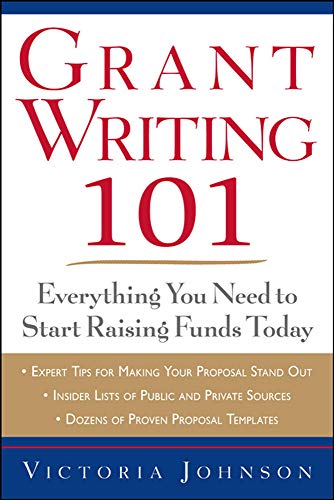
A Crash Course in Writing Powerful, Persuasive Grants! "Grant Writing 101 provides straightforward and effective strategies for improving results. It is a wonderful reference guide for experienced fundraisers and an invaluable 'how-to' manual for those starting their careers." -Emmett D. Carson, Ph.D., CEO and President, Silicon Valley Community Foundation "This new book is an essential tool in helping nonprofits manage grant writing by keeping it simple, easy, and enjoyable!" -Barb Larson, CEO, American Red Cross, Silicon Valley Grant Writing 101 offers quick and easy tactics for getting the funding you need-right now! Written to enable beginners with little or no experience to hit the ground running, it covers: Ten tactics for writing a compelling proposal Tips for finding the best grantor for your needs Important components of various types of grants Next steps for when you're approved Includes samples of grant proposals and budget presentations!
Die Inhaltsangabe kann sich auf eine andere Ausgabe dieses Titels beziehen.
Über die Autorin bzw. den Autor
Victoria Johnson, CFRE, is a successful grant writer, fundraising professional, and author who is one of only a few hundred in the country to hold the designation Certified Fund Raising Executive (CFRE), practice-based credentials that demonstrate a proven mastery of the standards set for core knowledge and skills required of fundraising executives after at least five years of experience.
In addition to her current role as Development Director for a major metropolitan city, Johnson has twenty years of professional experience in grant writing and research, grant management, public relations, donor cultivation, fundraising, capital campaign readiness, corporate sponsorships, special event planning and implementation, press releases, collateral material design, budget monitoring, and contract administration. She is also on the Board of Directors for Friends of the Library, Los Gatos, CA.
She is an acting member for her local Association of Fundraising Professionals (AFP) chapter, has been a featured speaker at the Silicon Valley chapter of AFP, and served on an "Ask the Experts" panel in June 2009. Her article on fundraising, "What's Working," was published in the July/August issue of Philanthropy magazine.
She holds a BS from San Jose State University with a major in Business Administration, and served in the US Air Force Reserve and the California Air National Guard.
Auszug. © Genehmigter Nachdruck. Alle Rechte vorbehalten.
GRANT WRITING 101
Everything You Need to Start Raising Funds Today
By VICTORIA M. JOHNSONThe McGraw-Hill Companies, Inc.
Copyright © 2011 McGraw-Hill
All rights reserved.
ISBN: 978-0-07-175018-9All rights reserved.
Contents
| Preface | |
| Acknowledgments | |
| Part 1 Tips and Tactics for Generating Immediate Funds | |
| 1 Which Type of Grant Is Right for You? | |
| 2 Understanding the Components | |
| 3 Preparation | |
| 4 Writing | |
| 5 Standing Out from the Crowd | |
| 6 Researching Grantors | |
| 7 The Waiting Process | |
| 8 Handling Acceptance | |
| 9 Turning Rejection into Future Victory | |
| 10 Achieving Long-Term Success | |
| 11 Other Uses for Your Proposals | |
| Part 2 Samples of Successful Proposal Templates, Cover Letters, Budgets, and Reports | |
| 12 Grant Deadlines Matrix | |
| 13 Congratulations Letter, Final Report, and Cover Letter | |
| 14 Short Grant Proposals | |
| 15 Medium Grant Proposals | |
| 16 Long Grant Proposals | |
| 17 Program and Project Budgets | |
| Appendix A List of Items Available on Request | |
| Appendix B List of Ways to Earn Funds | |
| Appendix C The Best Online Grant Writing Resources | |
| Index |
Excerpt
CHAPTER 1
Which Type of Grant Is Right for You?
Tin cup fundraising is antiquated. Modern fundraising gives donors theopportunity to invest in exciting initiatives and programs. Donors want a chanceto change their corner of the world.
—Richard B. Ajluni, Director of Major Gifts,Catholic Charities of Santa Clara County
The first order of business for a new grant writer is to know what's out there.This chapter decodes some of the terminology that is used to describe the manyways grant dollars are awarded. Before we look at the types of grants, it makessense to review the seven most common purposes for writing a grant proposal.Knowing your purpose will help you to narrow the search for the appropriate typeof grant. Familiarity with these purposes also helps you to know what to ask forin your grant proposal.
Grant Purposes
Project Grants
If a grant guideline says that the organization only funds project grants, youwant to make sure that's what you submit. This means that you ask for support ofa specific project such as the study of penguins in the Antarctic, theacquisition of equipment for a computer lab, funding of a new art exhibition. Aproject has an end to it. These sample projects end when the penguin studyconcludes, the computer lab is equipped, and the art exhibit opens. Projectgrants are not ongoing. While the computer lab will have ongoing operatingcosts, your request for equipment is for a specific onetime expense. Thepurchase happens only once. While the art gallery will always have exhibits,bringing one specific exhibition to the gallery can be called a project. Youbring it only once, even if the exhibit is there for a year.
Program Grants
Sometimes funders want to support ongoing efforts. This can be an educationprogram at a zoo, a mentoring program at a YWCA, a job-preparation program withThe Salvation Army, and so on. Programs are usually ongoing or multiyear.Funders often like to help implement new programs or expand programs whenthere's a need in the community. Program grants can help to supply materials,equipment, and brochures and pay for any number of events and activities. Somegrants may cover staff costs. The thing to remember is that all the requestedfunds must go entirely to that specific program. Thus, if you want a grant forthe salary of a program mentor and that person works in three programs, thenonly one-third of her salary can be requested in that grant or whatever portionyou determine contributes to that program. As you'll learn in the comingchapters of this book, you ask only for the items identified as allowableexpenses for the grant, whether they fund project or program grants.
Operating Grants
Every organization has operating costs, that is, the monthly expenses to keepthe organization operational. This includes overhead such as rent, utilities,ongoing equipment rentals, and staff costs. The organization still has tojustify the necessity of the costs and what impact the funds will have. Thefunder expects more than just keeping the organization going for a few months.Funders expect results, whether that is hiring a new grant manager to helpincrease income or paying the rental deposit for an organization to move to alarger facility to increase its reach in the community.
Organizational Effectiveness Grants
These types of grants help organizations to improve their way of doing business.You could request an organizational effectiveness grant to perform a study ofyour practices, to hire a consultant to help you develop a program, to carry outthe recommendations of a consultant, or to implement your organization'sinternal strategies to improve your efficiency, competence, or outcomes inperforming your mission. For example, say that your organization wants toincrease revenue, and you're considering revamping your fee structure for theservices your organization provides. You first may want to hire a consultant,who will bring expertise that your staff does not have, to guide you in yourdecisions. Such an expert will ensure that your organization doesn't priceitself out of the marketplace, maximizes your income potential, and may evenhelp with your marketing strategy to publicize the new fees.
Capacity-Building Grants
Funders want organizations to be sustainable, that is, to increase theircapability to support themselves. What could your organization do to becomeself-supporting? That's what capacity-building funders want to hear about. Fartoo many organizations in the nonprofit sector don't look beyond the currentyear. They keep relying on the same income that they've always had. (But notguerilla grant writers.) You might request these funds to implement an annualcampaign program, to purchase one of the corporate and foundation onlinedirectories that will help you to find new funders, or to build a new exhibit inyour museum that will bring more visitors and thereby increase your revenue.Staff development (improving skills) could qualify as well.
Capital Grants
Capital expenses (anything above $100,000) are for things that have a long life,such as structures, buildings, and major equipment, although specializedvehicles also may fall into this category. Major renovations to buildings, suchas adding an exhibit hall to an aquarium, count as a capital expense. Thevariety of opportunities means that there are a number of ways to request thesefunds. Some might require an extensive grant application process, whereas othersmay require a packet of your materials with a letter. Your research will revealthe way to make a capital grant request. Often the grant application is only thefirst step before a capital grant is awarded. Funders at this level are verycommitted to the organization and its mission or to the community theorganization serves. They often will provide the funding in multiyear paymentswith...
„Über diesen Titel“ kann sich auf eine andere Ausgabe dieses Titels beziehen.
Suchergebnisse für Grant Writing 101: Everything You Need To Start Raising...

Beispielbild für diese ISBN
Grant Writing 101: Everything You Need to Start Raising Funds Today
Verlag:
McGraw-Hill Education - Europe, 2011
ISBN 10: 0071750185
ISBN 13: 9780071750189
Gebraucht
Paperback
Anbieter: World of Books (was SecondSale), Montgomery, IL, USA
Verkäuferbewertung 5 von 5 Sternen

Paperback. Zustand: Good. The first crash course for a fast-growing market: the inexperienced grant writer tasked with quickly crafting grants that generate tangible results immediately. Artikel-Nr. 00105173442
Gebraucht kaufen
EUR 4,72
Versand gratis
Versand innerhalb von USA
Versand innerhalb von USA
Anzahl: 4 verfügbar
Beispielbild für diese ISBN
Grant Writing 101: Everything You Need to Start Raising Funds Today
Verlag:
McGraw Hill (edition 1), 2011
ISBN 10: 0071750185
ISBN 13: 9780071750189
Gebraucht
Paperback
Anbieter: BooksRun, Philadelphia, PA, USA
Verkäuferbewertung 5 von 5 Sternen
Paperback. Zustand: Very Good. 1. It's a well-cared-for item that has seen limited use. The item may show minor signs of wear. All the text is legible, with all pages included. It may have slight markings and/or highlighting. Artikel-Nr. 0071750185-11-1
Gebraucht kaufen
EUR 4,74
Versand gratis
Versand innerhalb von USA
Versand innerhalb von USA
Anzahl: 1 verfügbar
Beispielbild für diese ISBN
Grant Writing 101: Everything You Need to Start Raising Funds Today
Anbieter: ThriftBooks-Phoenix, Phoenix, AZ, USA
Verkäuferbewertung 5 von 5 Sternen
Paperback. Zustand: Good. No Jacket. Pages can have notes/highlighting. Spine may show signs of wear. ~ ThriftBooks: Read More, Spend Less. Artikel-Nr. G0071750185I3N00
Gebraucht kaufen
EUR 6,06
Versand gratis
Versand innerhalb von USA
Versand innerhalb von USA
Anzahl: 1 verfügbar
Beispielbild für diese ISBN
Grant Writing 101: Everything You Need to Start Raising Funds Today
Anbieter: ThriftBooks-Dallas, Dallas, TX, USA
Verkäuferbewertung 5 von 5 Sternen
Paperback. Zustand: Good. No Jacket. Pages can have notes/highlighting. Spine may show signs of wear. ~ ThriftBooks: Read More, Spend Less. Artikel-Nr. G0071750185I3N00
Gebraucht kaufen
EUR 6,06
Versand gratis
Versand innerhalb von USA
Versand innerhalb von USA
Anzahl: 1 verfügbar
Beispielbild für diese ISBN
Grant Writing 101: Everything You Need to Start Raising Funds Today
Anbieter: ThriftBooks-Atlanta, AUSTELL, GA, USA
Verkäuferbewertung 5 von 5 Sternen
Paperback. Zustand: Fair. No Jacket. Readable copy. Pages may have considerable notes/highlighting. ~ ThriftBooks: Read More, Spend Less. Artikel-Nr. G0071750185I5N00
Gebraucht kaufen
EUR 6,06
Versand gratis
Versand innerhalb von USA
Versand innerhalb von USA
Anzahl: 1 verfügbar
Beispielbild für diese ISBN
Grant Writing 101: Everything You Need to Start Raising Funds Today
Anbieter: ThriftBooks-Dallas, Dallas, TX, USA
Verkäuferbewertung 5 von 5 Sternen
Paperback. Zustand: Very Good. No Jacket. May have limited writing in cover pages. Pages are unmarked. ~ ThriftBooks: Read More, Spend Less. Artikel-Nr. G0071750185I4N00
Gebraucht kaufen
EUR 6,06
Versand gratis
Versand innerhalb von USA
Versand innerhalb von USA
Anzahl: 1 verfügbar
Beispielbild für diese ISBN
Grant Writing 101: Everything You Need to Start Raising Funds Today
Verlag:
McGraw-Hill Education, 2011
ISBN 10: 0071750185
ISBN 13: 9780071750189
Gebraucht
Softcover
Erstausgabe
Anbieter: Better World Books: West, Reno, NV, USA
Verkäuferbewertung 5 von 5 Sternen
Zustand: Very Good. 1st Edition. Pages intact with possible writing/highlighting. Binding strong with minor wear. Dust jackets/supplements may not be included. Stock photo provided. Product includes identifying sticker. Better World Books: Buy Books. Do Good. Artikel-Nr. 5239572-6
Gebraucht kaufen
EUR 9,19
Versand gratis
Versand innerhalb von USA
Versand innerhalb von USA
Anzahl: 1 verfügbar