
Verwandte Artikel zu HR Transformation: Building Human Resources From the...
HR Transformation: Building Human Resources From the Outside In - Hardcover
Buch 3 von 36: BUSINESS SKILLS AND DEVELOPMENT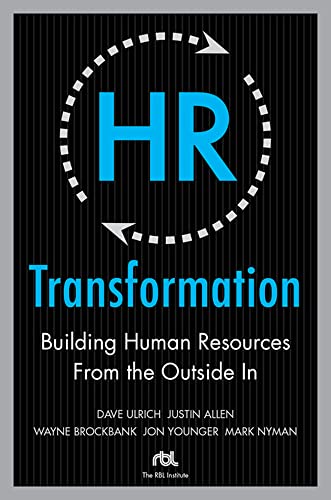
Inhaltsangabe
Named as BusinessWeek's #1 Management Educator, expert Dave Ulrich and his team of authors bring human resources a whole new way of thinking and practicing-moving the focus from internal issues to actively helping to set business strategies. Businesses of the future need "all hands on deck" when implementing new ways to stimulate grown and cost efficiency, and this includes human resources.
In HR Transformation, the team presents a four-phase model of transformation that shows you step-by-step how to make meaningful progress in contributing to the performance of your company by redesigning HR to work as a strategic partnership.
From the "#1 Management Educator & Guru"-BusinessWeek
"The authors have presented us with an accessible, readable, and practical illustration of a clear path for successful strategy execution in a complex environment."
-Majed Al Romaithi, Executive Director, Abu Dhabi Investment Authority
"HR can only transform organizations if it transforms HR. This book shows us how. HR Transformation would have been important in the past-it is critical now! We are entering a new world. HR Transformation can help our organizations thrive in the midst of uncertainty."
-Marshall Goldsmith, author of the Wall Street Journal bestsellers What Got You Here Won't Get You There and Succession: Are You Ready?
"Ulrich and his colleagues talk tough and provide a detailed blueprint for how those of us in the field can use our own tools to do a "720-degree" evaluation of ourselves. We cannot contribute to the success of our organizations until we upgrade ourselves."
-Linda A. Hill, Wallace Brett Donham Professor of Business Administration, Harvard Business School
"Based on groundbreaking research with hundreds of companies and thousands of executives, HR Transformation provides compelling theory and practical tools to create alignment between strategy, systems, and people. This important book should be read carefully by leadership teams everywhere."
-Mark Huselid, Professor of HR Strategy, Rutgers University, Co-author of The HR Scorecard, The Workforce Scorecard, and The Differentiated Workforce
Turn to the front matter for more than thirty rousing endorsements of HR Transformation.
INCLUDES CASE STUDIES FROM Intel, Pfizer, Takeda, Flextronics
Die Inhaltsangabe kann sich auf eine andere Ausgabe dieses Titels beziehen.
Über die Autorin bzw. den Autor
Dave Ulrich is a Professor of Business at the Ross School of Business at the University of Michigan and a partner at The RBL Group (www.rbl.net), a consulting firm that helps organizations and leaders deliver value. Ulrich studies how organizations build capabilities of speed, learning, collaboration, accountability, talent and leadership through leveraging human resources. He has helped generate award-winning databases that assess alignment between strategies, human resource practices and HR competencies. Ulrich has published more than 200 articles and book chapters and co-authored over 20 books covering topics in leadership and human resources, including HR Transformation (2009); The Leadership Code (2008); HR Competencies (2008); Leadership Brand (2007); and HR Value Proposition (2006). He has also served on the editorial board of four journals, the Board of Directors for Herman Miller, and the Board of Trustees at Southern Virginia University, and is a Fellow in the National Academy of Human Resources. Ulrich has been ranked the most influential person in HR by HR Magazine and the #1 Management Educator & Guru by BusinessWeek, and also listed in Forbes as one of the "world's top five" business coaches.
Auszug. © Genehmigter Nachdruck. Alle Rechte vorbehalten.
HR Transformation
Building Human Resources from the Outside InBy DAVE ULRICH JUSTIN ALLEN WAYNE BROCKBANK JON YOUNGER MARK NYMANMcGraw-Hill
Copyright © 2009 The RBL InstituteAll right reserved.
ISBN: 978-0-07-163870-8
Contents
Chapter One
INTRODUCTION TO HR TRANSFORMATION
A few years ago, we sat with a dozen senior human resources executives and academic colleagues, talking about how HR departments should respond to increased expectations given constantly changing and challenging business conditions. We listened as the executives described the business challenges they had faced and how they had transformed the way they work. While our academic colleagues toiled to conceptualize the theory to study their new processes, we realized that we had participated directly or indirectly in the HR transformation with almost all of these executives and with others in a wide range of industries. In many cases, we had experienced firsthand their efforts to contribute to their business. We had helped them discover ways to reshape HR to meet these increased expectations. We had learned with them what worked and what did not work. In short, we had the privilege of working with them to develop the implicit theory, logic, and processes of HR transformation.
Sources (Where This Book Comes From)
This book synthesizes and summarizes the lessons we have learned about HR transformation. We have learned these lessons not in isolation but by working with thoughtful and innovative HR executives who have helped their organizations and the HR profession make meaningful progress in contributing to the performance of their companies. We have learned these lessons both from successes—where the transformation delivered value—and from failures—where we did not make the progress we intended. We hope this book captures both the theory (ideas, rationale, and approaches) and the practices (tools, processes, and actions) for creating a successful HR transformation. Transformation theory draws from change literatures found in sociology, psychology, anthropology, organizational development, systems theory, high-performing teams, and economics. These disciplines teach ways to approach both large-scale and personal change. Transformation theory and practice come as we have applied these ideas in dozens of organizations. Theory without practice is conjecture and is usually irrelevant. Practice without theory is idiosyncratic and unsustainable. We hope to combine theory and practice so that those charged with and affected by HR transformation can make sustainable progress.
Audience (Who Should Read This)
HR professionals: The ideas and tools in this book are targeted primarily to HR professionals. Senior human resources executives face increased accountability for making sure that HR practices and functions align with and drive business results. To fulfill their HR leadership role, they need to be active participants in the process of setting business strategy. They can then set direction for transformation, design a process that focuses on HR results, engage people in the process, execute to ensure transformation happens, and make sure it endures. HR professionals should also be aware of the principles of HR transformation. HR professionals who continually complain about lack of access to business leaders will never gain access. In contrast, HR professionals who understand the transformation principles we present and then implement them will be in a much better position to add significant value.
Line managers: A second important audience for this book is line managers. We find increasing numbers of line managers who believe that issues like talent, organizational capability development, strategy execution, and leadership are the keys to their business success. They increasingly look to HR for thought leadership, insightful recommendations, and practical processes for these issues. If and when they understand the principles of HR transformation, they can be more confident that HR will add value to business success and help them reach their goals.
Staff functions: A third audience for this book is made up of professionals and leaders of other staff functions, including information technology, finance, and legal, who, like HR, are challenged to deliver value. We are finding that principles of HR transformation can readily be adapted to these functions so that these professionals can also successfully transform current processes and practices to help their business meet the challenges in an increasingly difficult environment.
Perspective (Why Our Approach Is Different)
A successful HR transformation increases the value human resources adds to the business. This is a simple statement and one that is easy to gloss over, but it reflects an approach to transformation that is not always practiced. In workshops with HR professionals, we often begin with the general question, "What is the biggest challenge you face in your job today?" As we go around the room, the challenges range from doing HR practices better (hiring people, training leaders, building incentive compensation) to relating to business leaders (having a voice at the table, getting buy-in) to managing the increased personal demands of the HR job (managing time, feeling overwhelmed with so much to do). As heads nod in affirmation of the inevitable and obvious challenges facing HR professionals, we then say that these answers are wrong. Silence ensues.
Simply stated, we propose that the biggest challenge for HR professionals today is to help their respective organizations succeed.
In businesses, promoting success may mean reducing costs, increasing market share, growing in global markets, or innovating new products or services. In government agencies or nonprofit organizations, it may mean delivering services, achieving externally imposed goals, meeting constituent needs, or operating with reduced budgets. Our point is that HR professionals often focus internally on the function of HR rather than externally on what customers and investors need HR to deliver. If HR professionals are to truly serve as business partners, then their goals must be the goals of the business. Transforming HR professionals into business partners isn't an end in and of itself; it's the means to a strategic, business-oriented end. Granted, the activities of HR are important—we do recognize that when we say focusing on these HR activities is wrong, we overstate the position to make a point.
Our point is that HR should begin from the outside in. We should be at least as worried about the outcomes of our activities as about the activities themselves. Thus, we ask people to add two simple words—so that—to their biggest challenge at work. The "so that" query shifts from a focus on what we do to what we deliver, from the activities we perform to the value that these activities create.
Likewise, an HR transformation should begin with a clear understanding of the business context because the setting in which you do business offers the rationale for the HR transformation you will do. Basic supply-demand logic asserts that if supply is high for any given product or service but demand is zero, then its value is zero. If what we do on the inside does not create value on the outside, in the ability of the company to attract, serve, and retain customers and investors, its value is zero.
This logic has many practical implications. For example, many HR leaders launching an HR transformation have...
„Über diesen Titel“ kann sich auf eine andere Ausgabe dieses Titels beziehen.
Suchergebnisse für HR Transformation: Building Human Resources From the...

Beispielbild für diese ISBN
HR Transformation Building Hum
Anbieter: World of Books (was SecondSale), Montgomery, IL, USA
Verkäuferbewertung 5 von 5 Sternen

Zustand: Very Good. Item in very good condition! Textbooks may not include supplemental items i.e. CDs, access codes etc. Artikel-Nr. 00103966529
Gebraucht kaufen
EUR 3,96
Versand gratis
Versand innerhalb von USA
Versand innerhalb von USA
Anzahl: 4 verfügbar
Beispielbild für diese ISBN
HR Transformation Building Hum
Anbieter: World of Books (was SecondSale), Montgomery, IL, USA
Verkäuferbewertung 5 von 5 Sternen
Zustand: Good. Item in good condition. Textbooks may not include supplemental items i.e. CDs, access codes etc. Artikel-Nr. 00096257856
Gebraucht kaufen
EUR 3,96
Versand gratis
Versand innerhalb von USA
Versand innerhalb von USA
Anzahl: 8 verfügbar
Beispielbild für diese ISBN
HR Transformation: Building Human Resources from the Outside in
Anbieter: ThriftBooks-Reno, Reno, NV, USA
Verkäuferbewertung 5 von 5 Sternen
Hardcover. Zustand: Very Good. No Jacket. May have limited writing in cover pages. Pages are unmarked. ~ ThriftBooks: Read More, Spend Less. Artikel-Nr. G0071638709I4N00
Gebraucht kaufen
EUR 5,82
Versand gratis
Versand innerhalb von USA
Versand innerhalb von USA
Anzahl: 1 verfügbar
Beispielbild für diese ISBN
HR Transformation: Building Human Resources from the Outside in
Anbieter: ThriftBooks-Dallas, Dallas, TX, USA
Verkäuferbewertung 5 von 5 Sternen
Hardcover. Zustand: Very Good. No Jacket. Missing dust jacket; May have limited writing in cover pages. Pages are unmarked. ~ ThriftBooks: Read More, Spend Less. Artikel-Nr. G0071638709I4N01
Gebraucht kaufen
EUR 5,82
Versand gratis
Versand innerhalb von USA
Versand innerhalb von USA
Anzahl: 1 verfügbar
Beispielbild für diese ISBN
HR Transformation: Building Human Resources from the Outside in
Anbieter: ThriftBooks-Atlanta, AUSTELL, GA, USA
Verkäuferbewertung 5 von 5 Sternen
Hardcover. Zustand: Good. No Jacket. Missing dust jacket; Pages can have notes/highlighting. Spine may show signs of wear. ~ ThriftBooks: Read More, Spend Less. Artikel-Nr. G0071638709I3N01
Gebraucht kaufen
EUR 5,82
Versand gratis
Versand innerhalb von USA
Versand innerhalb von USA
Anzahl: 1 verfügbar
Beispielbild für diese ISBN
HR Transformation: Building Human Resources from the Outside in
Anbieter: ThriftBooks-Atlanta, AUSTELL, GA, USA
Verkäuferbewertung 5 von 5 Sternen
Hardcover. Zustand: Very Good. No Jacket. May have limited writing in cover pages. Pages are unmarked. ~ ThriftBooks: Read More, Spend Less. Artikel-Nr. G0071638709I4N00
Gebraucht kaufen
EUR 5,82
Versand gratis
Versand innerhalb von USA
Versand innerhalb von USA
Anzahl: 1 verfügbar
Beispielbild für diese ISBN
HR Transformation: Building Human Resources from the Outside in
Anbieter: ThriftBooks-Dallas, Dallas, TX, USA
Verkäuferbewertung 5 von 5 Sternen
Hardcover. Zustand: Very Good. No Jacket. May have limited writing in cover pages. Pages are unmarked. ~ ThriftBooks: Read More, Spend Less. Artikel-Nr. G0071638709I4N00
Gebraucht kaufen
EUR 5,82
Versand gratis
Versand innerhalb von USA
Versand innerhalb von USA
Anzahl: 1 verfügbar
Beispielbild für diese ISBN
HR Transformation: Building Human Resources from the Outside In
Verlag:
McGraw-Hill Education, 2009
ISBN 10: 0071638709
ISBN 13: 9780071638708
Gebraucht
Hardcover
Erstausgabe
Anbieter: Better World Books, Mishawaka, IN, USA
Verkäuferbewertung 5 von 5 Sternen
Zustand: Good. 1st Edition. Pages intact with minimal writing/highlighting. The binding may be loose and creased. Dust jackets/supplements are not included. Stock photo provided. Product includes identifying sticker. Better World Books: Buy Books. Do Good. Artikel-Nr. 5549882-6
Gebraucht kaufen
EUR 6,59
Versand gratis
Versand innerhalb von USA
Versand innerhalb von USA
Anzahl: 1 verfügbar
Beispielbild für diese ISBN
HR Transformation: Building Human Resources from the Outside In
Verlag:
McGraw-Hill Education, 2009
ISBN 10: 0071638709
ISBN 13: 9780071638708
Gebraucht
Hardcover
Erstausgabe
Anbieter: Better World Books, Mishawaka, IN, USA
Verkäuferbewertung 5 von 5 Sternen
Zustand: Very Good. 1st Edition. Former library copy. Pages intact with possible writing/highlighting. Binding strong with minor wear. Dust jackets/supplements may not be included. Includes library markings. Stock photo provided. Product includes identifying sticker. Better World Books: Buy Books. Do Good. Artikel-Nr. GRP83730226
Gebraucht kaufen
EUR 6,59
Versand gratis
Versand innerhalb von USA
Versand innerhalb von USA
Anzahl: 1 verfügbar
Beispielbild für diese ISBN
HR Transformation: Building Human Resources from the Outside In
Verlag:
McGraw-Hill Education, 2009
ISBN 10: 0071638709
ISBN 13: 9780071638708
Gebraucht
Hardcover
Erstausgabe
Anbieter: Better World Books, Mishawaka, IN, USA
Verkäuferbewertung 5 von 5 Sternen
Zustand: Good. 1st Edition. Former library copy. Pages intact with minimal writing/highlighting. The binding may be loose and creased. Dust jackets/supplements are not included. Includes library markings. Stock photo provided. Product includes identifying sticker. Better World Books: Buy Books. Do Good. Artikel-Nr. 5403455-6
Gebraucht kaufen
EUR 6,59
Versand gratis
Versand innerhalb von USA
Versand innerhalb von USA
Anzahl: 1 verfügbar