
Verwandte Artikel zu Security Analysis, w. CD-ROM: Forew. by Warren E. Buffett...
Security Analysis, w. CD-ROM: Forew. by Warren E. Buffett (Security Analysis Prior Editions) - Hardcover
Inhaltsangabe
"A road map for investing that I have now been following for 57 years."
--From the Foreword by Warren E. Buffett
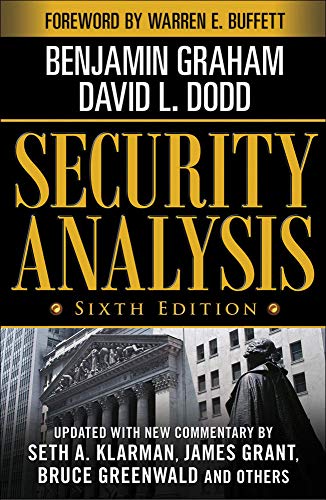
First published in 1934, Security Analysis is one of the most influential financial books ever written. Selling more than one million copies through five editions, it has provided generations of investors with the timeless value investing philosophy and techniques of Benjamin Graham and David L. Dodd.
As relevant today as when they first appeared nearly 75 years ago, the teachings of Benjamin Graham, "the father of value investing," have withstood the test of time across a wide diversity of market conditions, countries, and asset classes.
This new sixth edition, based on the classic 1940 version, is enhanced with 200 additional pages of commentary from some of today's leading Wall Street money managers. These masters of value investing explain why the principles and techniques of Graham and Dodd are still highly relevant even in today's vastly different markets. The contributor list includes:
Seth A. Klarman, president of The Baupost Group, L.L.C. and author of Margin of Safety
James Grant, founder of Grant's Interest Rate Observer , general partner of Nippon Partners
Jeffrey M. Laderman, twenty-five year veteran of BusinessWeek
Roger Lowenstein , author of Buffett: The Making of an American Capitalist and When America Aged and Outside Director, Sequoia Fund
Howard S. Marks, CFA, Chairman and Co-Founder, Oaktree Capital Management L.P.
J. Ezra Merkin, Managing Partner, Gabriel Capital Group .
Bruce Berkowitz, Founder, Fairholme Capital Management.
Glenn H. Greenberg, Co-Founder and Managing Director, Chieftain Capital Management
Bruce Greenwald, Robert Heilbrunn Professor of Finance and Asset Management, Columbia Business School
David Abrams, Managing Member, Abrams Capital
Featuring a foreword by Warren E. Buffett (in which he reveals that he has read the 1940 masterwork "at least four times"), this new edition of Security Analysis will reacquaint you with the foundations of value investing-more relevant than ever in the tumultuous 21st century markets.
Die Inhaltsangabe kann sich auf eine andere Ausgabe dieses Titels beziehen.
Über die Autorin bzw. den Autor
<p><b>Benjamin Graham</b> is considered to be the founder of value investing and taught at Columbia University’s Graduate School of Business.</p><p><b>David L. Dodd</b> was a colleague of Graham’s at Columbia University, where he was an assistant professor of finance.</p>
Von der hinteren Coverseite
<p><b>“A roadmap for investing that I have now been following for 57 years.”<br>—From the foreword by Warren E. Buffett</br></b></p><p>The 1940 edition of <i>Security Analysis</i> is considered the bible of value investing. McGraw-Hill continues its proud tradition with this new sixth edition that will serve as a touchstone for a new generation of investors.</p><p>The leading “Masters” of value investing have updated Graham and Dodd’s classic work with more than 200 pages of new commentary:</p><ul><li><b>Seth A. Klarman,</b> president of The Baupost Group, L.L.C. and author of <i>Margin of Safety</i></li><li><b>James Grant,</b> founder of <i>Grant's Interest Rate Observer</i>, general partner of Nippon Partners</li><li><b>Jeffrey M. Laderman,</b> twenty-five year veteran of <i>BusinessWeek</i></li><li><b>Roger Lowenstein</b>, author of <i>Buffett: The Making of an American Capitalist</i> and <i>When America Aged</i> and Outside Director, Sequoia Fund</li><li><b>Howard S. Marks, CFA,</b> Chairman and Co-Founder, Oaktree Capital Management L.P.</li><li><b>J. Ezra Merkin,</b> Managing Partner, Gabriel Capital Group .</li><li><b>Bruce Berkowitz,</b> Founder, Fairholme Capital Management.</li><li><b>Glenn H. Greenberg,</b> Co-Founder and Managing Director, Chieftain Capital Management</li><li><b>Bruce Greenwald,</b> Robert Heilbrunn Professor of Finance and Asset Management, Columbia Business School</li><li><b>David Abrams,</b> Managing Member, Abrams Capital</li></ul><p>The accompanying CD-ROM contains additional chapters from the original 1940 edition.</p><p>“Benjamin Graham is the father of investment analysts everywhere, originally sparking the debate for a credential to professionalize the industry which led to the CFA Charter. He transformed the practice of financial analysis from trade to science, starting with his groundbreaking book, Security Analysis, first published in 1934. This edition, with new commentary by some of today’s finest investors, belongs on every investment professional’s shelf.”<br><b>—Jeffrey J. Diermeier, CFA, president and CEO, CFA Institute</b></br></p>
Auszug. © Genehmigter Nachdruck. Alle Rechte vorbehalten.
Security Analysis
Principles and TechniqueBy BENJAMIN GRAHAM DAVID L. DODDMcGraw-Hill
Copyright © 2009 The McGraw-Hill Companies, Inc.All right reserved.
ISBN: 978-0-07-159253-6
Contents
Chapter One
The Scope and Limitations of Security Analysis. The Concept of Intrinsic Value
Analysis Connotes the careful study of available facts with the attempt to draw conclusions therefrom based on established principles and sound logic. It is part of the scientific method. But in applying analysis to the field of securities we encounter the serious obstacle that investment is by nature not an exact science. The same is true, however, of law and medicine, for here also both individual skill (art) and chance are important factors in determining success or failure. Nevertheless, in these professions analysis is not only useful but indispensable, so that the same should probably be true in the field of investment and possibly in that of speculation.
In the last three decades the prestige of security analysis in Wall Street has experienced both a brilliant rise and an ignominious fall—a history related but by no means parallel to the course of stock prices. The advance of security analysis proceeded uninterruptedly until about 1927, covering a long period in which increasing attention was paid on all sides to financial reports and statistical data. But the "new era" commencing in 1927 involved at bottom the abandonment of the analytical approach; and while emphasis was still seemingly placed on facts and figures, these were manipulated by a sort of pseudo-analysis to support the delusions of the period. The market collapse in October 1929 was no surprise to such analysts as had kept their heads, but the extent of the business collapse which later developed, with its devastating effects on established earning power, again threw their calculations out of gear. Hence the ultimate result was that serious analysis suffered a double discrediting: the first—prior to the crash—due to the persistence of imaginary values, and the second—after the crash—due to the disappearance of real values.
The experiences of 1927–1933 were of so extraordinary a character that they scarcely provide a valid criterion for judging the usefulness of security analysis. As to the years since 1933, there is perhaps room for a difference of opinion. In the field of bonds and preferred stocks, we believe that sound principles of selection and rejection have justified themselves quite well. In the common-stock arena the partialities of the market have tended to confound the conservative viewpoint, and conversely many issues appearing cheap under analysis have given a disappointing performance. On the other hand, the analytical approach would have given strong grounds for believing representative stock prices to be too high in early 1937 and too low a year later.
THREE FUNCTIONS OF ANALYSIS: 1. DESCRIPTIVE FUNCTION
The functions of security analysis may be described under three headings: descriptive, selective, and critical. In its more obvious form, descriptive analysis consists of marshalling the important facts relating to an issue and presenting them in a coherent, readily intelligible manner. This function is adequately performed for the entire range of marketable corporate securities by the various manuals, the Standard Statistics and Fitch services, and others. A more penetrating type of description seeks to reveal the strong and weak points in the position of an issue, compare its exhibit with that of others of similar character, and appraise the factors which are likely to influence its future performance. Analysis of this kind is applicable to almost every corporate issue, and it may be regarded as an adjunct not only to investment but also to intelligent speculation in that it provides an organized factual basis for the application of judgment.
2. THE SELECTIVE FUNCTION OF SECURITY ANALYSIS
In its selective function, security analysis goes further and expresses specific judgments of its own. It seeks to determine whether a given issue should be bought, sold, retained, or exchanged for some other. What types of securities or situations lend themselves best to this more positive activity of the analyst, and to what handicaps or limitations is it subject? It may be well to start with a group of examples of analytical judgments, which could later serve as a basis for a more general inquiry.
Examples of Analytical Judgments. In 1928 the public was offered a large issue of 6% noncumulative preferred stock of St. Louis-San Francisco Railway Company priced at 100. The record showed that in no year in the company's history had earnings been equivalent to as much as 1Â1/2 times the fixed charges and preferred dividends combined. The application of well-established standards of selection to the facts in this case would have led to the rejection of the issue as insufficiently protected.
A contrasting example: In June 1932 it was possible to purchase 5% bonds of Owens-Illinois Glass Company, due 1939, at 70, yielding 11% to maturity. The company's earnings were many times the interest requirements—not only on the average but even at that time of severe depression. The bond issue was amply covered by current assets alone, and it was followed by common and preferred stock with a very large aggregate market value, taking their lowest quotations. Here, analysis would have led to the recommendation of this issue as a strongly entrenched and attractively priced investment.
Let us take an example from the field of common stocks. In 1922, prior to the boom in aviation securities, Wright Aeronautical Corporation stock was selling on the New York Stock Exchange at only $8, although it was paying a $1 dividend, had for some time been earning over $2 a share, and showed more than $8 per share in cash assets in the treasury. In this case analysis would readily have established that the intrinsic value of the issue was substantially above the market price.
Again, consider the same issue in 1928 when it had advanced to $280 per share. It was then earning at the rate of $8 per share, as against $3.77 in 1927. The dividend rate was $2; the net-asset value was less than $50 per share. A study of this picture must have shown conclusively that the market price represented for the most part the capitalization of entirely conjectural future prospects—in other words, that the intrinsic value was far less than the market quotation.
A third kind of analytical conclusion may be illustrated by a comparison of Interborough Rapid Transit Company First and Refunding 5s with the same company's Collateral 7% Notes, when both issues were selling at the same price (say 62) in 1933. The 7% notes were clearly worth considerably more than the 5s. Each $1,000 note was secured by deposit of $1,736 face amount of 5s; the principal of the notes had matured; they were entitled either to be paid off in full or to a sale of the collateral for their benefit. The annual interest received on the collateral was equal to about $87 on each 7% note (which amount was actually being distributed to the note holders), so that the current income on the 7s was considerably greater than that on the 5s. Whatever technicalities might be invoked to prevent the note holders from asserting their contractual rights promptly and completely, it was difficult to imagine conditions under which the 7s would not be intrinsically worth considerably more than the 5s.
A more recent comparison of the same...
„Über diesen Titel“ kann sich auf eine andere Ausgabe dieses Titels beziehen.
Suchergebnisse für Security Analysis, w. CD-ROM: Forew. by Warren E. Buffett...

Beispielbild für diese ISBN
Security Analysis: Sixth Edition, Foreword by Warren Buffett
Verlag:
McGraw Hill (edition 6), 2008
ISBN 10: 0071592539
ISBN 13: 9780071592536
Gebraucht
Hardcover
Anbieter: BooksRun, Philadelphia, PA, USA
Verkäuferbewertung 5 von 5 Sternen

Hardcover. Zustand: Fair. 6. With dust jacket. The item might be beaten up but readable. May contain markings or highlighting, as well as stains, bent corners, or any other major defect, but the text is not obscured in any way. Artikel-Nr. 0071592539-7-1-29
Gebraucht kaufen
EUR 15,03
Versand gratis
Versand innerhalb von USA
Versand innerhalb von USA
Anzahl: 1 verfügbar
Foto des Verkäufers
Security Analysis: Sixth Edition, Foreword by Warren Buffett
Anbieter: Goodwill of Ventura and Santa Barbara Counties, Oxnard, CA, USA
Verkäuferbewertung 5 von 5 Sternen
Zustand: very_good. Very good: The book does not look new and has been read but is in excellent condition. There is no obvious damage to the cover the dust jacket if applicable is included for hard covers. There are no missing or damaged pages, no creases or tears, and no underlining highlighting of text or writing in the margins. It may have very minimal identifying marks on the inside cover as well as very minimal wear and tear. See the seller's listing for full details and a description of any imperfections. Artikel-Nr. VSBV.0071592539.VG
Gebraucht kaufen
EUR 14,12
EUR 4,47 Versand
Versand innerhalb von USA
Versand innerhalb von USA
Anzahl: 2 verfügbar
Beispielbild für diese ISBN
Security Analysis: Sixth Edition, Foreword by Warren Buffett
Anbieter: Weird Books, Napa, CA, USA
Verkäuferbewertung 5 von 5 Sternen
hardcover. Zustand: Very Good. Sealed CD Rom included. Very Good text, minor to light reading wear to text and dust jacket. Fast shipping from Northern California via US MAIL. Most International orders shipped via DHL/Asendia. Additional postage may be required on oversize books and sets. Please, NO prison orders. Artikel-Nr. 2608200058
Gebraucht kaufen
EUR 17,06
EUR 6,19 Versand
Versand innerhalb von USA
Versand innerhalb von USA
Anzahl: 1 verfügbar
Beispielbild für diese ISBN
Security Analysis: Sixth Edition, Foreword by Warren Buffett
Verlag:
McGraw Hill (edition 6), 2008
ISBN 10: 0071592539
ISBN 13: 9780071592536
Gebraucht
Hardcover
Anbieter: BooksRun, Philadelphia, PA, USA
Verkäuferbewertung 5 von 5 Sternen
Hardcover. Zustand: Very Good. 6. With dust jacket. It's a well-cared-for item that has seen limited use. The item may show minor signs of wear. All the text is legible, with all pages included. It may have slight markings and/or highlighting. Artikel-Nr. 0071592539-11-6-29
Gebraucht kaufen
EUR 24,98
Versand gratis
Versand innerhalb von USA
Versand innerhalb von USA
Anzahl: 1 verfügbar
Beispielbild für diese ISBN
Security Analysis: Sixth Edition, Foreword by Warren Buffett
Anbieter: Better World Books, Mishawaka, IN, USA
Verkäuferbewertung 5 von 5 Sternen
Zustand: Good. Pages intact with minimal writing/highlighting. The binding may be loose and creased. Dust jackets/supplements are not included. Stock photo provided. Product includes identifying sticker. Better World Books: Buy Books. Do Good. Artikel-Nr. 7866526-75
Gebraucht kaufen
EUR 25,14
Versand gratis
Versand innerhalb von USA
Versand innerhalb von USA
Anzahl: 1 verfügbar
Foto des Verkäufers
Security Analysis: Sixth Edition, Foreword by Warren Buffett: Principles and Technique (PROFESSIONAL FINANCE & INVESTM)
Anbieter: WeBuyBooks, Rossendale, LANCS, Vereinigtes Königreich
Verkäuferbewertung 5 von 5 Sternen
hardcover. Zustand: Very Good. Most items will be dispatched the same or the next working day. A copy that has been read, but is in excellent condition. Pages are intact and not marred by notes or highlighting. The spine remains undamaged. Artikel-Nr. rev8721232108
Gebraucht kaufen
EUR 21,29
EUR 12,65 Versand
Versand von Vereinigtes Königreich nach USA
Versand von Vereinigtes Königreich nach USA
Anzahl: 1 verfügbar
Foto des Verkäufers
Security Analysis: Sixth Edition, Foreword by Warren Buffett: Principles and Technique (PROFESSIONAL FINANCE & INVESTM)
Anbieter: WeBuyBooks, Rossendale, LANCS, Vereinigtes Königreich
Verkäuferbewertung 5 von 5 Sternen
hardcover. Zustand: Good. Most items will be dispatched the same or the next working day. A copy that has been read but remains in clean condition. All of the pages are intact and the cover is intact and the spine may show signs of wear. The book may have minor markings which are not specifically mentioned. Artikel-Nr. rev9593250194
Gebraucht kaufen
EUR 21,29
EUR 12,65 Versand
Versand von Vereinigtes Königreich nach USA
Versand von Vereinigtes Königreich nach USA
Anzahl: 1 verfügbar
Beispielbild für diese ISBN
Security Analysis: Sixth Edition, Foreword by Warren Buffett: Principles and Technique (PROFESSIONAL FINANCE & INVESTM)
Anbieter: Sell Books, Elland, YORKS, Vereinigtes Königreich
Verkäuferbewertung 5 von 5 Sternen
Hardcover. Zustand: Very Good. Most of our very good books have only minor imperfections such as shelf wear consistent with a new book that's sat on a bookshop shelf for a year or two. Occasionally we may miss other minor imperfections as we have to grade books at speed. Our books are dispatched from a Yorkshire former cotton mill. We list via barcode/ISBN so please note that the images are stock images and may not be the exact copy you receive, furthermore the details about edition and year might not be accurate as many publishers reuse the same ISBN for multiple editions and as we simply scan a barcode or enter an ISBN we do not check the validity of the edition data when listing. If you're looking for an exact edition please don't order (at least not without checking with us first, although we don't always have time to check). We aim to dispatch prompty, the service used will depend on order value and book size. We can ship to most countries, see our shipping policies. Payment is via Abe only. Artikel-Nr. SBAB-SBL-002338
Gebraucht kaufen
EUR 21,69
EUR 13,63 Versand
Versand von Vereinigtes Königreich nach USA
Versand von Vereinigtes Königreich nach USA
Anzahl: 1 verfügbar
Beispielbild für diese ISBN
Security Analysis 6Th Edition
Anbieter: medimops, Berlin, Deutschland
Verkäuferbewertung 5 von 5 Sternen
Zustand: good. Befriedigend/Good: Durchschnittlich erhaltenes Buch bzw. Schutzumschlag mit Gebrauchsspuren, aber vollständigen Seiten. / Describes the average WORN book or dust jacket that has all the pages present. Artikel-Nr. M00071592539-G
Gebraucht kaufen
EUR 36,92
EUR 10,00 Versand
Versand von Deutschland nach USA
Versand von Deutschland nach USA
Anzahl: 1 verfügbar
Foto des Verkäufers
Security analysis : principles and technique
Anbieter: Bookbot, Prague, Tschechien
Verkäuferbewertung 5 von 5 Sternen
Hardcover. Zustand: As New. Leichte Kratzer / Abnutzungen / Druckstellen; Beilage vorhanden. Presents David Dodd and Benjamin Graham's original 1934 guide to value investing, with strategies and advice that are still relevant in the twenty-first century, with additional commentary from contemporary investment professionals. Artikel-Nr. 25472ab3-c8f8-4fec-92d3-79fd0a57bdd0
Gebraucht kaufen
EUR 64,37
EUR 18,99 Versand
Versand von Tschechien nach USA
Versand von Tschechien nach USA
Anzahl: 1 verfügbar