
Verwandte Artikel zu Happier: Learn the Secrets to Daily Joy and Lasting...
Inhaltsangabe
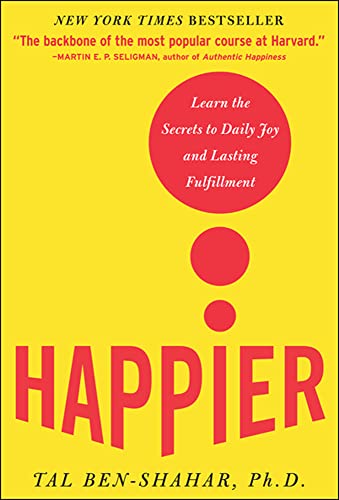
Can YouLearn to BeHappy?
YES . . . according to the teacher of HarvardUniversity’s most popular and life-changingcourse. One out of every five Harvard studentshas lined up to hear Tal Ben-Shahar’sinsightful and inspiring lectures on thatever-elusive state: HAPPINESS.
HOW?
Grounded in the revolutionary “positive psychology” movement,Ben-Shahar ingeniously combines scientific studies, scholarly research, self-help advice, and spiritual enlightenment. He weaves them together into a set of principles that you can apply to your daily life. Once you open your heart and mind to Happier ’s thoughts, you will feel more fulfilled, more connected . . . and, yes, HAPPIER.
“Dr. Ben-Shahar, one of the most popular teachers in Harvard’s recent history, has written a personal, informed, and highly enjoyable primer on how to become happier. It would be wise to take his advice.”
--Ellen J. Langer, author of Mindfulness and On Becoming an Artist
“This fine book shimmers with a rare brand of good sense that is imbedded in scientific knowledge about how to increase happiness. It is easy to see how this is the backbone of the most popular course at Harvard today."
--Martin E. P. Seligman, author of Authentic Happiness
Die Inhaltsangabe kann sich auf eine andere Ausgabe dieses Titels beziehen.
Über die Autorin bzw. den Autor
Tal Ben-Shahar is the New York Times Bestselling author of Happier. He taught the most popular course in Harvard and is currently writing, consulting, and lecturing worldwide on positive psychology and leadership. He holds his Ph.D. in Organizational Behavior and BA in Philosophy and Psychology from Harvard.
Von der hinteren Coverseite
Can YouLearn to BeHappy?
YES . . . according to the teacher of HarvardUniversity’s most popular and life-changingcourse. One out of every five Harvard studentshas lined up to hear Tal Ben-Shahar’sinsightful and inspiring lectures on thatever-elusive state: HAPPINESS.
HOW?
Grounded in the revolutionary “positive psychology” movement,Ben-Shahar ingeniously combines scientific studies, scholarly research, self-help advice, and spiritual enlightenment. He weaves them together into a set of principles that you can apply to your daily life. Once you open your heart and mind to Happier ’s thoughts, you will feel more fulfilled, more connected . . . and, yes, HAPPIER.
“Dr. Ben-Shahar, one of the most popular teachers in Harvard’s recent history, has written a personal, informed, and highly enjoyable primer on how to become happier. It would be wise to take his advice.”
--Ellen J. Langer, author of Mindfulness and On Becoming an Artist
“This fine book shimmers with a rare brand of good sense that is imbedded in scientific knowledge about how to increase happiness. It is easy to see how this is the backbone of the most popular course at Harvard today."
--Martin E. P. Seligman, author of Authentic Happiness
If you're a “rat racer,” who lives inthe hope of being happy in the future, and yet isunable to enjoy the here-and-now . . .
If you're a “hedonist,” who findssome pleasure in the good things in life--goodwine, good food, good company--and yet isunable to enjoy lasting fulfillment . . .
If you're a “nihilist,” who’s completelygiven up on finding happiness . . .you can learn to be happier!
Thousands of Harvard University students havediscovered that you can become happier. Theylearned the secret to lasting fulfillment fromacclaimed teacher Tal Ben-Shahar’s class onpositive psychology--a branch of psychologythat combines the latest scientific research withgood old common sense. Now you can join hisclass and learn how positive psychology canmake you happier right now--no lottery windfall,job promotion, or new love required.
Think of Happier as your own personalworkbook. As you read each chapter’s illuminatingdiscussion on happiness and incorporateits simple exercises into your daily routine, youwill see every aspect of your life with new eyesand a new sense of purpose.
When you learn how to live for today andfor tomorrow at the same time, you learn how tobalance your immediate personal needs withlong-term goals and enjoy life as you never havebefore.
Auszug. © Genehmigter Nachdruck. Alle Rechte vorbehalten.
Happier
Learn the Secrets to Daily Joy and Lasting FulfillmentBy TAL BEN-SHAHARMcGraw-Hill
Copyright © 2007 Tal Ben-ShaharAll right reserved.
ISBN: 978-0-07-149239-3
Contents
Chapter One
The Question of HappinessIn the middle of difficulty lies opportunity.
— Albert Einstein
I was sixteen years old when I won the Israeli national squash championship. It was an event that brought the subject of happiness into sharp focus in my life.
I had always believed that winning the title would make me happy, would alleviate the emptiness I felt so much of the time. For the five years I had trained for the event I felt that something important was missing from my life—something that all of the miles run, the weights lifted, the self-motivating speeches playing and replaying in my mind were not providing. But I believed that it was only a matter of time before that "missing something" would find its way into my life. After all, it seemed clear to me that the mental and physical exertion were necessary to win the championship. Winning the championship was necessary for fulfillment. Fulfillment was necessary for happiness. That was the logic I operated under.
And, in fact, when I won the Israeli Nationals, I was ecstatic, happier than I had ever imagined myself being. Following the final match I went out with my family and friends, and we celebrated together. I was certain then that the belief that had carried me through the five years of preparation—that winning the title would make me happy—was justified; the hard work, the physical and emotional pain, had paid off.
After the night of celebration, I retired to my room. I sat on my bed and wanted to savor, for the last time before going to sleep, that feeling of supreme happiness. Suddenly, without warning, the bliss that came from having attained in real life what had for so long been my most cherished and exalted fantasy disappeared, and my feeling of emptiness returned. I was befuddled and afraid. The tears of joy shed only hours earlier turned to tears of pain and helplessness. For if I was not happy now, when everything seemed to have worked out perfectly, what prospects did I have of attaining lasting happiness?
I tried to convince myself that I was feeling the temporary low following an overwhelming high. But as the days and months unfolded, I did not feel happier; in fact, I was growing even more desolate as I began to see that simply substituting a new goal— winning the world championship, say—would not in itself lead me to happiness. There no longer seemed to be a series of logical steps for me to follow.
TIME-IN
Reflect on a couple of personal experiences where reaching a certain milestone did not bring you the emotional payoff you expected.
I realized that I needed to think about happiness in different ways, to deepen or change my understanding of the nature of happiness. I became obsessed with the answer to a single question: how can I find lasting happiness? I pursued it fervently—I observed people who seemed happy and asked what it was that made them happy; I read everything I could find on the topic of happiness, from Aristotle to Confucius, from ancient philosophy to modern psychology, from academic research to self-help books.
To continue my exploration of the question of happiness in a more formal way, I decided to study philosophy and psychology in college. I met brilliant people who had dedicated themselves as writers, thinkers, artists, or teachers to understanding the "big questions." Learning to read a text closely and analytically, attending lectures on intrinsic motivation and on creativity, reading Plato on "the good" and Emerson on "the integrity of your own mind"—all of these provided me with new lenses through which my life and the lives of those around me came into clearer focus.
I was not alone in my unhappiness; many of my classmates seemed to be dispirited and stressed. And yet I was struck by how little time they dedicated to what I believed to be the question of questions. They spent their time pursuing high grades, athletic achievements, and prestigious jobs, but the pursuit—and attainment—of these goals failed to provide them with an experience of sustained well-being.
Although their specific goals changed when they left college (promotion at work replacing academic success, for instance), the essential pattern of their lives remained the same. So many people seemed to accept their poor emotional predicament as the inevitable price of success. Could it be, then, that Thoreau's observation that most people lead lives of "quiet desperation" was true? Even if it was, I refused to accept his dire assessment as a necessary fact of life and sought answers to the following questions: How can a person be both successful and happy? How can ambition and happiness be reconciled? Is it possible to defy the maxim of "no pain, no gain"?
In trying to answer these questions, I realized that I would first have to figure out what happiness is. Is it an emotion? Is it the same as pleasure? Is it the absence of pain? The experience of bliss? Words like pleasure, bliss, ecstasy, and contentment are often used interchangeably with the word happiness, but none of them describes precisely what I mean when I think about happiness. These emotions are fleeting, and while they are enjoyable and significant, they are not the measure—or the pillars—of happiness. We can experience sadness at times and still enjoy overall happiness.
While it was clear to me which words and definitions were inadequate, finding those that could capture the nature of happiness proved more difficult. We all talk about happiness and mostly know it when we experience it, but we lack a coherent definition that can help us identify its antecedents. The source of the word happiness is the Icelandic word happ, which means "luck" or "chance," the same source of the words haphazard and happenstance. I did not want to leave the experience of happiness to chance and therefore sought to define and understand it.
TIME-IN
How would you define happiness? What does happiness mean to you?
I do not have the complete answer to the single question I posed at age sixteen—I suspect that I will never have it. Through my reading, research, observation, and reflection, I have discovered no secret formula, no "five easy steps to happiness." My objective in writing this book is to raise awareness of the general principles underlying a happy and fulfilling life.
These general principles are certainly not a panacea and, moreover, are not relevant for all people in all situations. I have mostly limited my focus to positive psychology and do not address many internal obstacles that prevent people from pursuing happiness, such as major depression or acute anxiety disorder. Nor are the ideas applicable for many of the external obstacles that come in the way of a flourishing life.
It is sometimes impossible for those living in a conflict area, under political oppression, or in extreme poverty to begin to apply the theory presented in the following pages. Following the loss of someone dear, it is exceedingly hard to concern oneself with the question of questions. Even in less severe situations—a disappointment, a difficult spell at work or within a relationship—it may be unhelpful to ask a person to focus on the pursuit of happiness. The best we may be able to do under...
„Über diesen Titel“ kann sich auf eine andere Ausgabe dieses Titels beziehen.
Suchergebnisse für Happier: Learn the Secrets to Daily Joy and Lasting...

Beispielbild für diese ISBN
Happier
Verlag:
McGraw-Hill Education - Europe, 2007
ISBN 10: 0071492399
ISBN 13: 9780071492393
Gebraucht
Hardcover
Anbieter: World of Books (was SecondSale), Montgomery, IL, USA
Verkäuferbewertung 5 von 5 Sternen

Hardback. Zustand: Very Good. Provides guidelines for integrating habits of gratitude and accepting negative emotions into daily life. Artikel-Nr. 00110161986
Gebraucht kaufen
EUR 3,92
Versand gratis
Versand innerhalb von USA
Versand innerhalb von USA
Anzahl: 2 verfügbar
Beispielbild für diese ISBN
Happier
Verlag:
McGraw-Hill Education - Europe, 2007
ISBN 10: 0071492399
ISBN 13: 9780071492393
Gebraucht
Hardcover
Anbieter: World of Books (was SecondSale), Montgomery, IL, USA
Verkäuferbewertung 5 von 5 Sternen
Hardback. Zustand: Good. Provides guidelines for integrating habits of gratitude and accepting negative emotions into daily life. Artikel-Nr. 00078451261
Gebraucht kaufen
EUR 3,92
Versand gratis
Versand innerhalb von USA
Versand innerhalb von USA
Anzahl: Mehr als 20 verfügbar
Beispielbild für diese ISBN
Happier: Learn the Secrets to Daily Joy and Lasting Fulfillment
Verlag:
McGraw Hill (edition First Edition), 2007
ISBN 10: 0071492399
ISBN 13: 9780071492393
Gebraucht
Hardcover
Erstausgabe
Anbieter: BooksRun, Philadelphia, PA, USA
Verkäuferbewertung 5 von 5 Sternen
Hardcover. Zustand: Very Good. First Edition. With dust jacket. It's a well-cared-for item that has seen limited use. The item may show minor signs of wear. All the text is legible, with all pages included. It may have slight markings and/or highlighting. Artikel-Nr. 0071492399-11-1-29
Gebraucht kaufen
EUR 4,85
Versand gratis
Versand innerhalb von USA
Versand innerhalb von USA
Anzahl: 1 verfügbar
Beispielbild für diese ISBN
Happier: Learn the Secrets to Daily Joy and Lasting Fulfillment
Verlag:
McGraw Hill (edition First Edition), 2007
ISBN 10: 0071492399
ISBN 13: 9780071492393
Gebraucht
Hardcover
Erstausgabe
Anbieter: BooksRun, Philadelphia, PA, USA
Verkäuferbewertung 5 von 5 Sternen
Hardcover. Zustand: Very Good. First Edition. With dust jacket. It's a well-cared-for item that has seen limited use. The item may show minor signs of wear. All the text is legible, with all pages included. It may have slight markings and/or highlighting. Artikel-Nr. 0071492399-8-18-29
Gebraucht kaufen
EUR 5,19
Versand gratis
Versand innerhalb von USA
Versand innerhalb von USA
Anzahl: 1 verfügbar
Beispielbild für diese ISBN
Happier: Learn the Secrets to Daily Joy and Lasting Fulfillment
Verlag:
McGraw Hill (edition First Edition), 2007
ISBN 10: 0071492399
ISBN 13: 9780071492393
Gebraucht
Hardcover
Erstausgabe
Anbieter: BooksRun, Philadelphia, PA, USA
Verkäuferbewertung 5 von 5 Sternen
Hardcover. Zustand: Very Good. First Edition. With dust jacket. It's a well-cared-for item that has seen limited use. The item may show minor signs of wear. All the text is legible, with all pages included. It may have slight markings and/or highlighting. Artikel-Nr. 0071492399-8-1-29
Gebraucht kaufen
EUR 5,29
Versand gratis
Versand innerhalb von USA
Versand innerhalb von USA
Anzahl: 1 verfügbar
Beispielbild für diese ISBN
Happier: Learn the Secrets to Daily Joy and Lasting Fulfillment
Verlag:
McGraw Hill (edition First Edition), 2007
ISBN 10: 0071492399
ISBN 13: 9780071492393
Gebraucht
Hardcover
Erstausgabe
Anbieter: BooksRun, Philadelphia, PA, USA
Verkäuferbewertung 5 von 5 Sternen
Hardcover. Zustand: Very Good. First Edition. It's a well-cared-for item that has seen limited use. The item may show minor signs of wear. All the text is legible, with all pages included. It may have slight markings and/or highlighting. Artikel-Nr. 0071492399-8-18
Gebraucht kaufen
EUR 5,42
Versand gratis
Versand innerhalb von USA
Versand innerhalb von USA
Anzahl: 1 verfügbar
Beispielbild für diese ISBN
Happier: Learn the Secrets to Daily Joy and Lasting Fulfillment
Anbieter: ThriftBooks-Dallas, Dallas, TX, USA
Verkäuferbewertung 5 von 5 Sternen
Hardcover. Zustand: Good. No Jacket. Pages can have notes/highlighting. Spine may show signs of wear. ~ ThriftBooks: Read More, Spend Less. Artikel-Nr. G0071492399I3N00
Gebraucht kaufen
EUR 5,95
Versand gratis
Versand innerhalb von USA
Versand innerhalb von USA
Anzahl: 2 verfügbar
Beispielbild für diese ISBN
Happier: Learn the Secrets to Daily Joy and Lasting Fulfillment
Anbieter: ThriftBooks-Atlanta, AUSTELL, GA, USA
Verkäuferbewertung 5 von 5 Sternen
Hardcover. Zustand: Good. No Jacket. Pages can have notes/highlighting. Spine may show signs of wear. ~ ThriftBooks: Read More, Spend Less. Artikel-Nr. G0071492399I3N00
Gebraucht kaufen
EUR 5,95
Versand gratis
Versand innerhalb von USA
Versand innerhalb von USA
Anzahl: 1 verfügbar
Beispielbild für diese ISBN
Happier: Learn the Secrets to Daily Joy and Lasting Fulfillment
Anbieter: ThriftBooks-Reno, Reno, NV, USA
Verkäuferbewertung 5 von 5 Sternen
Hardcover. Zustand: Good. No Jacket. Missing dust jacket; Pages can have notes/highlighting. Spine may show signs of wear. ~ ThriftBooks: Read More, Spend Less. Artikel-Nr. G0071492399I3N01
Gebraucht kaufen
EUR 5,95
Versand gratis
Versand innerhalb von USA
Versand innerhalb von USA
Anzahl: 1 verfügbar
Beispielbild für diese ISBN
Happier: Learn the Secrets to Daily Joy and Lasting Fulfillment
Anbieter: ThriftBooks-Atlanta, AUSTELL, GA, USA
Verkäuferbewertung 5 von 5 Sternen
Hardcover. Zustand: Very Good. No Jacket. May have limited writing in cover pages. Pages are unmarked. ~ ThriftBooks: Read More, Spend Less. Artikel-Nr. G0071492399I4N00
Gebraucht kaufen
EUR 5,95
Versand gratis
Versand innerhalb von USA
Versand innerhalb von USA
Anzahl: 8 verfügbar