
Verwandte Artikel zu The Complete Book of Boondock Rving: Camping Off the...
Inhaltsangabe
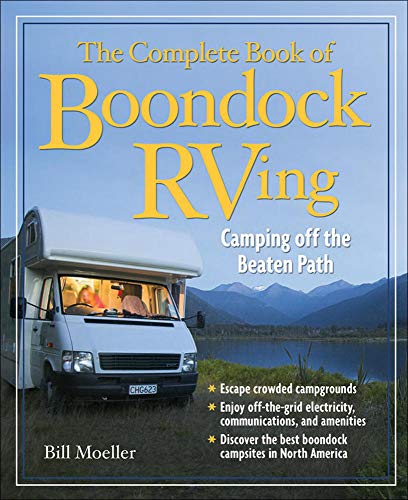
Here's Your Guide to Camping Off the Beaten Path
Ever feel frustrated by crowded RV parks? Yearn to camp out in the wild beside a babbling mountain brook or before a remote panoramic vista? Bill and Jan Moeller have been doing just that for more than thirty years, and The Complete Book of Boondock RVing is their complete guide to camping without hookups (aka "dry camping"). Whether you're planning to spend an occasional overnight in a parking lot or an extended stay in the wilderness, you'll learn how to equip your rig for boondocking, find great campsites, manage and conserve electricity and water, and camp in complete RV comfort and convenience.
- Increase your independence by learning how to camp "off the grid"
- Save money by finding cheap or free campsites anywhere--even in large cities
- Ensure your comfort, convenience, and safety when camping in the boonies
- Learn how to conserve and manage electricity, water, and waste, and to establish reliable communications
- Enjoy the quiet, solitude, and beauty of nature by getting away from crowded RV campgrounds
Die Inhaltsangabe kann sich auf eine andere Ausgabe dieses Titels beziehen.
Über die Autorin bzw. den Autor
Bill Moeller and his wife, the late Jan Moeller, were cruising sailors and liveaboards for more than 20 years before moving aboard a "land yacht"--an RV--where they found a very similar lifestyle on America's highways.
Von der hinteren Coverseite
Here’s Your Guide to Camping Off the Beaten Path
Ever feel frustrated by crowded RV parks? Yearn to camp out in the wild beside a babbling mountain brook or before a remote panoramic vista? Bill and Jan Moeller have been doing just that for more than thirty years, and The Complete Book of Boondock RVing is their complete guide to camping without hookups (aka "dry camping"). Whether you’re planning to spend an occasional overnight in a parking lot or an extended stay in the wilderness, you’ll learn how to equip your rig for boondocking, find great campsites, manage and conserve electricity and water, and camp in complete RV comfort and convenience.
- Increase your independence by learning how to camp "off the grid"
- Save money by finding cheap or free campsites anywhere--even in large cities
- Ensure your comfort, convenience, and safety when camping in the boonies
- Learn how to conserve and manage electricity, water, and waste, and to establish reliable communications
- Enjoy the quiet, solitude, and beauty of nature by getting away from crowded RV campgrounds
Bill and Jan Moeller have been fulltime RV campers for more than three decades. They have written several bestselling RV books, including RVing Basics, RV Electrical Systems, and Complete Guide to Full-Time RVing, along with a nationally syndicated newspaper column about RVing.
Auszug. © Genehmigter Nachdruck. Alle Rechte vorbehalten.
The Complete Book of Boondock RVing
Camping Off the Beaten Path
By Bill Moeller, Jan MoellerThe McGraw-Hill Companies, Inc.
Copyright © 2008 The McGraw-Hill Companies, Inc.
All rights reserved.
ISBN: 978-0-07-149065-8All rights reserved.
Contents
| Acknowledgments | |
| 1. What Is Boondock RVing? | |
| 2. Where to Go Boondock RVing? | |
| 3. Selecting a Rig | |
| 4. Water, Sewage, and Trash | |
| 5. Food: Stocking, Cooking, and Storing | |
| 6. Heating and Cooling | |
| 7. Communications and Navigation | |
| 8. Boondock Electricity Made Easy | |
| 9. Monitoring and Charging Your Batteries | |
| 10. Engine Alternators | |
| 11. Generators, Converters/Chargers, and Inverters | |
| 12. Sun and Wind Power | |
| Appendix 1: A Selected List of Boondock Campgrounds | |
| Appendix 2: Resources | |
| Appendix 3: Recommended Reading | |
| Index |
Excerpt
CHAPTER 1
What IsBoondock RVing?
Webster's New World Compact Desk Dictionary defines boondocks as "a jungle; theback-country; or a hinterland." As Jan and I understand it, the word derivesfrom the Tagalog word for mountain—bundok—and was picked up by U.S. soldiersafter the Spanish-American War when they were sent into the jungles of thePhilippines. It became more popular during the Vietnam War and has been usedmore and more by the general public ever since.
Boondock RVing (or camping) is, by an RVer's definition, camping with your RV ina place where there are no electrical hookups, water faucets, sewer drains, andphone or cable TV connections. This is also called dry camping or primitivecamping. Boondocking RVers are people who have their RVs equipped for this typeof camping.
We first started boondocking in the 1960s, and during that time, we had twodifferent RVs. Our first rig was a rented pickup camper, which we took on agrand tour of most of the western states. It had minimal equipment aboard: anicebox, two 110-volt lights, a two-burner propane cookstove, a water tank with ahand pump at the galley sink, a Humphrey propane mantle light, and a chemicaltoilet, which was just a large wooden box with a seat and cover, filled partlywith water and chemicals to control the smell.
(RVIA)
The trip was boondocking at its best. Our home was always with us, and we wereable to pull off the road whenever we chose to eat, sleep, and rest. Campinglife was simple then—and delightful. At night we would park our camper in aforest campground. With a gas light hissing away, we had comfortable warmth withplenty of light for reading and a battery-powered, shortwave radio forentertainment. The only problem we ever encountered was the lack of a furnace orheater, which we keenly felt when an early September snowstorm in YellowstonePark left behind 6 inches of snow.
After that trip, we bought a small Tow-Low trailer, which was a big improvement.Among other things, it had an AC/propane refrigerator, a convection furnace(although no fan), a pressure water system (using a hand pump to pump up the airpressure in the water tank), and a Porta-Potti toilet. With this RV, we traveledfrom New York to Nebraska, up through Canada, then into New England and down thecoast to our home in Connecticut, enjoying boondock camping wherever we couldfind it.
Today's RVs are much different from our early rigs. All the appliances andelectronics in modern RVs make them seem more like houses than vehicles, whatwith washing machines, dishwashers, slideouts, and the like. But with the rightequipment and some thoughtful planning, you can still take off in these modernRVs and enjoy the wilderness.
WHY BOONDOCK?
Ask any number of boondockers why they boondock and you'll probably get as manydifferent answers. For example:
* Enjoy the freedom.
* Save money.
* Experience primitive camping.
* Camp in our national parks and Forest Service campgrounds.
* Convenience.
* Visit the grandkids and other relatives and be able to park in their driveway.
* Get away from it all—cell phones, PDAs, faxes, e-mails, meetings, computers,and modern life in general—as much (or as little) as you want to; these daysit's easy to stay "connected" on the road.
Fun and Freedom
First and foremost, boondocking is fun. Imagine camping by a backwoods streamand having the option of either watching a football game on your satellite TVsystem or doing some fishing in the stream. Or you wake up with the earlymorning sun pushing through dense forest leaves, step out the door of your RVand onto a hiking trail. A few hours later, you come back, turn on thecoffeemaker, and e-mail your Aunt Tillie all about your morning.
With boondocking, you get to enjoy freedom of choice because you're not lockedinto camping in a full-hookup campground. You can choose a private campground aswell as a place off the beaten path. You can live simply and rough it, or pileas many amenities into your RV as you can.
We've roughed it and enjoyed it tremendously. But we also occasionally missedsome of our favorite television shows, particularly football games. So weeventually got a small, black-and-white, 12-volt DC TV with a good AM/FM radio.And with our shortwave radio, we could still listen to the BBC from London, theVoice of America, or even the Voice of the Andes even if we were really in theboonies. These gave us immeasurable pleasure. Today a satellite dish operatedfrom an inverter does the job, giving us plenty of movies, news, and sportingevents to watch.
We believe it's all worth it because many of these modern conveniences make forhappier camping. Boondock camping is all about being able to do what you want,when you want. Some of our books, at least in part, have been written in thecomfort of our fifth-wheel trailer while we boondocked. And we've enjoyed everyminute of it.
Save Money
If the main reason for boondock camping is to enjoy the experience, the secondmain reason is cost. RVing is one of the least expensive ways to live or travel.Many fulltimers living on fixed incomes from Social Security or pensions havefound this to be true, as have families who take vacations or spend weekendscamping in their RVs. Boondock camping is a wonderful way to make thisexperience even more affordable.
Additionally, the cost of staying in private campgrounds is increasing, going upby a dollar or more per night each year. We recently read an article inRVBusiness magazine, written by a campground spokesman, that stated the industryenvisions campground prices will eventually reach a level of 50% of the cost ofa midlevel hotel or motel. Consequently, if you would normally pay $100 a nightfor a hotel room, you would pay $50 a night in an RV park. Even those RVers whocan afford those prices may appreciate being able to average out the yearlycampground fees by boondocking as much as possible. If you pay $50 for onenight's camping and then boondock for the next three nights at no cost, you havereduced your average cost to only $12.50 a night for four nights of camping.
Please understand we are not advocating ripping someone off by free camping. Wehave seen some RVers sneak into a private campground after the office wasclosed, fill...
„Über diesen Titel“ kann sich auf eine andere Ausgabe dieses Titels beziehen.
Suchergebnisse für The Complete Book of Boondock Rving: Camping Off the...

Beispielbild für diese ISBN
The Complete Book of Boondock RVing: Camping Off the Beaten Path
Verlag:
International Marine/Ragged Mountain Press, 2007
ISBN 10: 0071490655
ISBN 13: 9780071490658
Gebraucht
Softcover
Anbieter: World of Books (was SecondSale), Montgomery, IL, USA
Verkäuferbewertung 5 von 5 Sternen

Zustand: Good. Item in good condition. Textbooks may not include supplemental items i.e. CDs, access codes etc. Artikel-Nr. 00102819273
Gebraucht kaufen
EUR 3,97
Versand gratis
Versand innerhalb von USA
Versand innerhalb von USA
Anzahl: 5 verfügbar
Beispielbild für diese ISBN
The Complete Book of Boondock RVing: Camping Off the Beaten Path
Verlag:
International Marine/Ragged Mountain Press (edition 1), 2007
ISBN 10: 0071490655
ISBN 13: 9780071490658
Gebraucht
Paperback
Anbieter: BooksRun, Philadelphia, PA, USA
Verkäuferbewertung 5 von 5 Sternen
Paperback. Zustand: Very Good. 1. It's a well-cared-for item that has seen limited use. The item may show minor signs of wear. All the text is legible, with all pages included. It may have slight markings and/or highlighting. Artikel-Nr. 0071490655-11-1
Gebraucht kaufen
EUR 4,63
Versand gratis
Versand innerhalb von USA
Versand innerhalb von USA
Anzahl: 1 verfügbar
Beispielbild für diese ISBN
The Complete Book of Boondock RVing: Camping Off the Beaten Path
Verlag:
International Marine Publishing, 2007
ISBN 10: 0071490655
ISBN 13: 9780071490658
Gebraucht
Paperback
Anbieter: ThriftBooks-Reno, Reno, NV, USA
Verkäuferbewertung 5 von 5 Sternen
Paperback. Zustand: Very Good. No Jacket. Former library book; May have limited writing in cover pages. Pages are unmarked. ~ ThriftBooks: Read More, Spend Less. Artikel-Nr. G0071490655I4N10
Gebraucht kaufen
EUR 5,84
Versand gratis
Versand innerhalb von USA
Versand innerhalb von USA
Anzahl: 1 verfügbar
Beispielbild für diese ISBN
The Complete Book of Boondock RVing: Camping Off the Beaten Path
Verlag:
International Marine Publishing, 2007
ISBN 10: 0071490655
ISBN 13: 9780071490658
Gebraucht
Paperback
Anbieter: ThriftBooks-Dallas, Dallas, TX, USA
Verkäuferbewertung 5 von 5 Sternen
Paperback. Zustand: Good. No Jacket. Pages can have notes/highlighting. Spine may show signs of wear. ~ ThriftBooks: Read More, Spend Less. Artikel-Nr. G0071490655I3N00
Gebraucht kaufen
EUR 5,84
Versand gratis
Versand innerhalb von USA
Versand innerhalb von USA
Anzahl: 2 verfügbar
Beispielbild für diese ISBN
The Complete Book of Boondock RVing: Camping Off the Beaten Path
Verlag:
International Marine Publishing, 2007
ISBN 10: 0071490655
ISBN 13: 9780071490658
Gebraucht
Paperback
Anbieter: ThriftBooks-Atlanta, AUSTELL, GA, USA
Verkäuferbewertung 5 von 5 Sternen
Paperback. Zustand: Fair. No Jacket. Readable copy. Pages may have considerable notes/highlighting. ~ ThriftBooks: Read More, Spend Less. Artikel-Nr. G0071490655I5N00
Gebraucht kaufen
EUR 5,84
Versand gratis
Versand innerhalb von USA
Versand innerhalb von USA
Anzahl: 1 verfügbar
Beispielbild für diese ISBN
The Complete Book of Boondock RVing: Camping Off the Beaten Path
Verlag:
International Marine Publishing, 2007
ISBN 10: 0071490655
ISBN 13: 9780071490658
Gebraucht
Paperback
Anbieter: ThriftBooks-Dallas, Dallas, TX, USA
Verkäuferbewertung 5 von 5 Sternen
Paperback. Zustand: Very Good. No Jacket. May have limited writing in cover pages. Pages are unmarked. ~ ThriftBooks: Read More, Spend Less. Artikel-Nr. G0071490655I4N00
Gebraucht kaufen
EUR 5,84
Versand gratis
Versand innerhalb von USA
Versand innerhalb von USA
Anzahl: 1 verfügbar
Beispielbild für diese ISBN
The Complete Book of Boondock RVing: Camping Off the Beaten Path
Verlag:
International Marine Publishing, 2007
ISBN 10: 0071490655
ISBN 13: 9780071490658
Gebraucht
Paperback
Anbieter: ThriftBooks-Phoenix, Phoenix, AZ, USA
Verkäuferbewertung 5 von 5 Sternen
Paperback. Zustand: Good. No Jacket. Pages can have notes/highlighting. Spine may show signs of wear. ~ ThriftBooks: Read More, Spend Less. Artikel-Nr. G0071490655I3N00
Gebraucht kaufen
EUR 5,84
Versand gratis
Versand innerhalb von USA
Versand innerhalb von USA
Anzahl: 1 verfügbar
Beispielbild für diese ISBN
The Complete Book of Boondock RVing: Camping Off the Beaten Path
Verlag:
International Marine Publishing, 2007
ISBN 10: 0071490655
ISBN 13: 9780071490658
Gebraucht
Paperback
Anbieter: ThriftBooks-Reno, Reno, NV, USA
Verkäuferbewertung 5 von 5 Sternen
Paperback. Zustand: Good. No Jacket. Pages can have notes/highlighting. Spine may show signs of wear. ~ ThriftBooks: Read More, Spend Less. Artikel-Nr. G0071490655I3N00
Gebraucht kaufen
EUR 5,84
Versand gratis
Versand innerhalb von USA
Versand innerhalb von USA
Anzahl: 1 verfügbar
Beispielbild für diese ISBN
The Complete Book of Boondock RVing: Camping Off the Beaten Path
Verlag:
International Marine Publishing, 2007
ISBN 10: 0071490655
ISBN 13: 9780071490658
Gebraucht
Paperback
Anbieter: ThriftBooks-Reno, Reno, NV, USA
Verkäuferbewertung 5 von 5 Sternen
Paperback. Zustand: Fair. No Jacket. Readable copy. Pages may have considerable notes/highlighting. ~ ThriftBooks: Read More, Spend Less. Artikel-Nr. G0071490655I5N00
Gebraucht kaufen
EUR 5,84
Versand gratis
Versand innerhalb von USA
Versand innerhalb von USA
Anzahl: 1 verfügbar
Beispielbild für diese ISBN
The Complete Book of Boondock RVing: Camping Off the Beaten Path
Verlag:
International Marine Publishing, 2007
ISBN 10: 0071490655
ISBN 13: 9780071490658
Gebraucht
Paperback
Anbieter: ThriftBooks-Atlanta, AUSTELL, GA, USA
Verkäuferbewertung 5 von 5 Sternen
Paperback. Zustand: Good. No Jacket. Pages can have notes/highlighting. Spine may show signs of wear. ~ ThriftBooks: Read More, Spend Less. Artikel-Nr. G0071490655I3N00
Gebraucht kaufen
EUR 5,84
Versand gratis
Versand innerhalb von USA
Versand innerhalb von USA
Anzahl: 2 verfügbar