
Verwandte Artikel zu High-Probability Trading: Take the Steps to Become...
High-Probability Trading: Take the Steps to Become a Successful Trader - Hardcover
Buch 4 von 12: PROFESSIONAL FINANCE & INVESTM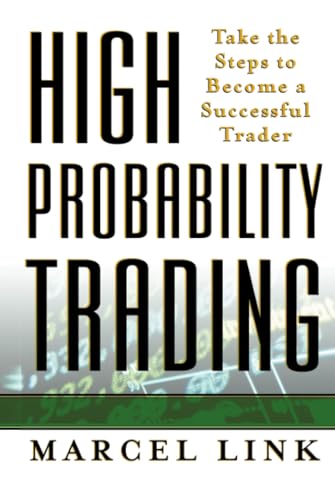
Inhaltsangabe
A common denominator among most new traders is that, within six months of launching their new pursuit, they are out of money and out of trading. High-Probability Trading softens the impact of this "trader's tuition," detailing a comprehensive program for weathering those perilous first months and becoming a profitable trader.
This no-nonsense book takes a uniquely blunt look at the realities of trading. Filled with real-life examples and intended for use by both short- and long-term traders, it explores each aspect of successful trading.
Die Inhaltsangabe kann sich auf eine andere Ausgabe dieses Titels beziehen.
Über die Autorin bzw. den Autor
Marcel Link has been trading professionally since 1991. He is the founder of linkfutures.com and is a TradeStation consultant. Linkfutures.com serves the trading community with daily commentary on the markets, along with insights into technical analysis, training, marketing, and other information that can be vital to traders. Link can be reached for questions or comments at marcel@linkfutures.com.
Von der hinteren Coverseite
"The Goal Is to Teach All Traders to Think with the Mindset of a Successful Trader..."
While successful trading requires tremendous skill and knowledge, it begins and ends with mindset. What do exceptional traders think when they purchase a quality stock and the price immediately plummets? How do they keep one bad trade from destroying their confidence--and bankroll? What do they know that the rest of us don't?
"Some trades are not worth the risk and should never be done."
High Probability Trading shows you how to trade only when the odds are in your favor. From descriptions of the software and equipment an exceptional trader needs to high probability signals that either a top or bottom has been reached, it is today's most complete guidebook to thinking like an exceptional trader--every day, on every trade.
"It's not how good you are at one individual thing, but it's the culmination of every aspect of trading that makes one successful."
Before he became a successful trader, Marcel Link spent years wading from one system to the next, using trial and error to figure out what worked, what didn't, and why. In High Probability Trading, Link reveals the steps he took to become a consistent, patient, and winning trader--by learning what to watch for, what to watch out for, and what to do to make each trade a high probability trade.
"Why do a select few traders repeatedly make money while the masses lose? What do bad traders do that good traders avoid, and what do winning traders do that is different? Throughout this book I will detail how successful traders behave differently and consistently make money by making high probability trades and avoiding common pitfalls..."--From the preface
Within 6 months of beginning their careers full of promise and hope, most traders are literally out of money and out of trading. High Probability Trading reduces the likelihood that you will have to pay this "traders' tuition," by detailing a market-proven program for weathering those first few months and becoming a profitable trader from the beginning.
Combining a uniquely blunt look at the realities of trading with examples, charts, and case studies detailing actual hits and misses of both short- and long-term traders, this straightforward guidebook discusses:
- The 10 consistent attributes of a successful trader, and how to make them work for you
- Strategies for controlling emotions in the heat of trading battle
- Technical analysis methods for identifying trends, breakouts, reversals, and more
- Market-tested signals for consistently improving the timing of entry and exit points
- How to "trade the news"--and understand when the market has already discounted it
- Learning how to get out of a bad trade before it can hurt you
The best traders enter the markets only when the odds are in their favor. High Probability Trading shows you how to know the difference between low and high probability situations, and only trade the latter. It goes far beyond simply pointing out the weaknesses and blind spots that hinder most traders to explaining how those defects can be understood, overcome, and turned to each trader's advantage.
While it is a cliché, it is also true that there are no bad traders, only bad trades. Let High Probability Trading show you how to weed the bad trades from your trading day by helping you see them before they occur. Packed with charts, trading tips, and questions traders should be asking themselves, plus real examples of traders in every market situation, this powerful book will first give you the knowledge and tools you need to tame the markets and then show you how to meld them seamlessly into a customized trading program--one that will help you join the ranks of elite traders and increase your probability of success on e
Auszug. © Genehmigter Nachdruck. Alle Rechte vorbehalten.
HIGH PROBABILITY TRADING
Take the Steps to Become a Successful TraderBy MARCEL LINKMcGraw-Hill
Copyright © 2003 Marcel LinkAll right reserved.
ISBN: 978-0-07-138156-7
Contents
Chapter One
The Tuition of TradingHow To Make Money Performing Vascular Surgery Using Household Tools and Kitchen Utensils. I don't think people would read such a book with the expectation of being able to do open-heart surgery out of their garages in their spare time, yet people go into trading with little or no experience and expect to succeed just after reading a book or two.
Doctors, lawyers, and engineers need to go to school for years before they are expected to be professionals and earn a living. A pro baseball player spends a few years in the minors before getting called up to play with the big boys. Football and basketball players start out by playing college ball for 4 years, and then only the best get drafted. Electricians, plumbers, and welders are apprentices first. These people do not just decide to work in their field and start doing so from day 1; they work up to it.
So why should traders think they are any different or better? After all, they are trying to enter what I believe is the hardest profession of all with hopes of being successful with little or no experience. The same way it takes years to become a surgeon, a trader needs to put in time before expecting to be capable of doing it successfully. Just as in every other profession, a trader needs the proper education. Unfortunately, Harvard doesn't offer any degrees in trading. The only "schooling" traders get in learning their profession is hands-on, and the money they lose can be considered their tuition. It is through these losses that they will, they hope, gain the experience needed to be a great trader.
THE LEARNING YEARS
The first few years of trading should be considered "the learning years." This is not the time to try to make a killing; instead, one should concentrate on preserving capital and educating oneself. This time should be treated as if one were in school to learn. Countless mistakes will be made when one is first starting to trade, simply because one doesn't know any better. It's okay to lose a little, and traders should be prepared for this when they are first beginning to trade. Your capital should not be considered trading capital; instead, think of it as "learning capital." At the beginning you should risk only a small portion of your money, just enough to get your feet wet and start the learning process. Too many traders are gung-ho from the start, concentrating only on making money, not on becoming better traders. Keep in mind that most successful traders began by losing quite a bit of money. Even most of Richard Dennis's turtles lost money their first year before becoming some of the world's most successful traders. Almost all the stories you read in Market Wizards are about traders who got blown out once or twice before learning from their mistakes. It doesn't matter whether one is investing in stocks or day trading bonds; it takes a lot of hard work and experience to be able to trade well. While many beginners may give up after a rough start, the ones who accept the learning curve, don't get discouraged, and are properly capitalized have a good chance of making it in the long run.
A Sampling of What Traders Need to Learn How to Do
Enter orders
Read charts
Use technical analysis
Understand how different markets trade
Trade off news
Write systems
Test systems
Become disciplined
Make a money management plan
Manage risk
Learn how to take a loss
Know when to trade and when not to trade
Make a trading plan
Control one's emotions
Equally Important, Traders Need to Learn What Not to Do: A Few
of These No-Nos Are
Chasing the markets
Trading while undercapitalized
Overtrading
Letting losses get too large
Marrying a position
Taking winners prematurely
Taking on too much risk
Trading for the excitement
Being stubborn
Trading is an ongoing learning process, not something that can be learned overnight by reading a book or going to a seminar. People can read five books on learning to play tennis and take a few lessons, but until they get out there and practice, practice, practice, they won't be competitive. Trading is not much different; it takes lots of practice to get good. The only difference between tennis and trading is that when you are bad at tennis, you still have fun and maybe lose a few pounds while getting in shape. With trading you may still lose a few pounds, but that's because you may not have money for food.
PAPER TRADING HELPS, BUT IT'S NOT THE REAL THING
No matter what one may have read in a book or how long one has paper traded, as soon as a person starts trading for real, everything changes. Mistakes one never even thought of start popping up left and right, and the best way to avoid making them is to make them, lose money, realize they were mistakes, and consciously be aware of them the next time the same situations arise. Losing real money will make you feel a pain that paper trading can't. Eventually, if you lose enough, you learn not to make the same mistakes over and over. Although paper trading is a good way to start and traders shouldn't risk money until they've done a fair amount of it, it is not the same as putting real money on the line. Losing $1000 on paper is quickly shaken off; when it's real money, it can be emotionally gut-wrenching and depressing, and when it happens on Friday, it ruins the whole weekend. These emotions aren't normally felt in paper trading, where there is no pain or grave sense of having made a mistake. No one gets a margin call when paper trading and has to liquidate positions, and everyone gets the best prices on every trade. With real money at risk, trading becomes a different ball game. Things that would not be done on paper are done when real money is on the line. Risk aversion levels change, profits are taken too quickly, losses are allowed to grow too big, and slippage and commissions become a major factor. These are just a few things that paper trading can't simulate, and though it's important to risk real money, it is wise to start on paper until one gets a feel for the markets. I also recommend voraciously reading everything one can get one's hands on. There is always room for improvement, and after 15 years in the business I'm constantly trying to learn more about trading.
THE TUITION OF TRADING
The Cost of Learning
From everything I've ever heard, read, and seen, a trader needs about 3 to 5 years to get through the learning period. During this time in which he is learning and honing his skills, a trader will be paying his "tuition of trading" the same way lawyers, chefs, and doctors pay...
„Über diesen Titel“ kann sich auf eine andere Ausgabe dieses Titels beziehen.
Suchergebnisse für High-Probability Trading: Take the Steps to Become...

Foto des Verkäufers
High probability trading : take the steps to become a successful trader
Anbieter: Dream Books Co., Denver, CO, USA
Verkäuferbewertung 5 von 5 Sternen

Zustand: acceptable. This copy has clearly been enjoyedâ"expect noticeable shelf wear and some minor creases to the cover. Binding is strong, and all pages are legible. May contain previous library markings or stamps. Artikel-Nr. DBV.0071381562.A
Gebraucht kaufen
EUR 4,05
Versand gratis
Versand innerhalb von USA
Versand innerhalb von USA
Anzahl: 1 verfügbar
Beispielbild für diese ISBN
High Probability Trading: Take the Steps to Become a Successful Trader
Anbieter: ThriftBooks-Atlanta, AUSTELL, GA, USA
Verkäuferbewertung 5 von 5 Sternen
Hardcover. Zustand: Fair. No Jacket. Missing dust jacket; Readable copy. Pages may have considerable notes/highlighting. ~ ThriftBooks: Read More, Spend Less. Artikel-Nr. G0071381562I5N01
Gebraucht kaufen
EUR 6,12
Versand gratis
Versand innerhalb von USA
Versand innerhalb von USA
Anzahl: 1 verfügbar
Beispielbild für diese ISBN
High Probability Trading: Take the Steps to Become a Successful Trader
Anbieter: ThriftBooks-Atlanta, AUSTELL, GA, USA
Verkäuferbewertung 5 von 5 Sternen
Hardcover. Zustand: Good. No Jacket. Missing dust jacket; Pages can have notes/highlighting. Spine may show signs of wear. ~ ThriftBooks: Read More, Spend Less. Artikel-Nr. G0071381562I3N01
Gebraucht kaufen
EUR 6,12
Versand gratis
Versand innerhalb von USA
Versand innerhalb von USA
Anzahl: 2 verfügbar
Beispielbild für diese ISBN
High Probability Trading: Take the Steps to Become a Successful Trader
Anbieter: ThriftBooks-Phoenix, Phoenix, AZ, USA
Verkäuferbewertung 5 von 5 Sternen
Hardcover. Zustand: Fair. No Jacket. Missing dust jacket; Readable copy. Pages may have considerable notes/highlighting. ~ ThriftBooks: Read More, Spend Less. Artikel-Nr. G0071381562I5N01
Gebraucht kaufen
EUR 6,12
Versand gratis
Versand innerhalb von USA
Versand innerhalb von USA
Anzahl: 1 verfügbar
Beispielbild für diese ISBN
High Probability Trading: Take the Steps to Become a Successful Trader
Anbieter: ThriftBooks-Dallas, Dallas, TX, USA
Verkäuferbewertung 5 von 5 Sternen
Hardcover. Zustand: Fair. No Jacket. Missing dust jacket; Readable copy. Pages may have considerable notes/highlighting. ~ ThriftBooks: Read More, Spend Less. Artikel-Nr. G0071381562I5N01
Gebraucht kaufen
EUR 6,12
Versand gratis
Versand innerhalb von USA
Versand innerhalb von USA
Anzahl: 1 verfügbar
Beispielbild für diese ISBN
High Probability Trading: Take the Steps to Become a Successful Trader
Anbieter: ThriftBooks-Phoenix, Phoenix, AZ, USA
Verkäuferbewertung 5 von 5 Sternen
Hardcover. Zustand: Fair. No Jacket. Readable copy. Pages may have considerable notes/highlighting. ~ ThriftBooks: Read More, Spend Less. Artikel-Nr. G0071381562I5N00
Gebraucht kaufen
EUR 6,12
Versand gratis
Versand innerhalb von USA
Versand innerhalb von USA
Anzahl: 1 verfügbar
Beispielbild für diese ISBN
High Probability Trading: Take the Steps to Become a Successful Trader
Anbieter: ThriftBooks-Reno, Reno, NV, USA
Verkäuferbewertung 5 von 5 Sternen
Hardcover. Zustand: Fair. No Jacket. Missing dust jacket; Readable copy. Pages may have considerable notes/highlighting. ~ ThriftBooks: Read More, Spend Less. Artikel-Nr. G0071381562I5N01
Gebraucht kaufen
EUR 6,12
Versand gratis
Versand innerhalb von USA
Versand innerhalb von USA
Anzahl: 1 verfügbar
Beispielbild für diese ISBN
High Probability Trading: Take the Steps to Become a Successful Trader
Anbieter: ThriftBooks-Atlanta, AUSTELL, GA, USA
Verkäuferbewertung 5 von 5 Sternen
Hardcover. Zustand: Very Good. No Jacket. May have limited writing in cover pages. Pages are unmarked. ~ ThriftBooks: Read More, Spend Less. Artikel-Nr. G0071381562I4N00
Gebraucht kaufen
EUR 6,12
Versand gratis
Versand innerhalb von USA
Versand innerhalb von USA
Anzahl: 4 verfügbar
Beispielbild für diese ISBN
High Probability Trading: Take the Steps to Become a Successful Trader
Anbieter: ThriftBooks-Dallas, Dallas, TX, USA
Verkäuferbewertung 5 von 5 Sternen
Hardcover. Zustand: Good. No Jacket. Missing dust jacket; Pages can have notes/highlighting. Spine may show signs of wear. ~ ThriftBooks: Read More, Spend Less. Artikel-Nr. G0071381562I3N01
Gebraucht kaufen
EUR 6,12
Versand gratis
Versand innerhalb von USA
Versand innerhalb von USA
Anzahl: 2 verfügbar
Beispielbild für diese ISBN
High Probability Trading: Take the Steps to Become a Successful Trader
Anbieter: ThriftBooks-Phoenix, Phoenix, AZ, USA
Verkäuferbewertung 5 von 5 Sternen
Hardcover. Zustand: Good. No Jacket. Pages can have notes/highlighting. Spine may show signs of wear. ~ ThriftBooks: Read More, Spend Less. Artikel-Nr. G0071381562I3N00
Gebraucht kaufen
EUR 6,12
Versand gratis
Versand innerhalb von USA
Versand innerhalb von USA
Anzahl: 1 verfügbar