
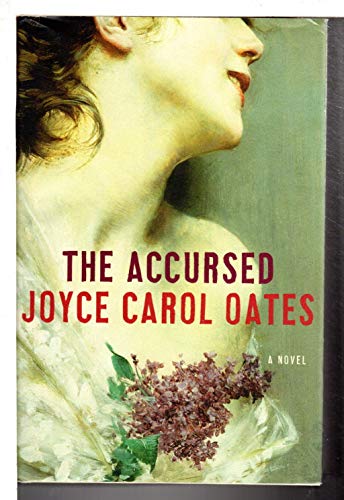
The Accursed: A Gothic Supernatural Horror in Woodrow Wilson's Cursed Princeton – Vampires and Dark Academia - Hardcover
Inhaltsangabe
"Joyce Carol Oates has written what may be the world’s finest postmodern Gothic novel: E.L. Doctorow’s Ragtime set in Dracula’s castle. It’s dense, challenging, problematic, horrifying, funny, prolix and full of crazy people. You should read it.” —Stephen King, New York Times Book Review
Princeton, New Jersey at the turn of the 20th century: a tranquil place to raise a family, a genteel town for genteel souls. But something dark and dangerous lurks at the edges of the town, corrupting and infecting its residents. Vampires and ghosts haunt the dreams of the innocent. A powerful curse besets the elite families of Princeton—their daughters begin disappearing. A young bride on the verge of the altar is seduced and abducted by a dangerously compelling man—a shape-shifting, vaguely European prince who might just be the devil, and who spreads his curse upon a richly deserving community of white Anglo-Saxon privilege. And in the Pine Barrens that border the town, a lush and terrifying underworld opens up.
When the bride’s brother sets out against all odds to find her, his path will cross those of Princeton’s most formidable people, from Grover Cleveland, fresh out of his second term in the White House and retired to town for a quieter life, to soon-to-be commander in chief Woodrow Wilson, president of the University, and a complex individual obsessed to the point of madness with his need to retain power; from the young Socialist idealist Upton Sinclair, to his charismatic comrade Jack London, and the most famous writer of the era, Samuel Clemens/ Mark Twain—all plagued by “accursed” visions.
Narrated with Oates's unmistakable psychological insight, The Accursed combines beautifully transporting historical detail with chilling supernatural elements to stunning effect.
Die Inhaltsangabe kann sich auf eine andere Ausgabe dieses Titels beziehen.
Über die Autorin bzw. den Autor
Joyce Carol Oates is a recipient of the National Medal of Humanities, the National Book Critics Circle Ivan Sandrof Lifetime Achievement Award, the National Book Award, and the 2019 Jerusalem Prize, and has been several times nominated for the Pulitzer Prize. She has written some of the most enduring fiction of our time, including the national bestsellers We Were the Mulvaneys; Blonde, which was nominated for the National Book Award; and the New York Times bestseller The Falls, which won the 2005 Prix Femina. She is the Roger S. Berlind Distinguished Professor of the Humanities at Princeton University and has been a member of the American Academy of Arts and Letters since 1978.
Von der hinteren Coverseite
A major historical novel from "one of the great artistic forces of our time" (The Nation)—an eerie, unforgettable story of possession, power, and loss in early-twentieth-century Princeton, a cultural crossroads of the powerful and the damned
Princeton, New Jersey, at the turn of the twentieth century: a tranquil place to raise a family, a genteel town for genteel souls. But something dark and dangerous lurks at the edges of the town, corrupting and infecting its residents. Vampires and ghosts haunt the dreams of the innocent. A powerful curse besets the elite families of Princeton; their daughters begin disappearing. A young bride on the verge of the altar is seduced and abducted by a dangerously compelling man–a shape-shifting, vaguely European prince who might just be the devil, and who spreads his curse upon a richly deserving community of white Anglo-Saxon privilege. And in the Pine Barrens that border the town, a lush and terrifying underworld opens up.
When the bride's brother sets out against all odds to find her, his path will cross those of Princeton's most formidable people, from Grover Cleveland, fresh out of his second term in the White House and retired to town for a quieter life, to soon-to-be commander in chief Woodrow Wilson, president of the university and a complex individual obsessed to the point of madness with his need to retain power; from the young Socialist idealist Upton Sinclair to his charismatic comrade Jack London, and the most famous writer of the era, Samuel Clemens/Mark Twain–all plagued by "accursed" visions.
An utterly fresh work from Oates, The Accursed marks new territory for the masterful writer. Narrated with her unmistakable psychological insight, it combines beautifully transporting historical detail with chilling supernatural elements to stunning effect.
Auszug. © Genehmigter Nachdruck. Alle Rechte vorbehalten.
The Accursed
By Joyce Carol OatesHarperCollins Publishers
Copyright ©2013 Joyce Carol Oates
All rights reserved.
ISBN: 978-0-06-223170-3All rights reserved.
Excerpt
CHAPTER 1
ASH WEDNESDAY EVE, 1905
Fellow historians will be shocked, dismayed, and perhaps incredulous — Iam daring to suggest that the Curse did not first manifest itself onJune 4, 1905, which was the disastrous morning of Annabel Slade'swedding, and generally acknowledged to be the initial public manifestationof the Curse, but rather earlier, in the late winter of the year, on the eve ofAsh Wednesday in early March.
This was the evening of Woodrow Wilson's (clandestine) visit tohis longtime mentor Winslow Slade, but also the evening of the day whenWoodrow Wilson experienced a considerable shock to his sense of family,indeed racial identity.
Innocently it began: at Nassau Hall, in the president's office, witha visit from a young seminarian named Yaeger Washington Ruggles whohad also been employed as Latin preceptor at the university, to assist inthe instruction of undergraduates. (Intent upon reforming the quality ofeducation at Princeton, with its reputation as a Southern-biased, largelyPresbyterian boys' school set beside which its rival Harvard Universitywas a paradigm of academic excellence, Woodrow Wilson had initiateda new pedagogy in which bright young men were hired to assist olderprofessors in their lecture courses; Yaeger Ruggles was one of these youngpreceptors, popular in the better homes of Princeton as at the university,as eligible bachelors are likely to be in a university town.) Yaeger Ruggles,was a slender, slight, soft-spoken fellow Virginian, a distant cousinof Wilson's who had introduced himself to the university president afterhe'd enrolled in his first year at the Princeton Theological Seminary;Wilson had personally hired him to be a preceptor, impressed with hiscourtesy, bearing, and intelligence. At their first meeting, Yaeger Ruggleshad brought with him a letter from an elderly aunt, living in Roanoke,herself a cousin of Wilson's father's aunt. This web of intricate connectionswas very Southern; despite the fact that Woodrow Wilson's branchof the family was clearly more affluent, and more socially prominent thanYaeger Ruggles's family, who dwelt largely in the mountainous area westof Roanoke, Woodrow Wilson had made an effort to befriend the youngman, inviting him to the larger receptions and soirees at his home, andintroducing him to the sons and daughters of his well-to-do Princetonassociates and neighbors. Though older than Ruggles by more than twentyyears, Woodrow Wilson saw in his young kinsman something of himself,at an earlier age when he'd been a law student in Virginia with an abidinginterest in theology. (Woodrow Wilson was the son of a preeminentPresbyterian minister who'd been a chaplain for the Confederate Army;his maternal grandfather was a Presbyterian minister in Rome, Georgia,also a staunch religious and political conservative.) At the time of YaegerRuggles's visit to President Wilson, in his office in Nassau Hall, thetwo had been acquainted for more than two years. Woodrow Wilson hadnot seen so much of his young relative as he'd wished, for his Prince tonsocial life had to be spent in cultivating the rich and influential. "A privatecollege requires donors. Tuition alone is inadequate"— so WoodrowWilson said often, in speeches as in private conversations. He did regretnot seeing more of Yaeger, for he had but three daughters and no son; andnow, with his wife's chronic ill health, that had become a sort of malaiseof the spirit, as well as her advancing age, it was not likely that Woodrowwould ever have a son. Yaeger's warm dark intelligent eyes invariablymoved Woodrow to an indefinable emotion, with the intensity ofmemory. His hair was very dark, as Woodrow's had once been, but thickand springy, where Woodrow's was rather thin, combed flat against hishead. And there was something thrilling about the young man's softlymodulated baritone voice also, that seemed to remind Wilson of a belovedvoice or voices of his childhood in Virginia and Georgia. It had been a wildimpulse of Woodrow's — (since childhood in his rigid Presbyterian household,Woodrow had been prone to near-irresistible urges and impulses ofevery kind, to which he'd rarely given in) — to begin singing in Yaeger'spresence, that the younger man might join him; for Woodrow had lovedhis college glee clubs, and liked to think that he had a passably fair tenorvoice, if untrained and, in recent years, unused.
But it would be a Protestant hymn Woodrow would sing with Yaeger,something melancholy, mournful, yearning, and deliciously submissive — Rockof Ages, cleft for me! Let me hide myself in Thee! Let the waterand the blood, that thy wounded side did flow ...
Woodrow had not yet heard Yaeger speak in public, but he'd predicted,in Princeton circles, and to the very dean of the seminary himself,that his young "Virginian cousin" would one day be an excellent minister — atwhich time, Woodrow wryly thought, Yaeger too would understandthe value of cultivating the wealthy at the expense of one's ownpredilections.
But this afternoon, Yaeger Washington Ruggles was not so composedas he usually was. He appeared to be short of breath, as if he'dbounded up the stone steps of Nassau Hall; he did not smile so readily andso sympathetically as he usually did. Nor was his hurried handshake so firm,or so warm. Woodrow saw with a pang of displeasure — (for it pained him,to feel even an inward rebuke of anyone whom he liked) — that the seminarian'sshirt collar was open at his throat, as if, in an effort to breathe, he'dunconsciously tugged at it; he had not shaved fastidiously and his skin,ordinarily of a more healthy tone than Woodrow's own, seemed darkened as by a shadow.
"Woodrow! I must speak with you."
"But of course, Yaeger — we are speaking."
Woodrow half-rose from his chair, behind his massive desk; then remainedseated, in his rather formal posture. The office of the president wasbook lined, floor to ceiling; windows opened out onto the cultivated greenof Nassau Hall's large and picturesque front lawn, that swept to NassauStreet and the wrought iron gates of the university; and, to the rear, anothergrassy knoll, that led to Clio and Whig Halls, stately Greek templesof startling if somewhat incongruous Attic beauty amid the darker, Gothicuniversity architecture. Behind Woodrow on the wall was a bewigged portraitof Aaron Burr, Sr., Princeton University's first president to take officein Nassau Hall.
"Yaeger, what is it? You seem troubled."
"You have heard, Woodrow? The terrible thing that happened yesterdayin Camden?"
"Why, I think that I — I have not 'heard' ... What is it?"
Woodrow smiled, puzzled. His polished eyeglasses winked.
In fact, Woodrow had been hearing, or half-hearing, of somethingvery ugly through the day, at the Nassau Club where he had had lunchwith several trustees and near the front steps of Nassau Hall where he'doverheard several preceptors talking together in lowered voices. (It was adisadvantage of the presidency, as it had not been when Woodrow was apopular professor at the university, that, sighting him, the younger facultyin particular seemed to freeze, and to smile at him with expressions offorced courtesy and affability.) And it seemed to him too, that morningat breakfast, in his home at Prospect, that their Negro servant, Clytie, hadbeen unusually silent, and had barely responded when Woodrow greetedher with his customary warm bright smile — "Good morning, Clytie! Whathave you prepared for us today?" (For...
„Über diesen Titel“ kann sich auf eine andere Ausgabe dieses Titels beziehen.
Weitere beliebte Ausgaben desselben Titels

Suchergebnisse für The Accursed: A Gothic Supernatural Horror in Woodrow...

Beispielbild für diese ISBN
The Accursed
Anbieter: World of Books (was SecondSale), Montgomery, IL, USA
Verkäuferbewertung 5 von 5 Sternen

Zustand: Good. Item in good condition. Textbooks may not include supplemental items i.e. CDs, access codes etc. Artikel-Nr. 00095225420
Gebraucht kaufen
EUR 3,68
Versand gratis
Versand innerhalb von USA
Versand innerhalb von USA
Anzahl: 8 verfügbar
Beispielbild für diese ISBN
The Accursed
Anbieter: World of Books (was SecondSale), Montgomery, IL, USA
Verkäuferbewertung 5 von 5 Sternen
Zustand: Acceptable. Item in acceptable condition! Textbooks may not include supplemental items i.e. CDs, access codes etc. Artikel-Nr. 00101401382
Gebraucht kaufen
EUR 3,68
Versand gratis
Versand innerhalb von USA
Versand innerhalb von USA
Anzahl: 2 verfügbar
Beispielbild für diese ISBN
The Accursed
Anbieter: World of Books (was SecondSale), Montgomery, IL, USA
Verkäuferbewertung 5 von 5 Sternen
Zustand: Good. Item in good condition. Textbooks may not include supplemental items i.e. CDs, access codes etc. Artikel-Nr. 00086923383
Gebraucht kaufen
EUR 3,95
Versand gratis
Versand innerhalb von USA
Versand innerhalb von USA
Anzahl: 5 verfügbar
Beispielbild für diese ISBN
The Accursed
Verlag:
HarperCollins Publishers, 2013
ISBN 10: 0062231707
ISBN 13: 9780062231703
Gebraucht
Hardcover
Erstausgabe
Anbieter: Better World Books, Mishawaka, IN, USA
Verkäuferbewertung 5 von 5 Sternen
Zustand: Good. First Edition. Former library copy. Pages intact with minimal writing/highlighting. The binding may be loose and creased. Dust jackets/supplements are not included. Includes library markings. Stock photo provided. Product includes identifying sticker. Better World Books: Buy Books. Do Good. Artikel-Nr. GRP89766396
Gebraucht kaufen
EUR 6,52
Versand gratis
Versand innerhalb von USA
Versand innerhalb von USA
Anzahl: 2 verfügbar
Beispielbild für diese ISBN
The Accursed
Verlag:
HarperCollins Publishers, 2013
ISBN 10: 0062231707
ISBN 13: 9780062231703
Gebraucht
Hardcover
Erstausgabe
Anbieter: Better World Books, Mishawaka, IN, USA
Verkäuferbewertung 5 von 5 Sternen
Zustand: Very Good. First Edition. Pages intact with possible writing/highlighting. Binding strong with minor wear. Dust jackets/supplements may not be included. Stock photo provided. Product includes identifying sticker. Better World Books: Buy Books. Do Good. Artikel-Nr. 4268100-75
Gebraucht kaufen
EUR 6,52
Versand gratis
Versand innerhalb von USA
Versand innerhalb von USA
Anzahl: 1 verfügbar
Beispielbild für diese ISBN
The Accursed
Anbieter: Wonder Book, Frederick, MD, USA
Verkäuferbewertung 5 von 5 Sternen
Zustand: Good. Good condition. Very Good dust jacket. A copy that has been read but remains intact. May contain markings such as bookplates, stamps, limited notes and highlighting, or a few light stains. Artikel-Nr. J14A-03079
Gebraucht kaufen
EUR 6,80
Versand gratis
Versand innerhalb von USA
Versand innerhalb von USA
Anzahl: 2 verfügbar
Beispielbild für diese ISBN
The Accursed: A Gothic Supernatural Horror in Woodrow Wilson's Cursed Princeton â" Vampires and Dark Academia
Verlag:
Ecco (edition First Edition), 2013
ISBN 10: 0062231707
ISBN 13: 9780062231703
Gebraucht
Hardcover
Erstausgabe
Anbieter: BooksRun, Philadelphia, PA, USA
Verkäuferbewertung 5 von 5 Sternen
Hardcover. Zustand: Very Good. First Edition. It's a well-cared-for item that has seen limited use. The item may show minor signs of wear. All the text is legible, with all pages included. It may have slight markings and/or highlighting. Artikel-Nr. 0062231707-11-6
Gebraucht kaufen
EUR 6,93
Versand gratis
Versand innerhalb von USA
Versand innerhalb von USA
Anzahl: 1 verfügbar
Beispielbild für diese ISBN
The Accursed
Anbieter: ThriftBooks-Atlanta, AUSTELL, GA, USA
Verkäuferbewertung 5 von 5 Sternen
Hardcover. Zustand: As New. No Jacket. Pages are clean and are not marred by notes or folds of any kind. ~ ThriftBooks: Read More, Spend Less. Artikel-Nr. G0062231707I2N00
Gebraucht kaufen
EUR 7,59
Versand gratis
Versand innerhalb von USA
Versand innerhalb von USA
Anzahl: 1 verfügbar
Beispielbild für diese ISBN
The Accursed
Anbieter: ThriftBooks-Dallas, Dallas, TX, USA
Verkäuferbewertung 5 von 5 Sternen
Hardcover. Zustand: Very Good. No Jacket. Former library book; May have limited writing in cover pages. Pages are unmarked. ~ ThriftBooks: Read More, Spend Less. Artikel-Nr. G0062231707I4N10
Gebraucht kaufen
EUR 7,59
Versand gratis
Versand innerhalb von USA
Versand innerhalb von USA
Anzahl: 1 verfügbar
Beispielbild für diese ISBN
The Accursed
Anbieter: ThriftBooks-Dallas, Dallas, TX, USA
Verkäuferbewertung 5 von 5 Sternen
Hardcover. Zustand: Very Good. No Jacket. Missing dust jacket; May have limited writing in cover pages. Pages are unmarked. ~ ThriftBooks: Read More, Spend Less. Artikel-Nr. G0062231707I4N01
Gebraucht kaufen
EUR 7,59
Versand gratis
Versand innerhalb von USA
Versand innerhalb von USA
Anzahl: 1 verfügbar