
Verwandte Artikel zu Portrait of a Spy: A Novel (Gabriel Allon, 11)
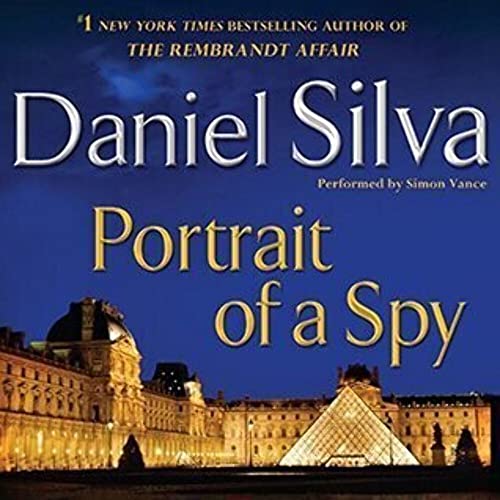
Inhaltsangabe
Gabriel Allon has been hailed as the most compelling creation since “Ian Fleming put down his martini and invented James Bond” (Rocky Mountain News). A man with a deep appreciation for all that is beautiful, Gabriel is also an angel of vengeance, an international operative who will stop at nothing to see justice done. Sometimes he must journey far in search of evil. And sometimes evil comes to him.
In a dangerous world, one extraordinary woman can mean the difference between life and death. . . .
For Gabriel and his wife, Chiara, it was supposed to be the start of a pleasant weekend in London—a visit to a gallery in St. James’s to authenticate a newly discovered painting by Titian, followed by a quiet lunch. But a pair of deadly bombings in Paris and Copenhagen has already marred this autumn day. And while walking toward Covent Garden, Gabriel notices a man he believes is about to carry out a third attack. Before Gabriel can draw his weapon, he is knocked to the pavement and can only watch as the nightmare unfolds.
Haunted by his failure to stop the massacre of innocents, Gabriel returns to his isolated cottage on the cliffs of Cornwall, until a summons brings him to Washington and he is drawn into a confrontation with the new face of global terror. At the center of the threat is an American-born cleric in Yemen to whom Allah has granted “a beautiful and seductive tongue.” A gifted deceiver, who was once a paid CIA asset, the mastermind is plotting a new wave of attacks.
Gabriel and his team devise a daring plan to destroy the network of death from the inside, a gambit fraught with risk, both personal and professional. To succeed, Gabriel must reach into his violent past. A woman waits there—a reclusive heiress and art collector who can traverse the murky divide between Islam and the West. She is the daughter of an old enemy, a woman joined to Gabriel by a trail of blood. . . .
Set against the disparate worlds of art and intelligence, Portrait of a Spy moves swiftly from the corridors of power in Washington to the glamorous auction houses of New York and London to the unforgiving landscape of the Saudi desert. Featuring a climax that will leave readers haunted long after they turn the final page, this deeply entertaining story is also a breathtaking portrait of courage in the face of unspeakable evil—and Daniel Silva’s most extraordinary novel to date.
Amazon Exclusive: Daniel Silva on Writing Portrait of a Spy with a Pencil
While on book tour, I’ve been surprised to find that readers are fascinated by how writers actually write. Most readers hold in their mind an idealized image of the novelist at work—a figure in a trendy urban coffeehouse, a solitary figure walking along an empty beach. The truth, however, is seldom so romantic.
Before going any further, let us stipulate that, much like the hero of my novels, the art restorer and spy Gabriel Allon, I am something of a creature of habit. I work seven days a week, from early in the morning until six thirty in the evening, when I stop to watch the evening news. My work clothing never varies: gray sweatpants by Russell Athletic, a long-sleeve T-shirt by L.L. Bean, fleece Acorn moccasins, and discount cotton socks from Marks & Spencer in England. Occasionally, visitors to our house will catch a glimpse of this outfit, but, for the most part, my wife and children tend to shield me from public view. As a rule, I don’t answer the telephone—unless it is a family emergency of some sort—and I don’t read e-mail. I nibble rather than eat. Portrait of a Spy, like all the Gabriel Allon novels, was fueled largely by McVitie’s digestive biscuits.
I have a computer, of course, but I really do most of my actual writing in longhand, on yellow legal pads. I prefer to work while lying on the floor rather than at my desk. This annoys my wife because she took a great deal of time and effort to have a desk custom made to fit my office. When I showed her a photograph of Muriel Spark, one of her literary heroes, writing in longhand stretched across a floor, she was only partially mollified. Sometimes we talk about living somewhere other than Georgetown. Secretly, the very idea terrifies me. After writing 14 books in the same room of the same house, I am afraid I have lost the ability to work anywhere else.
As for my writing instrument of choice, it is unquestionably the pencil. There is something about the sound it makes scratching across the page that, for me, is the essence of composition. The pencil is the antithesis of all things cyber and e, a means of returning, however briefly, to a world that is unconnected and unwired. A pad and pencil do not freeze or crash. There are no viruses or error messages. If a thunderstorm knocks out the power, the words will still be there when the lights come on again. And then, there is the satisfying natural rhythm of the work itself—the turning of the completed page, the sharpening of the dulled point, the fortnightly disposal of the fluffy wooden shavings.
Lately, I have been hoarding pencils. I’m not sure precisely when it began; I suspect it had something to do with the death of the typewriter. An irrational fear gripped me, a fear that pencils were next. If the typewriter could go extinct, how could the lowly, environmentally hostile pencil possibly hope to survive in the brave new world? I now order my favorite brand—the Paper Mate Mirado Black Warrior No. 2—by the case. I am reasonably confident I now have enough pencils on hand to see me through the next several novels—though, if I happen to misplace a pencil, I will search the house thoroughly before removing a new one from its special drawer and sharpening it for the first time. To sharpen a virgin pencil is, in a sense, to commit an act of assisted suicide. It saddens me.
I wish it were not so. I wish I could write on a computer while traveling on an airplane or sitting in a strange hotel room, but I cannot. I have become a prisoner of my office. I need my floor, and my Mirado Black Warrior No. 2 pencils, and my McVitie’s digestive biscuits. I hoard them, too. I keep them on a special shelf in the storage room, next to my socks from Marks & Spencer.
Copyright © Daniel Silva 2011. All Rights Reserved.
Die Inhaltsangabe kann sich auf eine andere Ausgabe dieses Titels beziehen.
Über die Autorin bzw. den Autor
Daniel Silva is the award-winning #1 New York Times bestselling author of twenty-eight previous novels. He is married to the television journalist Jamie Gangel. His books are critically acclaimed bestsellers around the world and have been translated into more than thirty languages.
Von der hinteren Coverseite
Art restorer. Assassin. Spy.
Gabriel Allon has been hailed as the most compelling creation since "Ian Fleming put down his martini and invented James Bond" (Rocky Mountain News). A man with a deep appreciation for all that is beautiful, Gabriel is also an angel of vengeance, an international operative who will stop at nothing to see justice done. Sometimes he must journey far in search of evil. And sometimes evil comes to him.
In a dangerous world, one extraordinary woman can mean the difference between life and death. . . .
For Gabriel and his wife, Chiara, it was supposed to be the start of a pleasant weekend in London—a visit to a gallery in St. James's to authenticate a newly discovered painting by Titian, followed by a quiet lunch. But a pair of deadly bombings in Paris and Copenhagen has already marred this autumn day. And while walking toward Covent Garden, Gabriel notices a man he believes is about to carry out a third attack. Before Gabriel can draw his weapon, he is knocked to the pavement and can only watch as the nightmare unfolds.
Haunted by his failure to stop the massacre of innocents, Gabriel returns to his isolated cottage on the cliffs of Cornwall, until a summons brings him to Washington and he is drawn into a confrontation with the new face of global terror. At the center of the threat is an American-born cleric in Yemen to whom Allah has granted "a beautiful and seductive tongue." A gifted deceiver, who was once a paid CIA asset, the mastermind is plotting a new wave of attacks.
Gabriel and his team devise a daring plan to destroy the network of death from the inside, a gambit fraught with risk, both personal and professional. To succeed, Gabriel must reach into his violent past. A woman waits there—a reclusive heiress and art collector who can traverse the murky divide between Islam and the West. She is the daughter of an old enemy, a woman joined to Gabriel by a trail of blood. . . .
Set against the disparate worlds of art and intelligence, Portrait of a Spy moves swiftly from the corridors of power in Washington to the glamorous auction houses of New York and London to the unforgiving landscape of the Saudi desert. Featuring a climax that will leave readers haunted long after they turn the final page, this deeply entertaining story is also a breathtaking portrait of courage in the face of unspeakable evil—and Daniel Silva's most extraordinary novel to date.
Auszug. © Genehmigter Nachdruck. Alle Rechte vorbehalten.
Portrait of a Spy
A NovelBy Daniel SilvaHarperCollins
Copyright © 2011 Daniel SilvaAll right reserved.
ISBN: 9780062072184
Chapter One
The Lizard Peninsula, CornwallIt was the Rembrandt that solved the mystery once and
for all. Afterward, in the quaint shops where they did their
marketing and the dark little seaside pubs where they did their
drinking, they would chide themselves for having missed the telltale
signs, and they would share a good natured laugh at some of
their more outlandish theories about the true nature of his work.
Because in their wildest dreams there was not one among them
who ever considered the possibility that the taciturn man from
the far end of Gunwalloe Cove was an art restorer, and a world
famous art restorer at that.
He was not the first outsider to wander down to Cornwall with
a secret to keep, yet few had guarded theirs more jealously, or with
more style and intrigue. A case in point was the peculiar manner
in which he had secured lodgings for himself and his beautiful but
much younger wife. Having chosen the picturesque cottage at the
edge of the cliffs?by all accounts, sight unseen?he had paid
the entire twelve-month lease in advance, with all the paperwork
handled discreetly by an obscure lawyer in Hamburg. He settled
into the cottage a fortnight later as if he were conducting a raid
on a distant enemy outpost. Those who met him during his first
forays into the village were struck by his notable lack of candor.
He seemed to have no name?at least not one he was willing to
share?and no country of origin that any of them could place.
Duncan Reynolds, thirty years retired from the railroad and
regarded as the worldliest of Gunwalloe?s residents, described him as
?a cipher of a man? while other reviews ranged from ?standoffish?
to ?unbearably rude.? Even so, all agreed that, for better or worse,
the little west Cornish village of Gunwalloe had become a far more
interesting place.
With time, they were able to establish that his name was
Giovanni Rossi and that, like his beautiful wife, he was of Italian
descent. Which made it all the more curious when they began
to notice government-issue cars filled with government-issue men
prowling the streets of the village late at night. And then there
were the two blokes who sometimes fished the cove. Opinion was
universal that they were the worst fishermen anyone had ever seen.
In fact, most assumed they were not fishermen at all. Naturally, as
is wont to happen in a small village like Gunwalloe, there began
an intense debate about the true identity of the newcomer and the
nature of his work?a debate that was finally resolved by Portrait
of a Young Woman, oil on canvas, 104 by 86 centimeters, by
Rembrandt van Rijn.
Precisely when it arrived would never be clear. They
assumed it was sometime in mid-January because that was when
they noticed a dramatic change in his daily routine. One day he
was marching along the rugged cliff tops of the Lizard Peninsula
as though wrestling with a guilty conscience; the next he
was standing before an easel in his living room, a paintbrush
in one hand, a palette in the other, and opera music blasting so
loudly you could hear the wailing clear across Mount?s Bay in
Marazion . Given the proximity of his cottage to the Coastal
Path, it was possible?if one paused in just the right spot, mind
you, and craned one?s neck at just the right angle?to see him in
his studio. At first, they assumed he was working on a painting
of his own. But as the weeks ground slowly past, it became clear
he was involved in the craft known as conservation or, more
commonly, as restoration.
?Hell?s that mean?? Malcolm Braithwaite, a retired lobster man
who smelled perpetually of the sea, asked one evening at the Lamb
and Flag pub.
?It means he?s fixing the bloody thing,? said Duncan Reynolds.
?A painting is like a living, breathing thing. When it gets old, it
flakes and sags?just like you, Malcolm.?
?I hear it?s a young girl.?
?Pretty,? said Duncan, nodding his head. ?Cheeks like apples.
She looks positively edible.?
?Do we know the artist??
?Still working on that.?
And work on it they did. They consulted many books, searched
many sites on the Internet, and sought out people who knew more
about art than they did?a category that included most of the
population of West Cornwall. Finally, in early April, Dottie Cox from
the village store screwed up the nerve to simply ask the beautiful
young Italian woman about the painting when she came into town
to do her marketing. The woman evaded the question with an
ambiguous smile. Then, with her straw bag slung over her shoulder,
she sauntered back down to the cove, her riotous dark hair tossed
by the springtime wind. Within minutes of her arrival, the wailing
of the opera ceased and the window shades of the cottage fell like
eyelids.
They remained tightly closed for the next week, at which
point the restorer and his beautiful wife disappeared without
warning. For several days, the residents of Gunwalloe feared
they might not be planning to return, and a few actually berated
themselves for having snooped and pried into the couple?s
private affairs. Then, while leafing through the Times one
morning at the village store, Dottie Cox noticed a story from
Washington , D.C., about the unveiling of a long-lost portrait
by Rembrandt? a portrait that looked precisely like the one that
had been in the cottage at the far end of the cove. And thus the
mystery was solved.
Coincidentally, that same edition of the Times contained a
front-page article about a series of mysterious explosions at four
secret Iranian nuclear facilities. No one in Gunwalloe imagined
there might be any connection. At least not yet.
The restorer was a changed man when he came back from America;
they could see that. Though he remained guarded in his personal
encounters?and he was still not the sort you would want to
surprise in the dark?it was obvious a great burden had been lifted
from his shoulders. They saw a smile on his angular face every
now and again, and the light emitted by his unnaturally green eyes
seemed a shade less defensive. Even his long daily walks had a
different quality. Where once he had pounded along the footpaths
like a man possessed, he now seemed to float atop the mist-covered
cliffs like an Arthurian spirit who had come home after a long time
in a distant land.
?Looks to me as if he?s been released from a sacred vow,?
observed Vera Hobbs, owner of the village bakeshop. But when
asked to venture a guess as to what that vow might have been, or
to whom he had sworn it, she refused. Like everyone else in town,
she had made a fool of herself trying to divine his occupation.
?Besides,? she advised, ?it?s better to leave him in peace. Otherwise,
the next time he and his pretty wife leave the Lizard, it might be
for good.?
Indeed, as that glorious summer slowly faded, the restorer?s
future plans became the primary preoccupation of the entire village.
With the lease on the cottage running out in September, and with
no tangible evidence he was planning to renew it, they embarked on
a covert effort...
„Über diesen Titel“ kann sich auf eine andere Ausgabe dieses Titels beziehen.
Suchergebnisse für Portrait of a Spy: A Novel (Gabriel Allon, 11)

Beispielbild für diese ISBN
Portrait of a Spy
Anbieter: World of Books (was SecondSale), Montgomery, IL, USA
Verkäuferbewertung 5 von 5 Sternen

Zustand: Good. Item in good condition. Textbooks may not include supplemental items i.e. CDs, access codes etc. Artikel-Nr. 00056405003
Gebraucht kaufen
EUR 3,95
Versand gratis
Versand innerhalb von USA
Versand innerhalb von USA
Anzahl: Mehr als 20 verfügbar
Beispielbild für diese ISBN
Portrait of a Spy
Anbieter: World of Books (was SecondSale), Montgomery, IL, USA
Verkäuferbewertung 5 von 5 Sternen
Zustand: Very Good. Item in very good condition! Textbooks may not include supplemental items i.e. CDs, access codes etc. Artikel-Nr. 00108609825
Gebraucht kaufen
EUR 3,95
Versand gratis
Versand innerhalb von USA
Versand innerhalb von USA
Anzahl: 3 verfügbar
Beispielbild für diese ISBN
Portrait of a Spy
Anbieter: World of Books (was SecondSale), Montgomery, IL, USA
Verkäuferbewertung 5 von 5 Sternen
Zustand: Acceptable. Item in acceptable condition! Textbooks may not include supplemental items i.e. CDs, access codes etc. Artikel-Nr. 00092807910
Gebraucht kaufen
EUR 3,95
Versand gratis
Versand innerhalb von USA
Versand innerhalb von USA
Anzahl: 6 verfügbar
Beispielbild für diese ISBN
Portrait of a Spy
Verlag:
Harper (edition First Edition), 2011
ISBN 10: 0062072188
ISBN 13: 9780062072184
Gebraucht
Hardcover
Erstausgabe
Anbieter: BooksRun, Philadelphia, PA, USA
Verkäuferbewertung 5 von 5 Sternen
Hardcover. Zustand: Very Good. First Edition. With dust jacket. It's a well-cared-for item that has seen limited use. The item may show minor signs of wear. All the text is legible, with all pages included. It may have slight markings and/or highlighting. Artikel-Nr. 0062072188-8-1-29
Gebraucht kaufen
EUR 5,14
Versand gratis
Versand innerhalb von USA
Versand innerhalb von USA
Anzahl: 1 verfügbar
Beispielbild für diese ISBN
Portrait of a Spy
Verlag:
Harper (edition First Edition), 2011
ISBN 10: 0062072188
ISBN 13: 9780062072184
Gebraucht
Hardcover
Erstausgabe
Anbieter: BooksRun, Philadelphia, PA, USA
Verkäuferbewertung 5 von 5 Sternen
Hardcover. Zustand: Fair. First Edition. The item might be beaten up but readable. May contain markings or highlighting, as well as stains, bent corners, or any other major defect, but the text is not obscured in any way. Artikel-Nr. 0062072188-7-1
Gebraucht kaufen
EUR 5,43
Versand gratis
Versand innerhalb von USA
Versand innerhalb von USA
Anzahl: 1 verfügbar
Beispielbild für diese ISBN
Portrait of a Spy
Verlag:
Harper (edition First Edition), 2011
ISBN 10: 0062072188
ISBN 13: 9780062072184
Gebraucht
Hardcover
Erstausgabe
Anbieter: BooksRun, Philadelphia, PA, USA
Verkäuferbewertung 5 von 5 Sternen
Hardcover. Zustand: Very Good. First Edition. With dust jacket. It's a well-cared-for item that has seen limited use. The item may show minor signs of wear. All the text is legible, with all pages included. It may have slight markings and/or highlighting. Artikel-Nr. 0062072188-11-18-29
Gebraucht kaufen
EUR 5,62
Versand gratis
Versand innerhalb von USA
Versand innerhalb von USA
Anzahl: 1 verfügbar
Beispielbild für diese ISBN
Portrait of a Spy
Anbieter: ThriftBooks-Dallas, Dallas, TX, USA
Verkäuferbewertung 5 von 5 Sternen
Hardcover. Zustand: Very Good. No Jacket. Former library book; May have limited writing in cover pages. Pages are unmarked. ~ ThriftBooks: Read More, Spend Less. Artikel-Nr. G0062072188I4N10
Gebraucht kaufen
EUR 5,82
Versand gratis
Versand innerhalb von USA
Versand innerhalb von USA
Anzahl: 1 verfügbar
Beispielbild für diese ISBN
Portrait of a Spy
Anbieter: ThriftBooks-Atlanta, AUSTELL, GA, USA
Verkäuferbewertung 5 von 5 Sternen
Hardcover. Zustand: Very Good. No Jacket. Missing dust jacket; May have limited writing in cover pages. Pages are unmarked. ~ ThriftBooks: Read More, Spend Less. Artikel-Nr. G0062072188I4N01
Gebraucht kaufen
EUR 5,82
Versand gratis
Versand innerhalb von USA
Versand innerhalb von USA
Anzahl: 1 verfügbar
Beispielbild für diese ISBN
Portrait of a Spy
Anbieter: ThriftBooks-Atlanta, AUSTELL, GA, USA
Verkäuferbewertung 5 von 5 Sternen
Hardcover. Zustand: Very Good. No Jacket. Former library book; May have limited writing in cover pages. Pages are unmarked. ~ ThriftBooks: Read More, Spend Less. Artikel-Nr. G0062072188I4N10
Gebraucht kaufen
EUR 5,82
Versand gratis
Versand innerhalb von USA
Versand innerhalb von USA
Anzahl: 1 verfügbar
Beispielbild für diese ISBN
Portrait of a Spy
Anbieter: ThriftBooks-Atlanta, AUSTELL, GA, USA
Verkäuferbewertung 5 von 5 Sternen
Hardcover. Zustand: Very Good. No Jacket. May have limited writing in cover pages. Pages are unmarked. ~ ThriftBooks: Read More, Spend Less. Artikel-Nr. G0062072188I4N00
Gebraucht kaufen
EUR 5,82
Versand gratis
Versand innerhalb von USA
Versand innerhalb von USA
Anzahl: 1 verfügbar