
Verwandte Artikel zu Watching the Dark: An Inspector Banks Novel (Inspector...
Watching the Dark: An Inspector Banks Novel (Inspector Banks Novels, 20, Band 20) - Hardcover
Buch 20 von 28: Inspector Banks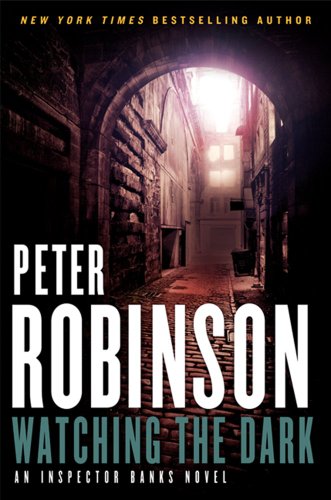
Inhaltsangabe
One of the premier masters of modern British crime, New York Times bestselling author Peter Robinson brings back Detective Chief Inspector Alan Banks and his colleague DI Annie Cabbot in a complex case involving corruption, a dead cop, and a missing girl
Watching the Dark
A decorated detective inspector is murdered on the tranquil grounds of the St. Peter's Police Treatment Centre, shot through the heart with a crossbow arrow, and compromising photographs are discovered in his room. Detective Chief Inspector Alan Banks is well aware that he must handle the highly sensitive—and dangerously explosive—investigation with the utmost discretion.
Because the case may involve police corruption, an officer from Professional Standards, Inspector Joanna Passero, has arrived to work with Banks and his team. Though he tries to keep an open mind and offer his full cooperation, the dedicated Banks and his practical investigative style clash with Passero's cool demeanor and by-the- book professionalism. All too soon, the seasoned detective finds himself under uncomfortable scrutiny, his methods second-guessed.
As Banks digs deeper into the life and career of the victim, a decorated cop and recent widower named Bill Quinn, he comes to believe that Quinn's murder may be linked to an unsolved missing persons case. Six years earlier, a pretty nineteen-year-old English girl named Rachel Hewitt made national headlines when she disappeared without a trace in Tallinn, Estonia. Convinced that finding the truth about Rachel will lead to Quinn's killer, Banks follows a twisting trail of clues that lead from England to the dark, cobbled alleys of Tallinn's Old Town. But the closer he seems to solving the complicated cold case, the more it becomes clear that someone doesn't want the past stirred up.
While Banks prowls the streets of Tallinn, DI Annie Cabbot, recovered from her near-fatal shooting and back at the station in Eastvale, is investigating a migrant labor scam involving corrupt bureaucrats and a loan shark who feeds on the poor. As evidence in each investigation mounts, Banks realizes the two are linked—and that solving them may put even more lives, including his own, in jeopardy.
Die Inhaltsangabe kann sich auf eine andere Ausgabe dieses Titels beziehen.
Über die Autorin bzw. den Autor
One of the world’s most popular and acclaimed writers, Peter Robinson was the bestselling, award-winning author of the DCI Banks series. He also wrote two short-story collections and three stand-alone novels, which combined have sold more than ten million copies around the world. Among his many honors and prizes were the Edgar Award, the CWA (UK) Dagger in the Library Award, and the Swedish Crime Writers’ Academy Martin Beck Award.
Von der hinteren Coverseite
One of the premier masters of modern British crime, New York Times bestselling author Peter Robinson brings back Detective Chief Inspector Alan Banks and his colleague DI Annie Cabbot in a complex case involving corruption, a dead cop, and a missing girl
Watching the Dark
A decorated detective inspector is murdered on the tranquil grounds of the St. Peter's Police Treatment Centre, shot through the heart with a crossbow arrow, and compromising photographs are discovered in his room. Detective Chief Inspector Alan Banks is well aware that he must handle the highly sensitive—and dangerously explosive—investigation with the utmost discretion.
Because the case may involve police corruption, an officer from Professional Standards, Inspector Joanna Passero, has arrived to work with Banks and his team. Though he tries to keep an open mind and offer his full cooperation, the dedicated Banks and his practical investigative style clash with Passero's cool demeanor and by-the- book professionalism. All too soon, the seasoned detective finds himself under uncomfortable scrutiny, his methods second-guessed.
As Banks digs deeper into the life and career of the victim, a decorated cop and recent widower named Bill Quinn, he comes to believe that Quinn's murder may be linked to an unsolved missing persons case. Six years earlier, a pretty nineteen-year-old English girl named Rachel Hewitt made national headlines when she disappeared without a trace in Tallinn, Estonia. Convinced that finding the truth about Rachel will lead to Quinn's killer, Banks follows a twisting trail of clues that lead from England to the dark, cobbled alleys of Tallinn's Old Town. But the closer he seems to solving the complicated cold case, the more it becomes clear that someone doesn't want the past stirred up.
While Banks prowls the streets of Tallinn, DI Annie Cabbot, recovered from her near-fatal shooting and back at the station in Eastvale, is investigating a migrant labor scam involving corrupt bureaucrats and a loan shark who feeds on the poor. As evidence in each investigation mounts, Banks realizes the two are linked—and that solving them may put even more lives, including his own, in jeopardy.
Auszug. © Genehmigter Nachdruck. Alle Rechte vorbehalten.
Watching the Dark
By Peter RobinsonHarperCollins Publishers
Copyright ©2013 Peter Robinson
All rights reserved.
ISBN: 978-0-06-200480-2All rights reserved.
Excerpt
CHAPTER 1
On nights when pain kept her awake, Lorraine Jensonwould get up around dawn and go outside to sit on oneof the wicker chairs before anyone else in the center wasstirring. With a tartan blanket wrapped around her shoulders to keepout the early-morning chill, she would listen to the birds sing as sheenjoyed a cup of Earl Grey, the aromatic steam curling from itssurface, its light, delicious scent filling her nostrils. She would smokeher first cigarette of the day, always the best one.
Some mornings, the small artificial lake below the sloping lawn wascovered in mist, which shrouded the trees on the other side. Othertimes, the water was a still, dark mirror that reflected the detail ofevery branch and leaf perfectly. On this fine April morning, the lakewas clear, though the water's surface was ruffled by a cool breeze, andthe reflections wavered.
Lorraine felt her pain slough off like a layer of dead skin as the painkillers kicked in, and the tea and cigarette soothed her frayed nerves.She placed her mug on the low wrought iron table beside her chairand adjusted the blanket around her shoulders. She was facing south,and the sun was creeping over the hill through the trees on her left.Soon the spell would be broken. She would hear the sounds of peoplegetting up in the building behind her, voices calling, doors opening,showers running, toilets flushing, and another day to be got throughwould begin.
As the light grew stronger, she thought she could see something,like a bundle of clothes, on the ground at the edge of the woods onthe far side of the lake. That was unusual, as Barry, the head groundsmanand general estate manager, was proud of his artificial lake andhis natural woodlands, so much so that some people complained hespent far more time down there than he did keeping the rest of theextensive grounds neat and tidy.
Lorraine squinted, but she couldn't bring the object into clearerfocus. Her vision was still not quite what it had been. Gripping thearms of her chair, she pushed herself to her feet, gritting her teeth atthe red hot pokers of pain that seared through her left leg, despite theOxycontin, then she took hold of her crutch and made her way downthe slope. The grass was still wet with dew, and she felt it fresh andcool on her bare ankles as she walked.
When she got to the water's edge, she took the cinder path thatskirted the lake and soon arrived on the other side, at the edge of thewoods, which began only a few feet away from the water. Even beforethen, she had recognized what it was that lay huddled there. Thoughshe had seen dead bodies before, she had never actually stumbledacross one. She was alone with the dead now, for the first time sinceshe had stood by her father's coffin in the funeral home.
Lorraine held her breath. Silence. She thought she heard a rustlingdeep in the woods, and a shiver of fear rippled through her. If thebody were a victim of murder, then the killer might still be out there,watching her. She remained completely still for about a minute, untilshe was certain there was nobody in the woods. She heard the rustlingagain and saw a fox making its way through the undergrowth.
Now that she was at the scene, Lorraine's training kicked in. Shewas wary of disturbing anything, so she kept her distance. Much asshe wanted to move in closer and examine the body, see if it wassomeone she knew, she restrained herself. There was nothing shecould do, she told herself; the way he - for it was definitely a man - waskneeling with his body bent forward, head touching the groundlike a parody of a Muslim at prayer, there was no way he was still alive.The best thing she could do was stay here and protect the scene.Murder or not, it was definitely a suspicious death, and whatever shedid, she could not screw up now. Cursing the pain that rippled throughher leg whenever she moved, Lorraine fumbled for her mobile in herjeans pocket and phoned Eastvale police station.
There was something about Bach that suited the early morningperfectly, DCI Alan Banks thought as he drove out of Gratly towardthe St. Peter's Police Convalescence and Treatment Center, four milesnorth of Eastvale, shortly after dawn that morning. He needed somethingto wake him up and keep his attention engaged, get the old graycells buzzing, but nothing too loud, nothing too jarring or emotionallytaxing. Alina Ibragimova's CD of Bach's sonatas and partitas for violinwas just right. Bach both soothed and stimulated the mind at once.Banks knew St. Peter's. He had visited Annie Cabbot there severaltimes during her recent convalescence. Just a few short months ago hehad seen her in tears trying to walk on crutches, and now she was dueback at work on Monday. He was looking forward to that; life hadbeen dull for the past while without her.
He took the first exit from the roundabout and drove alongside thewall for about a hundred yards before arriving at the arched entranceand turning left on the tarmac drive. There was no gate or gatehouse,but the first officers to arrive on the scene had quite rightly taped offthe area. A young PC waved Banks down to check his ID and note hisname and time of entry on a clipboard before lifting the tape andletting him through.
Driving up to the car park was like arriving at a luxury spa hotel,Banks had always thought when he visited Annie. It was no differenttoday. St. Peter's presented a broad south facing facade at the top ofthe rise that led down to the lake and surrounding woods. Designedby a firm of Leeds architects, with Vanbrugh in mind, and built oflocal stone in the late nineteenth century, it was three stories high andhad a flagged portico, complete with simple Doric columns at thefront and two wings, east and west. Though not so extensive as someother local examples, the grounds were landscaped very much in thestyle and spirit of Capability Brown, with the lake and woods androlling lawns. There was even a folly. To the west, beyond the treesand lawns, the outlines of Swainsdale's hills and fells could be seen,forming a backdrop of what the Japanese called borrowed scenery,which merged nature with art.
The forensic team had got there before Banks, which seemed odduntil he remembered that a detective inspector had made the initialcall. Kitted out in disposable white coveralls, they were already goingabout their business. The crime scene photographer, Peter Darby, wasat work with his battered old Nikon SLR and his ultramodern digitalvideo recorder. Most So Cos - or CSIs, as they now liked to becalled - also took their own digital photos and videos when theysearched a scene, but though Peter Darby accepted the use of video, heshunned digital photography as being far too susceptible to tamperingand error. It made him a bit of a dinosaur, and one or two of theyounger techies cracked jokes behind his back. He could counter byboasting that he had never had any problems with his evidence incourt, and he had never lost an image because of computer problems.DI Lorraine Jenson, a lone, hunched figure resting her weight on acrutch by the water's edge and jotting in her notebook, stood withtwo other people about five or six yards away from the body. Banksknew her slightly from a case he had worked a few months ago thatcrossed the border into Humberside, where she worked. Not long ago,he had heard, she'd had a run-in with a couple of drug dealers in atower block, which ended with her falling from a second-floor balcony.She had sustained multiple fractures of her left leg, but aftersurgery, the cast...
„Über diesen Titel“ kann sich auf eine andere Ausgabe dieses Titels beziehen.
Suchergebnisse für Watching the Dark: An Inspector Banks Novel (Inspector...

Beispielbild für diese ISBN
Watching the Dark
Verlag:
HarperCollins Publishers, 2013
ISBN 10: 0062004808
ISBN 13: 9780062004802
Gebraucht
Hardcover
Anbieter: World of Books (was SecondSale), Montgomery, IL, USA
Verkäuferbewertung 5 von 5 Sternen

Hardback. Zustand: Good. One of the premier masters of modern British crime, New York Times bestselling author Peter Robinson brings back Detective Chief Inspector Alan Banks and his colleague DI Annie Cabbot in a complex case involving corruption, a dead cop, and a missing girl Watching the Dark A decorated detective inspector is murdered on the tranquil grounds of the St. Peter's Police Treatment Centre, shot through the heart with a crossbow arrow, and compromising photographs are discovered in his room. Detective Chief Inspector Alan Banks is well aware that he must handle the highly sensitive--and dangerously explosive--investigation with the utmost discretion. Because the case may involve police corruption, an officer from Professional Standards, Inspector Joanna Passero, has arrived to work with Banks and his team. Though he tries to keep an open mind and offer his full cooperation, the dedicated Banks and his practical investigative style clash with Passero's cool demeanor and by-the- book professionalism. All too soon, the seasoned detective finds himself under uncomfortable scrutiny, his methods second-guessed. As Banks digs deeper into the life and career of the victim, a decorated cop and recent widower named Bill Quinn, he comes to believe that Quinn's murder may be linked to an unsolved missing persons case. Six years earlier, a pretty nineteen-year-old English girl named Rachel Hewitt made national headlines when she disappeared without a trace in Tallinn, Estonia. Convinced that finding the truth about Rachel will lead to Quinn's killer, Banks follows a twisting trail of clues that lead from England to the dark, cobbled alleys of Tallinn's Old Town. But the closer he seems to solving the complicated cold case, the more it becomes clear that someone doesn't want the past stirred up. While Banks prowls the streets of Tallinn, DI Annie Cabbot, recovered from her near-fatal shooting and back at the station in Eastvale, is investigating a migrant labor scam involving corrupt bureaucrats and a loan shark who feeds on the poor. As evidence in each investigation mounts, Banks realizes the two are linked--and that solving them may put even more lives, including his own, in jeopardy. Artikel-Nr. 00087760683
Gebraucht kaufen
EUR 3,91
Versand gratis
Versand innerhalb von USA
Versand innerhalb von USA
Anzahl: 5 verfügbar
Beispielbild für diese ISBN
Watching the Dark: An Inspector Banks Novel
Verlag:
William Morrow (edition 1), 2013
ISBN 10: 0062004808
ISBN 13: 9780062004802
Gebraucht
Hardcover
Anbieter: BooksRun, Philadelphia, PA, USA
Verkäuferbewertung 5 von 5 Sternen
Hardcover. Zustand: Very Good. 1. With dust jacket. It's a well-cared-for item that has seen limited use. The item may show minor signs of wear. All the text is legible, with all pages included. It may have slight markings and/or highlighting. Artikel-Nr. 0062004808-11-6-29
Gebraucht kaufen
EUR 5,60
Versand gratis
Versand innerhalb von USA
Versand innerhalb von USA
Anzahl: 1 verfügbar
Beispielbild für diese ISBN
Watching the Dark
Verlag:
William Morrow & Company, 2013
ISBN 10: 0062004808
ISBN 13: 9780062004802
Gebraucht
Hardcover
Anbieter: ThriftBooks-Reno, Reno, NV, USA
Verkäuferbewertung 5 von 5 Sternen
Hardcover. Zustand: Good. No Jacket. Former library book; Pages can have notes/highlighting. Spine may show signs of wear. ~ ThriftBooks: Read More, Spend Less. Artikel-Nr. G0062004808I3N10
Gebraucht kaufen
EUR 5,96
Versand gratis
Versand innerhalb von USA
Versand innerhalb von USA
Anzahl: 1 verfügbar
Beispielbild für diese ISBN
Watching the Dark
Verlag:
William Morrow & Company, 2013
ISBN 10: 0062004808
ISBN 13: 9780062004802
Gebraucht
Hardcover
Anbieter: ThriftBooks-Dallas, Dallas, TX, USA
Verkäuferbewertung 5 von 5 Sternen
Hardcover. Zustand: Good. No Jacket. Missing dust jacket; Pages can have notes/highlighting. Spine may show signs of wear. ~ ThriftBooks: Read More, Spend Less. Artikel-Nr. G0062004808I3N01
Gebraucht kaufen
EUR 5,96
Versand gratis
Versand innerhalb von USA
Versand innerhalb von USA
Anzahl: 1 verfügbar
Beispielbild für diese ISBN
Watching the Dark
Verlag:
William Morrow & Company, 2013
ISBN 10: 0062004808
ISBN 13: 9780062004802
Gebraucht
Hardcover
Anbieter: ThriftBooks-Dallas, Dallas, TX, USA
Verkäuferbewertung 5 von 5 Sternen
Hardcover. Zustand: Good. No Jacket. Former library book; Pages can have notes/highlighting. Spine may show signs of wear. ~ ThriftBooks: Read More, Spend Less. Artikel-Nr. G0062004808I3N10
Gebraucht kaufen
EUR 5,96
Versand gratis
Versand innerhalb von USA
Versand innerhalb von USA
Anzahl: 1 verfügbar
Beispielbild für diese ISBN
Watching the Dark
Verlag:
William Morrow & Company, 2013
ISBN 10: 0062004808
ISBN 13: 9780062004802
Gebraucht
Hardcover
Anbieter: ThriftBooks-Atlanta, AUSTELL, GA, USA
Verkäuferbewertung 5 von 5 Sternen
Hardcover. Zustand: Good. No Jacket. Missing dust jacket; Pages can have notes/highlighting. Spine may show signs of wear. ~ ThriftBooks: Read More, Spend Less. Artikel-Nr. G0062004808I3N01
Gebraucht kaufen
EUR 5,96
Versand gratis
Versand innerhalb von USA
Versand innerhalb von USA
Anzahl: 1 verfügbar
Beispielbild für diese ISBN
Watching the Dark
Verlag:
William Morrow & Company, 2013
ISBN 10: 0062004808
ISBN 13: 9780062004802
Gebraucht
Hardcover
Anbieter: ThriftBooks-Atlanta, AUSTELL, GA, USA
Verkäuferbewertung 5 von 5 Sternen
Hardcover. Zustand: Good. No Jacket. Former library book; Pages can have notes/highlighting. Spine may show signs of wear. ~ ThriftBooks: Read More, Spend Less. Artikel-Nr. G0062004808I3N10
Gebraucht kaufen
EUR 5,96
Versand gratis
Versand innerhalb von USA
Versand innerhalb von USA
Anzahl: 1 verfügbar
Beispielbild für diese ISBN
Watching the Dark: An Inspector Banks Novel (Inspector Banks Novels)
Anbieter: Wonder Book, Frederick, MD, USA
Verkäuferbewertung 5 von 5 Sternen
Zustand: Very Good. Very Good condition. Very Good dust jacket. A copy that may have a few cosmetic defects. May also contain light spine creasing or a few markings such as an owner's name, short gifter's inscription or light stamp. Artikel-Nr. G06A-02831
Gebraucht kaufen
EUR 6,43
Versand gratis
Versand innerhalb von USA
Versand innerhalb von USA
Anzahl: 2 verfügbar
Beispielbild für diese ISBN
Watching the Dark : An Inspector Banks Novel
Verlag:
HarperCollins Publishers, 2013
ISBN 10: 0062004808
ISBN 13: 9780062004802
Gebraucht
Hardcover
Erstausgabe
Anbieter: Better World Books: West, Reno, NV, USA
Verkäuferbewertung 5 von 5 Sternen
Zustand: Very Good. 1st Edition. Pages intact with possible writing/highlighting. Binding strong with minor wear. Dust jackets/supplements may not be included. Stock photo provided. Product includes identifying sticker. Better World Books: Buy Books. Do Good. Artikel-Nr. 4180990-6
Gebraucht kaufen
EUR 6,75
Versand gratis
Versand innerhalb von USA
Versand innerhalb von USA
Anzahl: 1 verfügbar
Beispielbild für diese ISBN
Watching the Dark : An Inspector Banks Novel
Verlag:
HarperCollins Publishers, 2013
ISBN 10: 0062004808
ISBN 13: 9780062004802
Gebraucht
Hardcover
Erstausgabe
Anbieter: Better World Books, Mishawaka, IN, USA
Verkäuferbewertung 5 von 5 Sternen
Zustand: Very Good. 1st Edition. Former library copy. Pages intact with possible writing/highlighting. Binding strong with minor wear. Dust jackets/supplements may not be included. Includes library markings. Stock photo provided. Product includes identifying sticker. Better World Books: Buy Books. Do Good. Artikel-Nr. 4394238-6
Gebraucht kaufen
EUR 6,75
Versand gratis
Versand innerhalb von USA
Versand innerhalb von USA
Anzahl: 2 verfügbar