Inhaltsangabe
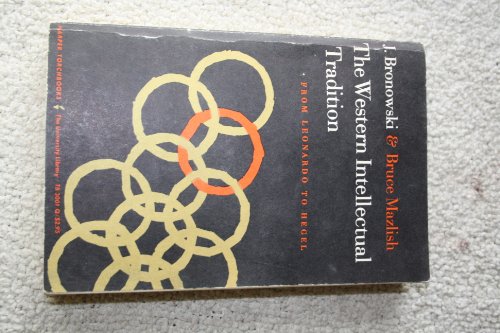
Traces the development of thought through historical movements and periods from 1500 to 1830.
Die Inhaltsangabe kann sich auf eine andere Ausgabe dieses Titels beziehen.
Von der hinteren Coverseite
Traces the development of thought through historical movements and periods from 1500 to 1830.
Aus dem Klappentext
The history of science has been successfully integrated with other intellectual and political developments in the 'Western tradition, ' instead of being cut off as a recondite specialty untouched by the humanists. The method used by Brunswick and Mazlish is to select twenty-five or more key persons or events and to weave the whole chronicle of Western thought from Leonardo to Heel (inclusive) around them. Their work is therefore less abstract than some histories of thought of a similar compass, since it does not hesitate to deal with specific persons and even political events: intellectual history is not reduced to themes and elements. The individual chapters, since they are really examples, present the newest learned evidence with some detail and even indicate the scholarly controversies that are involved. References to the learned literature in these essays are invariably apt...
„Über diesen Titel“ kann sich auf eine andere Ausgabe dieses Titels beziehen.
Weitere beliebte Ausgaben desselben Titels

Suchergebnisse für The Western Intellectual Tradition

Beispielbild für diese ISBN
Western Intellectual Tradition: From Leonardo to Hegel
Anbieter: Wonder Book, Frederick, MD, USA
Verkäuferbewertung 5 von 5 Sternen

Zustand: Good. Good condition. A copy that has been read but remains intact. May contain markings such as bookplates, stamps, limited notes and highlighting, or a few light stains. Artikel-Nr. L17A-02781
Beispielbild für diese ISBN
Western Intellectual Tradition: From Leonardo to Hegel
Verlag:
Harper Perennial (edition ), 1962
ISBN 10: 0061330019
ISBN 13: 9780061330018
Gebraucht
Paperback
Anbieter: BooksRun, Philadelphia, PA, USA
Verkäuferbewertung 5 von 5 Sternen
Paperback. Zustand: Good. It's a preowned item in good condition and includes all the pages. It may have some general signs of wear and tear, such as markings, highlighting, slight damage to the cover, minimal wear to the binding, etc., but they will not affect the overall reading experience. Artikel-Nr. 0061330019-11-1
Beispielbild für diese ISBN
The Western Intellectual Tradition
Verlag:
HarperCollins Publishers, 1962
ISBN 10: 0061330019
ISBN 13: 9780061330018
Gebraucht
Softcover
Anbieter: Better World Books, Mishawaka, IN, USA
Verkäuferbewertung 5 von 5 Sternen
Zustand: Good. Former library book; may include library markings. Used book that is in clean, average condition without any missing pages. Artikel-Nr. 3938991-6
Beispielbild für diese ISBN
The Western Intellectual Tradition
Anbieter: ThriftBooks-Dallas, Dallas, TX, USA
Verkäuferbewertung 5 von 5 Sternen
Paperback. Zustand: Good. No Jacket. Pages can have notes/highlighting. Spine may show signs of wear. ~ ThriftBooks: Read More, Spend Less. Artikel-Nr. G0061330019I3N00
Beispielbild für diese ISBN
Western Intellectual Tradition: From Leonard to Hegel (Harper Torchbooks / The University Library TB 3001)
Anbieter: Revaluation Books, Exeter, Vereinigtes Königreich
Verkäuferbewertung 5 von 5 Sternen
Paperback. Zustand: Brand New. 534 pages. 8.00x5.50x1.50 inches. In Stock. Artikel-Nr. 0061330019
Neu kaufen
EUR 30,20
Versand:
EUR 11,42
Von Vereinigtes Königreich nach USA
Anzahl: 1 verfügbar
Foto des Verkäufers
The Western Intellectual Tradition.
Verlag:
New York a.o. : Harper, 1960
ISBN 10: 0061330019
ISBN 13: 9780061330018
Gebraucht
Original softcover.
Anbieter: Fundus-Online GbR Borkert Schwarz Zerfaß, Berlin, Deutschland
Verkäuferbewertung 5 von 5 Sternen
Original softcover. Zustand: Sehr gut. XVIII, 522 p. From the library of Prof. Wolfgang Haase, long-time editor of ANRW and the International Journal of the Classical Tradition (IJCT). - Overall very good and clean. - Introduction: This book is a study of the development of ideas from the Renaissance to the opening of the nineteenth century. It differs in several ways, in content and in presentation, from other books on the history of ideas. We ought to draw attention at the outset to three differences which are fundamental, and which amount to differences of principle. First, this is an intellectual history in the largest sense. It is not confined to ideas in some one fieldin politics, say, or in philosophy. We are interested in the whole spectrum of the mind, and an important feature of our book is its stress on the interplay of ideas from different fields. In particular, we give more attention than is usual to the ideas of science, to the movements of literary style, and to the innovations of the arts. Second, we believe that the history of ideas must be coupled with a concrete knowledge of the events that took place at the same time. The study of ideas is an evolutionary study, and the reader should feel behind it the context of events, the physical environment within which ideas have evolved. He should see the influence of events on ideas, and of ideas on events. Therefore, our book gives more attention than is usual to the history of the times which it covers. Particularly, it stresses the impact of technical and social inventions, which go hand in hand with new ideas, and in which the intellectual vigor of a community displays itself in practice. Third, we think that the right way to present an idea is in the speech of the men to whom it came as a revelation. Therefore, we have constantly shown ideas as held by peopleby single men or by groups of men. In general, each of our chapters focuses on the outlook of a man or of a group of men who epitomize a way of thinking: such men as Descartes and Bentham, groups of men such as the early humanists and the dissenting manufacturers in the Lunar Society. These men are not paraded as heroes or as dramatic figures in themselves. We see them and we show them as the living embodiment of the thought of an age, and the interest of their lives is that in them the conflicts of the age take on the sharp edge of struggles of conscience. These three principles, in our view, give reality to the history of ideas. Ideas are not dead thoughts, even when they are no longer contemporary; for they remain steps in the evolution of contemporary ideas. We have wanted to present the ideas of each age not as fossils but as evolving organisms, and not as butterflies in a box but as the vital processes of the human mind. This is a history of the life of ideas: active, mobile, and changing. We have therefore presented it and written it as integrated history. ISBN 9780061330018 Sprache: Englisch Gewicht in Gramm: 428. Artikel-Nr. 1183190
Gebraucht kaufen
EUR 12,00
Versand:
EUR 40,00
Von Deutschland nach USA
Anzahl: 1 verfügbar