
Verwandte Artikel zu Little House by Boston Bay: A Middle Grade Historical...
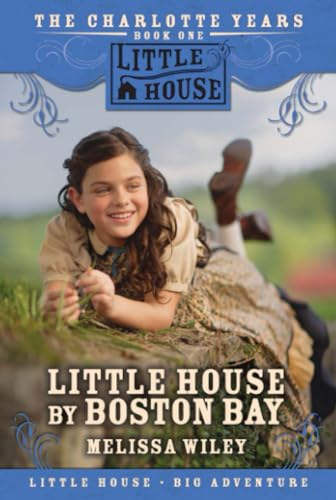
Little House by Boston Bay: A Middle Grade Historical Novel about Charlotte's Life in 1814 America for Children (Ages 8-12) (Little House Prequel, 19, Band 1) - Softcover
Inhaltsangabe
It's 1814 and Charlotte lives just outside the city of Boston. She always has something to look forward to—tending Mama's garden, visiting Papa's blacksmith shop, and embarking on her very own Scottish adventure! This middle grade novel is an excellent choice for tween readers in grades 5 to 6, especially during homeschooling. It’s a fun way to keep your child entertained and engaged while not in the classroom.
Charlotte lives with her family near the bustling city of Boston. What an exciting time she has! There’s Mama’s garden to tend to, Papa’s blacksmith shop to visit, and lots of brothers and sisters to play with. But best of all, Charlotte is a brand-new American girl, born just one generation after the United States of America was formed.
Die Inhaltsangabe kann sich auf eine andere Ausgabe dieses Titels beziehen.
Über die Autorin bzw. den Autor
Melissa Wiley, the author of the Charlotte Years and the Martha Years series, has done extensive research on early-nineteenth-century New England life. She lives in Virginia with her husband, Scott, and her daughters, Kate, Erin, and Eileen.
Von der hinteren Coverseite
It's 1814 and Charlotte lives just outside the city of Boston. She always has something to look forward to—tending Mama's garden, visiting Papa's blacksmith shop, and embarking on her very own Scottish adventure!
Auszug. © Genehmigter Nachdruck. Alle Rechte vorbehalten.
Little House by Boston Bay
By Melissa WileyHarperCollins Publishers, Inc.
Copyright © 2007 Melissa WileyAll right reserved.
ISBN: 9780061148286
Chapter One
The Saturday Family
Through the window, Charlotte could see Papa and the boys walking across the road from the smithy. In a moment, Mama would say, "Time to get these beans on the plate, Charlotte." Baked beans were part of the special supper that belonged to Saturday night.
Most evenings supper was simply a cold tea of bread and cheese and leftovers, for the big meal of the day was dinner, at noon. Mama seldom cooked at night—except on Saturdays.
Saturday night supper meant thick pools of cornmeal pudding on the plates beside the baked beans. It meant coffee for Mama and Papa instead of cider. And it meant three things in the middle of the dinner table—the three members of what Charlotte thought of as the "Saturday family." There was the mother, a tall, delicately curved cruet of cider vinegar for the vegetables; the father, a squat redware molasses jug with a jaunty handle and a friendly chip on the rim; and between them, cradled in a china dish, the butter baby for Mama's rolls.
Charlotte had never told anyone about the Saturday family—it was nice to have a secret all her own. Besides, she knew her brothers would tease her about it. Lewis would tease because he was a teasing kind of person, and Tom, who was seven, would tease because he wanted to be like Lewis. Charlotte's older sister Lydia never teased, but she would either be not at all interested in the secret or, worse, much too interested. She would take over the game and change it. To Charlotte, the Saturday family was perfect just as it was.
From the lean-to came the splashing, jostling sound of the boys washing up.
Charlotte could hear Papa and Lewis talking about the war. She had been listening to war talk almost her whole life, for the war with England had begun way back in 1812, when she was only a little girl. She knew it had something to do with sea battles, and a place called Canada way to the north, and that Mama thought it was a foolish thing and spoke of it scornfully as "Mr. Madison's War."
But when Papa came inside, smelling of coal smoke and horses, the talk of the war ended. He went to the hearth and kissed the back of Mama's neck below her white linen cap. Mama turned and smiled her special Papa-smile that made her eyes crinkle into crescent moons.
Papa tugged Lydia's thick red braids to say hello, and he stretched out one of Charlotte's dark ringlets like a spring. Then he bent down to baby Mary, who was playing with a rolling pin on the floor at Mama's feet, and swept her up into his arms. This was the Saturday night that Charlotte loved. Carrying the breadboard, she followed Lydia and her brothers along the narrow hallway, past the stairs and the front door, into the parlor for supper.
Soon Mama came into the parlor, tucking wisps of her red hair back into place beneath her cap, and just behind her was Papa, with Mary in his arms.
Charlotte listened to the fire pop and sigh beneath the sound of Papa's quiet voice as he spoke the words of the blessing. Then Papa said, "Amen," and that was when Charlotte opened her eyes and realized at once that something was not right.
The Saturday father was missing. The vinegar mother was there in her usual place, and the fat, dimpled lump of butter was beside her in its little china crib. But the jolly redware jug wasn't there.
Before Charlotte could say anything, Lewis noticed it, too. "Lydia forgot the molasses for our pudding!" he announced. It was one of the few chores of Lydia's that Charlotte longed to do.
"I did not either forget!" Lydia protested. "There isn't any molasses. Right, Mama?"
"Aye," Mama said. "You ought to be careful about letting your tongue set sail without a compass, Lewis." She winked at him and everyone laughed, because that was what Mama always said about herself.
"But what happened to the Sat— To the molasses?" Charlotte asked. She had almost said "the Saturday father" but caught herself just in time.
"There isna any," Mama said. "I fear we'll have no more until the blockade is lifted; not even Bacon's store can get it right now. I'm sorry, Lew," she said to Papa. "We'll have to eat our pudding without it."
Cornmeal pudding with molasses was Papa's very favorite of all the new foods he had learned to eat since he had come to America fifteen years ago. He had never eaten molasses in Scotland, where he and Mama had grown up.
Papa shrugged. "We canna expect to go withoot makin' some sacrifices noo and then, when there's a war on," he said.
Always the war. War meant fighting, Charlotte knew, but what did that have to do with molasses?
"What's a blockade?" Tom asked.
Lewis spoke up quickly. "It's when someone blocks a harbor so no ships can get in or out. Those blasted British have got Boston Harbor closed so tight, you couldn't get a rowboat through, let alone a merchant ship."
"Lewis!" Mama said sternly, and Papa raised his eyebrows.
"Beg pardon," Lewis mumbled. "But I'd like to know what I should call 'em. They're our enemies, after all."
"Still, that be no excuse for rough language," Papa said.
And Mama demanded, "Have you ivver heard your father usin' such a word?"
A funny look came over Lewis's face. "No, not Papa . . ." he said, letting the sentence trail off.
Mama stared at him a moment, and then burst out laughing. "Meanin' you've heard me use it, I suppose. Och, my mother always said a day would come when my quick tongue would get me into trouble. And here it is, my own son tellin' me I'm a bad influence." She smiled a rueful smile. Mama's sharp tongue was as famous as her singing. She had a different song for every task. Mama said she had gotten the habit as a little girl in Scotland.
Continues...
Excerpted from Little House by Boston Bayby Melissa Wiley Copyright © 2007 by Melissa Wiley. Excerpted by permission.
All rights reserved. No part of this excerpt may be reproduced or reprinted without permission in writing from the publisher.
Excerpts are provided by Dial-A-Book Inc. solely for the personal use of visitors to this web site.
„Über diesen Titel“ kann sich auf eine andere Ausgabe dieses Titels beziehen.
Suchergebnisse für Little House by Boston Bay: A Middle Grade Historical...

Beispielbild für diese ISBN
Little House by Boston Bay
Anbieter: ThriftBooks-Phoenix, Phoenix, AZ, USA
Verkäuferbewertung 5 von 5 Sternen

Paperback. Zustand: Good. No Jacket. Pages can have notes/highlighting. Spine may show signs of wear. ~ ThriftBooks: Read More, Spend Less. Artikel-Nr. G0061148288I3N00
Gebraucht kaufen
EUR 5,96
Versand gratis
Versand innerhalb von USA
Versand innerhalb von USA
Anzahl: 1 verfügbar
Beispielbild für diese ISBN
Little House by Boston Bay
Anbieter: ThriftBooks-Atlanta, AUSTELL, GA, USA
Verkäuferbewertung 5 von 5 Sternen
Paperback. Zustand: Good. No Jacket. Former library book; Pages can have notes/highlighting. Spine may show signs of wear. ~ ThriftBooks: Read More, Spend Less. Artikel-Nr. G0061148288I3N10
Gebraucht kaufen
EUR 5,96
Versand gratis
Versand innerhalb von USA
Versand innerhalb von USA
Anzahl: 1 verfügbar
Beispielbild für diese ISBN
Little House by Boston Bay
Anbieter: ThriftBooks-Phoenix, Phoenix, AZ, USA
Verkäuferbewertung 5 von 5 Sternen
Paperback. Zustand: Fair. No Jacket. Readable copy. Pages may have considerable notes/highlighting. ~ ThriftBooks: Read More, Spend Less. Artikel-Nr. G0061148288I5N00
Gebraucht kaufen
EUR 5,96
Versand gratis
Versand innerhalb von USA
Versand innerhalb von USA
Anzahl: 1 verfügbar
Beispielbild für diese ISBN
Little House by Boston Bay
Anbieter: ThriftBooks-Dallas, Dallas, TX, USA
Verkäuferbewertung 5 von 5 Sternen
Paperback. Zustand: Good. No Jacket. Former library book; Pages can have notes/highlighting. Spine may show signs of wear. ~ ThriftBooks: Read More, Spend Less. Artikel-Nr. G0061148288I3N10
Gebraucht kaufen
EUR 5,96
Versand gratis
Versand innerhalb von USA
Versand innerhalb von USA
Anzahl: 1 verfügbar
Beispielbild für diese ISBN
Little House by Boston Bay
Anbieter: ThriftBooks-Reno, Reno, NV, USA
Verkäuferbewertung 5 von 5 Sternen
Paperback. Zustand: Fair. No Jacket. Readable copy. Pages may have considerable notes/highlighting. ~ ThriftBooks: Read More, Spend Less. Artikel-Nr. G0061148288I5N00
Gebraucht kaufen
EUR 5,96
Versand gratis
Versand innerhalb von USA
Versand innerhalb von USA
Anzahl: 1 verfügbar
Beispielbild für diese ISBN
Little House by Boston Bay
Anbieter: ThriftBooks-Atlanta, AUSTELL, GA, USA
Verkäuferbewertung 5 von 5 Sternen
Paperback. Zustand: Fair. No Jacket. Readable copy. Pages may have considerable notes/highlighting. ~ ThriftBooks: Read More, Spend Less. Artikel-Nr. G0061148288I5N00
Gebraucht kaufen
EUR 5,96
Versand gratis
Versand innerhalb von USA
Versand innerhalb von USA
Anzahl: 1 verfügbar
Beispielbild für diese ISBN
Little House by Boston Bay
Anbieter: ThriftBooks-Dallas, Dallas, TX, USA
Verkäuferbewertung 5 von 5 Sternen
Paperback. Zustand: Fair. No Jacket. Readable copy. Pages may have considerable notes/highlighting. ~ ThriftBooks: Read More, Spend Less. Artikel-Nr. G0061148288I5N00
Gebraucht kaufen
EUR 5,96
Versand gratis
Versand innerhalb von USA
Versand innerhalb von USA
Anzahl: 1 verfügbar
Beispielbild für diese ISBN
Little House by Boston Bay
Anbieter: ThriftBooks-Dallas, Dallas, TX, USA
Verkäuferbewertung 5 von 5 Sternen
Paperback. Zustand: Very Good. No Jacket. May have limited writing in cover pages. Pages are unmarked. ~ ThriftBooks: Read More, Spend Less. Artikel-Nr. G0061148288I4N00
Gebraucht kaufen
EUR 5,96
Versand gratis
Versand innerhalb von USA
Versand innerhalb von USA
Anzahl: 1 verfügbar
Beispielbild für diese ISBN
Little House by Boston Bay
Anbieter: ThriftBooks-Atlanta, AUSTELL, GA, USA
Verkäuferbewertung 5 von 5 Sternen
Paperback. Zustand: Good. No Jacket. Pages can have notes/highlighting. Spine may show signs of wear. ~ ThriftBooks: Read More, Spend Less. Artikel-Nr. G0061148288I3N00
Gebraucht kaufen
EUR 5,96
Versand gratis
Versand innerhalb von USA
Versand innerhalb von USA
Anzahl: 1 verfügbar
Beispielbild für diese ISBN
Little House by Boston Bay
Anbieter: ThriftBooks-Reno, Reno, NV, USA
Verkäuferbewertung 5 von 5 Sternen
Paperback. Zustand: Good. No Jacket. Pages can have notes/highlighting. Spine may show signs of wear. ~ ThriftBooks: Read More, Spend Less. Artikel-Nr. G0061148288I3N00
Gebraucht kaufen
EUR 5,96
Versand gratis
Versand innerhalb von USA
Versand innerhalb von USA
Anzahl: 1 verfügbar