
Verwandte Artikel zu The Fallen Man (A Leaphorn and Chee Novel, 12)
The Fallen Man (A Leaphorn and Chee Novel, 12) - Softcover
Buch 12 von 29: Leaphorn, Chee & Manuelito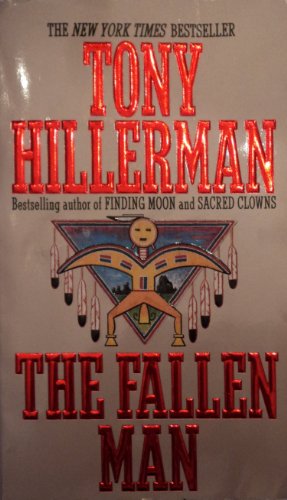
Inhaltsangabe
Don’t miss the TV series, Dark Winds, based on the Leaphorn, Chee, & Manuelito novels, now on AMC and AMC+!
From New York Times bestselling author Tony Hillerman comes another thrilling mystery featuring Leaphorn & Chee who must investigate a cold case that has far more personal consequences than expected.
“Gripping.”—New York Times Book Review
Human bones lie on a ledge under the peak of Ship Rock mountain, the remains of a murder victim undisturbed for more than a decade. Three hundred miles across the Navajo reservation, a harmless old canyon guide is felled by a sniper's bullet.
Joe Leaphorn, recently retired from the Navajo Tribal Police, believes the shooter and the skeleton are somehow connected and recalls a chilling puzzle he was previously unable to solve. But Acting Lieutenant Jim Chee is too busy to take an interest in a dusty cold case . . . until the reborn violence of it hits much too close to home.
Die Inhaltsangabe kann sich auf eine andere Ausgabe dieses Titels beziehen.
Über die Autorin bzw. den Autor
Tony Hillerman served as president of the Mystery Writers of America and received the Edgar and Grand Master Awards. His other honors include the Center for the American Indian’s Ambassador Award, the Spur Award for Best Western Novel, and the Navajo Tribal Council Special Friend of the Dineh Award. A native of Oklahoma, Tony Hillerman lived in Albuquerque, New Mexico, until his death in 2008.
Von der hinteren Coverseite
Human bones lie on a ledge under the peak of Ship Rock mountain, the remains of a murder victim undisturbed for more than a decade. Three hundred miles across the Navajo reservation, a harmless old canyon guide is felled by a sniper's bullet. Joe Leaphorn, recently retired from the Navajo Tribal Police, believes the shooter and the skeleton are somehow connected and recalls a chilling puzzle he was previously unable to solve. But Acting Lieutenant Jim Chee is too busy to take an interest in a dusty cold case ... until the reborn violence of it hits much too close to home.
Auszug. © Genehmigter Nachdruck. Alle Rechte vorbehalten.
The Fallen Man
By Tony HillermanHarperCollins Publishers, Inc.
Copyright ©2006 Tony HillermanAll right reserved.
ISBN: 0061092886
Chapter One
From where Bill Buchanan sat with his back resting against the rough breccia, he could see the side of Whiteside's head, about three feet away. When John leaned back, Buchanan could see the snowcapped top of Mount Taylor looming over Grants, New Mexico, about eighty miles to the east. Now John was leaning forward, talking.
"This climbing down to climb back up, and climbing up so you can climb back down again," Whiteside said. "That seems like a poor way to get the job done. Maybe it's the only way to get to the summit, but I'll bet we could find a faster way down."
"Relax," Buchanan said. "Be calm. We're supposed to be resting."
They were perched on one of the few relatively flat outcrops of basalt in what climbers of Ship Rock call Rappel Gully. On the way up, it was the launching point for the final hard climb to the summit, a slightly tilted but flat surface of basalt about the size of a desktop and 1,721 feet above the prairie below. If you were going down, it was where you began a shorter but even harder almost vertical climb to reach the slope that led you downward with a fair chance of not killing yourself.
Buchanan, Whiteside, and Jim Stapp had just been to the summit. They had opened the army surplus ammo box that held the Ship Rock climbers' register and signed it, certifying their conquest of one of North America's hard ones. Buchanan was tired. He was thinking that he was getting too old for this.
Whiteside was removing his climbing harness, laying aside the nylon belt and the assortment of pitons, jumars, etriers, and carabiners that make reaching such mountaintops possible.
He did a deep knee bend, touched his toes, and stretched. Buchanan watched, uneasy.
"What are you doing?"
"Nothing," Whiteside said. "Actually, I'm following the instructions of that rock climber's guide you're always threatening to write. I am getting rid of all nonessential weight before making an unprotected traverse."
Buchanan sat up. He played in a poker game in which Whiteside was called "Two-Dollar John" because of his unshakable faith that the dealer would give him the fifth heart if he needed one. Whiteside enjoyed taking risks.
"Traversing what?" Buchanan asked.
"I'm just going to ease over there and take a look." He pointed along the face of the cliff. "Get out there maybe a hundred feet and you can see down under the overhang and into the honeycomb formations. I can't believe there's not some way to rappel right on down."
"You're looking for some way to kill yourself," Buchanan said. "If you're in such a damn hurry to get down, get yourself a parachute."
"Rappelling down is easier than up," Whiteside said. He pointed across the little basin to where Stapp was preparing to begin hauling himself up the basalt wall behind them. "I'll just be a few minutes." He began moving with gingerly care out onto the cliff face.
Buchanan was on his feet. "Come on, John! That's too damn risky."
"Not really," Whiteside said. "I'm just going out far enough to see past the overhang. Just a peek at what it looks like. Is it all this broken-up breccia or is there, maybe, a big old finger of basalt sticking up that we could scramble right on down?"
Buchanan slid along the wall, getting closer, admiring Whiteside's technique if not his judgment. The man was moving slowly along the cliff, body almost perfectly vertical, his toes holding his weight on perhaps an inch of sloping stone, his fingers finding the cracks, crevices, and rough spots that would help him keep his balance if the wind gusted. He was doing the traverse perfectly. Beautiful to watch. Even the body was perfect for the purpose. A little smaller and slimmer than Buchanan's. Just bone, sinew, and muscle, without an ounce of surplus weight, moving like an insect against the cracked basalt wall.
And a thousand feet below him—no, a quarter of a mile below him lay what Stapp liked to call "the surface of the world." Buchanan looked out at it. Almost directly below, two Navajos on horseback were riding along the base of the monolith—tiny figures that put the risk of what Whiteside was doing into terrifying perspective. If he slipped, Whiteside would die, but not for a while. It would take time for a body to drop six hundred feet, then to bounce from an outcrop, and fall again, and bounce and fall, until it finally rested among the boulders at the bottom of this strange old volcanic core.
Buchanan looked away from the riders and from the thought. It was early afternoon, but the autumn sun was far to the north and the shadow of Ship Rock already stretched southeastward for miles across the tan prairie. Winter would soon end the climbing season. The sun was already so low that it reflected only from the very tip of Mount Taylor. Eighty miles to the north early snows had already packed the higher peaks in Colorado's San Juans. Not a cloud anywhere. The sky was a deep dry-country blue; the air was cool and, a rarity at this altitude, utterly still.
The silence was so absolute that Buchanan could hear the faint sibilance of Whiteside's soft rubber shoe sole as he shifted a foot along the stone. A couple of hundred feet below him, a red-tailed hawk drifted along, riding an updraft of air along the cliff face. From behind him came the click of Stapp fastening his rappelling gear.
This is why I climb, Buchanan thought. To get so far away from Stapp's "surface of the earth" that I can't even hear it. But Whiteside climbs for the thrill of challenging death. And now he's out about thirty yards. It's just too damn risky.
"That's far enough, John," Buchanan said. "Don't press your luck."
"Two more feet to a handhold," Whiteside said. "Then I can take a look."
He moved. And stopped. And looked down.
"There's more of that honeycomb breccia under the overhang," he said, and shifted his weight to allow a better head position. "Lot of those little erosion cavities, and it looks like some pretty good cracking where you can see the basalt." He shifted again. "And a pretty good shelf down about—"
Silence. Then Whiteside said, "I think I see a helmet."
"What?"
"My God!" Whiteside said. "There's a skull in it."
The white Porsche looming in the rearview mirror of his pickup distracted Jim Chee from his gloomy thoughts. Chee had been rolling southward down Highway 666 toward Salt Creek Wash at about sixty-five miles per hour, which was somewhat more than the law he was paid to uphold allowed. But Navajo Tribal Police protocol this season was permitting speeders about that much margin of error. Besides, traffic was very light, it was past quitting time (the mid-November sunset was turning the clouds over the Carrizo Mountains a gaudy pink), and he saved both gasoline and wear on the pickup's tired old engine by letting it accelerate downhill, thereby gathering momentum for the long climb over the hump between the wash and Shiprock.
But the driver of the Porsche was making a lot more than a tolerable mistake. He was doing about ninety-five. Chee picked the portable blinker light off the passenger-side floorboard, switched it on, rolled down the window, and slapped its magnets against the pickup roof. Just as the Porsche whipped past.
He was instantly engulfed in cold air and road dust. He rolled up the window and jammed his foot down on the accelerator. The speedometer needle reached 70 as he crossed Salt Creek Wash, crept up to almost 75, and then wavered back to 72 as the upslope gravity and engine fatigue took their toll. The...
„Über diesen Titel“ kann sich auf eine andere Ausgabe dieses Titels beziehen.
Suchergebnisse für The Fallen Man (A Leaphorn and Chee Novel, 12)

Beispielbild für diese ISBN
Fallen Man
Verlag:
HarperCollins Publishers Inc, 1997
ISBN 10: 0061092886
ISBN 13: 9780061092886
Gebraucht
Softcover
Anbieter: World of Books (was SecondSale), Montgomery, IL, USA
Verkäuferbewertung 5 von 5 Sternen

Zustand: Fair. Don't miss the TV series, Dark Winds, based on the Leaphorn, Chee, & Manuelito novels, now on AMC and AMC+! From New York Times bestselling author Tony Hillerman comes another thrilling mystery featuring Leaphorn & Chee who must investigate a cold case that has far more personal consequences than expected. "Gripping."--New York Times Book Review Human bones lie on a ledge under the peak of Ship Rock mountain, the remains of a murder victim undisturbed for more than a decade. Three hundred miles across the Navajo reservation, a harmless old canyon guide is felled by a sniper's bullet. Joe Leaphorn, recently retired from the Navajo Tribal Police, believes the shooter and the skeleton are somehow connected and recalls a chilling puzzle he was previously unable to solve. But Acting Lieutenant Jim Chee is too busy to take an interest in a dusty cold case . . . until the reborn violence of it hits much too close to home. Artikel-Nr. 00094669123
Gebraucht kaufen
EUR 3,85
Versand gratis
Versand innerhalb von USA
Versand innerhalb von USA
Anzahl: 14 verfügbar
Beispielbild für diese ISBN
Fallen Man
Verlag:
HarperCollins Publishers Inc, 1997
ISBN 10: 0061092886
ISBN 13: 9780061092886
Gebraucht
Softcover
Anbieter: World of Books (was SecondSale), Montgomery, IL, USA
Verkäuferbewertung 5 von 5 Sternen
Zustand: Good. Don't miss the TV series, Dark Winds, based on the Leaphorn, Chee, & Manuelito novels, now on AMC and AMC+! From New York Times bestselling author Tony Hillerman comes another thrilling mystery featuring Leaphorn & Chee who must investigate a cold case that has far more personal consequences than expected. "Gripping."--New York Times Book Review Human bones lie on a ledge under the peak of Ship Rock mountain, the remains of a murder victim undisturbed for more than a decade. Three hundred miles across the Navajo reservation, a harmless old canyon guide is felled by a sniper's bullet. Joe Leaphorn, recently retired from the Navajo Tribal Police, believes the shooter and the skeleton are somehow connected and recalls a chilling puzzle he was previously unable to solve. But Acting Lieutenant Jim Chee is too busy to take an interest in a dusty cold case . . . until the reborn violence of it hits much too close to home. Artikel-Nr. 00109574481
Gebraucht kaufen
EUR 3,85
Versand gratis
Versand innerhalb von USA
Versand innerhalb von USA
Anzahl: 2 verfügbar
Beispielbild für diese ISBN
The Fallen Man (A Leaphorn and Chee Novel, 12)
Verlag:
HarperTorch (edition ), 1997
ISBN 10: 0061092886
ISBN 13: 9780061092886
Gebraucht
Mass Market Paperback
Anbieter: BooksRun, Philadelphia, PA, USA
Verkäuferbewertung 5 von 5 Sternen
Mass Market Paperback. Zustand: Very Good. It's a well-cared-for item that has seen limited use. The item may show minor signs of wear. All the text is legible, with all pages included. It may have slight markings and/or highlighting. Artikel-Nr. 0061092886-11-1
Gebraucht kaufen
EUR 4,32
Versand gratis
Versand innerhalb von USA
Versand innerhalb von USA
Anzahl: 1 verfügbar
Beispielbild für diese ISBN
The Fallen Man (A Leaphorn and Chee Novel, 12)
Verlag:
HarperTorch (edition ), 1997
ISBN 10: 0061092886
ISBN 13: 9780061092886
Gebraucht
Mass Market Paperback
Anbieter: BooksRun, Philadelphia, PA, USA
Verkäuferbewertung 5 von 5 Sternen
Mass Market Paperback. Zustand: Fair. The item might be beaten up but readable. May contain markings or highlighting, as well as stains, bent corners, or any other major defect, but the text is not obscured in any way. Artikel-Nr. 0061092886-7-1-13
Gebraucht kaufen
EUR 4,36
Versand gratis
Versand innerhalb von USA
Versand innerhalb von USA
Anzahl: 1 verfügbar
Beispielbild für diese ISBN
The Fallen Man (A Leaphorn and Chee Novel, 12)
Verlag:
HarperTorch (edition ), 1997
ISBN 10: 0061092886
ISBN 13: 9780061092886
Gebraucht
Mass Market Paperback
Anbieter: BooksRun, Philadelphia, PA, USA
Verkäuferbewertung 5 von 5 Sternen
Mass Market Paperback. Zustand: Very Good. It's a well-cared-for item that has seen limited use. The item may show minor signs of wear. All the text is legible, with all pages included. It may have slight markings and/or highlighting. Artikel-Nr. 0061092886-11-18
Gebraucht kaufen
EUR 4,77
Versand gratis
Versand innerhalb von USA
Versand innerhalb von USA
Anzahl: 1 verfügbar
Beispielbild für diese ISBN
The Fallen Man (A Leaphorn and Chee Novel, 12)
Anbieter: ThriftBooks-Dallas, Dallas, TX, USA
Verkäuferbewertung 5 von 5 Sternen
Unknown. Zustand: Very Good. No Jacket. May have limited writing in cover pages. Pages are unmarked. ~ ThriftBooks: Read More, Spend Less. Artikel-Nr. G0061092886I4N00
Gebraucht kaufen
EUR 5,94
Versand gratis
Versand innerhalb von USA
Versand innerhalb von USA
Anzahl: 1 verfügbar
Beispielbild für diese ISBN
The Fallen Man (A Leaphorn and Chee Novel, 12)
Anbieter: ThriftBooks-Dallas, Dallas, TX, USA
Verkäuferbewertung 5 von 5 Sternen
Unknown. Zustand: Fair. No Jacket. Readable copy. Pages may have considerable notes/highlighting. ~ ThriftBooks: Read More, Spend Less. Artikel-Nr. G0061092886I5N00
Gebraucht kaufen
EUR 5,94
Versand gratis
Versand innerhalb von USA
Versand innerhalb von USA
Anzahl: 1 verfügbar
Beispielbild für diese ISBN
The Fallen Man (A Leaphorn and Chee Novel, 12)
Anbieter: ThriftBooks-Reno, Reno, NV, USA
Verkäuferbewertung 5 von 5 Sternen
Unknown. Zustand: Very Good. No Jacket. May have limited writing in cover pages. Pages are unmarked. ~ ThriftBooks: Read More, Spend Less. Artikel-Nr. G0061092886I4N00
Gebraucht kaufen
EUR 5,94
Versand gratis
Versand innerhalb von USA
Versand innerhalb von USA
Anzahl: 1 verfügbar
Beispielbild für diese ISBN
The Fallen Man (A Leaphorn and Chee Novel, 12)
Anbieter: ThriftBooks-Dallas, Dallas, TX, USA
Verkäuferbewertung 5 von 5 Sternen
Unknown. Zustand: Good. No Jacket. Former library book; Pages can have notes/highlighting. Spine may show signs of wear. ~ ThriftBooks: Read More, Spend Less. Artikel-Nr. G0061092886I3N10
Gebraucht kaufen
EUR 5,94
Versand gratis
Versand innerhalb von USA
Versand innerhalb von USA
Anzahl: 1 verfügbar
Beispielbild für diese ISBN
The Fallen Man (A Leaphorn and Chee Novel, 12)
Anbieter: ThriftBooks-Atlanta, AUSTELL, GA, USA
Verkäuferbewertung 5 von 5 Sternen
Unknown. Zustand: Very Good. No Jacket. May have limited writing in cover pages. Pages are unmarked. ~ ThriftBooks: Read More, Spend Less. Artikel-Nr. G0061092886I4N00
Gebraucht kaufen
EUR 5,94
Versand gratis
Versand innerhalb von USA
Versand innerhalb von USA
Anzahl: 1 verfügbar