
Verwandte Artikel zu Little House Sampler: Autobiographical Frontier Writings...
Little House Sampler: Autobiographical Frontier Writings Spanning 100 Years from Laura Ingalls Wilder and Her Daughter Rose - Softcover
Buch 2 von 12: Little House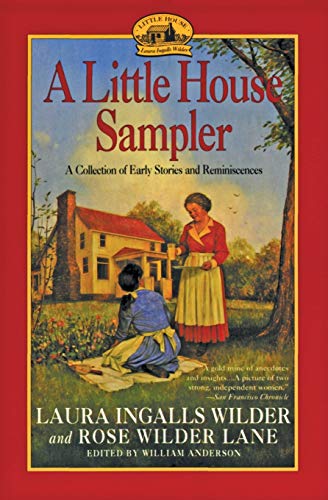
Inhaltsangabe
For everyone who loves the Little House books-a reissue of a charming collection of early stories and reminiscences by Laura Ingalls Wilder, along with essays and writings from her daughter, Rose Wilder Lane, who was an award-winning writer.
This charming collection of early stories contains many never before published newspaper pieces, stories and essays by Laura Ingalls and Rose Wilder. Inspiring the popular series, these works are a vivid and personal testament to American life and history as seen by two remarkable pioneers.
Die Inhaltsangabe kann sich auf eine andere Ausgabe dieses Titels beziehen.
Über die Autorin bzw. den Autor
Laura Ingalls Wilder was born in 1867 in the log cabin described in Little House in the Big Woods, and she and her family traveled by covered wagon across the Midwest. As an adult she wrote down the stories of her pioneer childhood in her classic Little House books, which have been cherished by millions of readers ever since they were first published over ninety years ago.
Von der hinteren Coverseite
For everyone who loves the Little House books--a reissue of a charming collection of early stories and reminiscences by Laura Ingalls Wilder, along with essays and writings from her daughter, Rose Wilder Lane, who was an award-winning writer.
This charming collection of early stories contains many never before published newspaper pieces, stories and essays by Laura Ingalls and Rose Wilder. Inspiring the popular series, these works are a vivid and personal testament to American life and history as seen by two remarkable pioneers.
Auszug. © Genehmigter Nachdruck. Alle Rechte vorbehalten.
Little House Sampler
By Wilder, Laura IngallsPerennial
Copyright © 2004 Laura WilderAll right reserved.
ISBN: 0060972408
Chapter One
OneSunday morning, on almost every Sunday morning, Ruth and Patrick Cleary drove from their smart Bristol flat to Patrick's parents' farmhouse outside Bath. They had only been married for four years and Ruth would have preferred to linger in bed, but this Sunday, as almost every Sunday, they had been invited for lunch. Patrick always enjoyed returning to his home. It had once been a dairy farm, and Patrick's father had sold off the land, only retaining a circle of fields around the house, a little wood, and the winding drive. The house itself was lovely: an eighteenth-century manor farm of yellow Bath stone. While never being so vulgar as to lie, the Clearys liked to suggest that their family had lived there since the farmhouse had been built. Patrick's father was fond of claiming that he came from Somerset yeoman stock. But it was not true. It had been a clever purchase in the mid-1960s, and the profit, as house prices had risen and land prices had rocketed, would make a small fortune should they ever wish to sell.
Patrick's mother opened the door as they came up the path. She was always there when they arrived, ready to fling open the door in welcome. Once Ruth teased Patrick, saying that his mother spent her life crouched in front of the brass letterbox, peeping out so that she could throw open the door as her son arrived, wrap him in her arms, and say, "Welcome home, darling." Patrick had looked offended, and had not laughed.
"Welcome home, darling," his mother said.
Patrick kissed her, and then she put out her arms to Ruth and kissed Ruth's cheek. "Hello, dearest, how pale you look. Have you been working too hard?"
Ruth was surprised to find that immediately she felt exhausted. "No," she said.
"Freddie, they're here!" Ruth's mother called into the house, and Patrick's father appeared in the hall.
"Hello, old boy," he said lovingly to Patrick. He dropped an arm briefly on Patrick's shoulder and then turned to Ruth and kissed her. "Looking lovely, my dear. Patrick--saw you on television last night, the piece on the commuters. Jolly good. They used a bit of it on News at Ten. Good show."
Patrick grimaced. "It didn't come out how I wanted," he said. "I had a new film crew and they all had their own ideas. I might be the reporter, but none of them want to listen to me."
"Too many chiefs and not enough Indians," Frederick pronounced.
Ruth looked at him. He often said a sentence, like a little motto, that she had never heard before and that made no sense to her whatsoever. They were a playful family, sometimes quoting family jokes or phrases of Patrick's babytalk that had survived for years. No one ever explained the jokes to Ruth; she was supposed to laugh at them and enjoy them, as if they were self-explanatory.
"That's shoptalk," Patrick's mother said firmly. "Not now. I want my assistant in the kitchen!"
It was one of the Sunday rituals that Patrick helped his mother in the kitchen while Ruth and Frederick chatted in the drawing room. Ruth had tried to join the two in the kitchen once or twice and had glimpsed Patrick's indispensable help. He was perched on one of the kitchen stools, listening to Elizabeth and picking nuts from a bowl of nibbles she had placed before him. When Ruth had interrupted them, they had looked up like two unfriendly children and fallen silent. It was Elizabeth's private time with her son; she did not want Ruth. Ruth was sent back into the sitting room with the decanter of sherry and instructions to keep Frederick entertained. She learned that she must wait for Patrick to put his head around the door and say, "Luncheon is served, ladies and gents." Then Frederick could stop making awkward conversation with her and say, "I could eat a horse! Is it horse again?"
Elizabeth served roast pork with cracklings, applesauce, roast potatoes, boiled potatoes, peas and carrots. Ruth wanted only a little. In Bristol in the canteen of the radio station where she worked as a journalist, she was always hungry. But there was something about the dining room at the farmhouse that made her throat close up. Patrick's father poured red wine and Ruth would drink two or three glasses, but she could not make herself eat.
Patrick ate a good lunch, his plate always favored with the crunchiest potatoes and the best cuts of meat, and always had seconds.
"You'll get fat," his father warned him. "Look at me, never gained a pound till I retired from the army and had your mother's home cooking every day."
"He burns it all up," Elizabeth defended her son. "His job is all nerves. He burns it all up with nervous energy."
They both looked at Ruth, and she managed a small uncomfortable smile. She did not know whether to agree that he would get fat, which would imply an unwifely lack of admiration, or agree that he lived on his nerves, which would indicate that she was not protecting him from stress.
"It's been a devil of a week," Patrick agreed. "But I think I may be getting somewhere at last."
There was a little murmur of interest. Ruth looked surprised. She did not know that Patrick had any news from work. She wondered guiltily if her own work, which was demanding and absorbing, had made her neglect his ambition. "I didn't know," she said.
He smiled his wide, handsome smile at her. "I thought I'd wait to tell you until it was shaping up," he said.
"No point in counting chickens," his father agreed. "Spill the beans, old boy."
"There's talk of a new unit, to do specialist local film documentaries," Patrick said. "It'll be headed by a news producer. The best news producer we've got." He paused, and smiled his professionally modest smile. "Looks like I'm in line for the job."
"Good show."
"Wonderful," Patrick's mother said.
"What would you do?" Ruth asked.
"Regular hours!" Patrick replied with a little chuckle. "That's the main thing! I'd still do reports to camera but I wouldn't be on call all the time, and I'd not be running around out of hours. I'd have more control. It's an opportunity for me."
"Is this a bubble-size celebration?" Patrick's father demanded of Ruth.
She looked at him blankly. She simply had no idea what he meant.
"Champagne, darling," Patrick prompted. "Do wake up!"
"I suppose it must be." Ruth stretched her mouth in a smile, trying to be bright and excited. "How wonderful!"
Patrick's father was already on his way to the kitchen. Elizabeth fetched the special champagne glasses from the sideboard.
"He's got a bottle already chilled," she said to Patrick. Ruth understood that this was significant.
"Oh ho!" Patrick said as his father came back into the room. "Chilled already?"
His father gave him a roguish wink and expertly opened the bottle. The champagne splashed into the glasses. Ruth said, "Only a little please," but no one heard her. She raised her full glass in a toast to Patrick's success. It was a very dry wine. Ruth knew that dry champagne was the right taste; only inexperienced, ill-educated people liked sweet champagne. If she continued to make herself drink it, then one day she too would like dry champagne and then she would have an educated palate. It was a question of endurance. Ruth took another sip.
"Now I wonder why you were keeping a bottle of champagne on ice?" Patrick prompted his father.
"I have some grounds for celebration--but only if you two are absolutely happy about it. Your mother and I have a little proposition to put to you."
Ruth tried to look intelligent and interested but the taste of the wine was bitter in her...
„Über diesen Titel“ kann sich auf eine andere Ausgabe dieses Titels beziehen.
Suchergebnisse für Little House Sampler: Autobiographical Frontier Writings...

Beispielbild für diese ISBN
Little House Sampler: Laura In
Anbieter: World of Books (was SecondSale), Montgomery, IL, USA
Verkäuferbewertung 5 von 5 Sternen

Zustand: Acceptable. Item in acceptable condition! Textbooks may not include supplemental items i.e. CDs, access codes etc. Artikel-Nr. 00090633232
Gebraucht kaufen
EUR 3,59
Versand gratis
Versand innerhalb von USA
Versand innerhalb von USA
Anzahl: 13 verfügbar
Beispielbild für diese ISBN
Little House Sampler: Laura In
Anbieter: World of Books (was SecondSale), Montgomery, IL, USA
Verkäuferbewertung 5 von 5 Sternen
Zustand: Good. Item in good condition. Textbooks may not include supplemental items i.e. CDs, access codes etc. Artikel-Nr. 00105690540
Gebraucht kaufen
EUR 3,59
Versand gratis
Versand innerhalb von USA
Versand innerhalb von USA
Anzahl: 5 verfügbar
Beispielbild für diese ISBN
Little House Sampler: Autobiographical Frontier Writings Spanning 100 Years from Laura Ingalls Wilder and Her Daughter Rose
Verlag:
Harper Perennial (edition Reprint), 1989
ISBN 10: 0060972408
ISBN 13: 9780060972400
Gebraucht
Paperback
Anbieter: BooksRun, Philadelphia, PA, USA
Verkäuferbewertung 5 von 5 Sternen
Paperback. Zustand: Fair. Reprint. The item might be beaten up but readable. May contain markings or highlighting, as well as stains, bent corners, or any other major defect, but the text is not obscured in any way. Artikel-Nr. 0060972408-7-1-13
Gebraucht kaufen
EUR 5,66
Versand gratis
Versand innerhalb von USA
Versand innerhalb von USA
Anzahl: 1 verfügbar
Beispielbild für diese ISBN
A Little House Sampler
Anbieter: ThriftBooks-Dallas, Dallas, TX, USA
Verkäuferbewertung 5 von 5 Sternen
Paperback. Zustand: Good. No Jacket. Pages can have notes/highlighting. Spine may show signs of wear. ~ ThriftBooks: Read More, Spend Less. Artikel-Nr. G0060972408I3N00
Gebraucht kaufen
EUR 5,76
Versand gratis
Versand innerhalb von USA
Versand innerhalb von USA
Anzahl: 2 verfügbar
Beispielbild für diese ISBN
A Little House Sampler
Anbieter: ThriftBooks-Phoenix, Phoenix, AZ, USA
Verkäuferbewertung 5 von 5 Sternen
Paperback. Zustand: Good. No Jacket. Pages can have notes/highlighting. Spine may show signs of wear. ~ ThriftBooks: Read More, Spend Less. Artikel-Nr. G0060972408I3N00
Gebraucht kaufen
EUR 5,76
Versand gratis
Versand innerhalb von USA
Versand innerhalb von USA
Anzahl: 1 verfügbar
Beispielbild für diese ISBN
A Little House Sampler
Anbieter: ThriftBooks-Reno, Reno, NV, USA
Verkäuferbewertung 5 von 5 Sternen
Paperback. Zustand: Good. No Jacket. Pages can have notes/highlighting. Spine may show signs of wear. ~ ThriftBooks: Read More, Spend Less. Artikel-Nr. G0060972408I3N00
Gebraucht kaufen
EUR 5,76
Versand gratis
Versand innerhalb von USA
Versand innerhalb von USA
Anzahl: 1 verfügbar
Beispielbild für diese ISBN
A Little House Sampler
Anbieter: ThriftBooks-Atlanta, AUSTELL, GA, USA
Verkäuferbewertung 5 von 5 Sternen
Paperback. Zustand: Fair. No Jacket. Readable copy. Pages may have considerable notes/highlighting. ~ ThriftBooks: Read More, Spend Less. Artikel-Nr. G0060972408I5N00
Gebraucht kaufen
EUR 5,76
Versand gratis
Versand innerhalb von USA
Versand innerhalb von USA
Anzahl: 2 verfügbar
Beispielbild für diese ISBN
A Little House Sampler
Anbieter: ThriftBooks-Dallas, Dallas, TX, USA
Verkäuferbewertung 5 von 5 Sternen
Paperback. Zustand: Good. No Jacket. Former library book; Pages can have notes/highlighting. Spine may show signs of wear. ~ ThriftBooks: Read More, Spend Less. Artikel-Nr. G0060972408I3N10
Gebraucht kaufen
EUR 5,76
Versand gratis
Versand innerhalb von USA
Versand innerhalb von USA
Anzahl: 1 verfügbar
Beispielbild für diese ISBN
A Little House Sampler
Anbieter: ThriftBooks-Phoenix, Phoenix, AZ, USA
Verkäuferbewertung 5 von 5 Sternen
Paperback. Zustand: Good. No Jacket. Former library book; Pages can have notes/highlighting. Spine may show signs of wear. ~ ThriftBooks: Read More, Spend Less. Artikel-Nr. G0060972408I3N10
Gebraucht kaufen
EUR 5,76
Versand gratis
Versand innerhalb von USA
Versand innerhalb von USA
Anzahl: 1 verfügbar
Beispielbild für diese ISBN
A Little House Sampler
Anbieter: ThriftBooks-Atlanta, AUSTELL, GA, USA
Verkäuferbewertung 5 von 5 Sternen
Paperback. Zustand: Very Good. No Jacket. May have limited writing in cover pages. Pages are unmarked. ~ ThriftBooks: Read More, Spend Less. Artikel-Nr. G0060972408I4N00
Gebraucht kaufen
EUR 5,76
Versand gratis
Versand innerhalb von USA
Versand innerhalb von USA
Anzahl: 1 verfügbar